Kirjojen hintavertailu – 12 859 818 kirjaa ja 27 kauppaa

Kirjailija

Martin Parker

Kirjat ja teokset yhdessä paikassa: 16 kirjaa, julkaisuja vuosilta 1999–2024, suosituimpiin kuuluu The Wrong Ancient Mariner. Vertaile teosten hintoja ja tarkista saatavuus suomalaisista kirjakaupoista.

16 kirjaa

Kirjojen julkaisuvuodet: 1999–2024.

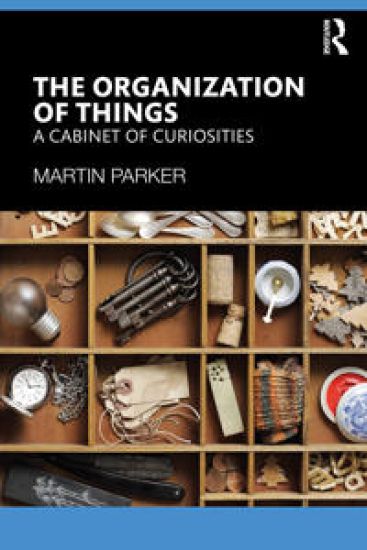
The Organization of Things

The Organization of Things

Martin Parker

TAYLOR FRANCIS LTD
2024
nidottu
This is a book about knowledge and how it is organized. The business school has captured ideas about organization, and reduced them to questions of formal structures, documented processes, logistics and operations. This book shows how the concept can be understood more generously by illuminating the fundamental importance of culture to our understanding of organization. Using the idea of a cabinet of curiosities, the author shows how we can learn a lot about authority from choirs of angels, about secrecy from shipping containers, or work from art galleries. In disorganizing categories, forcing unusual conjunctions, the work opens itself to organization studies and studies of organizing, as well as cultural sociology, human geography, and social theory. Bringing together arguments developed over the last two decades, this book brings together and updates work that will provide a unique and valuable reference for students and scholars of management and organization around the world.

The Organization of Things

The Organization of Things

Martin Parker

TAYLOR FRANCIS LTD
2024
sidottu
This is a book about knowledge and how it is organized. The business school has captured ideas about organization, and reduced them to questions of formal structures, documented processes, logistics and operations. This book shows how the concept can be understood more generously by illuminating the fundamental importance of culture to our understanding of organization. Using the idea of a cabinet of curiosities, the author shows how we can learn a lot about authority from choirs of angels, about secrecy from shipping containers, or work from art galleries. In disorganizing categories, forcing unusual conjunctions, the work opens itself to organization studies and studies of organizing, as well as cultural sociology, human geography, and social theory. Bringing together arguments developed over the last two decades, this book brings together and updates work that will provide a unique and valuable reference for students and scholars of management and organization around the world.
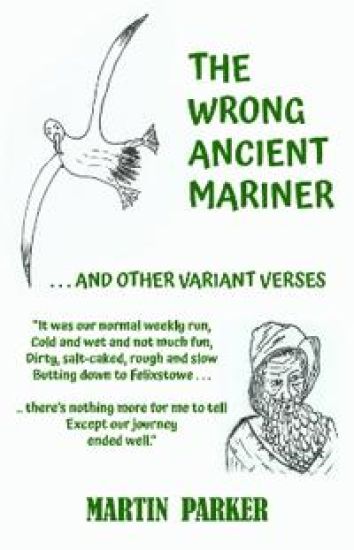
The Wrong Ancient Mariner

The Wrong Ancient Mariner

Martin Parker

GROSVENOR HOUSE PUBLISHING LTD
2023
nidottu
Abandon disbelief, all ye who enter here. Or face problems when you encounter an ancient mariner with no tale worth telling, wild parties at Pooh Corner, John Betjeman moonlighting as a trapeze artist, Shakespeare assembling flat-pack furniture without the Instructions, Pam Ayres and her teeth on Judgement Day, Longfellow's reaction to the gift of a paper-shredder, the real writer of the Bard's plays, Robert Burns as a hater of the haggis, a very seasick John Masefield, the Lady of Shalott with a shotgun, Ogden Nash on the facts of life (no, not those facts), Philip Larkin's views on child carol singers and Noel Coward's on Council flats. This excursion through the left field of English verse also features comments by word-smiths including Old Nokomis, Joan Hunter-Dunn, Wordsworth's ghost, Christopher Robin, Andrew Marvell's coy mistress, Betjeman's bit-swallowing pony, Tennyson's garden-phobic Maud, Cleopatra's Executor, Mrs Polonius, Nigel Molesworth, Maya Angelou's Christmas turkey, Eeyore and a cheese and pickle sandwich. A light-heartedly irreverent read for all but the most po-faced of poetry fans. Several of its poems have already appeared in public, chiefly in The Spectator. From the author of I Think I Thought which laughed wryly at the rites and wrongs of childhood, youth and ageing.
Kaadetaan kauppakorkea

Kaadetaan kauppakorkea

Martin Parker

VASTAPAINO
2019
nidottu

Halvin toimitettuna 30,60 €

Johtamista ja ahneutta opettavilla kauppakorkeakouluilla on ollut keskeinen rooli markkinakapitalismin globaalissa voittokulussa. Sen myötä ne ovat myös vastuussa finanssikriiseistä, eriarvoistumisesta ja ilmaston lämpenemisestä. Kauppakorkeakoulut ovat ujuttaneet markkinamallin myös emoyliopistoihinsa ja kasvaneet siellä loisesta isännäksi. Niiden tuottoisa tutkintokauppa on mahdollistanut yliopistojen julkisen rahoituksen alasajon ja murentanut yliopiston perinteistä ideaa yhteiskuntaa kokonaisvaltaisesti ja avoimesti palvelevana tiedon tuottajana. Professori Martin Parkerin mukaan on korkea aika kääntää kehityksen suunta. Kauppakorkeakoulut on suljettava ja ne on korvattava ihmiselämän moninaista järjestäytymistä ennakkoluulottomasti tutkivilla ja opettavilla organisaatiokouluilla. Uudistus tuottaisi avarakatseisempia ihmisiä ja auttaisi kehittämään uudenlaisia organisaatiomuotoja yritysmallille ominaisen hierarkkisen johtamisen sijaan ja rinnalle. Markkinamanagerialismin ahtaasta kehikosta murtautuminen synnyttäisi uusia toimintatapoja, jotka tukisivat yhteiskuntien ja koko maailman taloudellisesti, sosiaalisesti ja ekologisesti kestävää kehitystä. Martin Parker on opettanut monissa brittiläisissä bisneskouluissa vuodesta 1995. Nykyään hän on professorina Bristolin yliopiston johtamisen laitoksella.
Shut Down the Business School

Shut Down the Business School

Martin Parker

Pluto Press
2018
sidottu
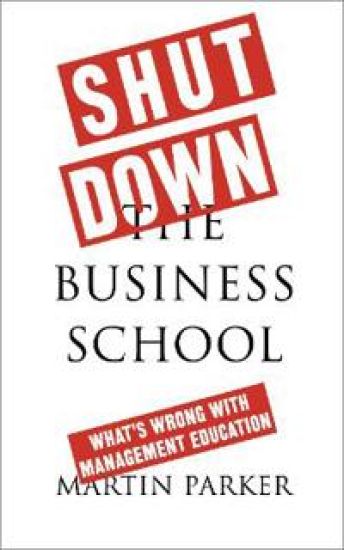
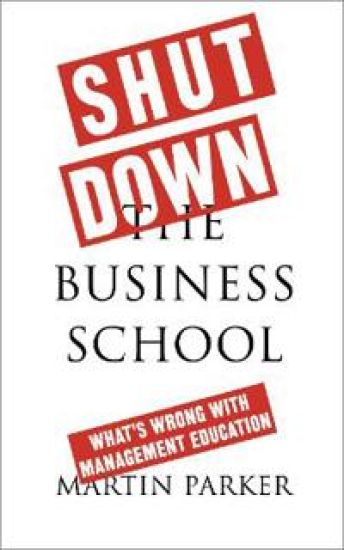
Business schools are institutions which, a decade after the financial crash, continue to act as loudspeakers for neoliberal capitalism with all its injustices and planetary consequences. In this lively and incendiary call to action, Martin Parker offers a simple message: shut down the business school. Parker argues that business schools are 'cash cows' for the contemporary university that have produced a generation of unreflective managers, primarily interested in their own personal rewards. If we see universities as institutions with responsibilities to the societies they inhabit, then we must challenge the common notion that 'the market' should be the primary determinant of the education they provide. Shut Down the Business School makes a compelling case for a radical alternative, in the form of a 'School for Organising'. This institution would develop and teach on different forms of organising, instead of reproducing the dominant corporate model, enabling individuals to discover alternative responses to the pressing issues of inequality and sustainability faced by all of us today.
Shut Down the Business School

Shut Down the Business School

Martin Parker

Pluto Press
2018
pokkari
Business schools are institutions which, a decade after the financial crash, continue to act as loudspeakers for neoliberal capitalism with all its injustices and planetary consequences. In this lively and incendiary call to action, Martin Parker offers a simple message: shut down the business school. Parker argues that business schools are 'cash cows' for the contemporary university that have produced a generation of unreflective managers, primarily interested in their own personal rewards. If we see universities as institutions with responsibilities to the societies they inhabit, then we must challenge the common notion that 'the market' should be the primary determinant of the education they provide. Shut Down the Business School makes a compelling case for a radical alternative, in the form of a 'School for Organising'. This institution would develop and teach on different forms of organising, instead of reproducing the dominant corporate model, enabling individuals to discover alternative responses to the pressing issues of inequality and sustainability faced by all of us today.
Daniel Defoe and the Bank of England – The Dark Arts of Projectors

Daniel Defoe and the Bank of England – The Dark Arts of Projectors

Valerie Hamilton; Martin Parker

John Hunt Publishing
2016
nidottu
This little book tells the truthful story of how the Bank of England actually came into being. It is a story of pirates, treasure, random good fortune and sheer determination. This is an institution founded on risk, daring and imagination. The tale is entangled with that of the early novel, in particular the fortunes of one Moll Flanders, an entrepreneur of sexual relations in the growing London market for capital in the early eighteenth century. These accounts are woven together with the life-stories of Daniel Defoe and William Paterson, founders of two of the key institutions of our modern age, the novel and the corporation. This reveals connections which are nowadays forgotten, and which the fractured specialisms of 'Literature', 'History' and 'Business' can rarely see. These tales are set against the backdrop of the long eighteenth century - fervent years of inventiveness, high risk gambling, and political revolution. The authors show that the dark arts of deceit, and the credibility of fictions, are requirements for any creative enterprise, and that all organizations are fictions.
Alternative Business

Alternative Business

Martin Parker

Routledge
2011
sidottu
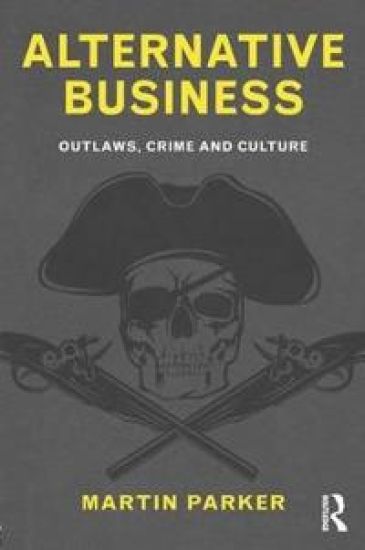
From Robin Hood to Jack Sparrow from Pirates of the Caribbean, outlaws have been a central part of 800 years of culture. These are characters who criticise the power of those in the castle or the skyscraper, and earn their keep by breaking the law. Outlaws break categories too. They are fact and fiction, opposition and product, culture and economy, natural justice and organized crime. Beginning with Robin Hood stealing from the rich, and covering along the way pirates, smugglers, highwaymen, the Wild West, the Mafia and many others, Martin Parker offers a fresh and exciting insight into the counter culture of the outlaw – one that rebels against the more dominant and traditional forms of economy and organization and celebrates a life free from wage slavery. Alternative Business is a highly readable, entertaining book that will prove a helpful study tool for all students and lecturers working on organizations, cultural studies and criminology.
Alternative Business

Alternative Business

Martin Parker

Routledge
2011
nidottu
From Robin Hood to Jack Sparrow from Pirates of the Caribbean, outlaws have been a central part of 800 years of culture. These are characters who criticise the power of those in the castle or the skyscraper, and earn their keep by breaking the law. Outlaws break categories too. They are fact and fiction, opposition and product, culture and economy, natural justice and organized crime. Beginning with Robin Hood stealing from the rich, and covering along the way pirates, smugglers, highwaymen, the Wild West, the Mafia and many others, Martin Parker offers a fresh and exciting insight into the counter culture of the outlaw – one that rebels against the more dominant and traditional forms of economy and organization and celebrates a life free from wage slavery. Alternative Business is a highly readable, entertaining book that will prove a helpful study tool for all students and lecturers working on organizations, cultural studies and criminology.
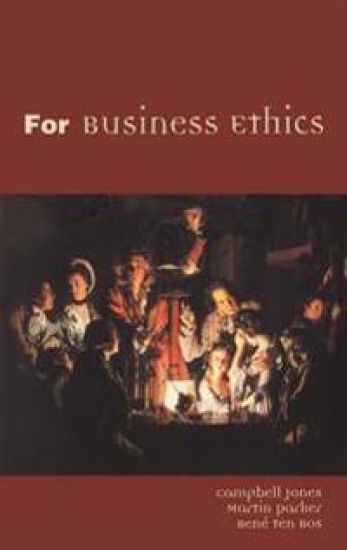
For Business Ethics

For Business Ethics

Campbell Jones; Martin Parker; Rene ten Bos

Routledge
2005
nidottu
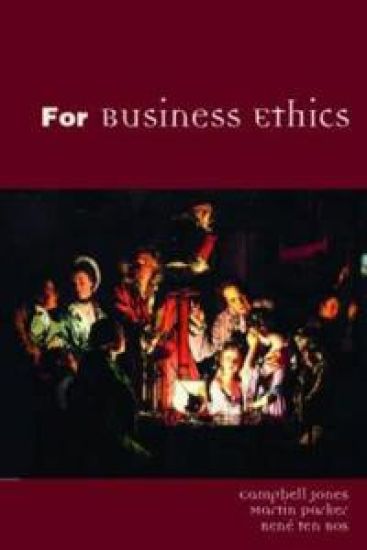
For Business Ethics is a daring adventure into the world of business ethics. It offers a clear and accessible introduction to business ethics and also expands business ethics beyond its current narrow confines. It is ground-breaking in the sense that it invites a distinctively critical approach to business ethics, an approach that the authors argue is part and parcel of ethics. With a thought-provoking glossary and recommendations for further readings, For Business Ethics is an essential purchase for students and practitioners alike. It is at once an introduction to business ethics and a challenge to anyone who wishes to take part in or change contemporary organized society.
For Business Ethics

For Business Ethics

Campbell Jones; Martin Parker; Rene ten Bos

Routledge
2005
sidottu
For Business Ethics is a daring adventure into the world of business ethics. It offers a clear and accessible introduction to business ethics and also expands business ethics beyond its current narrow confines. It is ground-breaking in the sense that it invites a distinctively critical approach to business ethics, an approach that the authors argue is part and parcel of ethics. With a thought-provoking glossary and recommendations for further readings, For Business Ethics is an essential purchase for students and practitioners alike. It is at once an introduction to business ethics and a challenge to anyone who wishes to take part in or change contemporary organized society.
Against Management

Against Management

Martin Parker

Polity Press
2002
sidottu
Against Management argues that management is increasingly being seen as a problem, and not a solution. Martin Parker argues that managing is not the only way to organize and that managerialism is a global form of ideology, which is being used to justify considerable cruelty and inequality. He also suggests that, in a variety of places, an odd collection of people seem to be coming to similar conclusions. It is possible to identify cracks in the religion of managerialism as some of its converts begin to lapse and others intensify their protest. In order to illustrate his argument, Parker draws from a wide variety of sources – anti-corporate activism; books and films which use management as their backdrop; the movement for business ethics and corporate social responsibility; as well as critical management studies and general social theories of the present. Parker's overall argument is that we can see the beginnings of a cultural shift in the image of management and that this is a significant historical change. Perhaps most importantly, it opens up the possibility of exploring non-managerial alternatives to contemporary assumptions about organizing. Against Management deliberately attempts to blur the boundaries between academic and popular writing, and encourages some radical questioning of the common sense that tells us that we need management, managers and management schools. This will be essential reading for second-year undergraduates and above in business and management studies (including MBA), sociology and cultural studies.
Against Management

Against Management

Martin Parker

Polity Press
2002
nidottu
Against Management argues that management is increasingly being seen as a problem, and not a solution. Martin Parker argues that managing is not the only way to organize and that managerialism is a global form of ideology, which is being used to justify considerable cruelty and inequality. He also suggests that, in a variety of places, an odd collection of people seem to be coming to similar conclusions. It is possible to identify cracks in the religion of managerialism as some of its converts begin to lapse and others intensify their protest. In order to illustrate his argument, Parker draws from a wide variety of sources – anti-corporate activism; books and films which use management as their backdrop; the movement for business ethics and corporate social responsibility; as well as critical management studies and general social theories of the present. Parker's overall argument is that we can see the beginnings of a cultural shift in the image of management and that this is a significant historical change. Perhaps most importantly, it opens up the possibility of exploring non-managerial alternatives to contemporary assumptions about organizing. Against Management deliberately attempts to blur the boundaries between academic and popular writing, and encourages some radical questioning of the common sense that tells us that we need management, managers and management schools. This will be essential reading for second-year undergraduates and above in business and management studies (including MBA), sociology and cultural studies.
Organizational Culture and Identity

Organizational Culture and Identity

Martin Parker

SAGE Publications Inc
1999
sidottu
Organizational Culture and Identity discusses the literature concerned with culture in organizations and explains why the term has been invoked with such enthusiasm. Martin Parker presents further ways of thinking about organizations and culture which suggest that organizational cultures should be seen as `fragmented unities' in which members identify themselves as collective at some times and divided at others.
Organizational Culture and Identity

Organizational Culture and Identity

Martin Parker

SAGE Publications Inc
1999
nidottu
Organizational Culture and Identity discusses the literature concerned with culture in organizations and explains why the term has been invoked with such enthusiasm. Martin Parker presents further ways of thinking about organizations and culture which suggest that organizational cultures should be seen as `fragmented unities' in which members identify themselves as collective at some times and divided at others.