Kirjojen hintavertailu – 12 903 725 kirjaa ja 27 kauppaa

Kirjailija

Martin Peterson

Kirjat ja teokset yhdessä paikassa: 13 kirjaa, julkaisuja vuosilta 2008–2025, suosituimpiin kuuluu Entreprenad- och konsulträtt. Utg 9. Vertaile teosten hintoja ja tarkista saatavuus suomalaisista kirjakaupoista.

13 kirjaa

Kirjojen julkaisuvuodet: 2008–2025.

Entreprenad- och konsulträtt. Utg 9

Entreprenad- och konsulträtt. Utg 9

Niklas Kåvius; Lars-Otto Liman; Martin Peterson; Claes Sahlin

Svensk Byggtjänst
2016
nidottu
Boken ger grundläggande kunskaper, anpassade för byggandets vardag. Författarna beskriver rättsreglernas bakgrund och funktion och deras samspel med andra regler och med tekniska förhållanden. Denna nionde utgåva föranleds dels av att BKK, Byggandets Kontraktskommitté, gav ut ABK 09, Allmänna Bestämmelser för konsultuppdrag. Uppdateringar har också gjorts i avsnitten om konsultavtal, lagar om offentlig upphandling, konkurrens och konkurrensbegränsning samt texterna avseende arbetsmiljö. Andra uppdateringar har gjorts med anledning av ny lagstiftning avseende elektronisk personalliggare, ny teknik såsom BIM samt nya samverkans- och åtagandeformer. Boken innehåller även AB 04, ABT 06 och ABK 09.
Ethics in the Gray Area

Ethics in the Gray Area

Martin Peterson

Cambridge University Press
2025
pokkari
What should morally conscientious agents do if they must choose among options that are somewhat right and somewhat wrong? Should one select an option that is right to the highest degree, or would it perhaps be more rational to choose randomly among all somewhat right options? And how should lawmakers and courts address behaviour that is neither entirely right nor entirely wrong? In this first book-length discussion of the 'gray area' in ethics, Martin Peterson challenges the assumption that rightness and wrongness are binary properties and explores acts which are neither entirely right nor entirely wrong, but rather a bit of both. Including discussions of white lies and the permissibility of abortion, Peterson's book presents a gradualist theory of right and wrong designed to answer these and other practical questions about the gray area in ethics.
Ethics for Engineers

Ethics for Engineers

Martin Peterson

OXFORD UNIVERSITY PRESS INC
2025
nidottu
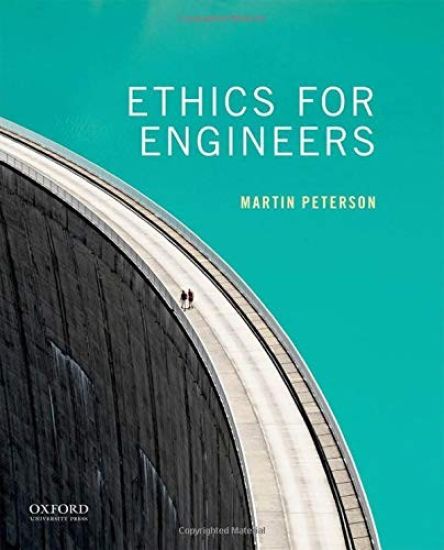
Ethics for Engineers offers a comprehensive, up-to-date introduction to engineering ethics. Major ethical theories, professional codes of ethics, and case studies are included in a single volume that helps engineers better understand and address ethical issues in their profession. The presentation is balanced and fair, with numerous examples and about 100 review questions. All this makes the book suitable for courses designed to meet the ABET requirement for professional ethics, which is a mandatory requirement for all accredited engineering schools. (As of 2024, ABET accredits 4,674 engineering programs at 920 universities in 42 countries.) Ethics for Engineers 2e includes 46 case studies, both classic and contemporary ones, each followed by discussion questions. The ethical issues in all cases are clearly articulated and analyzed from numerous perspectives. Unlike most competing books, it includes detailed chapters on the major ethical theories and the methods of applied ethics, as well as a chapter on the history of engineering. The remaining chapters cover topics such as professional codes for engineers, whistleblowing, the problem of many hands, the ethics of risk and uncertainty, gifts, bribes, conflicts of interest, the ethics of cost benefit analysis, engineering and environmental ethics, privacy and computer ethics, ethical technology assessment, and the ethics of artifacts. With 18 chapters, Ethics for Engineers can be used for semester-long engineering ethics courses taught within philosophy departments or schools of engineering.

Ethics in the Gray Area

Ethics in the Gray Area

Martin Peterson

Cambridge University Press
2023
sidottu
What should morally conscientious agents do if they must choose among options that are somewhat right and somewhat wrong? Should one select an option that is right to the highest degree, or would it perhaps be more rational to choose randomly among all somewhat right options? And how should lawmakers and courts address behaviour that is neither entirely right nor entirely wrong? In this first book-length discussion of the 'gray area' in ethics, Martin Peterson challenges the assumption that rightness and wrongness are binary properties and explores acts which are neither entirely right nor entirely wrong, but rather a bit of both. Including discussions of white lies and the permissibility of abortion, Peterson's book presents a gradualist theory of right and wrong designed to answer these and other practical questions about the gray area in ethics.
Ethics for Engineers

Ethics for Engineers

Martin Peterson

Oxford University Press
2019
nidottu
An essential all-in-one introduction, Ethics for Engineers provides in-depth coverage of major ethical theories, professional codes of ethics, and case studies in a single volume. Incorporating numerous practical examples and about 100 review questions, it helps students better understand and address ethical issues that they may face in their future careers. Topics covered include whistle-blowing, the problem of many hands, gifts, bribes, conflicts of interest, engineering and environmental ethics, privacy and computer ethics, ethical technology assessment, and the ethics of cost-benefit analysis and risk and uncertainty.
The Ethics of Technology

The Ethics of Technology

Martin Peterson

Oxford University Press Inc
2017
sidottu
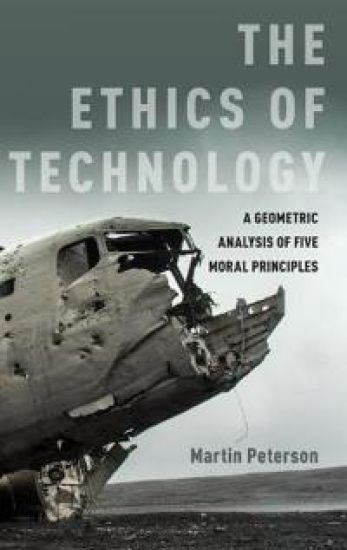
Autonomous cars, drones, and electronic surveillance systems are examples of technologies that raise serious ethical issues. In this analytic investigation, Martin Peterson articulates and defends five moral principles for addressing ethical issues related to new and existing technologies: the cost-benefit principle, the precautionary principle, the sustainability principle, the autonomy principle, and the fairness principle. It is primarily the method developed by Peterson for articulating and analyzing the five principles that is novel. He argues that geometric concepts such as points, lines, and planes can be put to work for clarifying the structure and scope of these and other moral principles. This geometric account is based on the Aristotelian dictum that like cases should be treated alike, meaning that the degree of similarity between different cases can be represented as a distance in moral space. The more similar a pair of cases are from a moral point of view, the closer is their location in moral space. A case that lies closer in moral space to a paradigm case for some principle p than to any paradigm for any other principle should be analyzed by applying principle p. The book also presents empirical results from a series of experimental studies in which experts (philosophers) and laypeople (engineering students) have been asked to apply the geometric method to fifteen real-world cases. The empirical findings indicate that experts and laypeople do in fact apply geometrically construed moral principles in roughly, but not exactly, the manner advocates of the geometric method believe they ought to be applied.
An Introduction to Decision Theory

An Introduction to Decision Theory

Martin Peterson

Cambridge University Press
2017
sidottu

Halvin toimitettuna 89,30 €

Now revised and updated, this introduction to decision theory is both accessible and comprehensive, covering topics including decision making under ignorance and risk, the foundations of utility theory, the debate over subjective and objective probability, Bayesianism, causal decision theory, game theory, and social choice theory. No mathematical skills are assumed, with all concepts and results explained in non-technical and intuitive as well as more formal ways. There are now over 140 exercises with solutions, along with a glossary of key terms and concepts. This second edition includes a new chapter on risk aversion as well as updated discussions of numerous central ideas, including Newcomb's problem, prisoner's dilemmas, and Arrow's impossibility theorem. The book will appeal particularly to philosophy students but also to readers in a range of disciplines, from computer science and psychology to economics and political science.
An Introduction to Decision Theory

An Introduction to Decision Theory

Martin Peterson

Cambridge University Press
2017
pokkari

Halvin toimitettuna 39,60 €

Now revised and updated, this introduction to decision theory is both accessible and comprehensive, covering topics including decision making under ignorance and risk, the foundations of utility theory, the debate over subjective and objective probability, Bayesianism, causal decision theory, game theory, and social choice theory. No mathematical skills are assumed, with all concepts and results explained in non-technical and intuitive as well as more formal ways. There are now over 140 exercises with solutions, along with a glossary of key terms and concepts. This second edition includes a new chapter on risk aversion as well as updated discussions of numerous central ideas, including Newcomb's problem, prisoner's dilemmas, and Arrow's impossibility theorem. The book will appeal particularly to philosophy students but also to readers in a range of disciplines, from computer science and psychology to economics and political science.
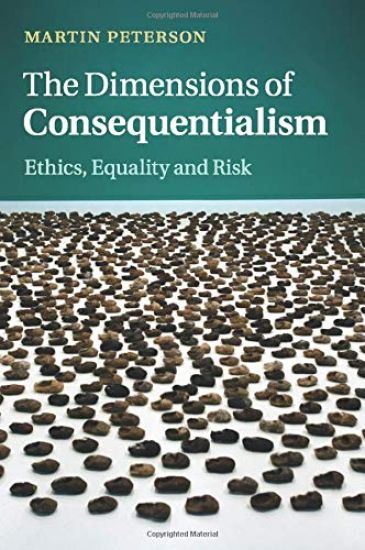
The Dimensions of Consequentialism

The Dimensions of Consequentialism

Martin Peterson

Cambridge University Press
2015
pokkari
Consequentialism, one of the major theories of normative ethics, maintains that the moral rightness of an act is determined solely by the act's consequences. The traditional form of consequentialism is one-dimensional, in that the rightness of an act is a function of a single moral aspect, such as the sum total of wellbeing it produces. In this book Martin Peterson introduces a new type of consequentialist theory: multidimensional consequentialism. According to this theory, an act's moral rightness depends on several separate dimensions, including individual wellbeing, equality and risk. Peterson's novel approach shows that moral views about equality and risk that were previously thought to be mutually incompatible can be rendered compatible, and his precise theoretical discussion helps the reader to understand better the distinction between consequentialist and non-consequentialist theories. His book will interest a wide range of readers in ethics.
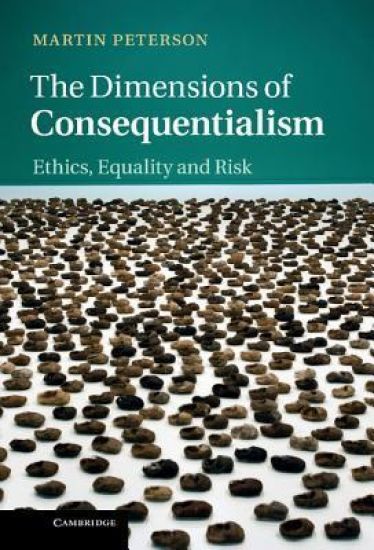
The Dimensions of Consequentialism

The Dimensions of Consequentialism

Martin Peterson

Cambridge University Press
2013
sidottu
Consequentialism, one of the major theories of normative ethics, maintains that the moral rightness of an act is determined solely by the act's consequences. The traditional form of consequentialism is one-dimensional, in that the rightness of an act is a function of a single moral aspect, such as the sum total of wellbeing it produces. In this book Martin Peterson introduces a new type of consequentialist theory: multidimensional consequentialism. According to this theory, an act's moral rightness depends on several separate dimensions, including individual wellbeing, equality and risk. Peterson's novel approach shows that moral views about equality and risk that were previously thought to be mutually incompatible can be rendered compatible, and his precise theoretical discussion helps the reader to understand better the distinction between consequentialist and non-consequentialist theories. His book will interest a wide range of readers in ethics.
Non-Bayesian Decision Theory

Non-Bayesian Decision Theory

Martin Peterson

Springer
2010
nidottu
For quite some time, philosophers, economists, and statisticians have endorsed a view on rational choice known as Bayesianism. The work on this book has grown out of a feeling that the Bayesian view has come to dominate the academic com- nitytosuchanextentthatalternative,non-Bayesianpositionsareseldomextensively researched. Needless to say, I think this is a pity. Non-Bayesian positions deserve to be examined with much greater care, and the present work is an attempt to defend what I believe to be a coherent and reasonably detailed non-Bayesian account of decision theory. The main thesis I defend can be summarised as follows. Rational agents m- imise subjective expected utility, but contrary to what is claimed by Bayesians, ut- ity and subjective probability should not be de?ned in terms of preferences over uncertain prospects. On the contrary, rational decision makers need only consider preferences over certain outcomes. It will be shown that utility and probability fu- tions derived in a non-Bayesian manner can be used for generating preferences over uncertain prospects, that support the principle of maximising subjective expected utility. To some extent, this non-Bayesian view gives an account of what modern - cision theory could have been like, had decision theorists not entered the Bayesian path discovered by Ramsey, de Finetti, Savage, and others. I will not discuss all previous non-Bayesian positions presented in the literature.
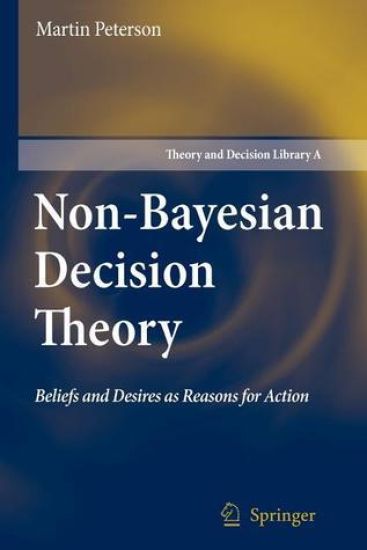
Non-Bayesian Decision Theory

Non-Bayesian Decision Theory

Martin Peterson

Springer-Verlag New York Inc.
2008
sidottu
For quite some time, philosophers, economists, and statisticians have endorsed a view on rational choice known as Bayesianism. The work on this book has grown out of a feeling that the Bayesian view has come to dominate the academic com- nitytosuchanextentthatalternative,non-Bayesianpositionsareseldomextensively researched. Needless to say, I think this is a pity. Non-Bayesian positions deserve to be examined with much greater care, and the present work is an attempt to defend what I believe to be a coherent and reasonably detailed non-Bayesian account of decision theory. The main thesis I defend can be summarised as follows. Rational agents m- imise subjective expected utility, but contrary to what is claimed by Bayesians, ut- ity and subjective probability should not be de?ned in terms of preferences over uncertain prospects. On the contrary, rational decision makers need only consider preferences over certain outcomes. It will be shown that utility and probability fu- tions derived in a non-Bayesian manner can be used for generating preferences over uncertain prospects, that support the principle of maximising subjective expected utility. To some extent, this non-Bayesian view gives an account of what modern - cision theory could have been like, had decision theorists not entered the Bayesian path discovered by Ramsey, de Finetti, Savage, and others. I will not discuss all previous non-Bayesian positions presented in the literature.