
Kirjailija
Martin Ruef
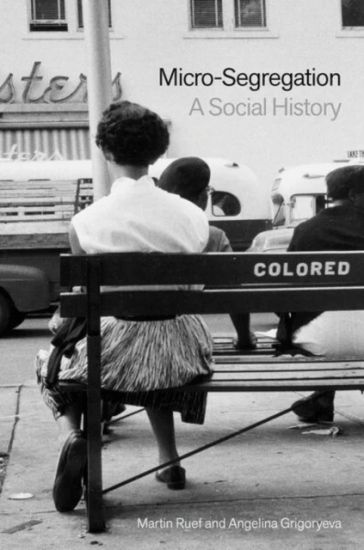
Kirjat ja teokset yhdessä paikassa: 12 kirjaa, julkaisuja vuosilta 2000–2026, suosituimpiin kuuluu Micro-Segregation. Vertaile teosten hintoja ja tarkista saatavuus suomalaisista kirjakaupoista.
12 kirjaa
Kirjojen julkaisuvuodet: 2000–2026.

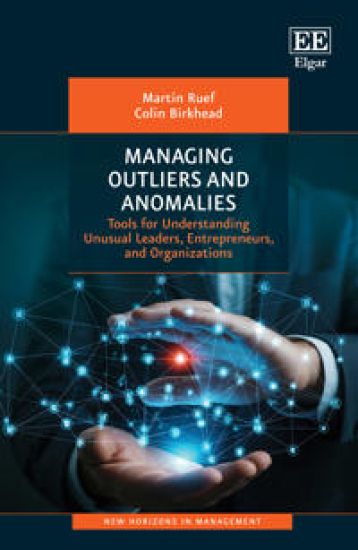
Managing Outliers and Anomalies
Martin Ruef; Colin Birkhead
EDWARD ELGAR PUBLISHING LTD
2026
sidottu
In this timely book, Martin Ruef and Colin Birkhead consider how academics and practitioners can learn from unusual entrepreneurs, leaders, and organizations. They clarify how researchers make sense of extremes – in particular, whether they see them as outliers (extreme cases) or anomalies (extreme events).
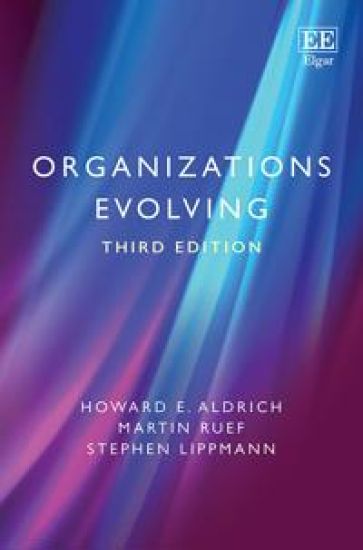
Organizations Evolving
Howard E. Aldrich; Martin Ruef; Stephen Lippmann
Edward Elgar Publishing Ltd
2020
sidottu
Organizations Evolving offers a unique theoretical framework for understanding organizational emergence, persistence, change, and decline. Synthesizing and integrating six paradigmatic approaches to organization theory, this updated and revised third edition presents an evolutionary view that provides a unified understanding of modern organizations and organization theory. Key features of the third edition include:A sophisticated analytic comparison of six major approaches to understanding modern organizations and their evolutionAn interdisciplinary focus, drawing extensively from sociology, social psychology, economics, history, management and entrepreneurship researchSupplementary materials from academic journals and the popular press, and multi-media resources in an online companionExtensive case examples that illustrate key evolutionary processesStudy questions designed for extended and reflective learning. Offering key insights and critical learning opportunities, this book is crucial reading for classes covering macro-organizational behaviour and the sociology of organizations. Students of management studies and entrepreneurship, particularly those with a focus on organization theory, will also benefit from its interdisciplinary approach.
Organizations Evolving
Howard E. Aldrich; Martin Ruef; Stephen Lippmann
Edward Elgar Publishing Ltd
2020
nidottu
Halvin toimitettuna 65,50 €
Organizations Evolving offers a unique theoretical framework for understanding organizational emergence, persistence, change, and decline. Synthesizing and integrating six paradigmatic approaches to organization theory, this updated and revised third edition presents an evolutionary view that provides a unified understanding of modern organizations and organization theory. Key features of the third edition include:A sophisticated analytic comparison of six major approaches to understanding modern organizations and their evolutionAn interdisciplinary focus, drawing extensively from sociology, social psychology, economics, history, management and entrepreneurship researchSupplementary materials from academic journals and the popular press, and multi-media resources in an online companionExtensive case examples that illustrate key evolutionary processesStudy questions designed for extended and reflective learning. Offering key insights and critical learning opportunities, this book is crucial reading for classes covering macro-organizational behaviour and the sociology of organizations. Students of management studies and entrepreneurship, particularly those with a focus on organization theory, will also benefit from its interdisciplinary approach.

At the center of the upheavals brought by emancipation in the American South was the economic and social transition from slavery to modern capitalism. In Between Slavery and Capitalism, Martin Ruef examines how this institutional change affected individuals, organizations, and communities in the late nineteenth century, as blacks and whites alike learned to navigate the shoals between two different economic worlds. Analyzing trajectories among average Southerners, this is perhaps the most extensive sociological treatment of the transition from slavery since W. E. B. Du Bois's Black Reconstruction in America. In the aftermath of the Civil War, uncertainty was a pervasive feature of life in the South, affecting the economic behavior and social status of former slaves, Freedmen's Bureau agents, planters, merchants, and politicians, among others. Emancipation brought fundamental questions: How should emancipated slaves be reimbursed in wage contracts? What occupations and class positions would be open to blacks and whites? What forms of agricultural tenure could persist? And what paths to economic growth would be viable? To understand the escalating uncertainty of the postbellum era, Ruef draws on a wide range of qualitative and quantitative data, including several thousand interviews with former slaves, letters, labor contracts, memoirs, survey responses, census records, and credit reports. Through a resolutely comparative approach, Between Slavery and Capitalism identifies profound changes between the economic institutions of the Old and New South and sheds new light on how the legacy of emancipation continues to affect political discourse and race and class relations today.
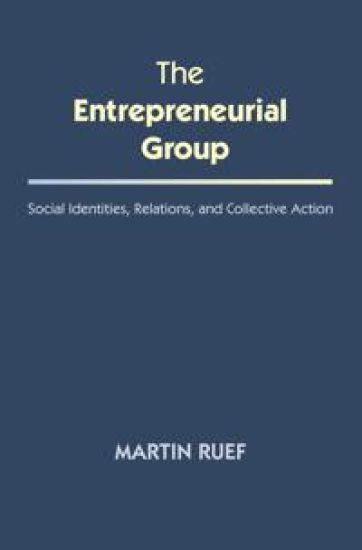
Recent surveys show that more than half of American entrepreneurs share ownership in their business startups rather than going it alone. Yet the media and many scholars continue to perpetuate the myth of the lone visionary who single-handedly revolutionizes the marketplace. In The Entrepreneurial Group, Martin Ruef shatters this myth, demonstrating that teams, not individuals, are the leading force behind entrepreneurial startups. This is the first book to provide an in-depth sociological analysis of entrepreneurial groups, and to put forward a theoretical framework for understanding activities and outcomes within them.

At the center of the upheavals brought by emancipation in the American South was the economic and social transition from slavery to modern capitalism. In Between Slavery and Capitalism, Martin Ruef examines how this institutional change affected individuals, organizations, and communities in the late nineteenth century, as blacks and whites alike learned to navigate the shoals between two different economic worlds. Analyzing trajectories among average Southerners, this is perhaps the most extensive sociological treatment of the transition from slavery since W. E. B. Du Bois's Black Reconstruction in America. In the aftermath of the Civil War, uncertainty was a pervasive feature of life in the South, affecting the economic behavior and social status of former slaves, Freedmen's Bureau agents, planters, merchants, and politicians, among others. Emancipation brought fundamental questions: How should emancipated slaves be reimbursed in wage contracts? What occupations and class positions would be open to blacks and whites? What forms of agricultural tenure could persist? And what paths to economic growth would be viable? To understand the escalating uncertainty of the postbellum era, Ruef draws on a wide range of qualitative and quantitative data, including several thousand interviews with former slaves, letters, labor contracts, memoirs, survey responses, census records, and credit reports. Through a resolutely comparative approach, Between Slavery and Capitalism identifies profound changes between the economic institutions of the Old and New South and sheds new light on how the legacy of emancipation continues to affect political discourse and race and class relations today.
`Howard Aldrich and Martin Ruef's tour de force shows us how the evolutionary approach can explain change not only in organizational populations, but within sectors and within organizations. Aldrich and Ruef display an astonishing command of the management literature, using vivid illustrations from cutting edge research to show how the processes of variation, selection, retention, and struggle operate within organizations and across them. A lucid and engaging book that should appeal both to the newcomer to organization theory and to the old pro' - Frank Dobbin, Harvard University A keenly anticipated Second Edition of an award winning classic, Organizations Evolving presents a sophisticated evolutionary view of key organizational paradigms that will give readers a unified understanding of modern organizations. This Second Edition is an up-to-date survey of the literature, as well as an overview of the new developments across organization studies. It contains new sections on organizational forms, community evolution and methods for studying organizations at multiple levels. The field of organization studies contains many contending paradigms that often puzzle and perplex students. This book is a stunning synthesis of the major organizational paradigms under the umbrella of organizational theory. Scholars and students will find it an excellent guide to the strengths and weaknesses of the various approaches, as well as an outstanding review of the best recent empirical research on organizations. The book includes many helpful features, such as: - Review questions and exercises that will consolidate reader's learning - A methodological appendix that assesses common research methods - Engaging cases that bring principles and concepts to life This Second Edition is a rich resource for study, discussion and debate amongst organizational scholars and postgraduate students of organizations.
`Howard Aldrich and Martin Ruef's tour de force shows us how the evolutionary approach can explain change not only in organizational populations, but within sectors and within organizations. Aldrich and Ruef display an astonishing command of the management literature, using vivid illustrations from cutting edge research to show how the processes of variation, selection, retention, and struggle operate within organizations and across them. A lucid and engaging book that should appeal both to the newcomer to organization theory and to the old pro' - Frank Dobbin, Harvard University A keenly anticipated Second Edition of an award winning classic, Organizations Evolving presents a sophisticated evolutionary view of key organizational paradigms that will give readers a unified understanding of modern organizations. This Second Edition is an up-to-date survey of the literature, as well as an overview of the new developments across organization studies. It contains new sections on organizational forms, community evolution and methods for studying organizations at multiple levels. The field of organization studies contains many contending paradigms that often puzzle and perplex students. This book is a stunning synthesis of the major organizational paradigms under the umbrella of organizational theory. Scholars and students will find it an excellent guide to the strengths and weaknesses of the various approaches, as well as an outstanding review of the best recent empirical research on organizations. The book includes many helpful features, such as: - Review questions and exercises that will consolidate reader's learning - A methodological appendix that assesses common research methods - Engaging cases that bring principles and concepts to life This Second Edition is a rich resource for study, discussion and debate amongst organizational scholars and postgraduate students of organizations.
Institutional Change and Healthcare Organizations
W. Richard Scott; Martin Ruef; Peter J. Mendel; Carol A. Caronna
University of Chicago Press
2000
nidottu
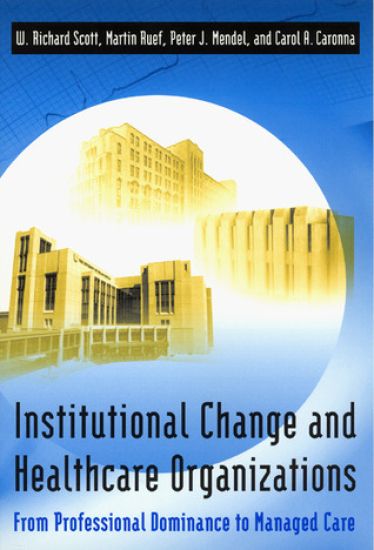
Few large institutions have changed as fully and dramatically as the US healthcare system since World War II. Compared to the 1930s, healthcare now incorporates a variety of new technologies, service-delivery arrangements, financing mechanisms and underlying sets of organizing principles. This book examines the transformations that have occurred in medical care systems in the San Francisco Bay area since 1945. The authors describe these changes in detail and relate them to both the sociodemographic trends in the Bay Area and to shifts in regulatory systems and policy environments at local, state and national levels. But this is more than a social history; the authors employ a variety of theoretical perspectives - including strategic management, population ecology and institutional theory - to examine five types of healthcare organizations through quantitative data analysis and illustrative case studies. Providing a thorough account of changes for one of the nation's leading metropolitan areas in health service innovation, this book is a landmark in the theory of organizations and in the history of healthcare systems.
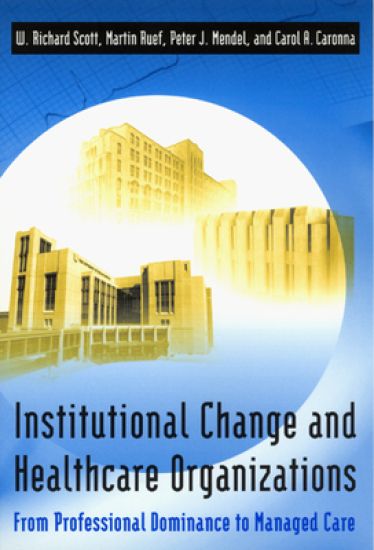
Institutional Change and Healthcare Organizations
W. Richard Scott; Martin Ruef; Peter J. Mendel; Carol A. Caronna
University of Chicago Press
2000
sidottu
Few large institutions have changed as fully and dramatically as the US healthcare system since World War II. Compared to the 1930s, healthcare now incorporates a variety of new technologies, service-delivery arrangements, financing mechanisms and underlying sets of organizing principles. This book examines the transformations that have occurred in medical care systems in the San Francisco Bay area since 1945. The authors describe these changes in detail and relate them to both the sociodemographic trends in the Bay Area and to shifts in regulatory systems and policy environments at local, state and national levels. But this is more than a social history; the authors employ a variety of theoretical perspectives - including strategic management, population ecology and institutional theory - to examine five types of healthcare organizations through quantitative data analysis and illustrative case studies. Providing a thorough account of changes for one of the nation's leading metropolitan areas in health service innovation, this book is a landmark in the theory of organizations and in the history of healthcare systems.