Kirjojen hintavertailu – 12 903 732 kirjaa ja 27 kauppaa

Kirjailija

Martin Svensson Ekström

Kirjat ja teokset yhdessä paikassa: 3 kirjaa, julkaisuja vuosilta 2024–2025, suosituimpiin kuuluu The Origins of Chinese Literary Hermeneutics. Vertaile teosten hintoja ja tarkista saatavuus suomalaisista kirjakaupoista.

3 kirjaa

Kirjojen julkaisuvuodet: 2024–2025.

Tu Fus liv

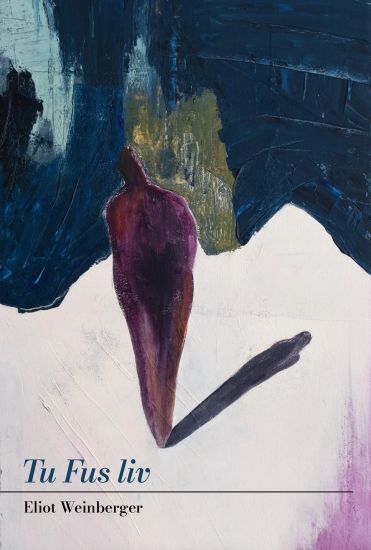
Tu Fus liv

Eliot Weinberger; Martin Svensson Ekström

Rand Förlag
2025
nidottu
”Weinbergers syrliga, orakelmässiga Tu Fu beskriver en värld som känns smärtsamt bekant. Det skulle kunna vara Etiopien, Myanmar eller en rad andra konfliktzoner. – The Paris Review ”Han är som en uråldrig kinesisk cittraspelare som stämmer upp ensam uppe i bergen och blickar ut över världen.” – Bei Dao _______ ”Kriget fortgår: jag lever bland rådjur.” I över femtio år har Eliot Weinberger prisats för sina nyskapande litterära och politiska essäer, som har översatts till över trettio språk. I sin enastående nya bok Tu Fus liv har Weinberger skapat ett montage med femtioåtta dikter som fångar Tangdynasti-poeten Tu Fus (712–770) liv och tiden han levde i. I hans egna ord: ”Detta är inte en översättning av enskilda dikter utan en fiktiv självbiografi över Tu Fu med utgångspunkt i tankarna, bildspråket och allusionerna i hans poesi.” Genom verser lika genomträngande som en klassisk tanka och lika klara som en bergsbäck skildras de oändliga krig och pågående pandemier som utgör fonden till den gamle kinesiske mästarens kringflackande liv. ”Genom lärd auktoritet och en moralisk trohet mot det svårbegripliga skapar Weinberger genreöverskridande essäer och prosadikter som hjälper oss att se världen med nya ögon.” – The New York Times
The Origins of Chinese Literary Hermeneutics

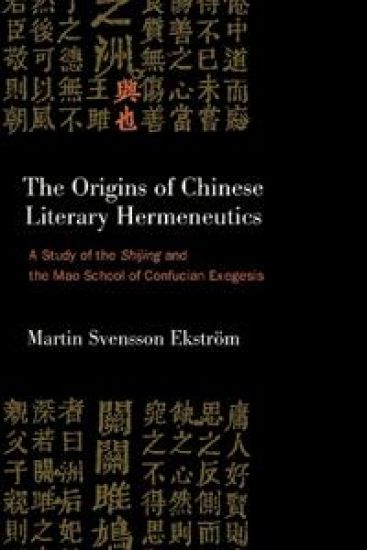
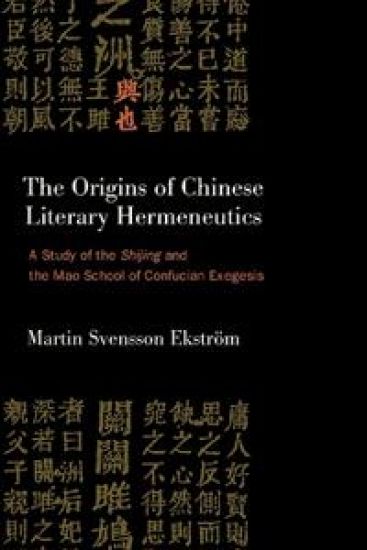
The Origins of Chinese Literary Hermeneutics

Martin Svensson Ekström

STATE UNIVERSITY OF NEW YORK PRESS
2024
pokkari
Explores how China's oldest poetry collection was interpreted in a Confucian exegetical text—the Mao Commentary—in the mid-second century BCE. The Shijing ("Canon of Odes") is China's oldest poetry collection, traditionally considered to have been edited by Confucius himself. Despite their enormous importance for Confucianism and Chinese civilization, the 305 odes have for millennia also puzzled readers. Why did the Sage include in the Canon apparently lewd poems about women promising men to "hitch up" their skirts and "wade the river," and men "tossing and turning in bed" yearning for young women? What did the innumerable representations of plants, beasts, and birds, and of various climactic and astronomical phenomena, signify beyond their immediate function as natural descriptions? One such puzzled reader was Mao Heng, a learned Confucian employed at a minor court in the mid-second century BCE. The object of this study is the Commentary that Mao composed on the Odes, and in particular the hermeneutic tool-the xing-that he invented to explain the figurality and tropes at play in them. Mao's "xingish" interpretation of the Odes is both genuinely hermeneutic, in that it explains the rhetorical organization of these poems, and thoroughly ideological, since it allows Mao to transform them into Confucian dogma. The book also argues that the xing, content, function, and cultural importance, is comparable to the Aristotelian concept of metaphor (metaphora), and that the xing, the Odes, and the practice of shi (Chinese "poetry") demand an intercultural, "comparative" reading for a more nuanced understanding.
The Origins of Chinese Literary Hermeneutics

The Origins of Chinese Literary Hermeneutics

Martin Svensson Ekström

STATE UNIVERSITY OF NEW YORK PRESS
2024
sidottu
Explores how China's oldest poetry collection was interpreted in a Confucian exegetical text—the Mao Commentary—in the mid-second century BCE. The Shijing ("Canon of Odes") is China's oldest poetry collection, traditionally considered to have been edited by Confucius himself. Despite their enormous importance for Confucianism and Chinese civilization, the 305 odes have for millennia also puzzled readers. Why did the Sage include in the Canon apparently lewd poems about women promising men to "hitch up" their skirts and "wade the river," and men "tossing and turning in bed" yearning for young women? What did the innumerable representations of plants, beasts, and birds, and of various climactic and astronomical phenomena, signify beyond their immediate function as natural descriptions? One such puzzled reader was Mao Heng, a learned Confucian employed at a minor court in the mid-second century BCE. The object of this study is the Commentary that Mao composed on the Odes, and in particular the hermeneutic tool-the xing-that he invented to explain the figurality and tropes at play in them. Mao's "xingish" interpretation of the Odes is both genuinely hermeneutic, in that it explains the rhetorical organization of these poems, and thoroughly ideological, since it allows Mao to transform them into Confucian dogma. The book also argues that the xing, content, function, and cultural importance, is comparable to the Aristotelian concept of metaphor (metaphora), and that the xing, the Odes, and the practice of shi (Chinese "poetry") demand an intercultural, "comparative" reading for a more nuanced understanding.