Kirjojen hintavertailu – 12 903 724 kirjaa ja 27 kauppaa

Kirjailija

Martin Westerholm

Kirjat ja teokset yhdessä paikassa: 3 kirjaa, julkaisuja vuosilta 2015–2019, suosituimpiin kuuluu Reading Sacred Scripture. Vertaile teosten hintoja ja tarkista saatavuus suomalaisista kirjakaupoista.

3 kirjaa

Kirjojen julkaisuvuodet: 2015–2019.

Freedom under the Word – Karl Barth`s Theological Exegesis

Freedom under the Word – Karl Barth`s Theological Exegesis

Martin Westerholm; Ben Rhodes

Baker Academic, Div of Baker Publishing Group
2019
nidottu
In Freedom under the Word, top-tier scholars offer critical engagements with Karl Barth's exegesis of Christian Scripture and explore its implications for contemporary hermeneutics and biblical interpretation. Focusing on rare texts from the Barth corpus, the book considers the legacy and potential of Barth's theology by presenting a wide-ranging engagement with and assessment of Barth's theological exegesis. It covers Barth's career chronologically, providing insight into his theological development as it relates to Scripture. Contributors include John Webster, Francis Watson, Wesley Hill, Stephen Fowl, Paul Nimmo, and Grant Macaskill.
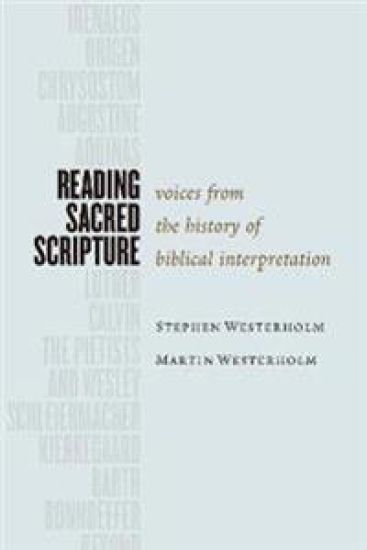
Reading Sacred Scripture

Reading Sacred Scripture

Stephen Westerholm; Martin Westerholm

William B Eerdmans Publishing Co
2016
nidottu

Halvin toimitettuna 34,70 €

Though well-known and oft-repeated, the advice to read the Bible "like any other book" is extremely unhelpful, say Stephen and Martin Westerholm, since the voice of Scripture calls us to hear and respond to its words uniquely as divine address. In Reading Sacred Scripture the authors (father and son) invite their readers to engage seriously with a dozen major Bible interpreters - ranging from the second century to the twentieth - who have been attentive to Scripture's voice. After expertly setting forth pertinent background context in two initial chapters, the Westerholms devote a separate chapter to each interpreter, exploring how these key Christian thinkers each understood Scripture and how it should be read. Though differing widely in their approaches to the text and its interpretation these twelve select interpreters all insisted that the Bible is like no other book and should be read accordingly. Subjects discussed include: Irenaeus, Origen, Chrysostom, Augustine, Aquinas, Luther, Calvin, The Pietists and Wesley, Schleiermacher, Kierkegaard, Barth and Bonhoeffer.
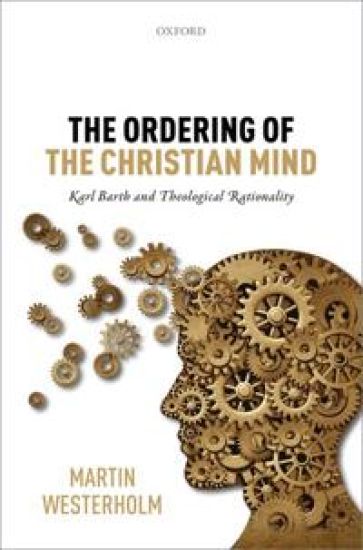
The Ordering of the Christian Mind

The Ordering of the Christian Mind

Martin Westerholm

Oxford University Press
2015
sidottu
The adequacy of Karl Barth's conception of theological reasoning is a decisive point of contention in assessments of the legacy and potential of twentieth-century theology. Barth's work is a formative point from which other twentieth-century figures take their orientation; later thinkers have most often taken their leave from his work by suggesting that it reflects an underdeveloped conception of the activities of human reason. The regularity with which other thinkers orient themselves in relation to Barth by pointing to a positivism, faith subjectivism, or fideism in his work elevates the question of theological reasoning to a decisive point in the comprehension of twentieth-century theology. The Ordering of the Christian Mind facilitates evaluation of Barth's work by reconstructing his conception of the activities of reason. It does so, first, by reframing the question. Martin Westerholm shows that Barth's understanding of the moral structure of the relation between God and creatures demands that the question of theological reasoning be approached through an ethical inquiry into the proper ordering of the activities of the mind. Secondly, Westerholm deploys a new set of categories through which Barth's work can be described. He shows that, by working through an account of the noetic corollaries of faith and of the understanding of faith, Barth develops a coherent and compelling account of the standpoint, orientation, and freedom of theological reasoning. Development of this material is accompanied by new accounts of Barth's earlier theology of the resurrection, his theological development, and the significance of his engagement with Anselm.