Kirjojen hintavertailu – 12 876 571 kirjaa ja 26 kauppaa

Kirjailija

Martin Wolf

Kirjat ja teokset yhdessä paikassa: 22 kirjaa, julkaisuja vuosilta 1982–2024, suosituimpiin kuuluu The Shifts and the Shocks: What We've Learned--And Have Still to Learn--From the Financial Crisis. Vertaile teosten hintoja ja tarkista saatavuus suomalaisista kirjakaupoista.

22 kirjaa

Kirjojen julkaisuvuodet: 1982–2024.

The Crisis of Democratic Capitalism

The Crisis of Democratic Capitalism

Martin Wolf

PENGUIN BOOKS LTD
2024
pokkari

Halvin toimitettuna 20,30 €

From the author of The Shifts and the Shocks, and one of the most influential writers on economics, a reckoning with how and why the relationship between democracy and capitalism is coming undone We are living in an age when economic failings have shaken faith in global capitalism. Political failings have undermined trust in liberal democracy and in the very notion of truth. The ties that ought to bind open markets to free and fair elections are being strained and rejected, even in democracy's notional heartlands. Around the world, democratic capitalism, which depends on the determined separation of power from wealth, is in crisis. Some now argue that capitalism is better without democracy; others that democracy is better without capitalism. This book is a forceful rejoinder to both views. It analyses how the marriage between capitalism and democracy has become so fraught and yet insists that a divorce would be an almost unimaginable calamity. Martin Wolf, one of the wisest public voices on global affairs, argues that for all its recent failings - slowing growth, increasing inequality, widespread popular disillusion - democratic capitalism, though inherently fragile, remains the best system we know for human flourishing. Capitalism and democracy are complementary opposites: they need each other if either is to thrive. Wolf's superb exploration of their marriage shows us how citizenship and a shared faith in the common good are not romantic slogans but the essential foundation of our economic and political freedom.
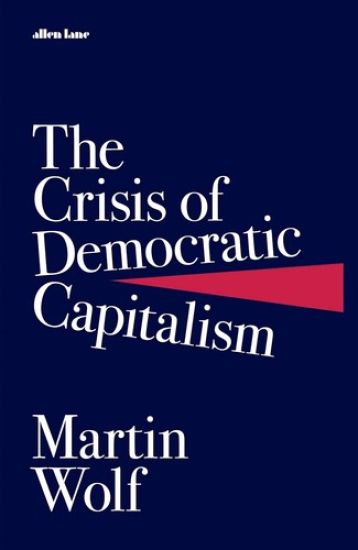
The Crisis of Democratic Capitalism

The Crisis of Democratic Capitalism

Martin Wolf

PENGUIN BOOKS LTD
2023
sidottu
From the author of The Shifts and the Shocks, and one of the most influential writers on economics, a reckoning with how and why the relationship between democracy and capitalism is coming undone We are living in an age when economic failings have shaken faith in global capitalism. Political failings have undermined trust in liberal democracy and in the very notion of truth. The ties that ought to bind open markets to free and fair elections are being strained and rejected, even in democracy's notional heartlands. Around the world, democratic capitalism, which depends on the determined separation of power from wealth, is in crisis. Some now argue that capitalism is better without democracy; others that democracy is better without capitalism. This book is a forceful rejoinder to both views. It analyses how the marriage between capitalism and democracy has become so fraught and yet insists that a divorce would be an almost unimaginable calamity. Martin Wolf, one of the wisest public voices on global affairs, argues that for all its recent failings - slowing growth, increasing inequality, widespread popular disillusion - democratic capitalism, though inherently fragile, remains the best system we know for human flourishing. Capitalism and democracy are complementary opposites: they need each other if either is to thrive. Wolf's superb exploration of their marriage shows us how citizenship and a shared faith in the common good are not romantic slogans but the essential foundation of our economic and political freedom.
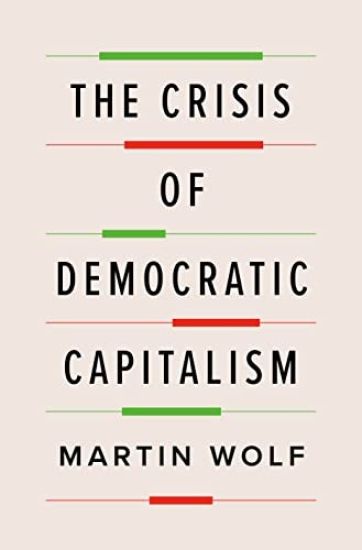
The Crisis of Democratic Capitalism

The Crisis of Democratic Capitalism

Martin Wolf

PENGUIN PRESS
2023
sidottu
From the chief economics commentator of the Financial Times, a magnificent reckoning with how and why the marriage between democracy and capitalism is coming undone, and what can be done to reverse this terrifying dynamic Martin Wolf has long been one of the wisest voices on global economic issues. He has rarely been called an optimist, yet he has never been as worried as he is today. Liberal democracy is in recession, and authoritarianism is on the rise. The ties that ought to bind open markets to free and fair elections are threatened, even in democracy's heartlands, the United States and England. Around the world, powerful voices argue that capitalism is better without democracy; others argue that democracy is better without capitalism. This book is a forceful rejoinder to both views. Even as it offers a deep, lucid assessment of why this marriage has grown so strained, it makes clear why a divorce of capitalism from democracy would be a calamity for the world. They need each other even if they find it hard to life together. For all its flaws, argues Wolf, democratic capitalism remains far and away the best system for human flourishing. But something has gone seriously awry: the growth of prosperity has slowed, and the division of its fruits between the hypersuccessful few and the rest has become more unequal. The plutocrats have retreated to their bastions, where they pour scorn on government's ability to invest in the public goods needed to foster opportunity and sustainability. But the incoming flood of autocracy will rise to overwhelm them, too, in the end. Citizenship is not just a slogan or a romantic idea; it's the only idea that can save us, Wolf argues. Nothing has ever harmonized political and economic freedom better than a shared faith in the common good. This wise and rigorously fact-based exploration of the epic story of the dynamic between democracy and capitalism concludes with the lesson that our ideals and our interests not only should align, but must do so, for everyone's sake. Democracy itself is now at stake.
The Shifts and the Shocks

The Shifts and the Shocks

Martin Wolf

Penguin Books Ltd
2015
pokkari
In The Shifts and the Shocks, Martin Wolf - one of the world's most influential economic commentators and author of Why Globalization Works - presents his controversial and highly original analysis of the economic course of the last seven yearsThere have been many books that have sought to explain the causes and courses of the financial and economic crisis which began in 2007-8. The Shifts and the Shocks is not another detailed history of the crisis, but the most persuasive and complete account yet published of what the crisis should teach us us about modern economies and economics. The book identifies the origin of the crisis in the complex interaction between globalization, hugely destabilizing global imbalances and our dangerously fragile financial system. In the eurozone, these sources of instability were multiplied by the tragically defective architecture of the monetary union. It also shows how much of the orthodoxy that shaped monetary and financial policy before the crisis occurred was complacent and wrong. In doing so, it mercilessly reveals the failures of the financial, political and intellectual elites who ran the system. The book also examines what has been done to reform the financial and monetary systems since the worst of the crisis passed. 'Are we now on a sustainable course?' Wolf asks. 'The answer is no.' He explains with great clarity why 'further crises seem certain' and why the management of the eurozone in particular 'guarantees a huge political crisis at some point in the future.' Wolf provides far more ambitious and comprehensive plans for reform than any currently being implemented. Written with all the intellectual command and trenchant judgement that have made Martin Wolf one of the world's most influential economic commentators, The Shifts and the Shocks matches impressive analysis with no-holds-barred criticism and persuasive prescription for a more stable future. It is a book no-one with an interest in global affairs will want to neglect." We have been inundated with books about the 'financial' aspects of the crisis. There have also been many books about specific institutions or memoirs by retired policy-makers. We need something different. There are two dimensions of the crisis that have received surprisingly little treatment. One is the link between developments in the macro-economy and the behaviour of the financial sector. The other is the global dimension of the crisis. Both these lie at the heart of Martin Wolf's analysis of the causes of the crisis and of his proposals to reduce the risk of another crisis. For these two reasons this is an important book that will be influential. Most important of all, it is in my view the right analysis and remedy" Mervyn King"To think straight about the causes and solutions of the financial crisis we must reject orthodox assumptions that more finance and global financial integration are limitlessly beneficial. The Shifts and the Shocks does just that, providing an intellectually sparkling and vital account of why the crisis occurred, and of the radical reforms needed if we are to avoid a future repeat" Adair Turner"Martin Wolf is unsurpassed in the world of economic journalists. His superb book may be the best of all those spawned by the Great Recession. It is analytical and rigorous without ever succumbing to fatalism or complacency" Lawrence Summers
The Shifts and the Shocks: What We've Learned--And Have Still to Learn--From the Financial Crisis
From the chief economic commentator for the Financial Times--a brilliant tour d'horizon of the new global economy There have been many books that have sought to explain the causes and courses of the financial and economic crisis that began in 2007. The Shifts and the Shocks is not another detailed history of the crisis but is the most persuasive and complete account yet published of what the crisis should teach us about modern economies and econom­ics. Written with all the intellectual command and trenchant judgment that have made Martin Wolf one of the world's most influential economic com­mentators, The Shifts and the Shocks matches impressive analysis with no-holds-barred criti­cism and persuasive prescription for a more stable future. It is a book no one with an interest in global affairs will want to neglect.
The Shifts and the Shocks Lib/E: What We've Learned and Have Still to Learn from the Financial Crisis
From the chief economic commentator for the Financial Times, a brilliant tour d'horizon of the new global economy and its trajectory There have been many books that have sought to explain the causes and courses of the financial and economic crisis which began in 2007-8. The Shifts and the Shocks is not another detailed history of the crisis, but the most persuasive and complete account yet published of what the crisis should teach us about modern economies and economics. The book identifies the origin of the crisis in the complex interaction between globalization, hugely destabilizing global imbalances and our dangerously fragile financial system. In the eurozone, these sources of instability were multiplied by the tragically defective architecture of the monetary union. It also shows how much of the orthodoxy that shaped monetary and financial policy before the crisis occurred was complacent and wrong. In doing so, it mercilessly reveals the failures of the financial, political and intellectual elites who ran the system. The book also examines what has been done to reform the financial and monetary systems since the worst of the crisis passed. "Are we now on a sustainable course?" Wolf asks. "The answer is no." He explains with great clarity why "further crises seem certain" and why the management of the eurozone in particular "guarantees a huge political crisis at some point in the future." Wolf provides far more ambitious and comprehensive plans for reform than any currently being implemented. Written with all the intellectual command and trenchant judgment that have made Martin Wolf one of the world's most influential economic commentators, The Shifts and the Shocks matches impressive analysis with no-holds-barred criticism and persuasive prescription for a more stable future. It is a book no one with an interest in global affairs will want to neglect.
Die Selbstdeutung der Intellektuellen am Beispiel von Michel Foucault und Jean-Francois Lyotard
Studienarbeit aus dem Jahr 2001 im Fachbereich Politik - Politische Theorie und Ideengeschichte, Note: 2,3, Universitat der Bundeswehr Munchen, Neubiberg (Fakultat fur Sozialwissenschaften), Veranstaltung: Interdisziplinares Seminar Soziologie/ Politische Theorie: Kritische und Postmoderne Theorien: Ausgewahlte Vergleichsaspekte, Sprache: Deutsch, Abstract: "Was immer auch die Intellektuellen sind - sie und sie allein waren es, die ihre jeweiligen Definitionen entwarfen und verwarfen. Jeder Versuch, Intellektuelle zu definieren, ist ein Versuch der Selbstdefinition; jeder Versuch, den Status eines Intellektuellen zu gewahren oder zu verweigern, ist ein Versuch der Selbstentwerfung. Definieren und uber Definitionen zu streiten sind das Kernstuck der Produktion und Reproduktion des intellektuellen Ich." Die Definition des Intellektuellen ist immer eine Diskussion um diese Definition. Die Diskussionen werden in der Regel von Intellektuellen selbst vorgenommen. Man hat es hier mit einem sich selbst reproduzierenden bzw. produzierenden Diskurs zu tun. Ziel der vorliegenden Arbeit ist es, die Selbstdeutungen der Intellektuellen am Beispiel der beiden franzosischen Intellektuellen Michel Foucault und Jean-Francois Lyotard darzustellen. Beide Personlichkeiten versuchen Antworten auf die Fragen nach dem Status, der Rolle und der Funktion des Intellektuellen in der Gesellschaft zu finden. Sie gehen davon aus, dass sich der heutige Intellektuelle nicht mehr mit universellen Subjekten identifizieren kann. Die Arbeit gliedert sich in funf Abschnitte: Nach der Einleitung, im zweiten Teil der Arbeit, wird die geschichtliche Entstehung des Begriffs "Intellektuelle" dargestellt. Als Ausgangspunkt dient hierbei die Dreyfus-Affare im Grossen Generalstab der franzosischen Armee im Jahre 1894 und der Offene Brief Emile Zolas an den franzosischen Prasidenten. Im dritten Abschnitt werden Michel Foucaults Auffassungen vom Intellektuellen erlautert. Im Vordergrund steht die Definition d
Why Globalization Works

Why Globalization Works

Martin Wolf

Yale University Press
2005
pokkari

Halvin toimitettuna 26,80 €

A powerful case for the global market economy The debate on globalization has reached a level of intensity that inhibits comprehension and obscures the issues. In this book a highly distinguished international economist scrupulously explains how globalization works as a concept and how it operates in reality. Martin Wolf confronts the charges against globalization, delivers a devastating critique of each, and offers a realistic scenario for economic internationalism in the future. Wolf begins by outlining the history of the global economy in the twentieth century and explaining the mechanics of world trade. He dissects the agenda of globalization’s critics, and rebuts the arguments that it undermines sovereignty, weakens democracy, intensifies inequality, privileges the multinational corporation, and devastates the environment. The author persuasively defends the principles of international economic integration, arguing that the biggest obstacle to global economic progress has been the failure not of the market but of politics and government, in rich countries as well as poor. He examines the threat that terrorism poses and maps the way to a global market economy that can work for everyone.