Kirjojen hintavertailu – 12 859 818 kirjaa ja 27 kauppaa

Kirjailija

Martine Beugnet

Kirjat ja teokset yhdessä paikassa: 8 kirjaa, julkaisuja vuosilta 2004–2026, suosituimpiin kuuluu Proust at the Movies. Vertaile teosten hintoja ja tarkista saatavuus suomalaisista kirjakaupoista.

8 kirjaa

Kirjojen julkaisuvuodet: 2004–2026.

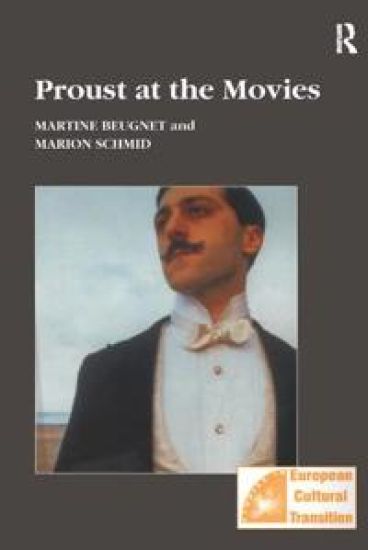
Proust at the Movies

Proust at the Movies

Martine Beugnet; Marion Schmid

Routledge
2017
nidottu
Film established itself as an artistic form of expression at the same time that Proust started work on his masterpiece, A la recherche du temps perdu. If Proust apparently took little interest in what he described as a poor avatar of reductive, mimetic representation, the resonances between his own radical reworking of writing styles and the novelistic forms, and cinema as the art of time are undeniable. Proust at the Movies is the first study in English to consider these rich interconnections. Its introductory chapter charts the missed encounter between Proust and the cinema and addresses the problems inherent in adapting his novel to the screen. The following chapters examine the various cinematic responses to A la recherche du temps perdu attempted to date: Luchino Visconti and Joseph Losey's failed attempts at adapting the whole of the novel in the 1970s, Volker Schlöndorff's Un Amour de Swann (1984), Raoul Ruiz's Le Temps retrouvé (1999), Chantal Akerman's La Prisonnière in La Captive (2000), and Fabio Carpi's Quartetto Basileus (1982) and Le Intermittenze del cuore (2003). The last chapter tracks the echoes of Proust's writing in the work of various directors, from Abel Grace to Jean-Luc Godard. The approach is multidisciplinary, combining literary criticism with film theory and elements of philosophy of art. Special attention is given to the modernist legacy in literature and film with its distinctive aesthetic and narrative features. An outline of the history and recent evolution of contemporary art cinema thus emerges: a cinema where the themes at the heart of Proust's work - memory, time, perception - are ceaselessly explored.
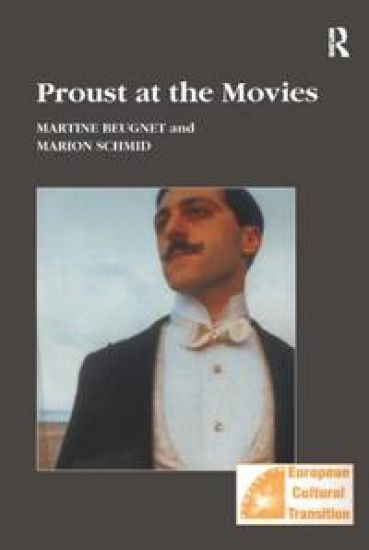
Proust at the Movies

Proust at the Movies

Martine Beugnet; Marion Schmid

Ashgate Publishing Limited
2005
sidottu
Film established itself as an artistic form of expression at the same time that Proust started work on his masterpiece, A la recherche du temps perdu. If Proust apparently took little interest in what he described as a poor avatar of reductive, mimetic representation, the resonances between his own radical reworking of writing styles and the novelistic forms, and cinema as the art of time are undeniable. Proust at the Movies is the first study in English to consider these rich interconnections. Its introductory chapter charts the missed encounter between Proust and the cinema and addresses the problems inherent in adapting his novel to the screen. The following chapters examine the various cinematic responses to A la recherche du temps perdu attempted to date: Luchino Visconti and Joseph Losey's failed attempts at adapting the whole of the novel in the 1970s, Volker Schlöndorff's Un Amour de Swann (1984), Raoul Ruiz's Le Temps retrouvé (1999), Chantal Akerman's La Prisonnière in La Captive (2000), and Fabio Carpi's Quartetto Basileus (1982) and Le Intermittenze del cuore (2003). The last chapter tracks the echoes of Proust's writing in the work of various directors, from Abel Grace to Jean-Luc Godard. The approach is multidisciplinary, combining literary criticism with film theory and elements of philosophy of art. Special attention is given to the modernist legacy in literature and film with its distinctive aesthetic and narrative features. An outline of the history and recent evolution of contemporary art cinema thus emerges: a cinema where the themes at the heart of Proust's work - memory, time, perception - are ceaselessly explored.
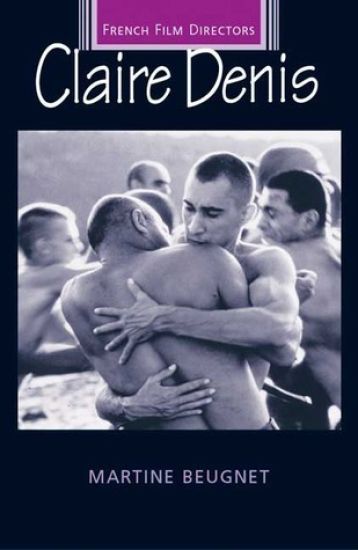
Claire Denis

Claire Denis

Martine Beugnet

Manchester University Press
2004
nidottu
Claire Denis is one of France's most acclaimed and original filmmakers. Since her remarkable debut success with 'Chocolat' (1986), she has produced an impressive series of features which have been intriguing, visually striking, and often highly controversial (including 'Beau Travail' (2000) and 'Trouble Every Day' (2001)). Beugnet provides a thematic and stylistic framework within which to consider Denis' work, as well as a comprehensive analysis of individual films. She highlights the resonance of Denis' films in relation to ongoing debates about French national identity and culture, and issues of postcolonial identity, alienation and transgression, as well as examining their exploration of the interface between sexuality, desire and sensuality. This is an essential introduction to Denis, and a sophisticated and illuminating study of her work to date.
Blur

Blur

Martine Beugnet

FORDHAM UNIVERSITY PRESS
2026
sidottu
In cinema, blurriness is usually intended to go unnoticed. When it appears it is either considered an error — a mistake of focus or a technological failure — or a background effect of shallow focus intended to offset a defined image. As Martine Beugnet argues, however, blur is an essential feature of the cinema, possessing its own properties and affordances, and capable of powerful effects. Examining an array of notable examples of blurriness from horror to art cinema and experimental film, and including the works of the Lumière brothers, Josef von Sternberg, Agnès Varda and many others, she develops a taxonomy of blurs, from speed and motion blur to the hand-held, "shaky camera" blur common in contemporary digital cinema. These wide-ranging instances all return the viewer to the sensorial and material qualities of the moving image. In the face of technological developments that valorize sharpness as an indicator of progress, blur stands as a provocative reminder of the value of uncertainty—a sign of the irreducible mystery at the heart of the filmic image.
Blur

Blur

Martine Beugnet

FORDHAM UNIVERSITY PRESS
2026
pokkari

Halvin toimitettuna 22,90 €

In cinema, blurriness is usually intended to go unnoticed. When it appears it is either considered an error — a mistake of focus or a technological failure — or a background effect of shallow focus intended to offset a defined image. As Martine Beugnet argues, however, blur is an essential feature of the cinema, possessing its own properties and affordances, and capable of powerful effects. Examining an array of notable examples of blurriness from horror to art cinema and experimental film, and including the works of the Lumière brothers, Josef von Sternberg, Agnès Varda and many others, she develops a taxonomy of blurs, from speed and motion blur to the hand-held, "shaky camera" blur common in contemporary digital cinema. These wide-ranging instances all return the viewer to the sensorial and material qualities of the moving image. In the face of technological developments that valorize sharpness as an indicator of progress, blur stands as a provocative reminder of the value of uncertainty—a sign of the irreducible mystery at the heart of the filmic image.
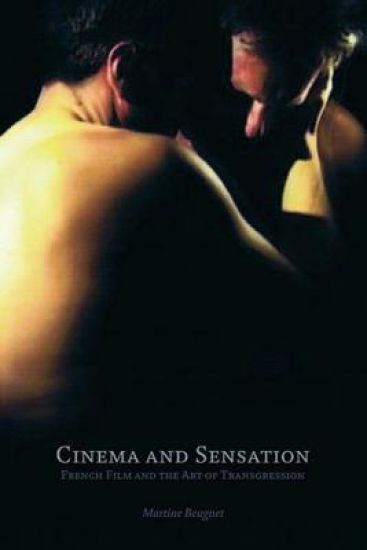
Cinema and Sensation

Cinema and Sensation

Martine Beugnet

Edinburgh University Press
2012
nidottu
This book looks at a much-debated phenomenon in contemporary cinema: the re-emergence of filmmaking practices (and, by extension, of theoretical approaches) that give precedence to cinema as the medium of the senses. France offers an intriguing case in point here. A specific sense of momentum comes from the release, in close succession, of a series of films that exemplify a characteristic awareness of cinema's sensory impact and transgressive nature: Adieu; A ma soeur; Baise-moi; Beau Travail; La Blessure; La Captive; Dans ma peau; Demonlover; L'Humanite; Flandres; L'Intrus; Les Invisibles; Lady Chatterley; Lecons de tenebres; Romance; Sombre; Tiresia; Trouble Every Day; Twentynine Palms; Vendredi soir; La Vie nouvelle; Wild Side; Zidane, un portrait du XXIeme siecle. These films, amongst others, typify a willingness to explore cinema's unique capacity to move us both viscerally and intellectually. Martine Beugnet focuses on the crucial and fertile overlaps that occur between experimental and mainstream cinema. Her book draws on the writings of the likes of Deleuze, Merleau-Ponty and Bataille, but first and foremost, she develops her arguments from the films themselves, from the comprehensive description of specific sequences, techniques and motifs which allows us to engage with the works as material events and as thinking processes. In turn, she demonstrates how the films, envisaged as forms of embodied thought, offer alternative ways of approaching those questions that are at the heart of today's most burning socio-cultural debates: from the growing supremacy of technology, to globalisation, exile and exclusion, these are the issues that appear embedded here in the very texture of images and sounds.
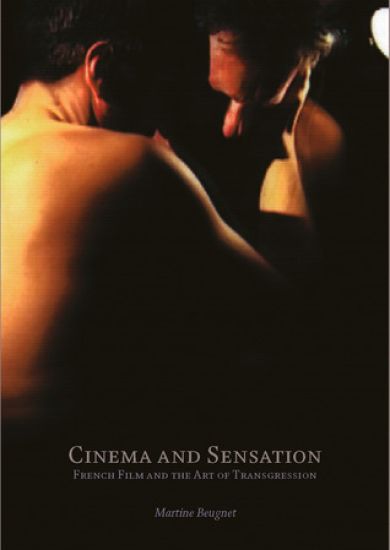
Cinema and Sensation: French Film and the Art of Transgression

Cinema and Sensation: French Film and the Art of Transgression

Martine Beugnet

SOUTHERN ILLINOIS UNIVERSITY PRESS
2008
sidottu
Cinema and Sensation: French Film and the Art of Transgression looks at a much-debated phenomenon in contemporary cinema: the reemergence of filmmaking practices (and, by extension, of theoretical approaches) that give precedence to cinema as the medium of the senses. France offers an intriguing case in point here. A specific sense of momentum comes from the release, in close succession, of a series of films that exemplify a characteristic awareness of cinema's sensory impact and transgressive nature: Adieu; A ma soeur; Baise-moi; Beau Travail; La Blessure; La Captive; Dans ma peau; Demonlover; L'Humanit ; Flandres; L'Intrus; Les Invisibles; Lady Chatterley; Le ons de t n bres; Romance; Sombre; Tiresia; Trouble Every Day; Twentynine Palms; Vendredi soir; La Vie nouvelle; Wild Side; and Zidane, un portrait du XXI me si cle. These films, among others, typify a willingness to explore cinema's unique capacity to move us both viscerally and intellectually. Martine Beugnet focuses on the crucial and fertile overlaps that occur between experimental and mainstream cinema. Her book draws on the writings of Deleuze, Merleau-Ponty, and Bataille, among others, but first and foremost, she develops her arguments from the films themselves, from the comprehensive description of specific sequences, techniques, and motifs that allows us to engage with the works as material events and as thinking processes. In turn, she demonstrates how the films, envisaged as forms of embodied thought, offer alternative ways of approaching today's most burning sociocultural debates--from the growing supremacy of technology, to globalization, exile, and exclusion.
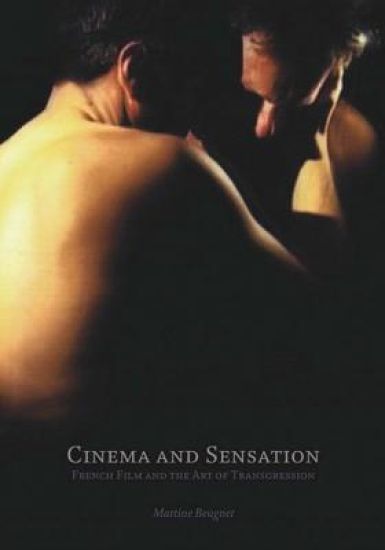
Cinema and Sensation

Cinema and Sensation

Martine Beugnet

Edinburgh University Press
2007
sidottu
This book looks at a much-debated phenomenon in contemporary cinema: the re-emergence of filmmaking practices (and, by extension, of theoretical approaches) that give precedence to cinema as the medium of the senses. France offers an intriguing case in point here. A specific sense of momentum comes from the release, in close succession, of a series of films that exemplify a characteristic awareness of cinema's sensory impact and transgressive nature: Adieu; A ma soeur; Baise-moi; Beau Travail; La Blessure; La Captive; Dans ma peau; Demonlover; L'Humanite; Flandres; L'Intrus; Les Invisibles; Lady Chatterley; Lecons de tenebres; Romance; Sombre; Tiresia; Trouble Every Day; Twentynine Palms; Vendredi soir; La Vie nouvelle; Wild Side; Zidane, un portrait du XXIeme siecle. These films, amongst others, typify a willingness to explore cinema's unique capacity to move us both viscerally and intellectually. Martine Beugnet focuses on the crucial and fertile overlaps that occur between experimental and mainstream cinema. Her book draws on the writings of the likes of Deleuze, Merleau-Ponty and Bataille, but first and foremost, she develops her arguments from the films themselves, from the comprehensive description of specific sequences, techniques and motifs which allows us to engage with the works as material events and as thinking processes. In turn, she demonstrates how the films, envisaged as forms of embodied thought, offer alternative ways of approaching those questions that are at the heart of today's most burning socio-cultural debates: from the growing supremacy of technology, to globalisation, exile and exclusion, these are the issues that appear embedded here in the very texture of images and sounds.