Kirjailija
Martyn Whittock
Kirjat ja teokset yhdessä paikassa: 26 kirjaa, julkaisuja vuosilta 1991–2025, suosituimpiin kuuluu Brief Guide to Celtic Myths and Legends. Vertaile teosten hintoja ja tarkista saatavuus suomalaisista kirjakaupoista.
26 kirjaa
Kirjojen julkaisuvuodet: 1991–2025.
In Western Europe, we typically associate Vikings with the storm-tossed waters of the North Sea and the North Atlantic, the deep Scandinavian fjords and the attacks on the monasteries and settlements of north-western Europe. This popular image rarely includes the river systems of Russia and Ukraine, the wide sweep of the Eurasian steppe, the far shores of the Caspian Sea, the incense and rituals of the Eastern Orthodox Church and the high walls and towers of the city of Constantinople. Yet for many Viking raiders, traders and settlers, it was the road to the East that beckoned. These Viking adventurers founded the Norse-Slavic dynasties of the Rus, which are entangled in the bitterly contested origin myths of Russia and Ukraine. The Rus were the first community in the region to convert to Christianity - in its Eastern Orthodox form - and so they are at the heart of the concept of 'Holy Russia'. Russian rulers have frequently referenced these Norse origins when trying to enhance their power and secure control over the Ukrainian lands, most recently demonstrated by Vladimir Putin as his justification for seizing Crimea and invading Ukraine. In this fascinating and timely book, historian Martyn Whittock explores the important but often misunderstood and manipulated role played by the Vikings in the origins of Russian power, the deadly consequences of which we are still living with today.
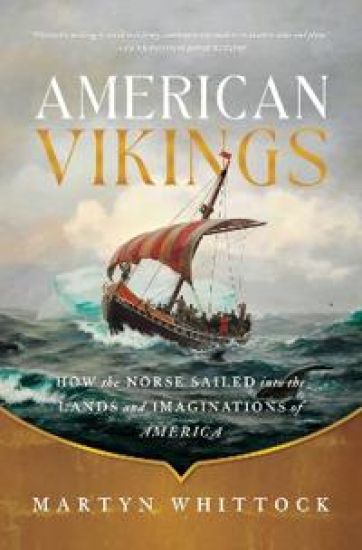
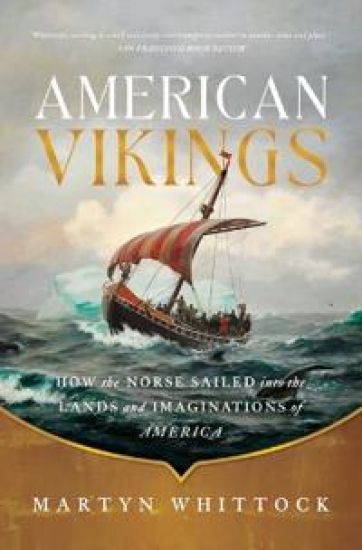
A vivid and illuminating new history—separate fact from fiction, myth from legend—exploring the early Vikings settlements in North America. Vikings are an enduring subject of fascination. The combination of adventure, mythology, violence, and exploration continues to grip our attention. As a result, for more than a millennium the Vikings have traveled far and wide, not least across the turbulent seas of our minds and imaginations. The geographical reach of the Norse was extraordinary. For centuries medieval sagas, first recorded in Iceland, claimed that Vikings reached North America around the year 1000. This book explores that claim, separating fact from fiction and myth from mischief, to assess the enduring legacy of this claim in America. The search for “American Vikings” connects a vast range of different areas; from the latest archaeological evidence for their actual settlement in North America to the myth-making of nineteenth-century Scandinavian pioneers in the Midwest; and from ancient adventurers to the political ideologies in the twenty-first century. It is a journey from the high seas of a millennium ago to the swirling waters and dark undercurrents of the online world of today. No doubt, the warlike Vikings would have understood how their image could be “weaponized.” In the same way, they would probably have grasped how their dramatic, violent, passionate, and discordant mythologies could appeal to our era and cultural setting. They might, though, have been more surprised at how their image has been commercialized and commodified. A vivid new history by a master of the form, American Vikings explores how the Norse first sailed into the lands, and then into the imaginations, of America.
American Vikings: How the Norse Sailed Into the Lands and Imaginations of America
Martyn Whittock
Pegasus Books
2023
sidottu
A vivid and illuminating new history--separate fact from fiction, myth from legend--exploring the early Vikings settlements in North America. Vikings are an enduring subject of fascination. The combination of adventure, mythology, violence, and exploration continues to grip our attention. As a result, for more than a millennium the Vikings have traveled far and wide, not least across the turbulent seas of our minds and imaginations. The geographical reach of the Norse was extraordinary. For centuries medieval sagas, first recorded in Iceland, claimed that Vikings reached North America around the year 1000. This book explores that claim, separating fact from fiction and myth from mischief, to assess the enduring legacy of this claim in America. The search for "American Vikings" connects a vast range of different areas; from the latest archaeological evidence for their actual settlement in North America to the myth-making of nineteenth-century Scandinavian pioneers in the Midwest; and from ancient adventurers to the political ideologies in the twenty-first century. It is a journey from the high seas of a millennium ago to the swirling waters and dark undercurrents of the online world of today. No doubt, the warlike Vikings would have understood how their image could be "weaponized." In the same way, they would probably have grasped how their dramatic, violent, passionate, and discordant mythologies could appeal to our era and cultural setting. They might, though, have been more surprised at how their image has been commercialized and commodified. A vivid new history by a master of the form, American Vikings explores how the Norse first sailed into the lands, and then into the imaginations, of America.
Apocalyptic (end times) beliefs are found across different religious cultures and time periods, especially those influenced by the Abrahamic faiths. These apocalyptic beliefs are often associated with radicalized politics and what we would today often describe as "populist" movements and leaders. What are the roots of such beliefs? How have they developed over time? In what ways do they impact the modern world? In a series of case studies--ranging over different faiths, time periods, and global locations--this book explores how and why these beliefs have become so often the driver of radicalized politics.
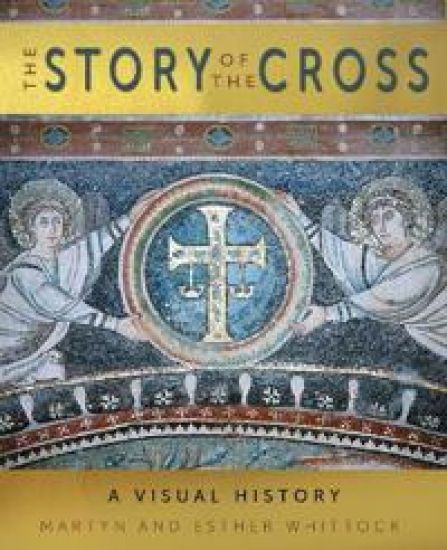
Over the past 2000 years the portrayal of the cross has changed and developed. How have these changes reflected belief and culture around the world? Through images produced by Christians and non-Christians, the authors will explore changing ideas about the cross, and the way in which different cultures have responded to the cross.
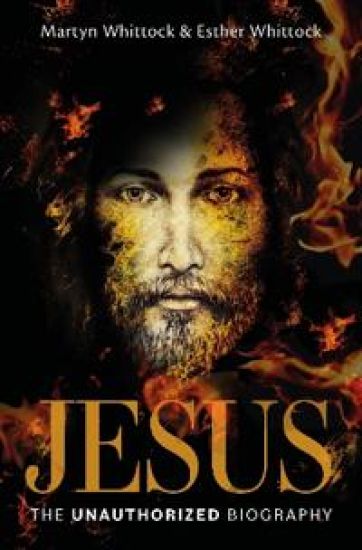
Jesus: The Unauthorized Biography
Martyn Whittock; Esther Whittock
Lion Books
2021
pokkari
Halvin toimitettuna 20,90 €
By bringing together all of the available evidence on the life of Jesus Christ of Nazareth, this book offers a compelling biography of His time on Earth. Looking at sources such as the gospels, inscriptions, early Church writings, the apocryphal gospels and more, readers will be able to vividly visualise Jesus’ life and his First-Century Jewish cultural context. If you've ever wondered about the impact of Jesus' social class on his ministry; the influence on His disciples of contemporary resistance movements; or the prominent role of women in the disciple community, then allow this book to challenge and deepen your understanding of the Jesus described in the Bible.
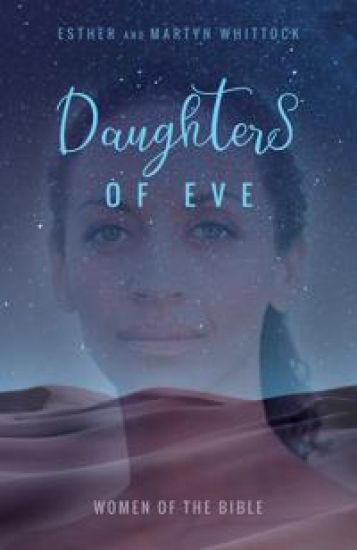
Women play an immensely important role in the Bible: from Eve to the Virgin Mary, Sarah to Mary Magdalene, Naomi to the anonymous woman suffering severe menstrual bleeding who was healed by Jesus. They are a sisterhood of faith. As such, they challenge many of our assumptions about the role of women in the development of the biblical story; about the impact of faith on lives lived in the 'heat and dust' of the real world. Here we will meet the prostitute who ended up in the genealogy of Jesus, a national resistance fighter, a determined victim of male sexual behaviour who challenged patriarchal power, a far from meek and mild mother of Jesus, a woman whose life has been so misrepresented that she is now the subject of the most bizarre conspiracy theories, and more. Renowned historians and Biblical scholars, Martyn and Esther Whittock, take the reader on a fascinating journey, one unafraid to ask difficult questions, such as, 'Was Eve set up to fall?'
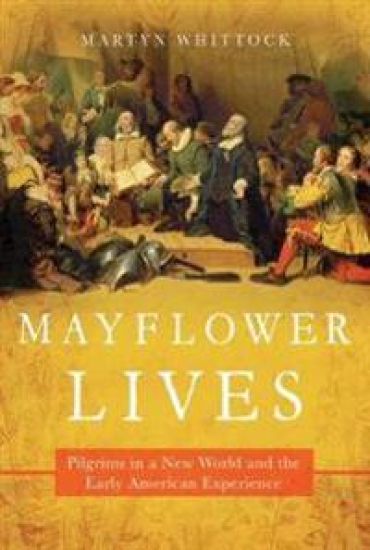
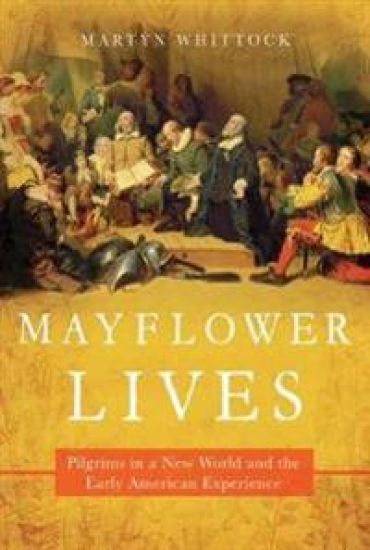
A fresh and revealing history of one of the most seminal events in American history as seen through fourteen diverse and dynamic figures. Martyn Whittock examines the lives of the “saints” (members of the Separatist puritan congregations) and “strangers” (economic migrants) on the original ship. Collectively, these people would become known to history as “the Pilgrims.” The story of the Pilgrims has taken on a life of its own as one of our founding national myths—their escape from religious persecution, the dangerous transatlantic journey, that brutal first winter. Throughout the narrative, we meet characters already familiar to us through Thanksgiving folklore—Captain Jones, Myles Standish, and Tisquantum (Squanto)—as well as new ones. There is Mary Chilton, the first woman to set foot on shore, and asylum seeker William Bradford. We meet fur trapper John Howland and little Mary More, who was brought as an indentured servant. Then there is Stephen Hopkins, who had already survived one shipwreck and was the only Mayflowerpassenger with any prior American experience. Decidedly un-puritanical, he kept a tavern and was frequently chastised for allowing drinking on Sundays. Epic and intimate, Mayflower Lives is a rich and rewarding book that promises to enthrall readers of early American history.
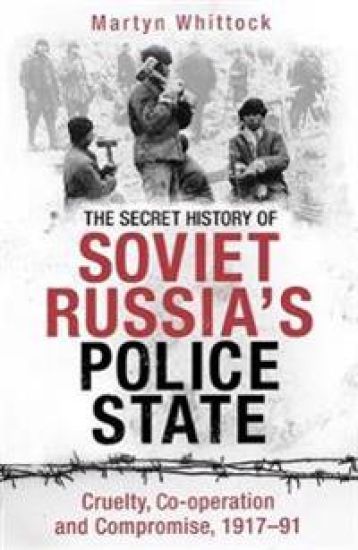
'[R]eadable and thoughtful . . . does an excellent job of exploring how the murderous political police in all its incarnations defined the Soviet Union, and left a poisonous legacy still with us today'Professor Mark Galeotti, author of The Vory and A Short History of RussiaRepression, control, manipulation and elimination of enemies assisted in the establishment of the Soviet state, and helped maintain it in power, but could not, in the end, prevent its collapse. Citizens of the West have, for the most part, been told a very simplified story of the repressive 'totalitarian' state that was the USSR. In fact, it was sustained by more than just policing and force. No amount of revisionist history can erase the reality of millions controlled, imprisoned and killed, but there was much more to the USSR's one-party state than this. Whittock tells a more complex story of the combination of cruelty, co-operation and compromise required to build and run a one-party state. Much of this is the story of the role played by the secret police in creating and sustaining such a form of government, but it is much more than simply a 'history of the secret police'. This is because the 'police state' which emerged (in which dissent, both real and imaginary, was undoubtedly policed, threatened and ruthlessly eliminated) was more than just the product of the arrests, interrogations, executions and imprisonments carried out by the secret police. The USSR was also made possible by a battle for hearts and minds which led millions of people to feel that they really had benefited from the system and had a stake in the new society.
Tales of Valhalla: Norse Myths and Legends
Martyn Whittock; Hannah Whittock
Pegasus Books
2020
nidottu
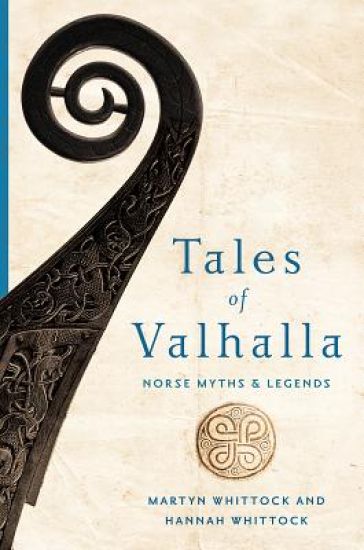
A vivid retelling of Norse mythology that explores these legendary stories and their significance and influence on the Viking world. Valhalla and its pantheon of gods and heroes have always fascinated readers, whether it is how these tales illuminate the Viking world or influence cultural touchstones like J. R. R. Tolkien, whose Middle Earth is heavily indebted to Germanic and Norse mythology, as well as Hollywood and comics culture. In Tales of Valhalla, the Whittocks have dramatically retold these rich stories and set them in context within the wider Viking world. Including both myths--stories, usually religious, which explain origins, why things are as they are, the nature of the spiritual--and legends--stories which attempt to explain historical events and may involve historical characters but are told in a non-historical way and often include supernatural events--Tales of Valhalla is an accessible and lively volume that brings these hallmarks of world literature to a new generation.
Trump and the Puritans
James Roberts; Martyn Whittock
Biteback Publishing
2020
sidottu
Halvin toimitettuna 17,90 €
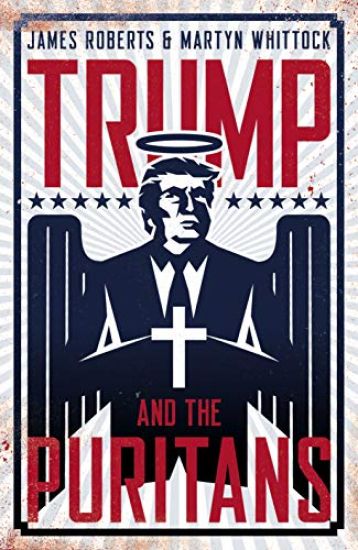
The year 2020 is a hugely significant one for the United States of America, marking as it does the 400th anniversary of the arrival of the Mayflower Pilgrims to the New World and their establishment of a `godly' colony in (what was for them) the `American wilderness'. But it is also the year of the next Presidential election, one where the current occupant is expected to stand for re-election. Many millions of Americans will not see this as a random juxtaposition of events, since for them the unlikely person of Donald Trump is the one chosen by God to implement a twenty-first-century programme of godly rule and the restoration of American spiritual exceptionalism that is directly rooted in those far-off times when Puritan settlers (who followed in 1630) first established a semi-theocratic `New Jerusalem' in the `New World'. The USA is the home of more Christians than any other nation on earth. In 2014 research revealed that 70.6 per cent of Americans identified as Christians of some form with 25.4% identifying as `Evangelicals'. Eighty-one per cent of them, around 33.7 million people, voted Trump in 2016. How can it be that self-described Christians of the `Evangelical Religious Right' see, of all people, Donald Trump as their political representative and thus defender of their cause? Trump and the Puritans argues that while Donald Trump is no Puritan, the long-term influence of these 17th century radicals makes the USA different from any other Western democracy, and that this influence motivates and energizes a key element of his base to an astonishing degree and has played a major part in delivering political power to Trump.
Leading into the 400th anniversary of the voyage of the Mayflower, Martyn Whittock examines the lives of the “saints” (members of the Separatist puritan congregations) and “strangers” (economic migrants) on the original ship. Collectively, these people would become known to history as “the Pilgrims.” The story of the Pilgrims has taken on a life of its own as one of our founding national myths—their escape from religious persecution, the dangerous transatlantic journey, that brutal first winter. Throughout the narrative, we meet characters already familiar to us through Thanksgiving folklore—Captain Jones, Myles Standish, and Tisquantum (Squanto)—as well as new ones. There is Mary Chilton, the first woman to set foot on shore, and asylum seeker William Bradford. We meet fur trapper John Howland and little Mary More, who was brought as an indentured servant. Then there is Stephen Hopkins, who had already survived one shipwreck and was the only Mayflower passenger with any prior American experience. Decidedly un-puritanical, he kept a tavern and was frequently chastised for allowing drinking on Sundays. Epic and intimate, Mayflower Lives is a rich and rewarding book that promises to enthrall readers of early American history.
Islam is not the only religion that has sought to take political power, or believed that it should be possible to create a theocracy. In the 17th century, Christians in the British Isles and North America attempted to follow the examples of 16th century European radicals of contrasting types, while attempting to learn from their mistakes - first in Scotland, and then Cromwell tried to impose just such a rule in the rest of the country. At the same time, millenarian groups planned a religious, political and social revolution to usher in the return of Christ; while others argued for something akin to communism. And even after the Restoration of the monarchy in 1660, there were sects, such as the Quakers, whose faith had a radical impact on their politics. Nor is Christian political radicalism dead today - it has influenced politicians ever since, and can be seen in recent political developments in the USA in the twenty-first century. This book is a fascinating study of the ideas and actions of these political radicals and the kind of societies and life experiences that produced them.
The popular image of the Vikings is of tall red-headed men, raping and pillaging their way around the coast of Europe, stopping only to ransack monasteries and burn longships. But the violent Vikings of the 8th century became the pious Christians of the 11th century, who gave gold crosses to Christian churches and in whose areas of rule pagan idols were destroyed and churches were built. So how did this radical transformation happen, and why? What difference did it make to the Vikings, and to those around them, and what is their legacy today? This book takes a "global" look at this key period in Viking history, exploring all the major areas of Viking settlement. Written to be an accessible and engaging overview for the general reader.
The popular image of the Vikings is of tall red-headed men, raping and pillaging their way around the coast of Europe, stopping only to ransack monasteries and burn longships. But the violent Vikings of the 8th century became the pious Christians of the 11th century, who gave gold crosses to Christian churches and in whose areas of rule pagan idols were destroyed and churches were built. So how did this radical transformation happen, and why? What difference did it make to the Vikings, and to those around them, and what is their legacy today? This book takes a 'global' look at this key period in Viking history, exploring all the major areas of Viking settlement. Written to be an accessible and engaging overview for the general reader.
Islam is not the only religion that has sought to take political power, or believed that it should be possible to create a theocracy. In the 17th century, Christians in the British Isles and North America attempted to follow the examples of 16th century European radicals of contrasting types, while attempting to learn from their mistakes - first in Scotland, and then Cromwell tried to impose just such a rule in the rest of the country. At the same time, millenarian groups planned a religious, political and social revolution to usher in the return of Christ; while others argued for something akin to communism. And even after the Restoration of the monarchy in 1660, there were sects, such as the Quakers, whose faith had a radical impact on their politics. Nor is Christian political radicalism dead today - it has influenced politicians ever since, and can be seen in recent political developments in the USA in the twenty-first century. This book is a fascinating study of the ideas and actions of these political radicals and the kind of societies and life experiences that produced them.
A collection of lively and accessible retellings of the major Norse myths and legends, with commentary to explain what is going on and its significance.
Edexcel GCSE (9-1) History Russia and the Soviet Union, 1917â??1941 Student Book
Martyn Whittock
Pearson Education Limited
2016
pokkari
Supporting great history teaching: developing confident, articulate and successful historians. Â Our new resources* include 16 Student Books â?? one for every option in the Edexcel GCSE (9â??1) History specification â?? for first teaching from September 2016.
Christ: The First Two Thousand Years
Martyn Whittock
Lion Books
2016
pokkari
Halvin toimitettuna 21,30 €
How has Christ been seen for the last two millennia? From the Christ of the Gospels to the Isa of Islam, this book explores the way Jesus Christ has been viewed, described, promoted, opposed and written about. What did the word 'Christ' mean in the first century, and how did it resonate with the politics and religion of the time? And beyond that, how was Jesus seen in the New Testament, and then onto the time of the Desert Fathers? What of the heretical Christs - and who decided, and why? And from the 2nd century onwards, people started to draw and to paint images of Christ - how did this change and develop? The book then traces the history of Christ through the militant leader of the Crusaders, via the multi-faceted Christ of the Middle Ages, and the opposing views of Him thrown up by the Reformation and the wars that followed. Finally, the authors consider the Christ of the technological age and the age of total war, before looking also at the Christ of Liberation Theology, Marxism, the Developing world, the Dalits, other faiths, and the Post-modern Christ of the 21st century.