Kirjojen hintavertailu – 12 859 818 kirjaa ja 27 kauppaa
Kirjailija
Marvin B Sussman
Kirjat ja teokset yhdessä paikassa: 26 kirjaa, julkaisuja vuosilta 1982–2022, suosituimpiin kuuluu Families and Law. Vertaile teosten hintoja ja tarkista saatavuus suomalaisista kirjakaupoista.
Originally published in 1985. This volume on household energy conditions considers the energy crisis in the United States and offers an important appraisal of the future of energy consumption by families and the family's adaptations to decreasing energy availability. The chapters in the first section investigate the cultural dimensions of energy use at the household level, looking at attitudes and trends. The second section considers energy policy, especially conservation, with a special chapter on elderly households, while the third presents case studies and projections of the future patterns and changes in energy consumption. This is a fascinating snapshot of thinking on families and the effects of energy use.
Originally published in 1985. This volume on household energy conditions considers the energy crisis in the United States and offers an important appraisal of the future of energy consumption by families and the family's adaptations to decreasing energy availability. The chapters in the first section investigate the cultural dimensions of energy use at the household level, looking at attitudes and trends. The second section considers energy policy, especially conservation, with a special chapter on elderly households, while the third presents case studies and projections of the future patterns and changes in energy consumption. This is a fascinating snapshot of thinking on families and the effects of energy use.
As the world heads into the twenty-first century, individuals and their families are being confronted with a more diverse array of possible life experiences than has ever existed before. Changes in longevity, marriage, fertility, employment, and many other areas have created new opportunities for individual and family choice and variability in life course experiences. American Families and the Future discusses a variety of issues that face and will continue to families in coming years and describes various strategies families can use in their decisionmaking processes. This enlightening book is divided into five main sections: Demographic Issues; Social and Economic Issues; Technological Issues; Family Process in Shaping the Future; and Family Vision in Creating the Future. Individual chapters view family problem solving from a variety of perspectives and disciplines. American Families and the Future: describes recent demographic trends and considers their implications for how individuals and their families plan and prepare for their later adult life reviews health care issues and concerns for the elderly and addresses strategies for self-health promotion and illness prevention provides examples illustrating the uses and abuses of data to promote partisan views and agendas outlines a conceptual framework that can be uses to understand problem solving and decisionmaking by individuals and family groups presents a model that explores family decisionmaking, focusing on the conditions under which decisions are made presents findings from a study of early adolescents’perceptions of their role in family decisionmakingThe book closes with an upbeat discussion of possible solutions to current pathologies affecting human societies and cultures. Professionals who work with families will find this book an enlightening and encouraging guide for helping families cope with the myriad issues and choices they face in planning for their futures.
Here is a comprehensive source of vital information on single parent families in contemporary society. This book analyzes literature and empirical research concerning single parent families and explores issues and challenges they face. Contributing authors from many fields and perspectives examine a broad range of subjects relating to families in which one person is primarily responsible for parenting. The only state-of-the-art compendium on the topic of single parent families available today, the book synthesizes empirical, theoretical, and contemporary literature about the diversity, myths, and realities of single parent families in western countries. Each chapter contains a demographic overview, definitions, a literature review, and implications for practice, research, education, and social policy. Theoretical and conceptual perspectives related to parenting and wider families are included. An analysis, synthesis, and commentary on single parent families concludes the volume. Themes highlighted throughout the book include socioeconomic and demographic characteristics of single parent families, cultural and ethnic features, and legal and ethical components. Some chapter topics include:single parenthood following divorce single parenthood following death of a spouse never married teen mothers and fathers female-headed homeless families adoptions by single parents noncustodial mothers and fathers grandparents as primary parents single parents of children with disabilitiesSingle Parent Families contains additional resources useful for family professionals: an annotated bibliography, a video/filmography, and a national community resource list. The book is intended for a multidisciplinary audience, including sociologists, psychologists, health care professionals, social workers, therapists, and other researchers, clinicians, policymakers, and educators. An ideal primary or reference text for undergraduate and graduate level programs, the book can also serve as a tool for staff development and continuing education in service agencies.
The Role of the Hospitality Industry in the Lives of Individuals and Families explores the evolution of the hospitality industry and the relationships between hospitality providers, their families, and the guests they serve. Focusing on the human aspect of the business, this text will give hospitality providers a better understanding of the human relations issues that they or their employees may face and show them how your services affect guests. Offering research and insight into customs and traditions that have influenced modern services, The Role of the Hospitality Industry in the Lives of Individuals and Families will teach you how to better meet the needs of guests at the national or international level while learning how the industry affects employees and their lives outside of work. The Role of the Hospitality Industry in the Lives of Individuals and Families discusses many different themes that relate to the improvement of the profession for both guests and employees, such as the spiritual, philosophical, and historical provisions of hospitality; the human resource and work issues of employees in the industry; consumer and family demands; and marketing strategies for hospitality organizations. In addition, this text discusses many issues that affect guests and that affect you as an employer or employee, such as:responding to the needs of travelers for a “home away from home” dealing with the social and health issues of guests recognizing the changing food habits of Americans and their impact on the hospitality industry examining the frequently negative attitude of Americans toward service hospitality employees balancing a career in the hospitality industry and family life researching the frequency of fast food patronage by older adults and the importance of hotel/motel services to older adults to determine if areas of service need improvement protecting employees from overly demanding guests balancing compassion, generosity, and idealism with the corporate profit maximization mandateThe Role of the Hospitality Industry in the Lives of Individuals and Families also examines the cultural relationships fostered by the hospitality industry as a benefit and proof of quality services. Complete with ideas for further research, this text will help you and your employees evaluate the personal effects of the hospitality industry and help provide better services to guests.
The Role of the Hospitality Industry in the Lives of Individuals and Families explores the evolution of the hospitality industry and the relationships between hospitality providers, their families, and the guests they serve. Focusing on the human aspect of the business, this text will give hospitality providers a better understanding of the human relations issues that they or their employees may face and show them how your services affect guests. Offering research and insight into customs and traditions that have influenced modern services, The Role of the Hospitality Industry in the Lives of Individuals and Families will teach you how to better meet the needs of guests at the national or international level while learning how the industry affects employees and their lives outside of work. The Role of the Hospitality Industry in the Lives of Individuals and Families discusses many different themes that relate to the improvement of the profession for both guests and employees, such as the spiritual, philosophical, and historical provisions of hospitality; the human resource and work issues of employees in the industry; consumer and family demands; and marketing strategies for hospitality organizations. In addition, this text discusses many issues that affect guests and that affect you as an employer or employee, such as:responding to the needs of travelers for a “home away from home” dealing with the social and health issues of guests recognizing the changing food habits of Americans and their impact on the hospitality industry examining the frequently negative attitude of Americans toward service hospitality employees balancing a career in the hospitality industry and family life researching the frequency of fast food patronage by older adults and the importance of hotel/motel services to older adults to determine if areas of service need improvement protecting employees from overly demanding guests balancing compassion, generosity, and idealism with the corporate profit maximization mandateThe Role of the Hospitality Industry in the Lives of Individuals and Families also examines the cultural relationships fostered by the hospitality industry as a benefit and proof of quality services. Complete with ideas for further research, this text will help you and your employees evaluate the personal effects of the hospitality industry and help provide better services to guests.
Stepfamilies: History, Research, and Policy examines language use, laws, cultural stereotypes, media images, and social policies and practices to create an understanding of how predominant views about stepfamilies and stepfamily members are constructed within society. As the rates of divorce and remarriage continue to increase, it is more important than ever to overcome nuclear family ideology and abandon the model of research that compares stepfamilies with nonstepfamilies. This book shows you how honor and empowerment can be attained in new family structures and how alternative kin networks can be just as healthy as the traditional nuclear family unit. As this book examines the ability of different societies to integrate different family forms into mainstream notions of “family,” you will realize the damaging effects of treating stepfamilies as incomplete, undesirable institutions. In fact, Stepfamilies: History, Research, and Policy will challenge your notions of family over and over again, as it discusses:key relationships in stepfamilies stepfather involvement in parenting after remarriage meaning of gender in a stepfamily differences in “investment” between biological and nonbiological parents demographic change and significant shifts in the social and cultural implications of stepfamilies attempting to reconstruct a household like that of a previous marriage the impact of stereotypes on the internal dynamics of stepfamilies and on the interactions of stepfamilies with outsiders the absence of guidelines and cultural norms for role performance and problem solving in stepfamiliesStepfamilies: History, Research, and Policy discusses both the difficulties of forming new families and households as well as the factors that promote family cohesiveness and integration in stepfamilies. From stereotypes of stepmothers to ambiguous legal relationships to child maltreatment in stepfamilies to sibling relations, there isn’t much that the penetrating lens of this book leaves uncovered.
Stepfamilies: History, Research, and Policy examines language use, laws, cultural stereotypes, media images, and social policies and practices to create an understanding of how predominant views about stepfamilies and stepfamily members are constructed within society. As the rates of divorce and remarriage continue to increase, it is more important than ever to overcome nuclear family ideology and abandon the model of research that compares stepfamilies with nonstepfamilies. This book shows you how honor and empowerment can be attained in new family structures and how alternative kin networks can be just as healthy as the traditional nuclear family unit. As this book examines the ability of different societies to integrate different family forms into mainstream notions of “family,” you will realize the damaging effects of treating stepfamilies as incomplete, undesirable institutions. In fact, Stepfamilies: History, Research, and Policy will challenge your notions of family over and over again, as it discusses:key relationships in stepfamilies stepfather involvement in parenting after remarriage meaning of gender in a stepfamily differences in “investment” between biological and nonbiological parents demographic change and significant shifts in the social and cultural implications of stepfamilies attempting to reconstruct a household like that of a previous marriage the impact of stereotypes on the internal dynamics of stepfamilies and on the interactions of stepfamilies with outsiders the absence of guidelines and cultural norms for role performance and problem solving in stepfamiliesStepfamilies: History, Research, and Policy discusses both the difficulties of forming new families and households as well as the factors that promote family cohesiveness and integration in stepfamilies. From stereotypes of stepmothers to ambiguous legal relationships to child maltreatment in stepfamilies to sibling relations, there isn’t much that the penetrating lens of this book leaves uncovered.
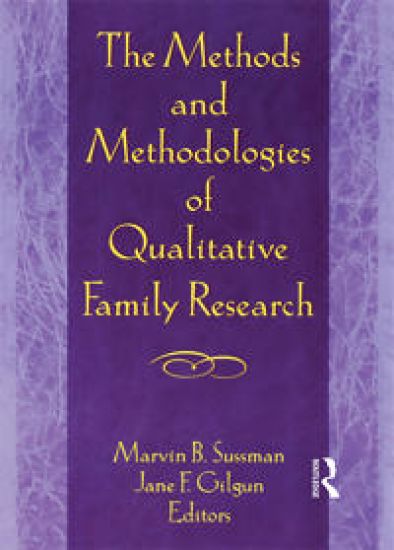
The Methods and Methodologies of Qualitative Family Research can provide you with a strong conceptual framework for undertaking qualitative research. As it explores inquiry and theory on the cutting edge, it shows how qualitative methodologies can be applied to family life, education, and research. Designed to demonstrate how emerging and established methodologies can advance the understanding of families and direct social change, this book is a major step in assessing the development, progress, and contributions of qualitative inquiry. Packed with useful information and innovative approaches, this volume pulls together a rich and diverse group of essays that teach readers about the complexities and challenges of qualitative research. Most importantly, you’ll learn how new qualitative approaches are grounded in systems thinking, holistic formulations, attention to context, cultural sensitivity, and nonlinear dynamics. The Methods and Methodologies of Qualitative Family Research is distinct from other books of its kind because it acknowledges the agent, or self, in compiling data and reaching conclusions. Moreover, it analyzes how studying the world affects those doing the studying and how those effects, in turn, play a substantial role in interpreting data and forming conclusions. The Methods and Methodologies of Qualitative Family Research introduces three major types of qualitative clinical family research: conversational analysis, recursive frame analysis, and hermeneutic phenomenology. It exposes a wide array of resources for undertaking qualitative inquiry, including data journals, letters, official files, clinical case notes, folk tales, interviews, and field observations. You’ll learn how these resources are invaluable tools for understanding:couples’decisionmaking generative fathering reflexivity the use of historical data to construct composite cases egalitarianism and oppression in marriage perceptions of gender, race, and class among African-American adolescent women successful aging among individuals who require long-term care poverty and access to servicesA skillful blend of theory and practice, The Methods and Methodologies of Qualitative Family Research offers conceptual schemes, bibliographies, and other useful resources for teaching and conducting qualitative research. It will revolutionize the way you think about qualitative inquiry and your own approaches to qualitative family research. In addition, you’ll come away updated on the current state of qualitative research and with new skills and techniques for tackling your own research.
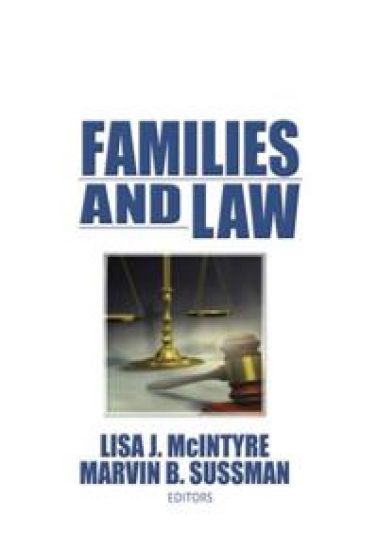
The family and the law, with its attendant legal systems, share a pervasive connectedness. With this new volume, family practitioners and scholars can begin to increase the family?s position in relation to the law and legal system. The contributing authors bring to light the power of laws and the ways to influence them,for the benefit of the family.
The Methods and Methodologies of Qualitative Family Research can provide you with a strong conceptual framework for undertaking qualitative research. As it explores inquiry and theory on the cutting edge, it shows how qualitative methodologies can be applied to family life, education, and research. Designed to demonstrate how emerging and established methodologies can advance the understanding of families and direct social change, this book is a major step in assessing the development, progress, and contributions of qualitative inquiry. Packed with useful information and innovative approaches, this volume pulls together a rich and diverse group of essays that teach readers about the complexities and challenges of qualitative research. Most importantly, you’ll learn how new qualitative approaches are grounded in systems thinking, holistic formulations, attention to context, cultural sensitivity, and nonlinear dynamics. The Methods and Methodologies of Qualitative Family Research is distinct from other books of its kind because it acknowledges the agent, or self, in compiling data and reaching conclusions. Moreover, it analyzes how studying the world affects those doing the studying and how those effects, in turn, play a substantial role in interpreting data and forming conclusions. The Methods and Methodologies of Qualitative Family Research introduces three major types of qualitative clinical family research: conversational analysis, recursive frame analysis, and hermeneutic phenomenology. It exposes a wide array of resources for undertaking qualitative inquiry, including data journals, letters, official files, clinical case notes, folk tales, interviews, and field observations. You’ll learn how these resources are invaluable tools for understanding:couples’decisionmaking generative fathering reflexivity the use of historical data to construct composite cases egalitarianism and oppression in marriage perceptions of gender, race, and class among African-American adolescent women successful aging among individuals who require long-term care poverty and access to servicesA skillful blend of theory and practice, The Methods and Methodologies of Qualitative Family Research offers conceptual schemes, bibliographies, and other useful resources for teaching and conducting qualitative research. It will revolutionize the way you think about qualitative inquiry and your own approaches to qualitative family research. In addition, you’ll come away updated on the current state of qualitative research and with new skills and techniques for tackling your own research.
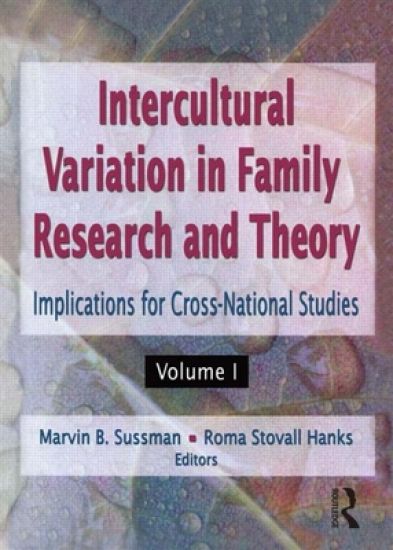
Intercultural Variation in Family Research and Theory sets forth 23 critical reviews in a 2-volume set that document the development of family research and theory in various societies around the world. Focusing on modern research while drawing on the historical roots of theoretical and methodological approaches employed in the study of family, this collection not only increases your knowledge about the status of family research in various countries, but also inspires cross-national research among researchers and scholars. The societies being studied have been grouped by region: Volume I contains the set’s Introduction and contributions from the Far East, the Baltic region, Australia, and South Africa. Volume II covers the Middle East, Western Europe, Scandinavia, and also includes the Index. The materials in these two volumes are the result of the charge given to scholars of 23 societies to review the development of family theory and research in their homelands. Their obligation was to provide an analytic report telling a story from their perspective of reality. The book’s editors now present some of the commonality of experiences and trends of the researchers and interpret country differences and similarities from their writings. Intercultural Variation in Family Research and Theory holds numerous suggestions for your investigations into the family field. You’ll find that the set adds to the body of knowledge on comparative family analysis and raises concerns and issues for future research. The questions anddressed in this book include:how gender of the investigator influences choice of research topics how funding sources shape the research agenda what influence a researcher’s career trajectory has on research topics, methods, and procedures why psychological and sociological frameworks and methodologies are commonly used in family research how political policy influences and dictates theory development and research what to do about the multitude of new questions that inevitably arise from such intercultural research
The family and the law, with its attendant legal systems, share a pervasive connectedness. With this new volume, family practitioners and scholars can begin to increase the family?s position in relation to the law and legal system. The contributing authors bring to light the power of laws and the ways to influence them,for the benefit of the family.
Here is a comprehensive source of vital information on single parent families in contemporary society. This book analyzes literature and empirical research concerning single parent families and explores issues and challenges they face. Contributing authors from many fields and perspectives examine a broad range of subjects relating to families in which one person is primarily responsible for parenting. The only state-of-the-art compendium on the topic of single parent families available today, the book synthesizes empirical, theoretical, and contemporary literature about the diversity, myths, and realities of single parent families in western countries. Each chapter contains a demographic overview, definitions, a literature review, and implications for practice, research, education, and social policy. Theoretical and conceptual perspectives related to parenting and wider families are included. An analysis, synthesis, and commentary on single parent families concludes the volume. Themes highlighted throughout the book include socioeconomic and demographic characteristics of single parent families, cultural and ethnic features, and legal and ethical components. Some chapter topics include:single parenthood following divorce single parenthood following death of a spouse never married teen mothers and fathers female-headed homeless families adoptions by single parents noncustodial mothers and fathers grandparents as primary parents single parents of children with disabilitiesSingle Parent Families contains additional resources useful for family professionals: an annotated bibliography, a video/filmography, and a national community resource list. The book is intended for a multidisciplinary audience, including sociologists, psychologists, health care professionals, social workers, therapists, and other researchers, clinicians, policymakers, and educators. An ideal primary or reference text for undergraduate and graduate level programs, the book can also serve as a tool for staff development and continuing education in service agencies.
As the world heads into the twenty-first century, individuals and their families are being confronted with a more diverse array of possible life experiences than has ever existed before. Changes in longevity, marriage, fertility, employment, and many other areas have created new opportunities for individual and family choice and variability in life course experiences. American Families and the Future discusses a variety of issues that face and will continue to families in coming years and describes various strategies families can use in their decisionmaking processes. This enlightening book is divided into five main sections: Demographic Issues; Social and Economic Issues; Technological Issues; Family Process in Shaping the Future; and Family Vision in Creating the Future. Individual chapters view family problem solving from a variety of perspectives and disciplines. American Families and the Future: describes recent demographic trends and considers their implications for how individuals and their families plan and prepare for their later adult life reviews health care issues and concerns for the elderly and addresses strategies for self-health promotion and illness prevention provides examples illustrating the uses and abuses of data to promote partisan views and agendas outlines a conceptual framework that can be uses to understand problem solving and decisionmaking by individuals and family groups presents a model that explores family decisionmaking, focusing on the conditions under which decisions are made presents findings from a study of early adolescents’perceptions of their role in family decisionmakingThe book closes with an upbeat discussion of possible solutions to current pathologies affecting human societies and cultures. Professionals who work with families will find this book an enlightening and encouraging guide for helping families cope with the myriad issues and choices they face in planning for their futures.
This special volume is devoted to the synthesis and review of theoretical and conceptual approaches associated with familial and non-familial connections across the life span. An important book as society “returns to the family,” it compares and contrasts different disciplinary perspectives associated with intergenerational relationships. Because intergenerational relationships have been the focus of research in many disciplines, various perspectives have emerged about kin and non-kin connections. Renewed interest in families and familial connections is due largely to events and situations occurring in complex, modernized societies which place the intergenerational nexus on center stage. The leading researchers represented in this outstanding book provide rare opportunity for the scholarly comparison of the various perspectives in the broader spectrum of family relations. Families: Intergenerational and Generational Connecting is a significant addition to the body of research on family connections. The three major areas of generational and intergenerational connections include theoretical and conceptual perspectives, connections within the family, and connections outside the family. As the use of families as support networks for individual members increases, this timely book will be an invaluable aid to educators, students, and researchers concerned about families and familial and non-familial relationships. Counselors and therapists will value this enlightening book with its diverse theoretical and conceptual perspectives on kinship, intergenerational solidarity and relations, social supports, and cross-national perspectives on family connections.
The first book of its kind, Homosexuality and Family Relations focuses on the effects of homosexuality and being homosexual on individuals in families and on the family as a group. Edited by Frederick W. Bozett, RN, DNS, and Marvin B. Sussman, PhD, this informative and enlightening volume examines the multiple varieties of family forms in which gay men and lesbians live, addresses the ramifications of homosexuality on family relationships, and explores the countless aspects of parenthood as they are experienced by gay men and lesbians, including adoption and foster care by lesbians and gay men, and the choice of increasing numbers of lesbians to bear children through artificial fertilization. Any professional who is interested in the family--educators, clinicians, academicians, researchers, and students, as well as others interested in families and in human sexuality and men’s and women’s studies--family science, gay studies, nursing, medicine, law, psychology, sociology, social work--will find this book useful, insightful, and unique.
The first book of its kind, Homosexuality and Family Relations focuses on the effects of homosexuality and being homosexual on individuals in families and on the family as a group. Edited by Frederick W. Bozett, RN, DNS, and Marvin B. Sussman, PhD, this informative and enlightening volume examines the multiple varieties of family forms in which gay men and lesbians live, addresses the ramifications of homosexuality on family relationships, and explores the countless aspects of parenthood as they are experienced by gay men and lesbians, including adoption and foster care by lesbians and gay men, and the choice of increasing numbers of lesbians to bear children through artificial fertilization. Any professional who is interested in the family--educators, clinicians, academicians, researchers, and students, as well as others interested in families and in human sexuality and men’s and women’s studies--family science, gay studies, nursing, medicine, law, psychology, sociology, social work--will find this book useful, insightful, and unique.
In this unusual but exciting look at a complex topic, family scholars offer a vast array of insights into the multiple consequences, concerns, and characteristics of parenthood. The transition to parenthood--the most critical step in individual and family life cycles--is thoroughly examined from a social psychological perspective. Cultural and ethnic factors are considered as major influences in the transition to parenthood, as are changing patterns in the work force, the consequences of the gender revolution, and altered patterns of marriage and divorce--all of which have shattered the traditional ways of parenting. Family theorists, practitioners, and parents are strongly encouraged to further research and discuss the necessary elements and available options involved in facing the changes brought on by parenthood.
How are men reacting to, perceiving, and behaving in light of the changes in gender roles. Here is an important volume that provides new and interesting reading about contemporary husbands and fathers. Men’s Changing Roles in the Family, offers an overview of the causes and consequences of changes in men’s family roles in recent decades. Experts introduce you to the issues, problems, and methods on the cutting edge of those disciplines that study men in the context of their families. Until now relatively little has been known empirically about men in contemporary families, and even less has been known about husbands and fathers from direct reports of the men themselves. This groundbreaking volume successfully closes this gap in the literature with an examination of the effects that fathers’growing involvement with their children have on their wives and themselves; a clinical assessment of some men’s angry reactions to separation and divorce and those special therapeutic goals and strategies that may help reduce their distress; examinations of the conflicting demands of the work world and the family upon some contemporary husbands and fathers and the negative effects of nonstandard work schedules upon men’s family life; and an examination of factors that make many men unhappy in patriarchal family structures. Men’s Changing Roles in the Family also contributes toward breaking new ground by examining family roles now performed by special groups of men. Finally, this important volume reports empirical findings about men in family-like relationships, illustrating evidence for the unique roles that male caregivers can offer children in day-care centers and reviewing current empirical studies of men’s friendships and their development.