Kirjojen hintavertailu – 12 903 725 kirjaa ja 27 kauppaa

Kirjailija

Marvin R. O'Connell

Kirjat ja teokset yhdessä paikassa: 5 kirjaa, julkaisuja vuosilta 1991–2020, suosituimpiin kuuluu The Oxford Conspirators. Vertaile teosten hintoja ja tarkista saatavuus suomalaisista kirjakaupoista.

Nimi esiintyy myös muodoissa: Marvin R. O`connell

5 kirjaa

Kirjojen julkaisuvuodet: 1991–2020.

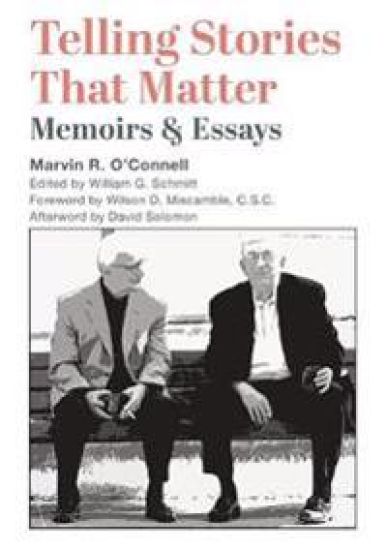
Telling Stories That Matter – Memoirs and Essays

Telling Stories That Matter – Memoirs and Essays

Marvin R. O`connell; William G. Schmitt; Wilson D. Miscamble; David Solomon

ST AUGUSTINE'S PRESS
2020
sidottu
The late historian Marvin O’Connell left a legacy of brilliant prose and pictures of the past, and in this book the reader at long last has access to O’Connell’s own story. Fr. Bill Miscamble, a noted historian and scholar in his own right, attributes to O’Connell the title ‘Master’ above all on account of his ability to know what matters and then write about it “in the way that all great stories are told.” In addition to his status as histor (giver of history), O’Connell was a long-time professor and chair of the history department at the University of Notre Dame. He is author of the masterwork, Sorin, which presents the riveting and dynamic narrative of the founding of Notre Dame on the inspired ambition of Edward Sorin, C. S. C. O’Connell was not a man who “genuflected in hagiography.” Rather, in the manner he lived faithfully yet soberly under the shining shadow of the Golden Dome, O’Connell told stories in the manner they were lived and with all the accompanying faults and triumphs. In Miscamble’s thorough introduction of O’Connell, he writes that the latter “utilized his striking talents as a historian as an integral part of his fundamental vocation as a priest. [O’Connell] once described the historian as a veritable ‘midwife to our faith,’ who must capture, as best as evidence will allow, the truth of the past.” This position lends itself to the structure of this work. The first part is the sadly incomplete memoirs of Fr. O’Connell, wherein the reader meets the historian and moves with eagerness and confidence into the essays that follow. Highlights of these collected essays include thoughts on Cardinal Newman, Belloc, the Spanish Inquisition, and the historical perspective of evangelization in the United States and modernism at large. What one reads are stories that might have been lost but are here preserved in what can with all moral certainty be called truthfulness. As his friend Ralph McInerny once qualified him, O’Connell combined compassion and judgment such that his histories were always indeed primarily stories and, as the reader well knows, stories have layers and threads and are not told simply for their conclusions. O’Connell succeeds in showing one how human history is written. Above all, he reveals that history is made by humans, but must also be remembered and deciphered by humans who cannot forego leaving their own marks and prints on everything they encounter (in memory or otherwise). The objectivity we seek can be found in one historical account alone, asserts the priest-storyteller, yet a sharp eye to the past is always consonant with a compassionate desire to understand. Bill Schmitt, Fr. Bill Miscamble and David Solomon do posterity a service by giving us this man and his masterful engagement of history. These friends of O’Connell deem the historian’s passion for truth-in-context to be foundational for shaping stories that matter, including his own. "This artful combination of memoir and selected essays reawakens our memory of Father O'Connell in all his immense personal charm, intellectual energy, rich erudition, keen wit, and steadfast dedication to his interlocking callings as priest and historian." —J. Philip Gleason, Emeritus Professor, History Department, University of Notre Dame"The work of a master historian, these memoirs and essays are reliable in recounting what happened, insightful in judging how and why, and eloquent in presenting it all with a flair and wit rarely equaled in historical writing. Moreover, they come forth from a Catholic faith so deep and secure that it need not be imposed on the reader. Rather, they do what good historical writing does, placing the reader into a past that can be seen and felt, recognized and understood. Whether it be his colorful accounts of the tumultuous life and times of Thomas More, or the valiant struggles of Newman and the Oxford Movement, or his own seminary training and teaching in St. Paul, or his fortunes as a graduate student at Notre Dame under the tutelage of the eminent Monsignor Phillip Hughes—whatever the topic, reading O’Connell’s history gives one the gift of being able to say, I remember that happening and I wasn’t even there!"—Michael J. Baxter, Director of Catholic Studies, Regis University in Denver"O'Connell was a master story teller. He was not, however, just a story teller. He was painstakingly rigorous in what and how he taught. His stories always perfectly illustrated a point, but they were never a substitution for the truth--rather an illustration of it." —Bradley Birzer, Russell Amos Kirk Chair in American Studies, Hillsdale College
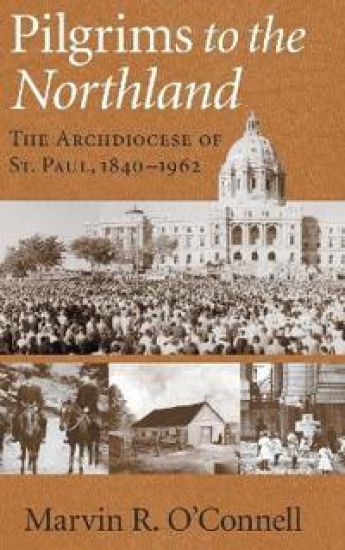
Pilgrims to the Northland

Pilgrims to the Northland

Marvin R. O'Connell

University of Notre Dame Press
2009
sidottu
This is the first narrative history of the Archdiocese of St. Paul, from 1840 to 1962. Historian Marvin R. O'Connell brings to life the extraordinary labors and accomplishments of the French priests who came to the upper midwest territory during the first half of the nineteenth century. Over the next fifty years a flood of settlers, primarily Irish and German Catholics, filled up the land. In 1850 Rome created a new diocese centered in the village of St. Paul, and in 1851 French priest Joseph Cretin was named its first bishop. O'Connell's lively account stresses the social, economic, and political context in which the Catholic Church in Minnesota grew and evolved. He vividly illuminates the personalities of the bishops who followed Cretin, Thomas Grace (1859–84) and John Ireland (1884–1918). Ireland inherited a sophisticated system of churches, schools, orphanages, and hospitals, staffed by orders of religious men and women. Ireland built upon this legacy, founding colleges for men and women, a major seminary, and cathedrals in both St. Paul and Minneapolis. Ireland's successors, Austin Dowling (1919–30) and John Gregory Murray (1931–56) were not as colorful as Ireland, although Murray was immensely popular. William Brady is the final archbishop covered in this book, serving from 1956 to 1961 when he died unexpectedly from a heart attack. O'Connell ends his narrative in 1962, soon after the death of Archbishop Brady and a few months before the first session of Vatican II.
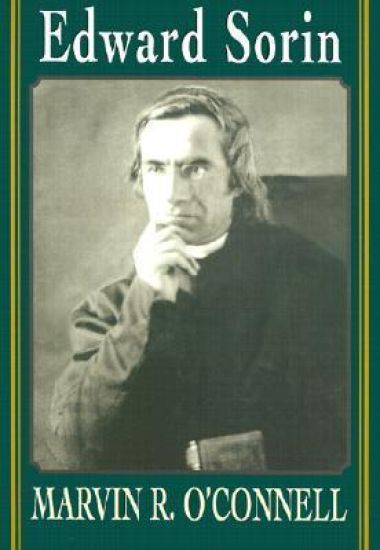
Edward Sorin

Edward Sorin

Marvin R. O'Connell

University of Notre Dame Press
2001
sidottu
This sweeping book offers the definitive account of the life and labors of Edward Sorin, founder of the University of Notre Dame. Born in the west of France in 1814, Sorin was ordained in 1838 and joined the newly founded Congregation of Holy Cross shortly thereafter. In 1841, Father Sorin, along with six Holy Cross brothers, was sent to establish a mission in Indiana. After a year's service in the Vincennes diocese's fledgling parochial schools, Sorin was offered a tract of land in the diocese's northernmost section—on the condition that a college be situated there. Father Sorin and his companions arrived at the lakeside property, located near the south bend of the St. Joseph River, in November 1842. The next year, the state of Indiana granted a charter to what Sorin proudly and reverently called the University of Notre Dame du Lac. In its early days, Father Sorin's "university" was composed of a few log shacks and a handful of half-educated brothers, only a few of whom could speak English. There was no money and hardly any students. But Father Sorin, by sheer willpower, was determined that his university would prosper. Basic to Father Sorin's success in this regard was his willingness to give free rein to gifted colleagues—men more intellectually sophisticated than himself—and his intuitive understanding of, and growing love for, the unique character of American culture. Edward Sorin is a lively, colorful history of the man who overcame great odds to found and grow one of the world's premier Catholic institutions of higher learning.
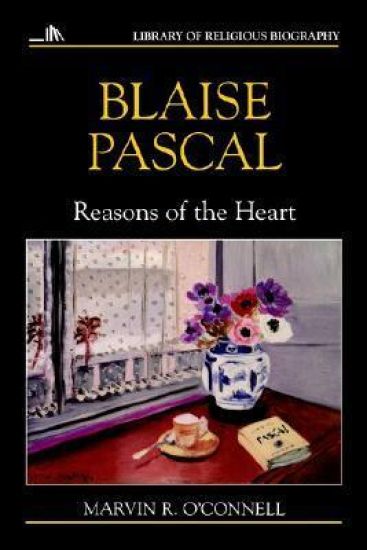
Blaise Pascal

Blaise Pascal

Marvin R. O'Connell

William B Eerdmans Publishing Co
1997
pokkari
Blaise Pascal (1623-1662), mathematician, physicist, inventor, and religious thinker was a man at odds with his time. The optimism of the Enlightenment and the belief among philosophers and scientists that the universe was both discoverable and rational made them feel invincible. Reason alone, declared the intellectuals, could discover a God of natural religion that was to replace the God of traditional Christianity. Pascal, on the other hand, was not so confident. In his Pensees, he wrote, "The eternal silence of these infinite spaces fills me with dread." For Pascal, the universe was full of a mystery that went far beyond the powers of reason. Blaise Pascal: Reasons of the Heart, the latest addition to Eerdmans LIBRARY OF RELIGIOUS BIOGRAPHY series, captures Pascal's life and times with a chronicle narrative based on the published sources and Pascal's own works. Marvin O'Connell takes readers on an eloquent journey into Pascal's world, showing the passion that drove the man and the radical spirituality he sought in his own heart. In the process, O'Connell also illumines the social, political, and religious intrigue of seventeenth-century Paris, especially the winner-take-all struggle between the Jesuits and the Jansenists, with whom Pascal himself was allied. Written in an enjoyable style accessible to all, this meticulously researched biography will acquaint readers with the life and thought of Blaise Pascal, a remarkable human being and luminous Christian thinker.
The Oxford Conspirators

The Oxford Conspirators

Marvin R. O'Connell

UNIV PR OF AMER
1991
pokkari
A narrative history of Oxford Movement, whereby a group of Anglican intellectuals, notably Newman, Pusey, Keble and Froude, attempted to restore to the Victorian Church of England the character of "primitive Christianity". Many of the inherent principles, such as Apostolic Succession, were seen to be exemplified by the Catholic Church. Newman later joined the Church of Rome, and the Anglo-Catholic wing of Anglicanism has its origins in this movement.