

Kirjailija
Mary Ann Jacobs
Kirjat ja teokset yhdessä paikassa: 9 kirjaa, julkaisuja vuosilta 2016–2026, suosituimpiin kuuluu Dabbling in Danger. Vertaile teosten hintoja ja tarkista saatavuus suomalaisista kirjakaupoista.
9 kirjaa
Kirjojen julkaisuvuodet: 2016–2026.

Fear has engulfed the tight-knit community of Pittman. In this cozy mystery, join the Super Sleuths as they unmask a thief, and not one, but three hitmen. Sadie, a Lebanese immigrant, arms herself to protect her adopted family in her new home. As tensions escalate, a renowned journalist delves into the depths of this quaint New England town, filming a documentary. Will tourists avoid their crime-ridden town, leaving the merchants at risk of financial ruin? Meet the members of the Geezer Book Club and discover the future plans of the characters you first met and loved in Don't Mess with Me, #1 in The Berkshire Mystery Series.

Sheriff Houtman, who left Boston to have a more peaceful career, finds himself faced with two murders, and he is challenged by a band of amateur sleuths who doubt his competence. Will his conclusions hold, or will he have to admit defeat? Unfortunately, Sheriff Houtman is quite infatuated with Sadie, a refugee from Lebanon who escaped ISIS. Robin George narrates the story. She is a widow with a young son who moves to the Berkshires after her beloved husband died. Her bookstore, Bookworms, and Sweet Indulgences, her best friend Sadie's restaurant, become the hubs for Robin's amateur detective group where they plan how to solve the local crimes and exonerate Billy, the Sheriff's main suspect. Will they prove the Sheriff wrong?
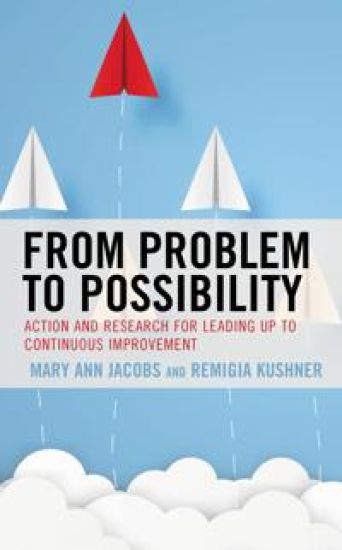
The purpose of this book is to not only persuade leaders that action research is leadership, but that leadership can be more deliberate in promoting human dignity when leaders engage in a reflective process of continuous improvement. An action research frame of mind is the impetus for efforts toward continuous improvement -- dissatisfaction with what is the beginning of improvement! The caveat is that leadership is not a position, leadership is action. Those who want to make their work better, their service better, their clients, customers, stakeholders, children, or students better -- are leaders, with or without a bureaucratic or hierarchical position. Professional leadership, executive leadership, company leadership, and everyday leadership requires action and reflection on those actions to determine the effectiveness of the continuous improvement process. The rationale for this book is to provide leaders at all levels with a framework that progresses through six steps of action and research from considering the challenge faced by the leader within an organization to reflecting on the improvement and next steps to continue the improvement process - thus Leading Up: From Problem to Possibility.
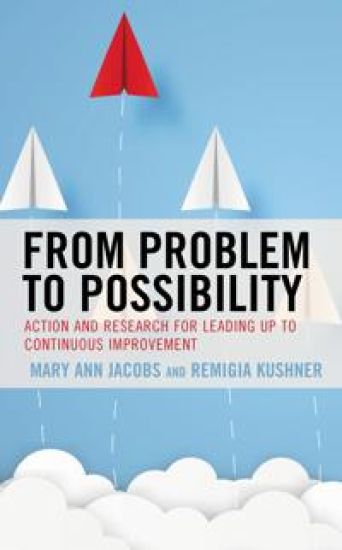
The purpose of this book is to not only persuade leaders that action research is leadership, but that leadership can be more deliberate in promoting human dignity when leaders engage in a reflective process of continuous improvement. An action research frame of mind is the impetus for efforts toward continuous improvement -- dissatisfaction with what is the beginning of improvement! The caveat is that leadership is not a position, leadership is action. Those who want to make their work better, their service better, their clients, customers, stakeholders, children, or students better -- are leaders, with or without a bureaucratic or hierarchical position. Professional leadership, executive leadership, company leadership, and everyday leadership requires action and reflection on those actions to determine the effectiveness of the continuous improvement process. The rationale for this book is to provide leaders at all levels with a framework that progresses through six steps of action and research from considering the challenge faced by the leader within an organization to reflecting on the improvement and next steps to continue the improvement process - thus Leading Up: From Problem to Possibility.

How Can You Become the Boss traces the trajectory of knowledge, skills, and disposition beginning with the ones needed to lead oneself through to leading others to develop the knowledge, skills, and dispositions to lead themselves, and ultimately, using that knowledge, those skills, and dispositions for leading an organization to transformation. The goals is being able to lead a party of one before assuming that one can lead others. Leading an organization means transformation into more of what the organization was intended to be by its vision and mission. Leaders develop a personal vision and mission, use the 168 hours a week that everyone has to produce a result, hold a problem-solving frame of mind, cultivate a desire to learn, and productively use self-talk. Ultimately these leaders foster a team approach through a culture of participantship. They regard leadership as an action rather than a position. They see the future of leadership as collective, lateral, and integral and work with others from an abundance mentality. These leaders move forward in learning, using neuroscience findings to promote actions grounded in brain research and assuming responsibility as a way of being for the organization.

How Can You Become the Boss traces the trajectory of knowledge, skills, and disposition beginning with the ones needed to lead oneself through to leading others to develop the knowledge, skills, and dispositions to lead themselves, and ultimately, using that knowledge, those skills, and dispositions for leading an organization to transformation. The goals is being able to lead a party of one before assuming that one can lead others. Leading an organization means transformation into more of what the organization was intended to be by its vision and mission. Leaders develop a personal vision and mission, use the 168 hours a week that everyone has to produce a result, hold a problem-solving frame of mind, cultivate a desire to learn, and productively use self-talk. Ultimately these leaders foster a team approach through a culture of participantship. They regard leadership as an action rather than a position. They see the future of leadership as collective, lateral, and integral and work with others from an abundance mentality. These leaders move forward in learning, using neuroscience findings to promote actions grounded in brain research and assuming responsibility as a way of being for the organization.
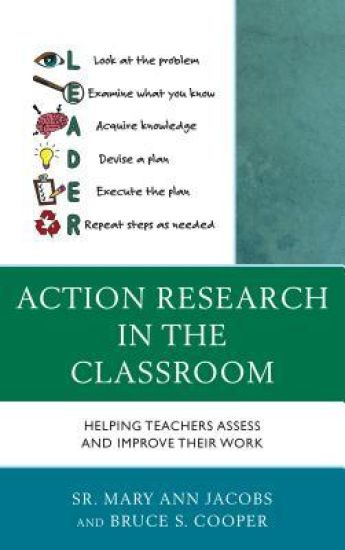
Action Research in the Classroom: Helping Teachers Assess and Improve their Work guides teacher-researchers through the process of using action research in their practice to improve students’ learning and teachers’ teaching. The book uses actual classroom examples to assist aspiring, new, and veteran teachers and those who support them (administrators, department chairpersons, and mentors) in using a six-step process L. E. A. D. E. R. to successfully accomplish and share research conducted by actual classroom teachers. Each step in the L. E. A. D. E. R. process -- (1) L=Look at the Problem, (2) E=Examine what we know; (3) A=Acquire knowledge of school problem-solving; (4) D=Devise a plan for improvement; (5) E=Execute the plan; and, (6) R=Repeat steps and processes as needed -- can guide teachers, administrators, and even parents – and students – in solving their own problems and improving their learning and teaching.
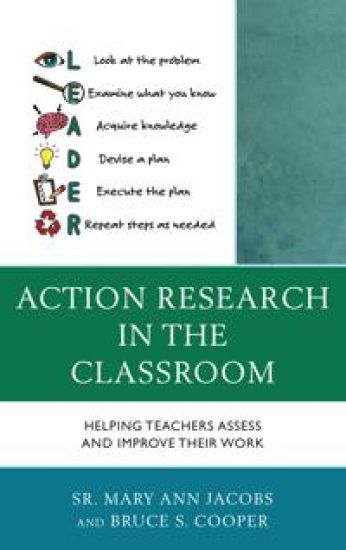
Action Research in the Classroom: Helping Teachers Assess and Improve their Work guides teacher-researchers through the process of using action research in their practice to improve students’ learning and teachers’ teaching. The book uses actual classroom examples to assist aspiring, new, and veteran teachers and those who support them (administrators, department chairpersons, and mentors) in using a six-step process L. E. A. D. E. R. to successfully accomplish and share research conducted by actual classroom teachers. Each step in the L. E. A. D. E. R. process -- (1) L=Look at the Problem, (2) E=Examine what we know; (3) A=Acquire knowledge of school problem-solving; (4) D=Devise a plan for improvement; (5) E=Execute the plan; and, (6) R=Repeat steps and processes as needed -- can guide teachers, administrators, and even parents – and students – in solving their own problems and improving their learning and teaching.