Kirjojen hintavertailu – 12 903 725 kirjaa ja 27 kauppaa

Kirjailija

Mary Carolyn Hollers George

Kirjat ja teokset yhdessä paikassa: 4 kirjaa, julkaisuja vuosilta 2006–2020, suosituimpiin kuuluu Pearl Sets the Pace. Vertaile teosten hintoja ja tarkista saatavuus suomalaisista kirjakaupoista.

4 kirjaa

Kirjojen julkaisuvuodet: 2006–2020.

Pearl Sets the Pace

Pearl Sets the Pace

Mary Carolyn Hollers George

State House Press
2020
nidottu
A family business frequently involves enough drama to fill a book - this one in fact. Pearl Sets the Pace tells the story of two landmark companies and a mighty dynasty. It begins in 1883, with the arrival of German brew master Otto Koehler in the bustling city of San Antonio, Texas. He establishes himself as one of the founders of a firm that eventually becomes the Pearl Brewery. In 1914, his murder at the hands of a disgruntled mistress becomes front-page news across the nation. Emma, his grieving (but tough-as-nails) widow, assumes leadership of the company and keeps it afloat during the dark days of Prohibition. In 1941, Margaret Koehler, one of Emma's granddaughters, marries David Earl Pace. After World War II, the young couple formulate a secret recipe for Mexican salsa. Like mad scientists, they experiment in their home kitchen and try out their concoctions on friends. From such humble beginnings grew a mighty enterprise, a real-world manifestation of the American Dream. By the early 1990s, Dave and Margaret's picante sauce was the top-selling Mexican food condiment in the world. Their descendants sold the business to the Campbell Soup Company for $1.1 billion. Through murders and mistresses, Depression and divorces, booms and busts, a passion for product sustained the Koehler-Pace clan. To make something, not simply for their neighbors to buy, but also something that would become integral to their daily lives. That became their defining principle. Yes, it defined them, but it also characterized their city. Can anyone really imagine San Antonio without beer and picante sauce? This is the story of a proud, complicated, and interwoven family and the two great enterprises they wrangled. But it is also the story of a unique Texas city and the people it breeds. It's a business story, a family story, and a story of a thriving, modern city; it is also our story.
Mary Bonner

Mary Bonner

Mary Carolyn Hollers George; Jane Lewis

Trinity University Press,U.S.
2018
pokkari
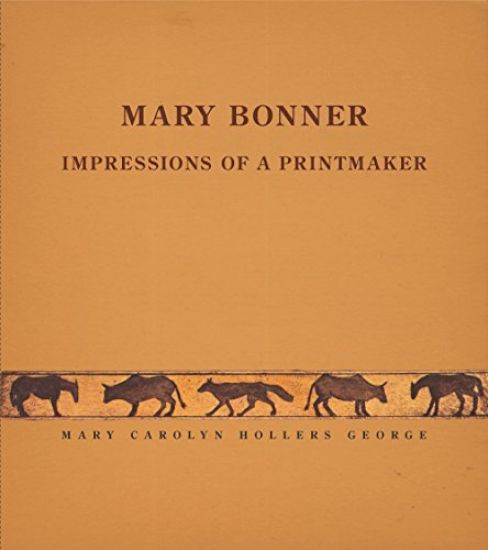
Mary Bonner: Impressions of a Printmaker is the definitive account of the life of an iconic Texas artist known for her delicate etchings and prints of the places and people that make South Texas unique. Mary Bonner begins with the artist’s early years in San Antonio and continues through her awakening as an artist at the Woodstock colony in upstate New York in summer 1922 to her years in France under the instruction of master printmaker Édouard Henri Léon. In Paris, Bonner began entering her work in juried exhibitions, and these early Paris prints were met with some acclaim. She came into her own when she began experimenting with a more innovative and modern style, exemplified by Les cowboys, a three-part frieze inspired by memories of her family’s ranch in Texas. After several years of dedicated study in Paris, Bonner began splitting her time between San Antonio and Paris. By 1928 she had begun to take on the causes of art and conservation in San Antonio, devoting less time to her own work. She spent the last years of her life at the family residence in San Antonio and died in 1935 at age forty-eight. Bonner’s legacy, both as an accomplished artist and as a steadfast advocate for the arts, lives on, especially in San Antonio. Mary Bonner is copublished with the National Trust for Historic Preservation and Villa Finale. The book will accompany a retrospective of Bonner’s work at the McNay Art Museum in San Antonio. This edition includes a new preface, an introduction by McNay curator Lyle Williams, and an afterword by Jane Lewis, director of Villa Finale.
Master Builder of the Lower Rio Grande

Master Builder of the Lower Rio Grande

W. Eugene George; Mary Carolyn Hollers George; Mariá Eugenia Guerra; Stephen Fox

Texas A M University Press
2016
sidottu
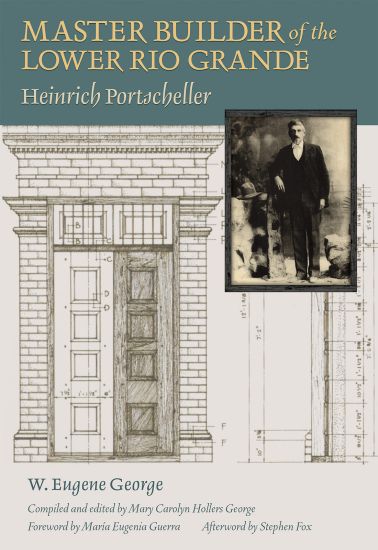
In 1865, Heinrich Portscheller emigrated to Mexico from his native Germany, perhaps motivated by a desire to avoid compulsory military service in the Austro-Prussian War. The scion of a well-known family of masons and master builders, he had the misfortune to disembark at Veracruz during the Franco-Mexican War. Portscheller and his traveling companion were impressed into the imperialist forces and sent to northern Mexico. Sometime following the Battle of Santa Gertrudis in1866, Portscheller deserted the army and eventually made a place for himself in Roma, a small town in Starr County, Texas. Over the next decades, Portscheller acquired a reputation as a master builder and architect. He brought to the Lower Rio Grande Valley his long heritage of Old World building knowledge and skills and integrated them with the practices of local Mexican construction and vernacular architecture. However, despite his many contributions to the distinctive architecture of Roma and surrounding places, by the mid-twentieth century he was largely forgotten. During nearly fift y years of historical sleuthing in South Texas and Germany, W. Eugene George reconstructed many of the details of the life and career of this important South Texas craft sman. Containing editorial contributions by Mary Carolyn Hollers George and featuring a foreword by Mari. Eugenia Guerra and a concluding assessment by noted architectural historian Stephen Fox, Master Builder of the Lower Rio Grande: Heinrich Portscheller at last permits a long-overdue appreciation of the legacy of this influential architect and builder of the Texas-Mexico borderlands.
The Architectural Legacy of Alfred Giles

The Architectural Legacy of Alfred Giles

Mary Carolyn Hollers George

Trinity University Press,U.S.
2006
sidottu
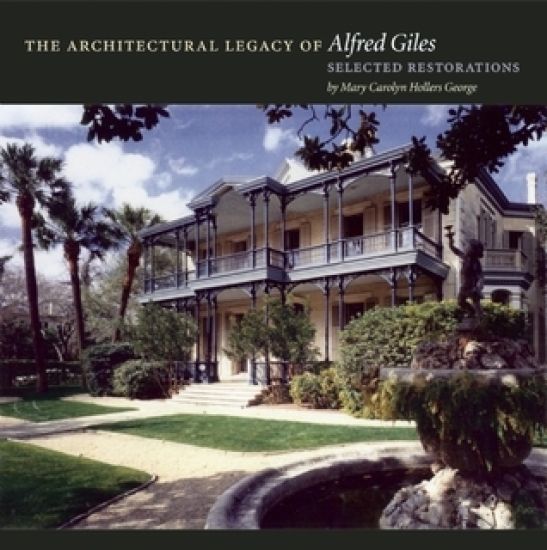
"Examines buildings designed by Texas architect Alfred Giles that have been restored over the last thirty years. Includes an appendix of Giles's works in northern Mexico, color photographs of restored sites, and black-and-white historical photographs"--Provided by publisher.