Kirjojen hintavertailu – 12 859 828 kirjaa ja 27 kauppaa

Kirjailija

Mary Ceruti

Kirjat ja teokset yhdessä paikassa: 6 kirjaa, julkaisuja vuosilta 2020–2025, suosituimpiin kuuluu Christine Sun Kim: All Day All Night. Vertaile teosten hintoja ja tarkista saatavuus suomalaisista kirjakaupoista.

6 kirjaa

Kirjojen julkaisuvuodet: 2020–2025.

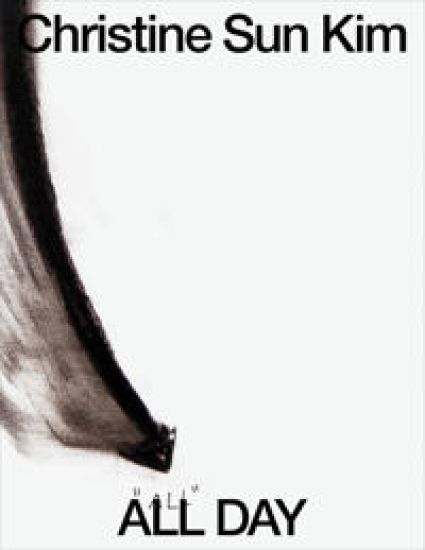
Christine Sun Kim: All Day All Night

Christine Sun Kim: All Day All Night

Mary Ceruti; Scott Rothkopf

WALKER ART CENTRE,U.S.
2025
sidottu

Halvin toimitettuna 70,20 €

“[Her] poetic and political art pushes viewers to consider the limits, and misunderstandings, that come with communication in any language.” —Andrew Russeth, the New York Times This volume surveys Christine Sun Kim’s works across painting, sculpture, drawing, moving image, performance, large-scale murals and collaborations with other artists made between 2011 and 2024. Kim’s practice considers how sound operates in society, deconstructing the politics of sound and exploring how oral languages operate as social currency. Identifying as Deaf and Korean American, Kim draws on musical notation, written language, infographics, American Sign Language (ASL) and the use of the body, strategically deploying humor to examine communication with her family and her community and to create new channels of dialogue with wide audiences. Published alongside the traveling exhibition, All Day All Night is brimming with supplementary texts from curators, artists and scholars, including an interview between Christine Sun Kim and exhibition curators Tom Finkelpearl, Jennie Goldstein and Pavel S. Pys; scholarly contributions by Seth Kim-Cohen, Jeffrey Yasuo Mansfield and Park McArthur; and an intimate artist timeline compiled by Brandon Eng and Rose Pallone. A substantial plate section follows these enriching text contributions. Christine Sun Kim (born 1980) is an American artist based in Berlin. Her work explores her relationship to spoken and signed languages, to her built and social environments and to the world at large. Kim has exhibited and performed internationally, including at the Queens Museum, New York (2022); the Drawing Center, New York (2022); Whitney Biennial, New York (2019); Albright-Knox Art Gallery, Buffalo (2019); and the Art Institute of Chicago (2018).
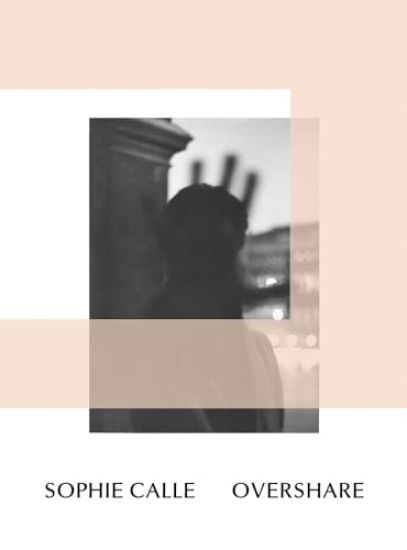
Sophie Calle: Overshare

Sophie Calle: Overshare

Mary Ceruti

WALKER ART CENTRE,U.S.
2024
nidottu
A career-spanning survey of the adored French artist whose conceptual works explore the tensions between the observed, the reported, the secret and the unsaid This volume accompanies the eponymous show at the Walker Art Center in Minneapolis, which is the first exhibition in North America to explore the range and depth of artist Sophie Calle’s practice across the past five decades. Through examples of major bodies of work as well as lesser-known pieces, the exhibition captures Calle’s astute probing into the human condition and reveals ways that her early work anticipated the rise of social media as a space to create and share oneself. The presentation features photography, video, installations and text-based works, highlighting the artist’s virtuosic use of different mediums to explore broadly recognizable and emotionally resonant themes. Organized into four thematic sections—“The Spy,” “The Protagonist,” “The End” and “The Beginning”—the book takes a new approach to some of Calle’s most acclaimed works including The Sleepers (1979) and Suite Vénitienne (1980), while also weaving in understudied works including Cash Machine (1991–2003) and Unfinished (2005). The catalog further explores this new examination of Calle's work with original writing by Henriette Huldisch, Eugenie Brinkeman, Aruna D’Souza and Courtenay Finn. Sophie Calle (born 1953) is an internationally renowned artist whose controversial works often fuse conceptual art and Oulipo-like constraints, investigatory methods and the plundering of autobiography. The Whitechapel Gallery in London organized a retrospective in 2009, and her work has been shown at the Museum of Modern Art and the Whitney Museum of American Art, New York; the Carnegie Museum of Art, Pittsburgh; the Museum of Fine Arts, Boston; the Hayward Gallery and Serpentine, London; and the Museum of Contemporary Art, Chicago, among others. She lives and works in Paris.
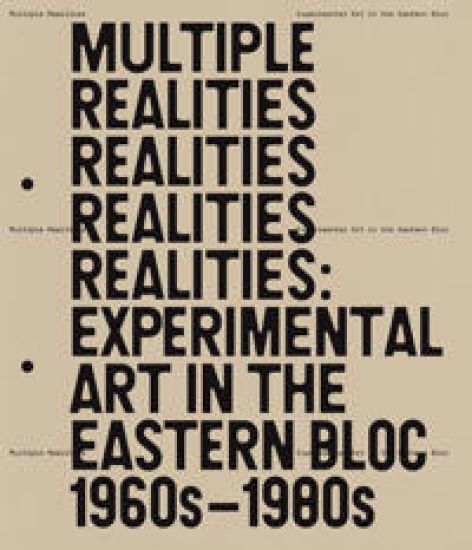
Multiple Realities: Experimental Art in the Eastern Bloc 1960s–1980s
A massive panorama of Eastern Europe’s postwar avant-gardes, featuring both canonical and lesser-known artists Multiple Realities offers a sweeping survey of experimental art made in six Central Eastern European nations—GDR, Poland, Czechoslovakia, Hungary, Romania and Yugoslavia—during the 1960s to 1980s. Despite their geographical proximity, artists working during this time encountered different conditions for daily life and art-making, confronting varying degrees of control and pressure exerted by state authorities. Embracing conceptual or formal innovation and a spirit of adventurousness, Multiple Realities sheds light on ways that artists refused, circumvented, eluded and subverted official systems, in the process creating works often riddled with wit, humor or irony. While it presents select canonical figures from the region, the exhibition foregrounds lesser-known practitioners, particularly women artists, artist collectives and those exploring embodiment through an LGBTQ+ lens. Artists include: Milan Adamciak, Autoperformationsartisten, AWACS, Lubomír Benes, Sándor Benkö, A. E. Bizottság, Vladimir Bonacic, Geta Bratescu, Adina Caloenescu, Zdenka Cechová, Vera Chytilová, Lutz Dammbeck, Jan Dobkowski, Sherban Epuré, Barbara Falender, Lászlo Fehér, Stano Filko, AG Geige, Teresa Gierzynska, Karpo Godina, Tomislav Gotovac, Ion Grigorescu, Wiktor Gutt & Waldemar Raniszewski, Gino Hahnemann, Heino Hilger, Károly Hopp-Halász, Janós Istvány, Sanja Ivekovic, Libuse Jarcovjáková, Zeljko Jerman, Krzysztof Jung, Eva Kmentová, Milan Knízák/AKTUAL Group, Július Koller, Jirí Kovanda, Gyula Konkoly, Kryzys, Jolanta Marcolla, Florin Maxa, Tomislav Mikulic, Teresa Murak, Katalin Ladik, Matei Lazarescu, Natalia LL, Ana Lupas, Dóra Maurer, Simon Menner, Andrzej Mitan, Kolomon Novak, Ewa Partum, Plastic People of the Universe, Polish Radio Experimental Studio, Queer Art Institute, Józef Robakowski, Jerzy Rosolowicz, Akademia Ruchu, Zbigniew Rybczynski, Alina Szapocznikow, Peter stembera and Krzysztof Wodiczko.
Jannis Kounellis in Six Acts

Jannis Kounellis in Six Acts

Mary Ceruti

WALKER ART CENTRE,U.S.
2023
nidottu
Six decades of sculptural innovation from the Arte Povera pioneer and alchemist of the everyday Over the course of more than five decades, Jannis Kounellis developed a singular practice across painting, works on paper, sculpture, installation and hybrid works combining objects with live performance. Playing a central role in the Italian Arte Povera movement of the 1960s and early 1970s, Kounellis created wide-ranging and innovative works exploring theater, migration, history, politics and other themes, which continue to influence subsequent generations of artists. Published by the Walker Art Center for the first US Kounellis survey in over 35 years, Jannis Kounellis in Six Acts offers the most comprehensive assessment of his career to date. The richly illustrated catalog, assembled with the full cooperation of the artist’s estate and archive, presents a first-of-its-kind collection of visual materials and Kounellis’ writings, including image-based exhibition and performance chronologies. The volume also features essays by Vincenzo de Bellis, Claire Gilman, Kit Hammonds and Ara H. Merjian. Jannis Kounellis (1936–2017) was born in Piraeus, Greece. In 1956, he moved to Rome and by 1960 was an active member of the Arte Povera movement. In 1969 he created one of his best-known works: the installation of 12 live horses in the gallery L’Attico in Rome. Kounellis’ first New York solo show was in 1972. Recent exhibitions have been held at the Museum of Cycladic Art, Athens, Greece (2012) and the Neue Nationalgalerie, Berlin, Germany (2007), among others.
Paul Chan: Breathers

Paul Chan: Breathers

Mary Ceruti

WALKER ART CENTRE,U.S.
2022
sidottu
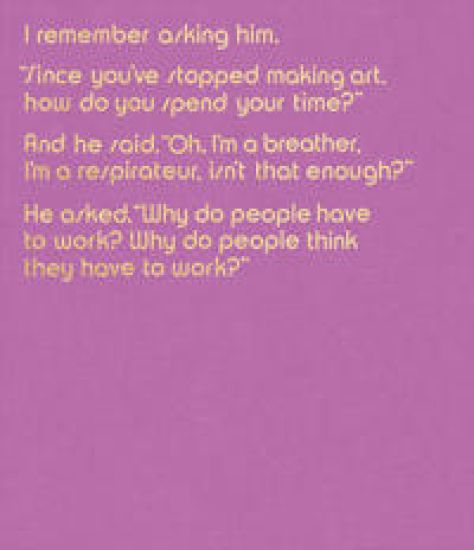
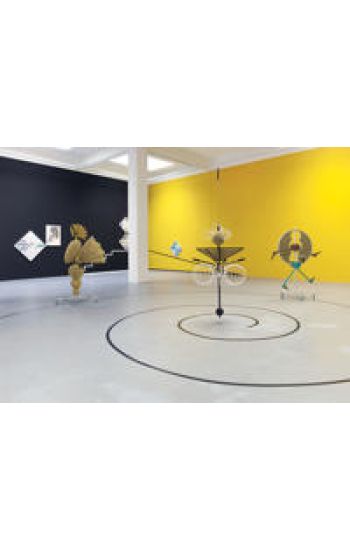
A handsomely designed overview of Chan’s acclaimed Badlands imprint and his latest sculptural series exploring the metaphor of the “breather” This volume surveys Paul Chan’s publications and works made between 2010 and 2022 following his return to artmaking. The exhibition takes as its organizing principle the notion of the “breather,” a word that can signify a moment of rest or pause but can also reference a purposeful redirection toward other activities. Chan’s turn to publishing through the founding of his independent press Badlands Unlimited represented a type of “breather.” Badlands for Chan embodied a radical break that seeded new ideas and ways of working. The term is also what Chan titles a recent major body of work. Breathers is an ongoing series of pneumatic sculptures and installations that he considers a new genre of moving-image works. Tacitly and overtly, the metaphor of the “breather” underscores each of the works in the Walker Art Center exhibition, which, with the artist’s input, is conceived in four sections. The exhibition catalog includes scholarly contributions by Chan; Pavel Pys, Curator of Visual Arts at the Walker Art Center; and Vic Brooks, Senior Curator of Time-based Visual Art at Experimental Media and Performing Arts Center Rensselaer Polytechnic Institute (EMPAC). Paul Chan (born 1973) is an artist, writer and publisher who lives in New York. Chan is the winner of the Hugo Boss Prize in 2014, a biennial award honoring artists who have made visionary contributions to contemporary art. Chan founded the independent press Badlands Unlimited in 2010. Badlands has published over 50 books, including the works of Yvonne Rainer, Calvin Tomkins, Lynne Tillman, Hans Ulrich Obrist, Carroll Dunham, Claudia La Rocco, Dread Scott, Martine Syms, Craig Owens, Petra Cortright, Cauleen Smith, Ian Cheng, Rachel Rose, Aruna D’Souza and many others.
The Paradox of Stillness: Art, Object, and Performance
How performance has transformed the status of the art object, in works by Félix González-Torres, Oskar Schlemmer, Robert Morris and more Presenting works from the early 20th century to today, The Paradox of Stillness: Art, Object, and Performance examines the notion of stillness as both a performative and visual gesture, featuring practitioners who have constructed static or near-static experiments that hover somewhere between action and representation as they are experienced in the gallery space. The exhibition investigates performance from the perspective of the object rather than the body, examining how performance has reinterpreted traditional artistic mediums. Stillness and permanence are qualities typically seen as inherent to painting and sculpture—consider the frozen gestures of a historical tableau or the unyielding solidity of a bronze figure. The Paradox of Stillness, however, expands the artwork’s quality of stillness to accommodate uncertain temporalities and physical states, investigating works that merge objects with human bodies suspended in motion. Featuring artists whose works include performative elements but also embrace acts, objects and gestures that refer more to the inert qualities of painting or sculpture than to true staged action, The Paradox of Stillness rethinks the history of performance through its aesthetic investigations into the interplay of the fixed image and the live body. Artists include: Marina Abramovic, Merce Cunningham, Giorgio de Chirico, VALIE EXPORT, Gilbert and George, Félix González-Torres, Maria Hassabi, Jannis Kounellis, Kasimir Malevich, Piero Manzoni, Robert Morris, Senga Nengudi, Michelangelo Pistoletto, Oskar Schlemmer, Sophie Taeuber-Arp, Cindy Sherman, Mario Garcia Torres and Franz West.