Kirjojen hintavertailu – 12 903 725 kirjaa ja 27 kauppaa

Kirjailija

Mary Douglas

Kirjat ja teokset yhdessä paikassa: 44 kirjaa, julkaisuja vuosilta 1983–2021, suosituimpiin kuuluu Jacob's Tears. Vertaile teosten hintoja ja tarkista saatavuus suomalaisista kirjakaupoista.

44 kirjaa

Kirjojen julkaisuvuodet: 1983–2021.

How Institutions Think (Routledge Revivals)
First published in 1986 Mary Douglas’ theory of institutions uses the sociological theories of Emile Durkheim and Ludwig Fleck to determine not only how institutions think, but also the extent to which thinking itself is dependent upon institutions. Different kinds of institutions allow individuals to think different kinds of thoughts and to respond to different emotions. It is just as difficult to explain how individuals come to share the categories of their thought as to explain how they ever manage to sink their private interests for a common good. Douglas forewarns us that institutions do not think independently, nor do they have purposes, nor do they build themselves. As we construct our institutions, we are squeezing each other’s ideas into a common shape in order to prove their legitimacy by sheer numbers. She admonishes us not to take comfort in the thought that primitives may think through institutions, but moderns decide on important issues individually. Our legitimated institutions make major decisions, and these decisions always involve ethical principles.

How Institutions Think (Routledge Revivals)
First published in 1986 Mary Douglas’ theory of institutions uses the sociological theories of Emile Durkheim and Ludwig Fleck to determine not only how institutions think, but also the extent to which thinking itself is dependent upon institutions. Different kinds of institutions allow individuals to think different kinds of thoughts and to respond to different emotions. It is just as difficult to explain how individuals come to share the categories of their thought as to explain how they ever manage to sink their private interests for a common good. Douglas forewarns us that institutions do not think independently, nor do they have purposes, nor do they build themselves. As we construct our institutions, we are squeezing each other’s ideas into a common shape in order to prove their legitimacy by sheer numbers. She admonishes us not to take comfort in the thought that primitives may think through institutions, but moderns decide on important issues individually. Our legitimated institutions make major decisions, and these decisions always involve ethical principles.
In the Active Voice (Routledge Revivals)
First published in 1982, this collection of essays is a reproach to a form of the sociology of religion that treats people as the passive objects of impersonal social influences. In opposition to this, the author seeks to assert an active voice style of thinking about the relations between individuals and their cultural environment, whether in economics, history or literary criticism. This collection is assembled with the guiding principle that all the essays touch upon the borderland between economic values and personal judgements of quality. Several essays illustrate the theme from the place of economics in anthropology and the place of economic behaviour in sociological and cultural criticism. The essay on 'Cultural bias' suggests a systematic method of analysis for investigating social influences on judgement and choice.
The Lele of the Kasai

The Lele of the Kasai

Mary Douglas

Routledge
2010
nidottu
This first volume is a compilation of numerous essays by Douglas on the Lele in the Belgian Congo covering a fifteen year period. There are early indications of Douglas's cultural imagination and written expression that were to make her works accessible and relevant to a western readership of non-anthropologists. The intellectural tools and examples she gained from Africanist ethnography continue to serve her explorations of European and American society.
Essays on the Sociology of Perception
First published in 1982, this is one of Mary Douglas' favourite books. It is based on her meetings with friends in which they attempt to apply the grip/group analysis from Natural Symbols. The essays have been important texts for preparing grid/group exercises ever since. She is still trying to improve the argument of Natural Symbols and is always hoping to find better applications to illustrate the power of the two dimensions used for accurate comparison.
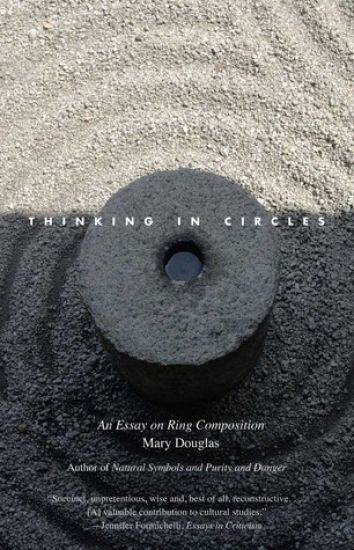
Thinking in Circles

Thinking in Circles

Mary Douglas

Yale University Press
2010
pokkari
Exploring beyond the usual boundaries of social anthropology, a leader in the field shows why our readings of ancient literary texts may be off the mark Many famous antique texts are misunderstood and many others have been completely dismissed, all because the literary style in which they were written is unfamiliar today. So argues Mary Douglas in this controversial study of ring composition, a technique which places the meaning of a text in the middle, framed by a beginning and ending in parallel. To read a ring composition in the modern linear fashion is to misinterpret it, Douglas contends, and today’s scholars must reevaluate important antique texts from around the world. Found in the Bible and in writings from as far afield as Egypt, China, Indonesia, Greece, and Russia, ring composition is too widespread to have come from a single source. Does it perhaps derive from the way the brain works? What is its function in social contexts? The author examines ring composition, its principles and functions, in a cross-cultural way. She focuses on ring composition in Homer’s Iliad, the Bible’s book of Numbers, and, for a challenging modern example, Laurence Sterne’s Tristram Shandy, developing a persuasive argument for reconstruing famous books and rereading neglected ones.
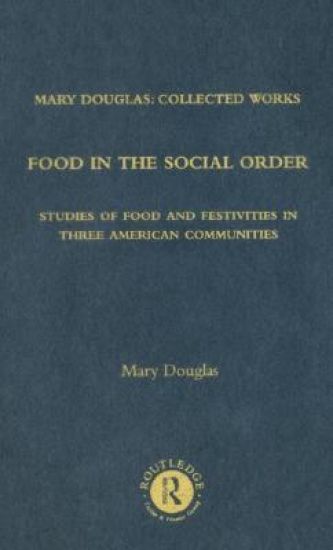
Food in the Social Order

Food in the Social Order

Mary Douglas

Routledge
2009
nidottu
First published in 1984, This work is a cross-cultural study of the moral and social meaning of food. It is a collection of articles by Douglas and her colleagues covering the food system of the Oglala Sioux, the food habits of families in rural North Carolina, meal formats in an Italian-American community near Philadelphia. It also includes a grid/group analysis of food consumption.
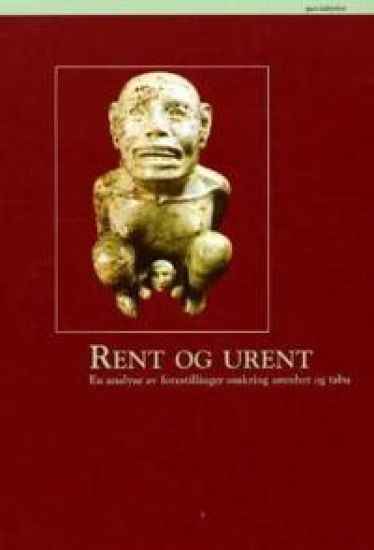
Rent og urent

Rent og urent

Mary Douglas

Pax
2007
sidottu
Gjennom sin analyse viser forfatteren hvordan det intrikate mønsteret som er vår egen tilværelse, ikke er noen naturlig inndeling, men resultatet av en sosial prosess. Hun hevder at forståelsen av renhet og urenhet er med på å skape kategorier og skillene i alle kulturer. Dette er en felles faktor som binder alle menneskelige samfunn sammen, og erkjennelsen av dette bidrar til å dempe vårt skille mellom en sekulær og en religiøs virkelighetsoppfatning. Har litteraturliste og stikkordregister.
Natural Symbols

Natural Symbols

Professor Mary Douglas; Mary Douglas

Routledge
2003
nidottu

Halvin toimitettuna 28,20 €

One of the most important works of modern anthropology. Written against the backdrop of the student uprisings of the late 1960s, the book took seriously the revolutionary fervour of the times, but instead of seeking to destroy the rituals and symbols that can govern and oppress, Mary Douglas saw instead that if transformation were needed, it could only be made possible through better understanding. Expressed with clarity and dynamism, the passionate analysis which follows remains one of the most insightful and rewarding studies of human behaviour ever written.
Purity and Danger

Purity and Danger

Mary Douglas

Routledge
2002
nidottu

Halvin toimitettuna 30,80 €

Is cleanliness next to godliness? What does such a concept really mean? Why does it recur as a universal theme across all societies? And what are the implications for the unclean? In Purity and Danger Mary Douglas identifies the concern for purity as a key theme at the heart of every society. In lively and lucid prose she explains its relevance for every reader by revealing its wide-ranging impact on our attitudes to society, values, cosmology and knowledge. This book has been hugely influential in many areas of debate – from religion to social theory. With a specially commissioned preface by the author which assesses the continuing significance of the work, this Routledge Classics edition will ensure that Purity and Danger continues to challenge, question and inspire for many years to come.
Mary Douglas

Mary Douglas

Professor Mary Douglas; Mary Douglas

Routledge
2002
muu
Mary Douglas is a central figure within British social anthropology. Studying under Evans-Pritchard at Oxford immediately after the second world war, she formed part of the group of anthropologists who established social anthropology's standing in the world of scholarship. Her works, spanning the second half of the twentieth century, have been widely read and her theories applied across the social sciences and humanities. While her research in the Congo clearly inspired her later studies, Douglas also applied her theories to Western societies and thus played a crucial role in normalizing the contemporary acceptance of the West as a legitimate field of anthropological investigation. Douglas' work has excited debate in such diverse areas as economics, religion, philosophy, the sociology of food, and risk analysis. This collection reproduces, in facsimile, twelve of Mary Douglas's groundbreaking works, all of which are also available for individual purchase. The first volume includes a new introduction written by Douglas for this collection.
Essays on the Sociology of Perception
First published in 1982, this is one of Mary Douglas' favourite books. It is based on her meetings with friends in which they attempt to apply the grip/group analysis from Natural Symbols. The essays have been important texts for preparing grid/group exercises ever since. She is still trying to improve the argument of Natural Symbols and is always hoping to find better applications to illustrate the power of the two dimensions used for accurate comparison.
Rules and Meanings

Rules and Meanings

Mary Douglas

Routledge
2002
sidottu
First published in 1973, Rules and Meanings is an anthology of works that form part of Mary Douglas' struggle to devise an anthropological modernism conducive to her opposition to reputedly modernizing trends in contemporary society. The collection contains works by Wittgenstein, Schutz, Husserl, Hertz and other continentals. The underlying themes of the anthology are the construction of meaning, the force of hidden background assumptions, tacit conventions and the power of spatial organization to reinforce words. The work serves to complement the philosophers' work on everyday language with the anthropologists' theory of everyday knowledge.
Food in the Social Order

Food in the Social Order

Mary Douglas

Routledge
2002
sidottu
First published in 1984, This work is a cross-cultural study of the moral and social meaning of food. It is a collection of articles by Douglas and her colleagues covering the food system of the Oglala Sioux, the food habits of families in rural North Carolina, meal formats in an Italian-American community near Philadelphia. It also includes a grid/group analysis of food consumption.
Risk and Acceptability

Risk and Acceptability

Mary Douglas

Routledge
2002
sidottu
First published in 1985, Mary Douglas intended Risk and Acceptability as a review of the existing literature on the state of risk theory. Unsatisfied with the current studies of risk, which she found to be flawed by individualistic and psychologistic biases, she instead uses the book to argue risk analysis from an anthropological perspective. Douglas raises questions about rational choice, the provision of public good and the autonomy of the individual.
Purity and Danger

Purity and Danger

Professor Mary Douglas; Mary Douglas

Routledge
2002
sidottu
Purity and Danger is acknowledged as a modern masterpiece of anthropology. It is widely cited in non-anthropological works and gave rise to a body of application, rebuttal and development within anthropology. In 1995 the book was included among the Times Literary Supplement's hundred most influential non-fiction works since WWII. Incorporating the philosophy of religion and science and a generally holistic approach to classification, Douglas demonstrates the relevance of anthropological enquiries to an audience outside her immediate academic circle. She offers an approach to understanding rules of purity by examining what is considered unclean in various cultures. She sheds light on the symbolism of what is considered clean and dirty in relation to order in secular and religious, modern and primitive life.
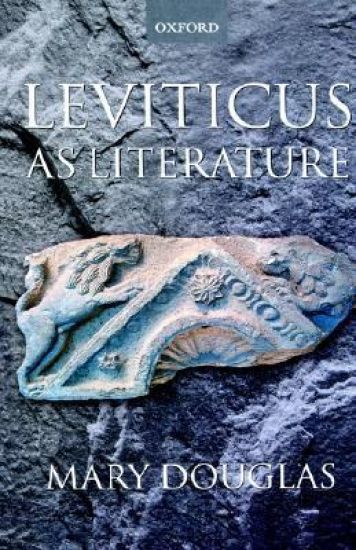
Leviticus as Literature

Leviticus as Literature

Mary Douglas

Oxford University Press
1999
sidottu
This first full-scale account of Leviticus by a world renowned anthropologist presents the biblical work as a literary masterpiece. Seen in an anthropological perspective Leviticus has a mystical structure which plots the book into three parts corresponding to the three parts of the desert tabernacle, both corresponding to the parts of Mount Sinai. This completely new reading transforms the interpretation of the purity laws. The pig and other forbidden animals are not abhorrent, they command the same respect due to all God's creatures. Boldly challenging several traditions of Bible criticism, Mary Douglas claims that Leviticus is not the narrow doctrine of a crabbed professional priesthood but a powerful intellectual statement about a religion which emphasizes God's justice and compassion.
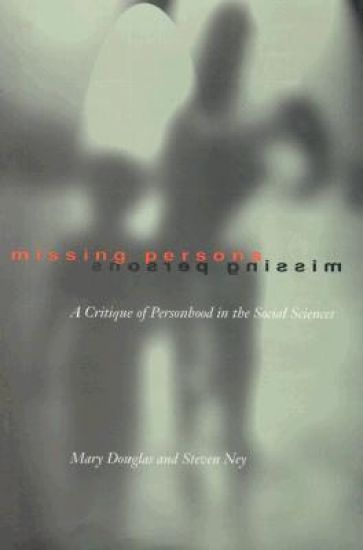
Missing Persons

Missing Persons

Mary Douglas; Steven Ney

University of California Press
1998
sidottu
The Western cultural consensus based on the ideas of free markets and individualism has led many social scientists to consider poverty as a personal experience, a deprivation of material things, and a failure of just distribution. Mary Douglas and Steven Ney find this dominant tradition of social thought about poverty and well-being to be full of contradictions. They argue that the root cause is the impoverished idea of the human person inherited through two centuries of intellectual history, and that two principles, the idea of the solipsist self and the idea of objectivity, cause most of the contradictions. Douglas and Ney state that Economic Man, from its semitechnical niche in eighteenth-century economic theory, has taken over the realms of psychology, consumption, public assistance, political science, and philosophy. They say that by distorting the statistical data presented for policy analysis, the ideas of the solipsist self and objectivity indeed often protect a political bias. The authors propose to correct this by revising the current model of the person. Taking cultural bias into account and giving full play to political dissent, they restore the 'persons' who have been missing from the social science debates. Drawing from anthropology, economics, political science, and sociology, the authors set forth a fundamental critique of the social sciences. Their book will find a wide audience among social scientists and will also interest anyone engaged in current discussions of poverty. This book is a copublication with the Russell Sage Foundation.