Kirjojen hintavertailu – 12 903 725 kirjaa ja 27 kauppaa

Kirjailija

Mary E. Lewis

Kirjat ja teokset yhdessä paikassa: 5 kirjaa, julkaisuja vuosilta 2006–2026, suosituimpiin kuuluu The Archaeology of Disease. Vertaile teosten hintoja ja tarkista saatavuus suomalaisista kirjakaupoista.

5 kirjaa

Kirjojen julkaisuvuodet: 2006–2026.

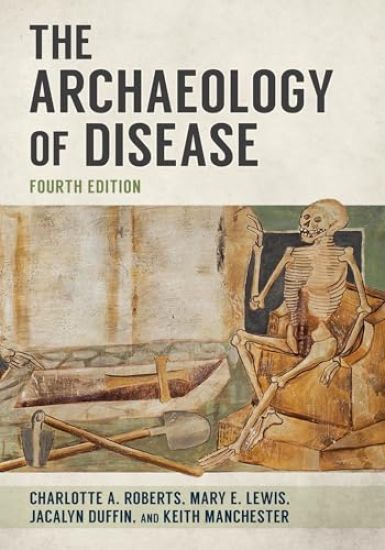
The Archaeology of Disease

The Archaeology of Disease

Charlotte A. Roberts; Mary E. Lewis; Jacalyn Duffin; Keith Manchester; Anne L. Grauer

CORNELL UNIVERSITY PRESS
2026
pokkari
This revised fourth edition of The Archaeology of Disease focuses on reconstructing the origin, evolution, and history of disease as seen mainly through human skeletons from archaeological sites. In addition, this edition addresses new concepts in medicine and explores the challenges faced by individuals and populations, including their children. Integrating conceptual frameworks from bioarchaeology, medical history, and clinical health, the authors take a long view of disease over thousands of years to examine how frequencies of disease have changed over time in relation to epidemiological transitions. They further investigate the risk of disease in populations at specific time periods and geographic locations. As a result, they provide a better understanding of the impact of health problems on our ancestors and present ethical considerations for palaeopathologists around the world when working with human remains using both archaeological and historical evidence.
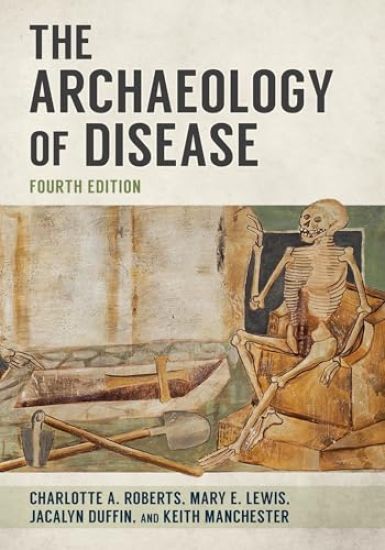
The Archaeology of Disease

The Archaeology of Disease

Charlotte A. Roberts; Mary E. Lewis; Jacalyn Duffin; Keith Manchester; Anne L. Grauer

CORNELL UNIVERSITY PRESS
2026
sidottu
This revised fourth edition of The Archaeology of Disease focuses on reconstructing the origin, evolution, and history of disease as seen mainly through human skeletons from archaeological sites. In addition, this edition addresses new concepts in medicine and explores the challenges faced by individuals and populations, including their children. Integrating conceptual frameworks from bioarchaeology, medical history, and clinical health, the authors take a long view of disease over thousands of years to examine how frequencies of disease have changed over time in relation to epidemiological transitions. They further investigate the risk of disease in populations at specific time periods and geographic locations. As a result, they provide a better understanding of the impact of health problems on our ancestors and present ethical considerations for palaeopathologists around the world when working with human remains using both archaeological and historical evidence.
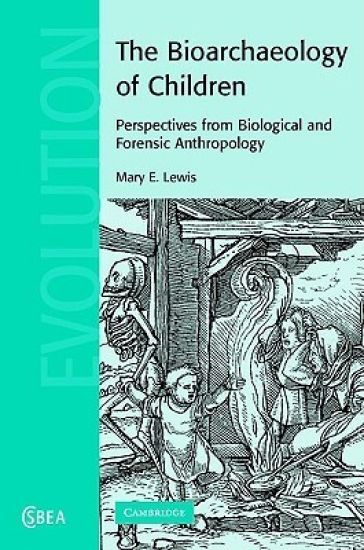
The Bioarchaeology of Children

The Bioarchaeology of Children

Mary E. Lewis

Cambridge University Press
2009
pokkari
This book is entirely devoted to the study of children's skeletons from archaeological and forensic contexts. It provides an extensive review of the osteological methods and theoretical concepts of their analysis. Non-adult skeletons provide a wealth of information on the physical and social life of the child from their growth, diet and age at death, to factors that expose them to trauma and disease at different stages of their lives. This book covers the factors that affect non-adult skeletal preservation; the assessment of their age, sex and ancestry; growth and development; infant and child mortality including infanticide; weaning ages and disease of dietary deficiency; skeletal pathology; personal identification and exposure to trauma from birth injuries, accidents and child abuse; providing insights for graduates and postgraduates in osteology, palaeopathology and forensic anthropology.
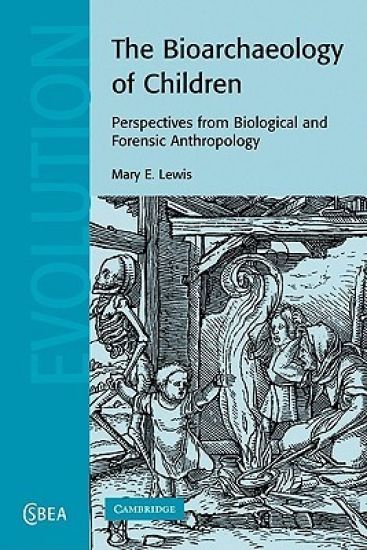
The Bioarchaeology of Children

The Bioarchaeology of Children

Mary E. Lewis

Cambridge University Press
2006
sidottu
This book is entirely devoted to the study of children's skeletons from archaeological and forensic contexts. It provides an extensive review of the osteological methods and theoretical concepts of their analysis. Non-adult skeletons provide a wealth of information on the physical and social life of the child from their growth, diet and age at death, to factors that expose them to trauma and disease at different stages of their lives. This book covers the factors that affect non-adult skeletal preservation; the assessment of their age, sex and ancestry; growth and development; infant and child mortality including infanticide; weaning ages and disease of dietary deficiency; skeletal pathology; personal identification and exposure to trauma from birth injuries, accidents and child abuse; providing insights for graduates and postgraduates in osteology, palaeopathology and forensic anthropology.