Kirjojen hintavertailu – 12 903 725 kirjaa ja 27 kauppaa

Kirjailija

Mary Ehrenworth

Kirjat ja teokset yhdessä paikassa: 8 kirjaa, julkaisuja vuosilta 2011–2026, suosituimpiin kuuluu AI-Supported Teaching for Multilingual Learners. Vertaile teosten hintoja ja tarkista saatavuus suomalaisista kirjakaupoista.

8 kirjaa

Kirjojen julkaisuvuodet: 2011–2026.

AI and Reading Instruction

AI and Reading Instruction

Mary Ehrenworth; Philip Seyfried

TAYLOR FRANCIS LTD
2026
nidottu
There are innovative, beautiful, personal ways that AI can deepen reading instruction—and most teachers simply need to be introduced to them. When willingness to explore AI combines with the urge to empower readers, remarkable things become possible. AI and Reading Instruction is a practical guide that shows you how. Drawing from years of classroom research and intensive professional development across grade levels, Mary Ehrenworth and Philip Seyfried reveal what happens when teachers discover the opportunities hidden in moments of technological change: newcomers and multilingual learners participate fully in class discussions. Avid readers examine their thinking in exciting new ways. Teachers co-author learning tools and assessments that would have taken hours to create alone. Whether you're tech-phobic, tech-savvy but concerned about AI's impact on teaching, or simply curious about where to start, this book offers practical entry points and clear demonstrations. You'll learn to use large language models like ChatGPT, Claude, and Google Gemini to rapidly generate learning tools and analyze reading data, and EdTech platforms like MagicSchool, SchoolAI, and Flint to create safe, contained chat rooms and simulations where students can interact with AI partners designed to your specifications. Inside, you'll find examples of research-based theoretical stances, practical tips, AI-student discussions, teacher-created chatbots, and co-created learning tools that show what this work looks like in practice. A companion website provides additional resources that will evolve as AI capabilities grow. At a moment when students need deeper reading comprehension and critical thinking skills, this book demonstrates how thoughtful AI integration increases accessibility and equity for every reader in your classroom.
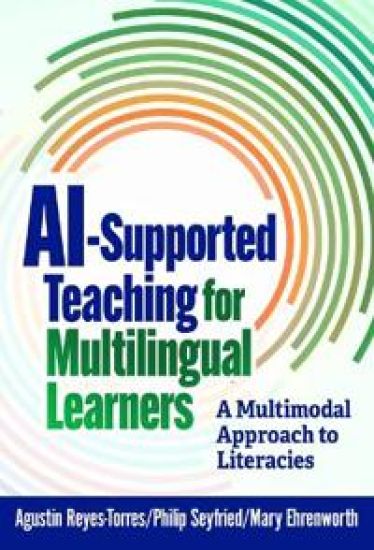
AI-Supported Teaching for Multilingual Learners

AI-Supported Teaching for Multilingual Learners

Agustín Reyes-Torres; Philip Seyfried; Mary Ehrenworth

TEACHERS' COLLEGE PRESS
2026
sidottu
Learn how to harness artificial intelligence to create inclusive learning environments where multilingual learners thrive (K–12). This book invites educators to reimagine literacy instruction at the intersection of language, culture, and technology. Through vivid classroom stories, practical frameworks, and adaptable lesson designs, the authors demonstrate how AI can serve as a thinking partner to help students translate, analyze, and express ideas across languages and modes. Rather than viewing multilingualism as a challenge, this book positions it as brilliance—a source of creativity, insight, and connection. From multimodal micropaths and strategic text sets to AI-powered feedback and assessment, readers will find tools that honor students’ full linguistic and cultural repertoires while deepening critical and creative thinking. AI-Supported Teaching for Multilingual Learners offers a hopeful vision for how teachers can combine human artistry and technological innovation to make literacy instruction more inclusive, dynamic, and human. Book Features: Brings together insights from multiliteracies pedagogy and emerging research on AI in education, offering practice-based models for how these fields can inform each other in meaningful, student-centered ways. Positions multilingual students as designers of meaning and knowledge, highlighting their full linguistic and cultural repertoires as assets in every classroom. Shows how AI can serve as a creative and critical partner that supports translation, feedback, and design, yet keeps human relationships and judgment at the center of teaching and learning.
AI-Supported Teaching for Multilingual Learners

AI-Supported Teaching for Multilingual Learners

Agustín Reyes-Torres; Philip Seyfried; Mary Ehrenworth

TEACHERS' COLLEGE PRESS
2026
nidottu
Learn how to harness artificial intelligence to create inclusive learning environments where multilingual learners thrive (K–12). This book invites educators to reimagine literacy instruction at the intersection of language, culture, and technology. Through vivid classroom stories, practical frameworks, and adaptable lesson designs, the authors demonstrate how AI can serve as a thinking partner to help students translate, analyze, and express ideas across languages and modes. Rather than viewing multilingualism as a challenge, this book positions it as brilliance—a source of creativity, insight, and connection. From multimodal micropaths and strategic text sets to AI-powered feedback and assessment, readers will find tools that honor students’ full linguistic and cultural repertoires while deepening critical and creative thinking. AI-Supported Teaching for Multilingual Learners offers a hopeful vision for how teachers can combine human artistry and technological innovation to make literacy instruction more inclusive, dynamic, and human. Book Features: Brings together insights from multiliteracies pedagogy and emerging research on AI in education, offering practice-based models for how these fields can inform each other in meaningful, student-centered ways. Positions multilingual students as designers of meaning and knowledge, highlighting their full linguistic and cultural repertoires as assets in every classroom. Shows how AI can serve as a creative and critical partner that supports translation, feedback, and design, yet keeps human relationships and judgment at the center of teaching and learning.
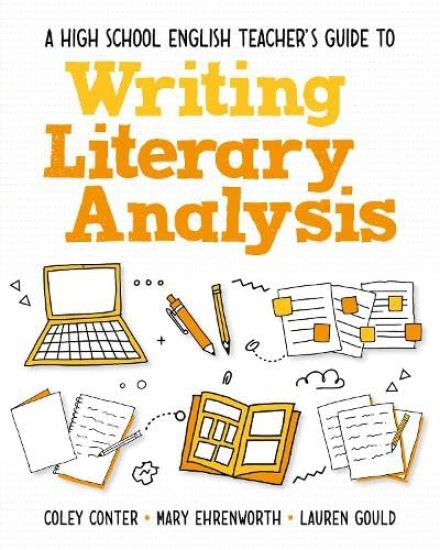
A High School English Teacher's Guide to Writing Literary Essay

A High School English Teacher's Guide to Writing Literary Essay

Coley Conter; Mary Ehrenworth; Lauren Gould

TAYLOR FRANCIS LTD
2025
nidottu
A High School English Teacher’s Guide to Writing Literary Analysis is more than a curriculum resource—it’s an invitation. With over fifty flexible lessons and a treasure trove of tools, charts, mentor texts, and AI recommendations, this ready-to-use guide invites teachers to reimagine literary analysis as something intimate, authentic, intellectual, and joyful. Grounded in research in university courses and high school classrooms, this guide dives deeply into literary analysis, inviting students to learn the art of lingering in texts, seeing more, and developing expressive language to articulate their thinking. Because reading is at the heart of literary analysis writing, half of these lessons lead students back into texts to develop interpretations. The other half of the lessons teach students the craft of writing about texts with insight and voice. Along the way, this guidebook also offers ways to coach students toward…? Developing original, evidence-based interpretations? Crafting nuanced, meaningful theses? Organizing and elevating their evidence and reasoning? Strengthening commentary and sharpening analysis? Refining structure, style, and conventions with intention? Using AI across the analytical and writing process to deepen thinking and sharpen writingIn a time when student engagement and authentic thinking matter more than ever, A High School English Teacher’s Guide to Writing Literary Analysis equips educators with the tools to make literary interpretation both rigorous and relevant. Drawing on real classrooms and fresh scholarship, this book honors student voice, celebrates interpretation, and dares to break the boundaries of the five-paragraph essay. Whether your students are writing about novels, podcasts, or other media, these lessons will help them deepen their thinking, express their ideas, and write about texts with real purpose—for real audiences. With this guide in hand, teachers can foster classrooms where analysis becomes not a formula to follow, but a powerful means of self-expression and discovery.
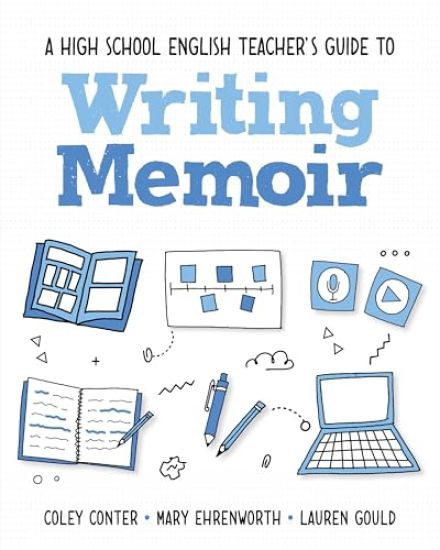
A High School English Teacher's Guide to Writing Memoir

A High School English Teacher's Guide to Writing Memoir

Coley Conter; Mary Ehrenworth; Lauren Gould

TAYLOR FRANCIS LTD
2025
nidottu
A High School English Teacher’s Guide to Writing Memoir is more than a set of writing lessons—it’s a call to see your students, and help them see themselves, through the power of story. With more than forty flexible lessons and a robust suite of downloadable charts, tools, mentor texts, and AI recommendations, this guide helps you teach memoir as courageous storytelling and self-discovery. Students will write honestly, revise bravely, and publish in formats that matter to them—from anthologies to picture books to multimodal memoirs. Grounded in research and practical classroom strategies, this guidebook walks teachers through each stage of memoir writing—from generating story ideas and experimenting with structure to revising with intention and experimenting with conventions. Along the way, it centers mentor text inquiry, writing partnerships, and author’s craft. It also embraces new technologies, including AI, as part of the writing process, so your students will emerge confident and adept as digital writers. Whether your students are excavating memories, wrestling with identity, or discovering their voice for the first time, this guide helps them transform raw moments into powerful memoirs. And for you—the teacher—it brings a new kind of classroom intimacy, a deepened community, and the reminder that storytelling is the heart of being known. Let memoir become a source of meaning, connection, and growth for every writer in your room.
Ai-Enhanced Literacy: Practical Steps for Deepening Reading and Writing Instruction

Ai-Enhanced Literacy: Practical Steps for Deepening Reading and Writing Instruction

Mary Ehrenworth; Philip Seyfried

ASCD
2025
nidottu

Halvin toimitettuna 29,50 €

Teach students to use AI tools in a thoughtful, critical, and ethical way during reading and writing instruction. The relationship between AI and literacy education isn't simple. Every tool that makes work more efficient also requires careful consideration. In this measured look at the powerful capabilities of artificial intelligence, literacy experts Mary Ehrenworth and Philip Seyfried take K-12 teachers on a tour of what's possible when AI tools are seamlessly integrated into literacy teaching and learning. Each chapter examines AI's potential to expand literacy instruction, deepen student understanding, and make the teacher's role more interesting and satisfying. You'll find both theoretical approaches and practical examples to help you - Understand and feel at ease with current AI tools. - Create AI-enhanced spaces in your classroom. - Harness AI as a writing coach. - Develop students' reading comprehension with digital texts and tools. - Extend multilingual competencies using AI-powered translation tools. - Build and use engaging text sets. - Teach students to think critically about and with AI. Using AI tools to improve reading and writing instruction can feel overwhelming, but it is a critical skill for today's literacy teachers. AI-Enhanced Literacy illuminates a strategic and successful path toward wise and seamless AI use--your own and your students'.
Vocabulary Connections

Vocabulary Connections

Mary Ehrenworth

TAYLOR FRANCIS LTD
2025
nidottu
In this lively, student-centered work, Dr. Mary Ehrenworth presents a complete curriculum for vocabulary acquisition, one that can be embedded as a separate component or taught inside of any reading curriculum in grades 3–6. Your students will learn to collect and apply literary vocabulary. They will learn a repertoire of writing about reading strategies for deepening literary vocabulary, close reading, and literary conversations. They will dive into a study of etymology, cognates, and compound words, as well as a deep study of morphology. These word conscious learners—budding linguists—will become flexible word solvers and creators as they learn to collect and apply domain vocabulary and develop expertise in attending to varied and subtle context clues not only to acquire domain vocabulary, but to comprehend more complex nonfiction texts. Teachers will appreciate the student-centered, affirming, and inclusive pedagogy, the attention to multilingualism, the focus on transfer and independence, the solid core of undergirding research, the room for immersion and inquiry, and the tremendous impact on reading comprehension and criticality as well as vocabulary. With a thoughtful progression across Literary Vocabulary, Word Consciousness, and Domain Vocabulary, Ehrenworth offers dozens of use-tomorrow lessons designed to be easily replicated with multiple texts, in a variety of learning experiences. Specifically, Vocabulary Connections presents practical structures to help teachers develop replicable protocols for:collecting literary and domain vocabularywriting about reading as a way to deepen vocabulary and interpretationinvestigating word choice as a way of thinking about point of viewexploring context clues in complex nonfictionbuilding word consciousness - morphology, compound words, cognatesGrounded in both inquiry and direct instruction and supported with a variety of engaging visuals and instructional tips, Vocabulary Connections will quickly become a trusted resource you’ll want to return to for planning and instruction year after year.
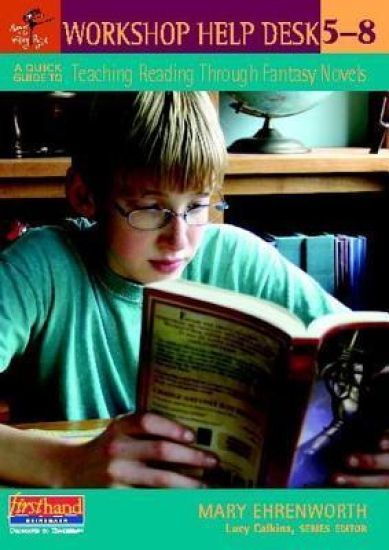
A Quick Guide to Teaching Reading Through Fantasy Novels, 5-8

A Quick Guide to Teaching Reading Through Fantasy Novels, 5-8

Lucy Calkins; Mary Ehrenworth

HEINEMANN EDUCATIONAL BOOKS
2011
nidottu
Supporting dreams of fabulous escape and transformation, fantasy literature can be especially compelling for adolescents. Mary Ehrenworth offers a unit of study that harnesses the power of this expansive and poignant genre to lure even reluctant readers into reading epic novels with passion and stamina. Adhering to reading workshop principles and the classic session architecture honed by Lucy Calkins in the Units of Study series, this unit of study begins by launching the kids into fantasy book clubs that foster literary conversations. After exploring ways to read with deep comprehension and to synthesize across pages, students learn to develop thematic understandings. During the course of this unit, students likewise explore where their novels fit within the larger literary tradition. Throughout the unit, students read several books--tackling at least one series, and sometimes moving across series. (This unit of study is drawn from Constructing Curriculum in the Units of Study for Teaching Reading series.) A Quick Guide to Teaching Reading Through Fantasy Novels is part of the Workshop Help Desk series. About the Workshop Help Desk series The Workshop Help Desk series is designed for teachers who believe in workshop teaching and who have already rolled up their sleeves enough to have encountered the predictable challenges. If you've struggled to get around quickly enough to help all your students, if you've wondered how to tweak your teaching to make it more effective and lasting, if you've needed to adapt your teaching for English learners, if you've struggled to teach grammar or nonfiction writing or test prep...if you've faced these and other specific, pressing challenges, then this series is for you. Provided in a compact 5" x 7" format, the Workshop Help Desk series offers pocket-sized professional development. For a comprehensive overview of the Units of Study in Opinion/Argument, Information, and Narrative series, including sample minilessons, sample videos, videos, frequently asked questions and more, visit UnitsofStudy.com.