Kirjojen hintavertailu – 12 903 725 kirjaa ja 27 kauppaa

Kirjailija

Mary Jo Deegan

Kirjat ja teokset yhdessä paikassa: 12 kirjaa, julkaisuja vuosilta 1984–2018, suosituimpiin kuuluu Self, War, and Society. Vertaile teosten hintoja ja tarkista saatavuus suomalaisista kirjakaupoista.

12 kirjaa

Kirjojen julkaisuvuodet: 1984–2018.

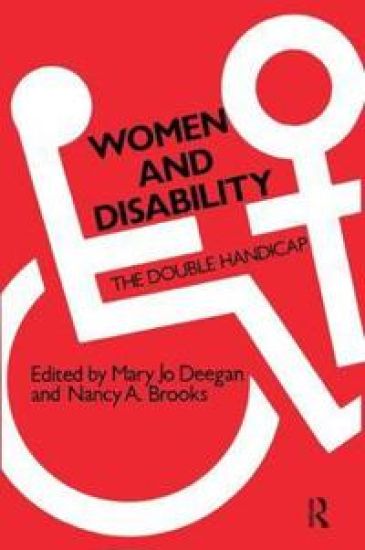
Women and Disability

Women and Disability

Mary Jo Deegan

Routledge
2018
nidottu
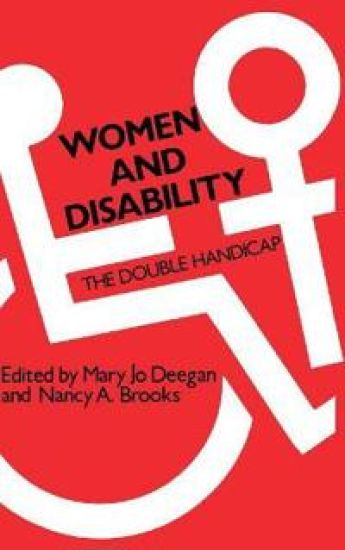
The special needs of women with disabilities have been disregarded in a wide variety of vital areas. Issues pertain to women as wives and mothers. Studies of the effects on female sexuality of such conditions as renal disease and diabetes are lacking, though the sexual functioning of men with these diseases has been researched. On the economic front, the Federal-State Vocational Rehabilitation system and the regulations concerning disability benefits under Social Security provide less adequately for women than for men. Hopefully, this volume will raise the consciousness of its readers to the special status of women with disabilities as a minority group experiences multiple sources of discriminations.

Self, War, and Society

Self, War, and Society

Mary Jo Deegan

AldineTransaction
2012
nidottu
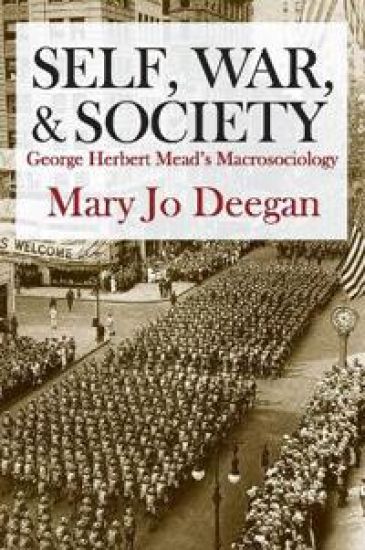
George Herbert Mead (1863-1931) is a founding figure in the field of sociology. His stature is comparable to that of his contemporaries Emile Durkheim and Max Weber. Mead's contribution was a profound and unique American theory that analyzed society and the individual as social objects. As Mead saw it, both society and the individual emerged from cooperative, democratic processes linking the self, the other, and the community. Mary Jo Deegan, a leading scholar of Mead's work, traces the evolution of his thought , its continuity and change. She is particularly interested in the most controversial period of Mead's work, in which he addressed topics of violence and the nation state. Mead's theory of war, peace, and society emerged out of the historical events of his time, particularly World War I. During this period he went from being a pacifist, along with his contemporaries John Dewey and Jane Addams, to being a strong advocate for war. From 1917-1918 Mead became a leader in voicing the need for war based on his theory of self and society. After the war, he became disillusioned with President Woodrow Wilson, with Americans' failure to support mechanisms for international arbitration, and with the political reasons for American participation in World War I. He returned to a more pacifist and co-operative model of behavior during the 1920s, when he became less political, more abstract, and more withdrawn from public debate. The book includes Deegan's interpretation of Mead's early social thought, his friendship and family networks, the historical context of America at war, and the importance of analysis of violence and the state from Mead's perspective. She also provides illustrative selections from Mead's work, much of which was previously unpublished.
Self, War, and Society

Self, War, and Society

Mary Jo Deegan

Transaction Publishers
2008
sidottu
George Herbert Mead (1863-1931) is a founding figure in the field of sociology. His stature is comparable to that of his contemporaries Emile Durkheim and Max Weber. Mead's contribution was a profound and unique American theory that analyzed society and the individual as social objects. As Mead saw it, both society and the individual emerged from cooperative, democratic processes linking the self, the other, and the community. Mary Jo Deegan, a leading scholar of Mead's work, traces the evolution of his thought , its continuity and change. She is particularly interested in the most controversial period of Mead's work, in which he addressed topics of violence and the nation state. Mead's theory of war, peace, and society emerged out of the historical events of his time, particularly World War I. During this period he went from being a pacifist, along with his contemporaries John Dewey and Jane Addams, to being a strong advocate for war. From 1917-1918 Mead became a leader in voicing the need for war based on his theory of self and society. After the war, he became disillusioned with President Woodrow Wilson, with Americans' failure to support mechanisms for international arbitration, and with the political reasons for American participation in World War I. He returned to a more pacifist and co-operative model of behavior during the 1920s, when he became less political, more abstract, and more withdrawn from public debate. The book includes Deegan's interpretation of Mead's early social thought, his friendship and family networks, the historical context of America at war, and the importance of analysis of violence and the state from Mead's perspective. She also provides illustrative selections from Mead's work, much of which was previously unpublished.
Race, Hull-House, and the University of Chicago

Race, Hull-House, and the University of Chicago

Mary Jo Deegan

Praeger Publishers Inc
2002
sidottu
Connecting the views of the Hull-House and early Chicago sociologists to issues of race and gender, Deegan offers a new perspective on race relations in Chicago from 1892 until 1960. She challenges the assumption that race relations activists had to choose either to align with W. E. B. DuBois or Booker T. Washington if they studied American race relations. Questioning the established accounts concerning the so-called Chicago way of thinking and doing sociology at the University of Chicago, she expands the role of the Chicago School of Race Relations by including more scholars, more political action, and more years within its compass. By examining the relationship between Hull-House, female and African-American sociologists, and the early Chicago school, Deegan dispels some of the common misconceptions that view Hull-House, especially, as an elitist, prejudiced, and moralistic institution. Chicago was a tumultuous place in 1892: immigration, industrialization, urbanization, and corruption created an atmosphere of profound change. Rising to the challenge, Jane Addams and her social settlement Hull-House saw hope for a new moral order and worked closely with friends and colleagues at the newly opened University of Chicago. Both institutions became centers for the study of society, including the peculiar nature of American race relations. Here, Deegan connects the views of the Hull-House and early Chicago sociologists to issues of race and gender, especially to the now-famous accounts of the Chicago school of sociology and its subgroup, the Chicago School of Race Relations. This thoughtful and carefully articulated analysis sheds light on the ways in which institutions and the people associated with them helped to shape sociological thought about race relations in particular and sociology in general.
The American Ritual Tapestry

The American Ritual Tapestry

Mary Jo Deegan

Praeger Publishers Inc
1998
sidottu
American rituals are vital to the creation and renewal of cultural meanings and rules for social interaction. These rituals are rooted in tradition yet are rapidly changing: a contradiction of hyper-modern society. This phenomenon was first explored by Professor Deegan in her 1989 study American Ritual Dramas. The theory examines both participatory rituals and mass-media rituals to show how everyday people become attached to and alienated from other rituals. Elaborating on the critical dramaturgy theory, the essays in this collection show how patterns can be changed to create a more emancipatory and celebratory society. The topics covered in the collection include an analysis of Santa Claus, skinheads, hate crimes, and strip dancing, among other topics. Each contributor has participated in these rituals and many examine related cultural artifacts such as music, brochures, and so forth. As the essays show, postmodern theory has gratly underestimated the power and coherence of these events. An important study for scholars and other researchers involved with sociological theory, social psychology, and popular culture.
With Her in Ourland

With Her in Ourland

Mary Jo Deegan; Michael R. Hill

Praeger Publishers Inc
1997
sidottu
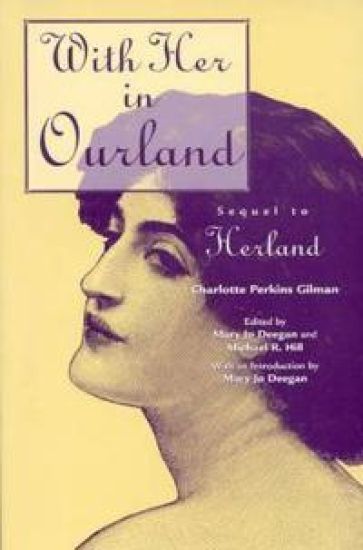
Two works in one, this volume contains the full text of With Her in Ourland by Charlotte Perkins Gilman, as well as an illuminating sociological analysis by Mary Jo Deegan with the assistance of Michael R. Hill. Ourland is the sequel to Gilman's acclaimed feminist utopian novel Herland; both were published in her journal, The Forerunner, in 1915 and 1916. Ourland resumes the adventures of ^IHerland^R's protagonists, Ellador and Van, but turns from utopian fantasy to a challenging analysis of contemporary social fissures in his land, or the real world. The republication of Herland as a separate novel in 1979 revived critical interest in Gilman's work but truncated the larger aims implicit in the ^IHerland/Ourland^R saga, leaving an erroneous understanding of Gilman's other/better half of the story, in which it is suggested that strong women can resocialize men to be nurturant and cooperative. Gilman's choice of a sexually integrated society in With Her in Ourland provides us with her answer to her ideal society, but her foray into a woman-only society as a corrective to a male dominated one is a controversial option. The challenging message of Ourland, however, does not impede the pleasure of reading it as a novel. Though known more for her fiction today, Gilman in her time was a recognized and accomplished sociologist who admired Lester F. Ward and frequently visited Jane Addams of Chicago's Hull-House. The male protagonist in Herland/Ourland, Van, is a sociologist, used by Gilman as a foil on which to skewer the assumptions and practices of patriarchal sociology. The interpretation presented here, which adopts a sociological viewpoint, is invaluable reading for scholars and students of sociology, American women's studies, and utopian literature.
With Her in Ourland

With Her in Ourland

Mary Jo Deegan; Michael R. Hill

Praeger Publishers Inc
1997
nidottu
Two works in one, this volume contains the full text of With Her in Ourland by Charlotte Perkins Gilman, as well as an illuminating sociological analysis by Mary Jo Deegan with the assistance of Michael R. Hill. Ourland is the sequel to Gilman's acclaimed feminist utopian novel Herland; both were published in her journal, The Forerunner, in 1915 and 1916. Ourland resumes the adventures of ^IHerland^R's protagonists, Ellador and Van, but turns from utopian fantasy to a challenging analysis of contemporary social fissures in his land, or the real world. The republication of Herland as a separate novel in 1979 revived critical interest in Gilman's work but truncated the larger aims implicit in the ^IHerland/Ourland^R saga, leaving an erroneous understanding of Gilman's other/better half of the story, in which it is suggested that strong women can resocialize men to be nurturant and cooperative. Gilman's choice of a sexually integrated society in With Her in Ourland provides us with her answer to her ideal society, but her foray into a woman-only society as a corrective to a male dominated one is a controversial option. The challenging message of Ourland, however, does not impede the pleasure of reading it as a novel. Though known more for her fiction today, Gilman in her time was a recognized and accomplished sociologist who admired Lester F. Ward and frequently visited Jane Addams of Chicago's Hull-House. The male protagonist in Herland/Ourland, Van, is a sociologist, used by Gilman as a foil on which to skewer the assumptions and practices of patriarchal sociology. The interpretation presented here, which adopts a sociological viewpoint, is invaluable reading for scholars and students of sociology, American women's studies, and utopian literature.
Women in Sociology

Women in Sociology

Mary Jo Deegan

Greenwood Press
1991
sidottu
. Women in sociology have shaped and changed the development of their field. This volume documents the major outlines of their work and profound impact from 1840 to 1990. The expertise and influence of these women are of such magnitude that it should have been impossible to forget or neglect them in the discipline of sociology--yet far too often their connections to sociology and to sociological labor have been buried. This unique reference book on female sociologists can answer a number of questions about them: Who were, or are, the female founders in sociology? Where were they born and when? What were their most important writings? What were their major accomplishments? How have they been honored? What are their connections to the discipline of sociology? These founding sisters worked in all specialities: e.g., aging, conflict resolution, criminology, demography, marriage and the family, race relations, research methods, social psychology, theory, and women. These women transcended narrow definitions of sociological thought and practice. Thus, scholars in disciplines other than sociology, including American studies, criminology, economics, history, literature, political science, law, psychology, social psychology, social work, women's studies, and urban studies, will find this volume of significant interest.
Jane Addams and the Men of the Chicago School, 1892-1918
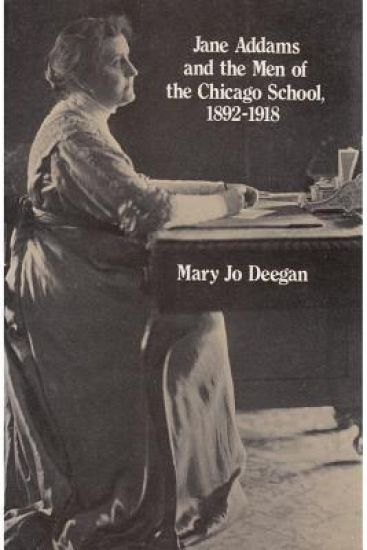
Jane Addams is well known for her leadership in urban reform, social settlements, pacifism, social work, and women's suffrage. The men of the Chicago School are well known for their leadership in founding sociology and the study of urban life. What has remained hidden however, is that Jane Addams played a pivotal role in the development of sociology and worked closely with the male faculty at the Department of Sociology at the University of Chicago. By using extensive archival material, Mary Jo Deegan is the first to document Addams's sociological significance and the existence of a sexual division of labor during the founding years of the discipline. As the leader of the women's network, Addams was able to bridge these two spheres of work and knowledge. Through an analysis of the changing relations between the male and female networks, Deegan shows that the Chicago men varied widely in their understanding and acceptance of her sociological though and action. Despite this variation, it was through her work with the men of the Chicago School that Addams left a legacy for sociology as a way of thinking, an area of study, and a methodological approach to data collecting. This previously unexamined heritage of American sociology will be of value to anyone interested in the history of the social sciences, especially sociology and social work, the development of American social thought, the role of professional women, the Progressive Era, and the intellectual contributions of Jane Addams.
Jane Addams and the Men of the Chicago School, 1892-1918
Jane Addams is well known for her leadership in urban reform, social settlements, pacifism, social work, and women's suffrage. The men of the Chicago School are well known for their leadership in founding sociology and the study of urban life. What has remained hidden however, is that Jane Addams played a pivotal role in the development of sociology and worked closely with the male faculty at the Department of Sociology at the University of Chicago. By using extensive archival material, Mary Jo Deegan is the first to document Addams's sociological significance and the existence of a sexual division of labor during the founding years of the discipline. As the leader of the women's network, Addams was able to bridge these two spheres of work and knowledge. Through an analysis of the changing relations between the male and female networks, Deegan shows that the Chicago men varied widely in their understanding and acceptance of her sociological though and action. Despite this variation, it was through her work with the men of the Chicago School that Addams left a legacy for sociology as a way of thinking, an area of study, and a methodological approach to data collecting. This previously unexamined heritage of American sociology will be of value to anyone interested in the history of the social sciences, especially sociology and social work, the development of American social thought, the role of professional women, the Progressive Era, and the intellectual contributions of Jane Addams.
Women and Disability

Women and Disability

Mary Jo Deegan

Transaction Publishers
1984
sidottu
The special needs of women with disabilities have been disregarded in a wide variety of vital areas. Issues pertain to women as wives and mothers. Studies of the effects on female sexuality of such conditions as renal disease and diabetes are lacking, though the sexual functioning of men with these diseases has been researched. On the economic front, the Federal-State Vocational Rehabilitation system and the regulations concerning disability benefits under Social Security provide less adequately for women than for men. Hopefully, this volume will raise the consciousness of its readers to the special status of women with disabilities as a minority group experiences multiple sources of discriminations.