
Kirjailija
Mary Johnston
Kirjat ja teokset yhdessä paikassa: 313 kirjaa, julkaisuja vuosilta 1996–2026, suosituimpiin kuuluu Audrey. Vertaile teosten hintoja ja tarkista saatavuus suomalaisista kirjakaupoista.
313 kirjaa
Kirjojen julkaisuvuodet: 1996–2026.


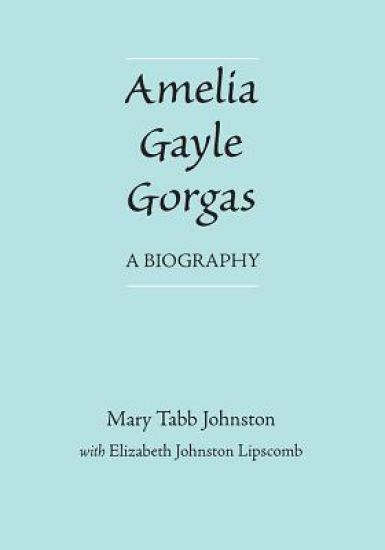
A daughter of John Gayle (lawyer and political leader who was governor of Alabama from 1831 to 1835), the devoted wife of Josiah Gorgas (chief of ordnance for the Confederacy), and the loving mother of William Crawford Gorgas (surgeon-general of the United States Army) and five other children – Amelia Gayle Gorgas (1826-1913) was all these things and a fascinating person in her own right – an antebellum Southern woman who made the transition to postbellum life and survived the difficult readjustments of the defeated South. Her biography is not just another account of a hero’s daughter, wife, or mother. It presents both the life of an individual who was herself a most attractive and appealing person and a captivating picture of the segment of nineteenth-century American society within which she moved. The authors skillfully avoid overdramatizing their heroine – though she lived in dramatic times – and emphasize the strength, flexibility, and resiliency that characterized so many of the purportedly fragile, helpless Southern women of her generation. IN turn, Amelia adapted herself readily to the relative prosperity of her early married life as wife of a United States Army officer in Maine, to the tensions and dangers of the Confederate capital Richmond during the Civil War, to the struggle to make a new life in the economically depressed South in the period immediately after the war, and to the postwar pleasures and problems of academic communities at The University of the South in Sewanee, Tennessee, and The University of Alabama in Tuscaloosa, Alabama. As told by Mary Tabb Johnston and Elizabeth Johnston Lipscomb, the life-story of this extraordinary woman is a delightful, fast-moving narrative indeed – a “good read” for young and old alike. The authors’ scholarship is extensive and penetrating, and yet their style is as graceful and enticing as their subject.
Chronicles of America Vol. 5: Pioneers of the Old South (1921)
Mary Johnston
KESSINGER PUBLISHING CO
2003
pokkari
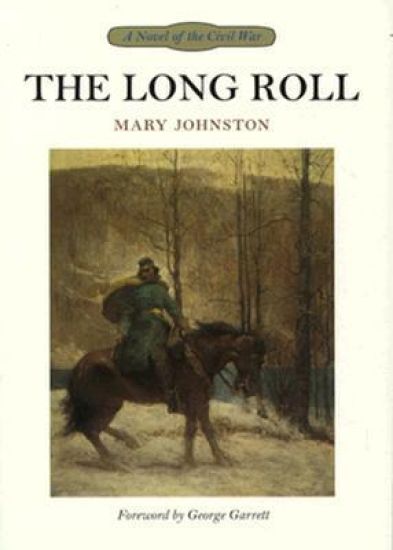
"The two rode on. To left and right were lighted streets of tents, visited here and there by substantial cabins. Soldiers were everywhere, dimly seen within the tents where the door-flap was fastened back, about the camp-fires in open places, clustering like bees in the small squares, everywhere apparent in the foreground and divined in the distance. From somewhere came the strains of 'Yankee Doodle.' A gust of wind blew out the folds of the stars and stripes, fastened above some regimental headquarters. The city of tents and of frame structures hasty and crude, of fires in open places, of Butlers' shops and canteens and booths of strolling players, of chapels and hospitals, of fluttering flags and wandering music, of restless blue soldiers, oscillating like motes in some searchlight of the giants, persisted for a long distance. At last it died away; there came a quiet field or two, then the old Maryland town of Frederick."from The Long Roll Before Gone with the Wind exploded into print, Mary Johnston's The Long Roll was one of the definitive novels about the Civil War. Unlike Mitchell's novel of Southern aristocracy, however, Johnston sets her tale among the fighting armies. The Long Roll begins with secession and ends with the funeral of Stonewall Jackson. Our protagonists are Richard Cleave of Virginia, and General Jackson himself, who begins the novel as a major. Cleaves' action in the Confederate artillery alternates with Jackson's cavalry maneuvers to show a wide range of battle experience and combat effectiveness. Johnston peels away some of the historical romance of the cavalry and shows how vital artillery was in the battles. No less significant, she pays close attention to the importance of planning and patience, and the role of roads, rail, horse, and boat, mixing all of these elements with descriptions of raw courage and reckless abandon. As the narrative follows Cleave and Jackson, we are led through the most decisive engagements in the years of Confederate supremacy: Manassas, The Seven Days, Fredericksburg, Malvern Hill, and Sharpsburg. The Long Roll brings alive the differing motives for secession and war, and eerily evokes the suspicion and battered consciences of both North and South.