Kirjojen hintavertailu – 12 859 828 kirjaa ja 27 kauppaa
Kirjailija
Mary Kellett
Kirjat ja teokset yhdessä paikassa: 7 kirjaa, julkaisuja vuosilta 2003–2016, suosituimpiin kuuluu Children's Perspectives on Integrated Services. Vertaile teosten hintoja ja tarkista saatavuus suomalaisista kirjakaupoista.
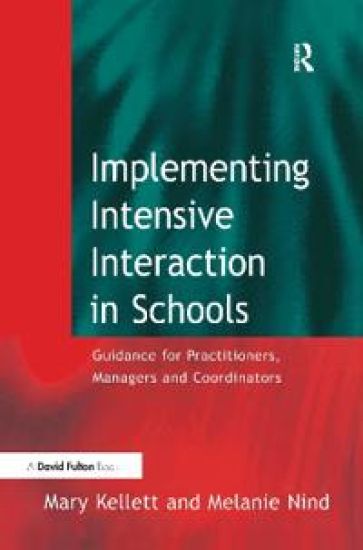
First Published in 2003. By taking a detailed look at the implementation and management of Intensive Interaction, the authors of this book offer practical guidance on how to get the most from the approach in the school context. This book includes: guidance on managing priorities, training issues, power dynamics and coping with Ofsted; advice on setting up and running evaluation projects; clear links to the National Curriculum for SEN; case studies from special and mainstream school and a glossary of terms. This book is for practitioners, coordinators and managers in schools using Intensive Interaction with pupils who have severe and complex learning difficulties.
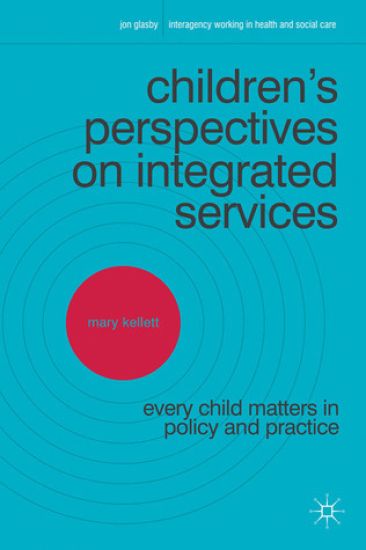
Launching Palgrave's new Interagency Working in Health and Social Care series, this book provides one of the first reflective assessments of the Every Child Matters legacy of New Labour. Woven through with the voice of the child, it examines the new landscape of children's services, in bothprinciple and practice.
Rethinking Children and Research considers the way people approach research into childhood and children's lives and examines the debates concerning the forms and goals of such research. Theoretical and practice-based perspectives are discussed in the context of recent key developments in research theory and philosophy of children. Mary Kellett promotes the idea that researchers should listen to the voices and perspectives of children as experts on their own lives, and offers insights and guidance on approaches to research design, implementation and presentation. Recent debates and developments are considered, including ethics, approaching research with children from a child-rights framework, and rethinking the power dynamic within research relationships with children. Rethinking Children and Research is essential for studying childhood and undergraduate or postgraduate level, and will be of interest to all involved with research into childhood and children's lives in the areas of education, health and social services.
"Rethinking Children and Research" considers the way people approach research into childhood and children's lives and examines the debates concerning the forms and goals of such research. Theoretical and practice-based perspectives are discussed in the context of recent key developments in research theory and philosophy of children. Mary Kellet promotes the idea that researchers should listen to the voices and perspectives of children as experts on their own lives, and offers insights and guidance on approaches to research design, implementation and presentation. Recent debates and developments are considered, including ethics, approaching research with children from a child-rights framework, and rethinking the power dynamic within research relationships with children. "Rethinking Children and Research" is essential for studying childhood and undergraduate or postgraduate level, and will be of interest to all involved with research into childhood and children's lives in the areas of education, health and social services. Is childhood changing? What effects are new ideas about childhood having on children's lives? How are children's voices and opinions affecting the services they use? Contemporary debates on the nature of childhood, attitudes towards children, the experiences of children and the emergence of a child rights agenda are resulting in a re-examination of theory, practice and research in many fields. "New Childhoods" offers a re-appraisal of the meaning of childhood - a series of texts that are succinct, accessible and engaging in introducing undergraduates to key areas of Childhood Studies, Education Studies and Sociology, and in disseminating new thinking, research, scholarship and practices. Books in this series will also be of interest to those who are preparing to work with children, such as teachers, early years practitioners, youth workers, health workers and psychologists. Key features of this title include: boxed summaries of research which engage the reader in analysis; case studies to explore each issue in context; tasks to develop critical thinking; and, pointers on further reading. Each volume promotes a child rights perspective, and provokes a re-examination of child-adult relationship in the contexts of family, community and state. Insights and experiences across fields such as sociology, philosophy and psychology are combined to encourage an inter-disciplinary approach.
'This book will be really useful to all teachers of upper Primary/lower Secondary pupils but will be especially useful as a resource for using with gifted children of 9 to12 years, as it will promote and support the type of self-directed, investigative enquiry that they enjoy. The author also emphasises the importance of the research process rather than the written product, which will appeal to all those children who dislike the written presentation of work! Each chapter outlines the learning outcomes, has a timed teaching content, and suggests a core activity; it also suggests differentiation and includes some simple 'games'. It is fully supported by photocopiable resources, making it a complete programme of work. Although written for a specific age group, this is such an excellent basic guide, it would be of use to anyone conducting research for the first time' - Eve Wilson, Education Consultant, National Association for Gifted Children 'This inspirational and innovative programme will be welcomed by all those who want to teach research skills to children. Clear discussion notes, activities and games provide everything a busy teacher needs to be able to deliver the programme. No prior knowledge of research is necessary. This is an ideal resource for those who want to offer pupils the opportunity to make their voice heard through the research process' - Dr. Ruth MacConville, Head of SENS, London Borough of Ealing 'An excellent book... a very informative guide to supporting teachers in delivering a comprehensive research training package to children and young people' - Children & Society Why teach research methodology to children? An effective and meaningful way of enhancing children's learning, doing research, empowers children to participate actively in their own education and to make original contributions to knowledge. The research carried out by children is also a vital key to improving our own understanding of children and childhood. This book's unique child-centred perspective provides an easy-to-follow model for teaching research methodology to children aged 10 and upwards. Packed with practical tips and photocopiable resources for the classroom, each chapter contains: " a core activity designed to distil the teaching content and engage children with the main learning objectives " ideas for supplementary activities and games " follow-up homework " mini boxed glossaries containing key research terms and their definitions " and suggestions for further reading. Key topics covered include: research design, data collection techniques, data analysis, dissemination, and children as active researchers.
'This book will be really useful to all teachers of upper Primary/lower Secondary pupils but will be especially useful as a resource for using with gifted children of 9 to12 years, as it will promote and support the type of self-directed, investigative enquiry that they enjoy. The author also emphasises the importance of the research process rather than the written product, which will appeal to all those children who dislike the written presentation of work! Each chapter outlines the learning outcomes, has a timed teaching content, and suggests a core activity; it also suggests differentiation and includes some simple 'games'. It is fully supported by photocopiable resources, making it a complete programme of work. Although written for a specific age group, this is such an excellent basic guide, it would be of use to anyone conducting research for the first time' - Eve Wilson, Education Consultant, National Association for Gifted Children 'This inspirational and innovative programme will be welcomed by all those who want to teach research skills to children. Clear discussion notes, activities and games provide everything a busy teacher needs to be able to deliver the programme. No prior knowledge of research is necessary. This is an ideal resource for those who want to offer pupils the opportunity to make their voice heard through the research process' - Dr. Ruth MacConville, Head of SENS, London Borough of Ealing 'An excellent book... a very informative guide to supporting teachers in delivering a comprehensive research training package to children and young people' - Children & Society Why teach research methodology to children? An effective and meaningful way of enhancing children's learning, doing research, empowers children to participate actively in their own education and to make original contributions to knowledge. The research carried out by children is also a vital key to improving our own understanding of children and childhood. This book's unique child-centred perspective provides an easy-to-follow model for teaching research methodology to children aged 10 and upwards. Packed with practical tips and photocopiable resources for the classroom, each chapter contains: " a core activity designed to distil the teaching content and engage children with the main learning objectives " ideas for supplementary activities and games " follow-up homework " mini boxed glossaries containing key research terms and their definitions " and suggestions for further reading. Key topics covered include: research design, data collection techniques, data analysis, dissemination, and children as active researchers.
First Published in 2003. By taking a detailed look at the implementation and management of Intensive Interaction, the authors of this book offer practical guidance on how to get the most from the approach in the school context. This book includes: guidance on managing priorities, training issues, power dynamics and coping with Ofsted; advice on setting up and running evaluation projects; clear links to the National Curriculum for SEN; case studies from special and mainstream school and a glossary of terms. This book is for practitioners, coordinators and managers in schools using Intensive Interaction with pupils who have severe and complex learning difficulties.