Kirjojen hintavertailu – 12 859 818 kirjaa ja 27 kauppaa

Kirjailija

Mary L. Coloe

Kirjat ja teokset yhdessä paikassa: 7 kirjaa, julkaisuja vuosilta 2001–2021, suosituimpiin kuuluu Creation Is Groaning. Vertaile teosten hintoja ja tarkista saatavuus suomalaisista kirjakaupoista.

Nimi esiintyy myös muodoissa: Mary L Coloe

7 kirjaa

Kirjojen julkaisuvuodet: 2001–2021.

John 11-21

John 11-21

Mary L. Coloe

Liturgical Press
2021
sidottu
Teaching and researching the Gospel of John for thirty years has led author Mary L. Coloe to an awareness of the importance of the wisdom literature to make sense of Johannine theology, language, and symbolism: in the prologue, with Nicodemus, in the Bread of Life discourse, with Mary and Lazarus, and in the culminating “Hour.” She also shows how the late Second Temple theology expressed in the books of Sirach and Wisdom, considered deuterocanonical and omitted from some Bible editions, are essential intertexts. Only the book of Wisdom speaks of “the reign of God” (Wis 10:10), “eternity life” (Wis 5:15), and the ambrosia maintaining angelic life (Wis 19:21)—all concepts found in John’s Gospel. While the Gospel explicitly states the Logos was enfleshed in Jesus, this is also true of Sophia. Coloe makes the case that Jesus’s words and deeds embody Sophia throughoutthe narrative. At the beginning of each chapter Coloe provides text from the later wisdom books that resonate with the Gospel passage, drawing Sophia out of the shadows.
John 1–10

John 1–10

Mary L. Coloe

Liturgical Press
2021
sidottu
2022 Catholic Media Association honorable mention in scripture: academic studiesTeaching and researching the Gospel of John for thirty years has led author Mary L. Coloe to an awareness of the importance of the wisdom literature to make sense of Johannine theology, language, and symbolism: in the prologue, with Nicodemus, in the Bread of Life discourse, with Mary and Lazarus, and in the culminating “Hour.” She also shows how the late Second Temple theology expressed in the books of Sirach and Wisdom, considered deuterocanonical and omitted from some Bible editions, are essential intertexts. Only the book of Wisdom speaks of “the reign of God” (Wis 10:10), “eternity life” (Wis 5:15), and the ambrosia maintaining angelic life (Wis 19:21)—all concepts found in John’s Gospel. While the Gospel explicitly states the Logos was enfleshed in Jesus, this is also true of Sophia. Coloe makes the case that Jesus’s words and deeds embody Sophia throughoutthe narrative. At the beginning of each chapter Coloe provides text from the later wisdom books that resonate with the Gospel passage, drawing Sophia out of the shadows.
Friendly Guide to the Birth of Jesus

Friendly Guide to the Birth of Jesus

Mary L Coloe

John Garratt Publishing
2017
pokkari
The birth of Jesus is one of the best-known stories in the Gospels, and yet often people do not think about or read the text as adults. They carry with them childhood memories that may be inaccurate, according to the text, and miss the deep theological purpose of these two narratives. While writing about the birth of a child, Matthew and Luke have clearly in their minds the adult Jesus - if only we could see him. It is a little like approaching an iceberg without realising that most of the iceberg is below the surface. If we only read the "surface" story of the nativity, we fail to understand the rich introductions to the person and ministry of the adult Jesus. This book will help you to dive beneath the surface of the text and come to a deeper faith appreciation of both Gospels' introduction to Jesus' ministry.
Creation Is Groaning

Creation Is Groaning

Mary L. Coloe

Liturgical Press
2013
pokkari
If, as some scholars attest, Christianity has been complicit in the destruction of the environment, then Christianity can and must also have a role in changing human behavior in a way that helps to solve this massive problem. In Creation is Groaning, a set of highly regarded theologians and Scripture scholars offer a theology and spirituality of creation based on principles of eco-justice and environmental responsibility. Contributors to this volume are Denis Edwards, Antoinette Collins, Dermot Nestor, Laurie Woods, Mary Coloe, and Anthony Kelly. Key elements of their project include: tracing the development of Israel's view of creation through different historical situations and key writings, with a particular focus on what ethical responsibilities toward creation emerge from its theology examining Israel's theology of Sabbath" and its developing understanding of the end time, thus encompassing creation in its origins and its final destiny considering the cosmic impact of the Jesus event as Paul and John understood it Together, the authors establish a firm foundation for a new ethic that promotes the flourishing of all planetary life and a just global community.
Friendly Guide to John's Gospel

Friendly Guide to John's Gospel

Mary L Coloe

Garratt Publishing
2012
pokkari
One of Australia's well-respected scripture theologians, Mary L. Coloe, brings the world of the gospels to life in this addition to the Friendly Guide series of books. In this guide, Coloe explains how John has selected and shaped this material di-fferently: where the Synoptic Gospels work from a theological framework of sin and atonement, John speaks of life and eternity life. This is an alternative approach to the meaning of Jesus' life, death and rising. Coloe explores John's positive message that affirms life, and speaks to the heart of human desires today.
Dwelling in the Household of God

Dwelling in the Household of God

Mary L. Coloe; Sandra M. Schneiders

Liturgical Press
2007
pokkari
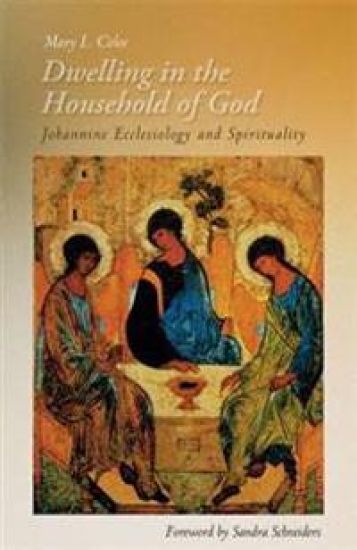
In her remarkable first book, God Dwells With Us: Temple Symbolism in the Fourth Gospel, Mary L. Coloe, P. B. V. M., explored the profound insight of John's Gospel expressed in Jesus ' invitation to his disciples: Make your home in me, as I make mine in you (John 15:4). For the gospel's author and audience, the dwelling of God among humans was, above al, the Jerusalem Temple. The gospel traces how 'after the trauma of the destruction of the Temple 'the Johannine community came to expand and deepen its knowledge of God's dwelling among humans, finding it now in the person of Jesus and in the community of believers. Dwelling in the Household of God moves us from seeing God's dwelling place as the Temple to seeing God's dwelling place within the community of believers. The starting point now is an image in John 14:2: my Father's house, which is given its Old Testament meaning of my father's household. Our awareness thus moves, like that of the first Christians, from understanding My father's house as the Temple (John 2:16) to My Father's Household as a community of believers drawn into Jesus ' own divine filiation. Coloe invites us to re-read the gospel from the post-Easter perspective of those who have become brothers and sisters of Jesus and living Temples of God's presence. What emerges is nothing less than a profound mysticism of the mutual indwelling of God and believers. Mary Coloe, PBVM, DTh, holds a joint teaching position at the Australian Catholic University and St Paul's Seminary, Brisbane. Her publications include numerous articles and God Dwells With Us: Temple Symbolism in the Fourth Gospel (Liturgical Press, 2001).
God Dwells with Us

God Dwells with Us

Mary L. Coloe

Liturgical Press
2001
pokkari
The image of the Temple speaks of a building, of a place of God's heavenly presence, and yet the experience of many Christians has been of God's indwelling in the human heart. In God Dwells with Us, Mary Coloe crosses the centuries through John's Gospel text and plunges into the experience of the Johannine community. Here, readers receive a sense of God's indwelling as promised by Jesus, and how it relates to the symbol of the Temple in the gospel narrative. In the years after the destruction of Jerusalem and its Temple, the Johannine community looked to the symbol of the Temple as a key means of expressing its new faith in Jesus. During his lifetime he was the living presence of Israel's God dwelling in history. In the absence of the historical Jesus, the believing community - past, present, and future - continue to be a locus for the divine indwelling and so can truly be called a living Temple. God Dwells with Us offers a new and consistent perspective on the symbol of the Temple which clarifies the christology of the Fourth Gospel. It establishes a new plot for this gospel - the destroying and raising of the Temple; and shows how this occurs within the text. The chapters provide a new approach to its structure. It is unique in its treatment of John14:2 where it establishes that the new Temple is the household of believers on earth. It also presents a new interpretation of the Johannine Crucifixion and the scene with Jesus' mother and the Beloved Disciple. Chapters are God's Dwelling Place in Israel," "The Temple of His Body: 2:13-15," "The Supplanter: 4:1-45,""The Tabernacling Presence of God: 7:1-8:59," "The Consecrated One: 10:22-42," "My Father's House 14:1-31," and "Raising the New Temple: 18:1-19:42." Mary L. Coloe, PBVM, ThD, teaches at the Australian Catholic University at Melbourne."