Kirjojen hintavertailu – 12 859 818 kirjaa ja 27 kauppaa

Kirjailija

Mary Lefkowitz

Kirjat ja teokset yhdessä paikassa: 5 kirjaa, julkaisuja vuosilta 2001–2024, suosituimpiin kuuluu Euripides and the Gods. Vertaile teosten hintoja ja tarkista saatavuus suomalaisista kirjakaupoista.

5 kirjaa

Kirjojen julkaisuvuodet: 2001–2024.

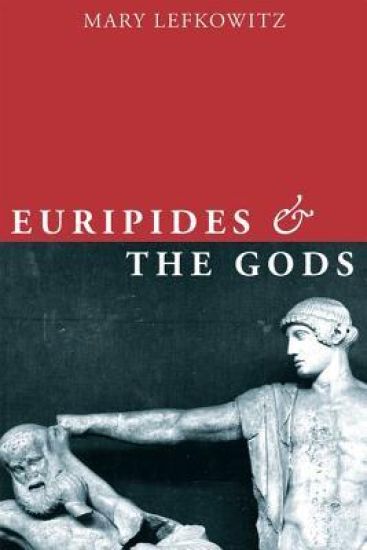
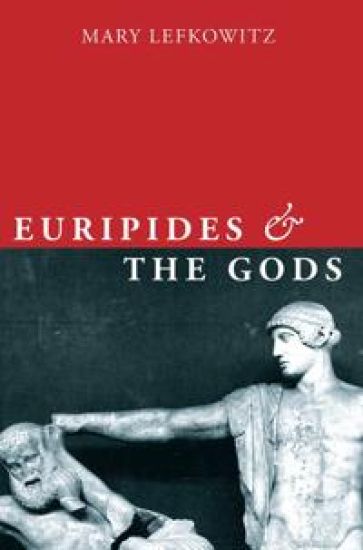
Euripides and the Gods

Euripides and the Gods

Mary Lefkowitz

Oxford University Press Inc
2016
sidottu
Many modern readers believe that, in his dramas, Euripides was questioning the nature and sometimes even the existence of the gods. In Euripides and the Gods, eminent classicist Mary K. Lefkowitz shows that the tragedian is not undermining ancient religion, but rather describing with a brutal realism what the gods are like, reminding his mortal audience of the limitations of human understanding. Although some scholars have begun to express similar views about the theology of individual plays, no one so far has written an extended treatment of these issues for a general audience who do not necessarily know ancient Greek. Lefkowitz will provide a book that will deal with all of his dramas, accessible to non-specialist readers, containing a more tolerant and nuanced understanding of ancient Greek religion: Euripides, like Homer, is making "a statement about the nature of the world and human life, terrible and dispassionate." That view of divinity was well known and understood in Euripides' own time. In spite of what has seemed to later critics his brutally realistic characterization of the gods, he was selected in virtually every year of his adult life to be one of the three poets allowed to put on a set of plays at the festival of Dionysus, and even after his death he remained the most popular and influential of the great playwrights in the Greek-speaking world. This would hardly have been the case if his portrayal of the gods appeared impious to the majority of his audiences. Like most of the author's distinguished publications in this field, the book will discuss a number of important related topics, including religion, philosophy, the surviving works of Euripides' contemporaries, and the theater and its significance to Greek society. The result will be a compelling invitation to return to the dramatic masterpieces of Euripides with fresh eyes.
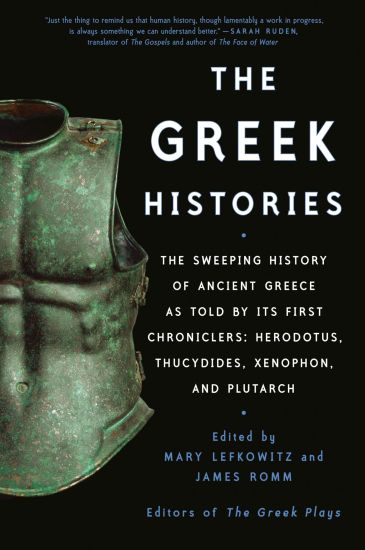
The Greek Histories

The Greek Histories

Mary Lefkowitz; James Romm

RANDOM HOUSE USA INC
2024
nidottu
From the leading scholars behind The Greek Plays, a collection of the best translations of the foremost Greek historians, presenting a sweeping history of ancient Greece as recorded by its first chroniclers "Just the thing to remind us that human history, though lamentably a work in progress, is always something we can understand better."--Sarah Ruden, translator of The Gospels and author of The Face of WaterThe historians of ancient Greece were pioneers of a new literary craft; their work stands among the world's most enduring and important legacies and forms the foundation of a major modern discipline. This highly readable edition includes new and newly revised translations of selections from Herodotus--often called the "father of history"--Thucydides, Xenophon, and Plutarch, the four greatest Greek innovators of historical narrative. Here the reader will find their most important, and most widely taught, passages collected in a single volume. The excerpts chart the landmark events of ancient Greece and provide a comprehensive account of the entire classical Greek age. From the start the Greek historians demonstrated how broad and varied historical writing could be and brought their craft beyond a mere chronicle of past events. This volume explores each author's interest in religion, leadership, character, and the lessons of war. How, for instance, should readers interpret Herodotus' inclusion of speeches and dialogues, dreams, and oracles as part of the "factual" record? What did Thucydides understand about human nature that (as he said) stays constant throughout time? How did Plutarch frame historical biography as a means of depicting the moral qualities of great men? Complete with introductions to the works of each historian, footnotes providing context and explaining obscurities, maps, and an appendix on the Greek conduct of war, this volume is an invaluable resource for students and passionate readers of history alike.
Euripides and the Gods

Euripides and the Gods

Mary Lefkowitz

Oxford University Press Inc
2019
nidottu
Modern readers find it hard to come to terms with the gods in Euripides' dramas. Readers try to dismiss them as a literary convention. Stage productions leave them out, especially in the cases when they appear ex machina. Instead, they place disproportionate emphasis on the harsh criticisms of the gods uttered by some of the characters in the dramas, and have sought to interpret Euripides ironically, viewing his portrayal of the cruel and capricious gods as a means of drawing attention to the deficiencies of ancient Greek religion. In their view Euripides' dramas seek to question the nature and sometimes even the very existence of traditional Greek gods. In Euripides and the Gods, classicist Mary Lefkowitz sets out to show that the tragedian is not undermining ancient religion, but rather describing with a brutal realism what the gods are like, impressing upon his mortal audience the limitations of human understanding. Writing the first extended treatment of these issues for a general audience, Lefkowitz provides a book that deals with all of Euripides' dramas, and argues for a more tolerant and nuanced understanding of ancient Greek religion. Euripides, like Homer, is making a statement about the nature of the world and human life, terrifying but accurate. She explains how the idea that Euripides was an atheist derives from ancient biographies that drew their evidence from comic poets, and shows why the doubts about the gods expressed by his characters must be understood in their dramatic context. Euripides and the Gods offers a compelling invitation to return to the dramatic masterpieces of Euripides with fresh eyes.
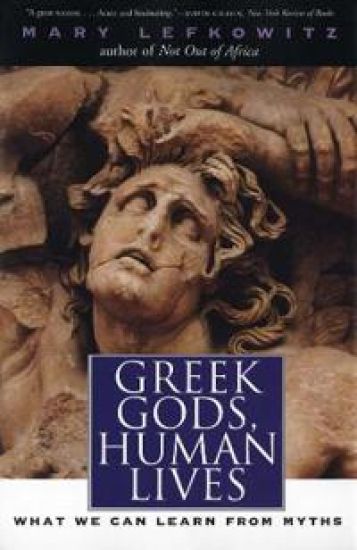
Greek Gods, Human Lives

Greek Gods, Human Lives

Mary Lefkowitz

Yale University Press
2005
pokkari
Why the Greek myths, more than those of any other culture, continue to captivate us The mythology of ancient Greece has fascinated readers for two millennia and has formed the basis of Western civilization. The Greek gods are a perennial source of delight because they seem so much like us: in their rages, their love affairs, and their obsession with honor, the gods often appear all too human. In Greek Gods, Human Lives, preeminent classicist Mary Lefkowitz reintroduces readers to the literature of ancient Greece. Lefkowitz demonstrates that these stories, although endlessly entertaining, are never frivolous. The Greek myths—as told by Homer, Ovid, Virgil, and many others—offer crucial lessons about human experience. Greek mythology makes vivid the fact that the gods control every aspect of the lives of mortals, but not in ways that modern audiences have properly understood. We can learn much from these myths, Lefkowitz shows, if we understand that they are stories about religious experience—about the meaning of divinity, the nature of justice, and the limitations of human knowledge. These myths spoke to ancient audiences and helped them to comprehend their world. With Mary Lefkowitz as an interpreter, these myths speak to us as well.
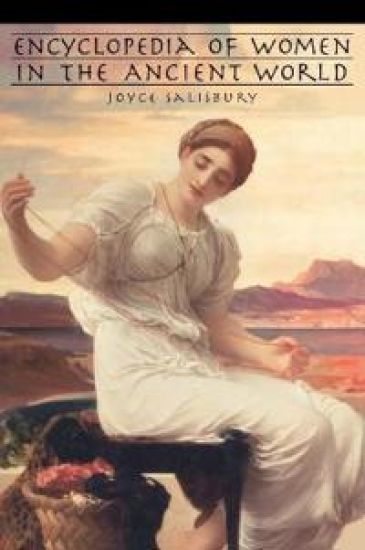
Encyclopedia of Women in the Ancient World

Encyclopedia of Women in the Ancient World

Joyce E. Salisbury; Mary Lefkowitz

ABC-CLIO
2001
sidottu
An extensive and fascinating collection of stories featuring both famous and everyday women, giving a well-rounded view of the lives of women in the ancient world. When did women first become rulers, athletes, soldiers, heroines, and villains? They always were, observes historian Judith Salisbury. From Mesopotamian priestesses and poets to Egyptian queens and consorts, "there was never a time when women did not participate in all aspects of society." Salisbury tells the stories of 150 women from the ancient world, ranging from the very famous, such as Cleopatra VII, immortalized by Hollywood, to the barely remembered, such as the Roman poet Nossis. Writing for a general audience, Salisbury begins by painting each woman into her historical context, then recounts each woman's story, describing the choices she made as she looked for happiness, wealth, power, or well-being for herself and her family—stories much like our own. In entries on general themes—clothing, cosmetics, work, sexuality, prostitution, gynecology—Salisbury analyzes the commonalties in the lives of these women of antiquity from a cross-cultural perspective.