

Kirjojen hintavertailu – 12 903 725 kirjaa ja 27 kauppaa

Kirjailija

Mary Margaret Fonow

Kirjat ja teokset yhdessä paikassa: 3 kirjaa, julkaisuja vuosilta 2003–2011, suosituimpiin kuuluu Making Feminist Politics. Vertaile teosten hintoja ja tarkista saatavuus suomalaisista kirjakaupoista.

3 kirjaa

Kirjojen julkaisuvuodet: 2003–2011.

Making Feminist Politics

Making Feminist Politics

Suzanne Franzway; Mary Margaret Fonow

University of Illinois Press
2011
sidottu
In this timely and detailed examination of the intersections of feminism, labor politics, and global studies, Suzanne Franzway and Mary Margaret Fonow reveal the ways in which women across the world are transforming labor unions in the contemporary era. Situating specific case studies within broad feminist topics, Franzway and Fonow concentrate on union feminists mobilizing at multiple sites, issues of wages and equity, child care campaigns, work-life balance, and queer organizing, demonstrating how unions around the world are broadening their focuses from contractual details to empowerment and family and feminist issues. By connecting the diversity of women's experiences around the world both inside and outside the home and highlighting the innovative ways women workers attain their common goals, Making Feminist Politics lays the groundwork for recognition of the total individual in the future of feminist politics within global union movements.
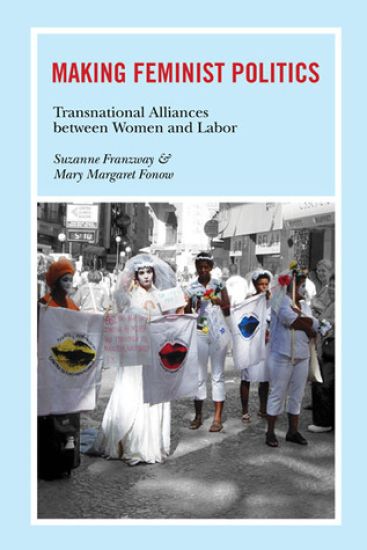
Making Feminist Politics

Making Feminist Politics

Suzanne Franzway; Mary Margaret Fonow

University of Illinois Press
2011
nidottu
In this timely and detailed examination of the intersections of feminism, labor politics, and global studies, Suzanne Franzway and Mary Margaret Fonow reveal the ways in which women across the world are transforming labor unions in the contemporary era. Situating specific case studies within broad feminist topics, Franzway and Fonow concentrate on union feminists mobilizing at multiple sites, issues of wages and equity, child care campaigns, work-life balance, and queer organizing, demonstrating how unions around the world are broadening their focuses from contractual details to empowerment and family and feminist issues. By connecting the diversity of women's experiences around the world both inside and outside the home and highlighting the innovative ways women workers attain their common goals, Making Feminist Politics lays the groundwork for recognition of the total individual in the future of feminist politics within global union movements.
Union Women

Union Women

Mary Margaret Fonow

University of Minnesota Press
2003
nidottu
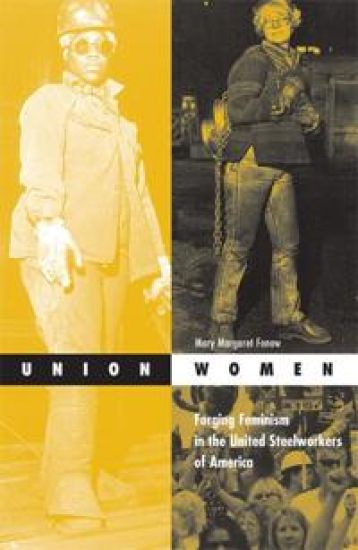
How a feminist agenda took hold in a male-dominated union. For more than a quarter century, steel mills in the United States and Canada have produced more than metal: they have produced a new kind of worker and union activist-"Women of Steel." In an era labeled postfeminist and postindustrial, women have created spaces in this quintessentially male-dominated workforce from which to mobilize for their rights as women and workers. In Union Women, Mary Margaret Fonow captures the stories of the women of the United Steelworkers. She focuses on a tenacious group who used their developing power in the union to challenge sex discrimination and to advocate for women’s rights, and applied their transnational resources to construct a feminist response to globalization and economic restructuring. In the process, they have transformed the organizations, resources, and networks of both the labor and women’s movements, and have in turn transformed themselves into feminists. In Union Women Fonow uses statistical, archival, and ethnographic research methods to provide a broad historical account of women in the steel industry. Fonow’s sweeping approach allows her to examine several key issues in social movement, feminist, and political theory, and to show that insights from these fields shape each other. She explores how social movements are gendered, how working-class women develop a feminist consciousness, and how this process is informed by intersecting demands of race, class, and gender. As a comparative, cross-national study, Union Women also demonstrates how different political and social cultures affect women’s organizing and strategic decisions. Finally, Fonow emphasizes that economic restructuring and globalization pose immediate challenges for women as laborers and activists, and that, in order to survive, all unions must develop organizing and mobilization strategies informed by feminism and other social movements.