Kirjojen hintavertailu – 12 859 828 kirjaa ja 27 kauppaa

Kirjailija

Mary Prince

Kirjat ja teokset yhdessä paikassa: 36 kirjaa, julkaisuja vuosilta 2000–2025, suosituimpiin kuuluu The History Of Mary Prince, A West Indian Slave. Vertaile teosten hintoja ja tarkista saatavuus suomalaisista kirjakaupoista.

36 kirjaa

Kirjojen julkaisuvuodet: 2000–2025.

The History of Mary Prince, a West Indian Slave
"The History of Mary Prince: A West Indian Slave" is a powerful and authentic autobiography offering a firsthand account of slavery in the West Indies. Mary Prince's narrative stands as a vital historical document, detailing her experiences under enslavement and her eventual fight for freedom. As a significant example of the slave narrative genre, this book provides invaluable insights into the brutal realities of slavery and the human spirit's resilience in the face of unimaginable hardship. Prince's story is a testament to the abolitionist movement and a poignant reminder of the individuals who struggled against injustice. Her words offer a crucial perspective on Caribbean history, the institution of slavery, and the broader fight for human rights. "The History of Mary Prince" remains a compelling and essential read for anyone interested in history, biography, and the enduring quest for liberation. This meticulously prepared edition ensures that Prince's important story continues to resonate with readers. This work has been selected by scholars as being culturally important, and is part of the knowledge base of civilization as we know it. This work is in the public domain in the United States of America, and possibly other nations. Within the United States, you may freely copy and distribute this work, as no entity (individual or corporate) has a copyright on the body of the work. Scholars believe, and we concur, that this work is important enough to be preserved, reproduced, and made generally available to the public. We appreciate your support of the preservation process, and thank you for being an important part of keeping this knowledge alive and relevant.

The History of Mary Prince (Warbler Classics Annotated Edition)
Mary Prince was the first black woman to publish an account of her life in Britain-an account so brutal that few believed it. The History of Mary Prince (1831) describes Prince's sufferings as a slave in the Caribbean Islands, and her eventual arrival in London with her sadistic owner Mr. Wood. Prince escaped in 1828 and sought assistance from the Anti-Slavery Society. Brief, forthright, and unvarnished, Prince's account sparked outrage and catalyzed change during a pivotal moment when stormy debates on abolition were raging on both sides of the Atlantic. It inspired two libel actions and sold out of three printings in the year of its publication. This powerful cry for emancipation stands as a seminal work of abolitionist literature. This edition is a republication of the complete 1831 edition and includes additional related texts, an in-depth essay, and a detailed biographical timeline.
The History of Mary Prince

The History of Mary Prince

Mary Prince

Kingston University Press Ltd
2023
pokkari
A story of love, loss and bravery. Mary Prince's account of the hardships of slavery gives a true insight as to the torture that millions were subjected to simply because of the colour of their skin. This new edition includes a full timeline of Prince's life, alongside The Narrative of Louis Asa-Asa, A Captured African, and his own experience of slavery. The History of Mary Prince was first published in 1831with the support of Thomas Pringle and the Anti-Slavery Society. It was circulated to abolitionists all over the British Isles and found support in Women's Rights groups. It has been reissued as a part of KU Press's The Black Abolitionists collection.
The History Of Mary Prince, A West Indian Slave
The History of Mary Prince, a West Indian Slave' is a powerful autobiographical narrative written by Mary Prince, an enslaved woman of African descent. It stands as one of the earliest narratives of its kind, shedding light on the brutal realities of slavery in the British West Indies during the early 19th century. The story remains an important historical document that offers a firsthand account of the lived experiences of enslaved individuals. Through her courageous and unflinching storytelling, Mary Prince amplifies the voices of countless others who suffered under the oppressive system of slavery, making an indelible impact on the abolitionist movement and the understanding of the horrors of the transatlantic slave trade. In addition to detailing the cruelties inflicted upon her, Mary Prince also provides insights into the resilience and strength of the enslaved community, highlighting their acts of resistance and their yearning for freedom.
Sara's Turn of the Century

Sara's Turn of the Century

Mary Prince

Book Vine Press
2022
pokkari
Sara Watson reflects on the "turn of the century" New Year's Eve upon all that happened in 1999, not knowing what still lies ahead for her to endure. Will the new love in her life be a prince charming? What new hurdles will she have to leap? Will there be miracles in her future, as well, or more heartache? Maybe a little of both All she can do is have faith and hope that God has a better tomorrow in store. She had no idea that the year she was about to face would have even more life-altering hurdles, memorable...only if she survived them.
The History of Mary Prince

The History of Mary Prince

Mary Prince

Digireads.com
2020
pokkari
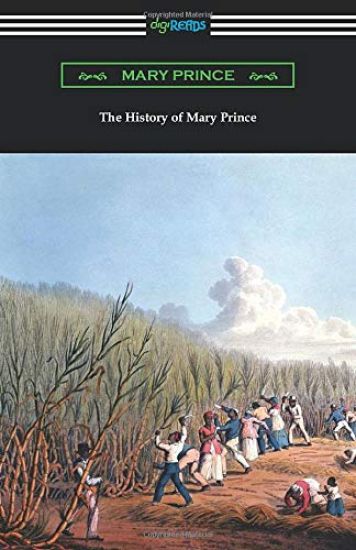
First published in 1831, "The History of Mary Prince" is the fascinating autobiography of the life of Mary Prince, who was born into slavery in Bermuda. It was the first time the story of a black woman was published in the United Kingdom and it was widely read and reprinted numerous times. It was also very influential to the growing abolitionist movement and increased the anti-slavery sentiment that was gaining popularity in England. Prince was born in 1788 and her parents were both enslaved by different masters. Prince lived with her mother and siblings as household servants until she was sold at age 12 to a series of cruel and brutal masters. Prince was sold a final time in 1815 and her new master eventually took her to England with his family in 1828. Prince was able to gain a certain amount of freedom from her owner in England and she eventually came to work for Thomas Pringle, an abolitionist writer. He convinced Prince to have her life story transcribed and the shocking and brutal tale that emerged affected readers deeply. "The History of Mary Prince" remains an important historical account of the horrors and injustice of slavery. This edition is printed on premium acid-free paper.
The History of Mary Prince

The History of Mary Prince

Mary Prince

Read Co. Books
2020
pokkari
"The History of Mary Prince - A West Indian Slave" is a 1831 autobiography of Mary Prince (1788-1833), a British abolitionist and autobiographer. Born in Bermuda to a family of African slaves, she managed to escape to London where she wrote this book. The first account of a black woman's life published in Great Britain, "The History of Mary Prince" was highly controversial in a time of growing anti-slavery agitation. The book touched many people and was hugely popular, selling out thee printings. Contents include: "The History Of Mary Prince, A West Indian Slave", "History Of Mary Prince, By The Editor", and "Narrative Of Louis Asa-Asa, A Captured African".
History of Mary Prince

History of Mary Prince

Mary Prince

READ BOOKS
2020
sidottu
"The History of Mary Prince - A West Indian Slave" is a 1831 autobiography of Mary Prince (1788-1833), a British abolitionist and autobiographer. Born in Bermuda to a family of African slaves, she managed to escape to London where she wrote this book. The first account of a black woman's life published in Great Britain, "The History of Mary Prince" was highly controversial in a time of growing anti-slavery agitation. The book touched many people and was hugely popular, selling out thee printings. Contents include: "The History Of Mary Prince, A West Indian Slave", "History Of Mary Prince, By The Editor", and "Narrative Of Louis Asa-Asa, A Captured African".
The History of Mary Prince, a West Indian Slave,
Mary Prince was the first black woman to escape from slavery in the British colonies and to publish a record of her life in bondage. Born into servitude, at the tender age of twelve she witnessed the ruin of her family, with her mother and each of her siblings sold off to separate owners, after which she herself was passed from master to master, all of whom subjected her to sexual or physical abuse. In this vivid and graphic account she describes the hideous working conditions of those enslaved, and the barbaric, arbitrary punishments meted out for minor or imagined misdemeanours, many of which led to the death of those oppressed. In her middle years Mary was taken to England, where (all slaves being automatically freed on touching English soil) she fled her former owner and took refuge with Thomas Pringle - a staunch abolitionist - who aided the editing of these her memoirs, first published to wide acclaim in 1831. Included in this fully annotated edition are five illustrations and one map, Thomas Pringle's report on the life and character of Mary Prince, and a short account of the trials of Asa-Asa, a young man who was captured during inter-tribal warfare and held asa a slave in Africa for six months, before being sold into the Atlantic Slave Trade.
The History of Mary Prince, a West Indian Slave

The History of Mary Prince, a West Indian Slave

Mary Prince

Createspace Independent Publishing Platform
2018
nidottu
The History of Mary Prince (1831) was the first narrative of a black woman to be published in Britain. It describes Prince's sufferings as a slave in Bermuda, Turks Island and Antigua, and her eventual arrival in London with her brutal owner Mr Wood in 1828. Prince escaped from him and sought assistance from the Anti-Slavery Society, where she dictated her remarkable story to Susanna Strickland (later Moodie).
The history of mary prince: A West Indian Slave

The history of mary prince: A West Indian Slave

Mary Prince

Createspace Independent Publishing Platform
2018
nidottu
The History of Mary Prince: A West Indian Slave. Mary Prince was a British abolitionist and autobiographer, born in Bermuda, to an enslaved family of African descent. Subsequent to her escape, she was later living in London, England, she wrote The History of Mary Prince (1831), which was the first account of the life of a black woman to be published in the United Kingdom. 'My mother was a household slave in the same family. I was under her own care, and my little brothers and sisters were my play-fellows and companions. My mother had several fine children after she came to Mrs. Williams, --three girls and two boys. The tasks given out to us children were light, and we used to play together with Miss Betsey, with as much freedom almost as if she had been our sister. My master, however, was a very harsh, selfish man; and we always dreaded his return from sea. His wife was herself much afraid of him; and, during his stay at home, seldom dared to shew her usual kindness to the slaves. He often left her, in the most distressed circumstances, to reside in other female society, at some place in the West Indies of which I have forgot the name.
The History of Mary Prince: A West Indian Slave Narrative

The History of Mary Prince: A West Indian Slave Narrative

Mary Prince

Createspace Independent Publishing Platform
2018
nidottu
Mary Prince was a British abolitionist and autobiographer, born in Bermuda, to an enslaved family of African descent. While she was later living in London, England, she wrote The History of Mary Prince (1831), which was the first account of the life of a black woman to be published in the United Kingdom. Belonging to the genre of slave narratives, this first-hand description of the brutalities of enslavement, released at a time when slavery was still legal in Bermuda and British Caribbean colonies, had a galvanising effect on the anti-slavery movement. It went through three printings in the first year. Prince had her account transcribed while living and working in England at the home of Thomas Pringle, a founder of the Anti-Slavery Society. She had gone to London with her master and his family in 1828 from Antigua.
The History of Mary Prince, a West Indian Slave

The History of Mary Prince, a West Indian Slave

Mary Prince

The University of North Carolina Press
2017
nidottu
Mary Prince's narrative was one of the earliest to reveal the ugly truths about slavery in the West Indies to an English reading public that was largely unaware of its atrocities. Prince was born in Bermuda to an enslaved family. She spent her early life in harsh conditions and was eventually sold to John Adams Wood of Antigua, working as his domestic servant. She joined the Moravian Church, where she learned to read, and married Daniel James, a former slave who had bought his freedom. In 1828 she traveled to England with the Woods family and after protracted efforts by abolitionists was able to leave their control. Encouraged by her new employer, Thomas Pringle, who also served as her editor, Prince wrote and published her book in 1831 to wide acclaim. While eighteenth-century slave narratives largely focused on Christian spiritual journeys and religious redemption, Prince was part of a growing trend of abolitionist writers focused on the injustice of slavery. Her work stands alongside better-known narratives such as A Narrative of the Adventures and Escape of Moses Roper and Narrative of the Life of Frederick Douglass. Adding to its importance, few early women's slave narratives exist.
The History of Mary Prince

The History of Mary Prince

Mary Prince

Createspace Independent Publishing Platform
2016
nidottu
Mary Prince was a British abolitionist and autobiographer, born in Bermuda, to an enslaved family of African descent. While she was later living in London, England, she wrote The History of Mary Prince (1831), which was the first account of the life of a black woman to be published in the United Kingdom. Mary Prince was born into enslavement at Brackish Pond in Bermuda, known today as Devonshire Parish, Bermuda. Her father (whose only given name was Prince) was a sawyer owned by David Trimmingham, and her mother a house-servant held by Charles Myners. She had three younger brothers and two sisters, Hannah and Dinah. 2] When Myners died in 1788, Mary Prince, her mother and siblings were sold as household servants to Captain Darrell. He gave Mary and her mother to his daughter, with Mary becoming the companion servant of his young granddaughter, Betsey Williams. 3] At the age of 12, Mary was sold for 38 sterling 4] (2017: 4484) to Captain John Ingham, of Spanish Point. Her two sisters were also sold that same day, all to different enslavers. Mary's new enslaver and his wife were cruel and often lost their tempers, Mary and others were often severely flogged for minor offenses. Ingham sold Mary in 1806 to an enslaver on Grand Turk, who owned salt ponds. The Bermudians had used these seasonally for a century for the extraction of salt from the ocean. The production of salt for export was a pillar of the Bermudian economy, but could not easily be produced. Originally, raking had been performed by whites due to the fear of black enslaved people being seized by Spanish and French raiders (the enslaved were considered property, and could be seized as such during hostilities). Blacks crewed the Bermuda sloops that delivered the rakers to and from the Turks Islands and delivered salt to markets in North America, engaging in maritime activities while the whites raked. When the threats posed by the Spanish and French in the region reduced, however, the enslaved were put to work in the salt pans. As a child Mary worked in poor conditions in the salt ponds up to her knees in water. Due to the nature of salt mining, Mary and others were often forced to work up to 17 hours straight as owners of the ponds were concerned that if the workers were gone for too long rain would come and soil the salt. Generally, men were the salt rakers, forced to work in the salt ponds, where they were exposed to the sun and heat, as well as the salt in the pans, which ate away at their uncovered legs. Women did packaging of salt. Mary Prince was returned to Bermuda in 1810, where her master at the time had moved with his daughter. While here, she was physically abused by her master, as well as forced to bathe him herself under threat of further beatings. Mary resisted her master's abuse on two occasions: once, in defense of his daughter, who he also beat; the second time, defending herself from her master as he beat her for dropping kitchen utensils. After this, she left his direct service and was hired out to Cedar Hill for a time, where she made money paid to her master for washing clothes.