Kirjojen hintavertailu – 12 859 819 kirjaa ja 27 kauppaa
Kirjailija
Mary W. Shelley
Kirjat ja teokset yhdessä paikassa: 37 kirjaa, julkaisuja vuosilta 2010–2025, suosituimpiin kuuluu Notes to the Complete Poetical Works of Percy Bysshe Shelley. Vertaile teosten hintoja ja tarkista saatavuus suomalaisista kirjakaupoista.
I VISITED Naples in the year 1818. On the 8th of December of that year, my companion and I crossed the Bay, to visit the antiquities which are scattered on the shores of Baiae. The translucent and shining waters of the calm sea covered fragments of old Roman villas, which were interlaced by sea-weed, and received diamond tints from the chequering of the sun-beams; the blue and pellucid element was such as Galatea might have skimmed in her car of mother of pearl; or Cleopatra, more fitly than the Nile, have chosen as the path of her magic ship. Though it was winter, the atmosphere seemed more appropriate to early spring; and its genial warmth contributed to inspire those sensations of placid delight, which are the portion of every traveller, as he lingers, loath to quit the tranquil bays and radiant promontories of Baiae. We visited the so called Elysian Fields and Avernus: and wandered through various ruined temples, baths, and classic spots; at length we entered the gloomy cavern of the Cumaean Sibyl. Our Lazzeroni bore flaring torches, which shone red, and almost dusky, in the murky subterranean passages, whose darkness thirstily surrounding them, seemed eager to imbibe more and more of the element of light. We passed by a natural archway, leading to a second gallery, and enquired, if we could not enter there also. The guides pointed to the reflection of their torches on the water that paved it, leaving us to form our own conclusion; but adding it was a pity, for it led to the Sibyl's Cave. Our curiosity and enthusiasm were excited by this circumstance, and we insisted upon attempting the passage. As is usually the case in the prosecution of such enterprizes, the difficulties decreased on examination. We found, on each side of the humid pathway, "dry land for the sole of the foot."
La novela comienza con unas cartas que le escrib a el capit n Walton a su hermana. En una de esas cartas le cuenta que vio una extra a figura en la nieve que se mov a a gran velocidad y que al poco tiempo perdieron de vista. Unos d as despu s rescataron a un n ufrago, V ctor Frankenstein, que se encontraba sobre un bloque de hielo. En este momento es cuando V ctor, el protagonista, comienza a contar su aterrador relato.
Frankenstein; or, The Modern Prometheus is a novel written by English author Mary Shelley that tells the story of Victor Frankenstein, a young scientist who creates a grotesque but sapient creature in an unorthodox scientific experiment. Shelley started writing the story when she was 18, and the first edition of the novel was published anonymously in London in 1818, when she was 20. Her name first appeared on the second edition, published in France in 1823. Shelley travelled through Europe in 1814, journeying along the River Rhine in Germany with a stop in Gernsheim which is just 17 km (10 mi) away from Frankenstein Castle, where, two centuries before, an alchemist was engaged in experiments. Later, she travelled in the region of Geneva (Switzerland)-where much of the story takes place-and the topic of galvanism and other similar occult ideas were themes of conversation among her companions, particularly her lover and future husband, Percy Shelley. Mary, Percy, Lord Byron and John Polidori decided to have a competition to see who could write the best horror story. After thinking for days, Shelley dreamt about a scientist who created life and was horrified by what he had made; her dream later evolved into the novel's story. Frankenstein is infused with elements of the Gothic novel and the Romantic movement. At the same time, it is an early example of science fiction. Brian Aldiss has argued that it should be considered the first true science fiction story because, in contrast to previous stories with fantastical elements resembling those of later science fiction, the central character "makes a deliberate decision" and "turns to modern experiments in the laboratory" to achieve fantastic results. It has had a considerable influence in literature and popular culture and spawned a complete genre of horror stories, films and plays. Since the novel's publication, the name "Frankenstein" has often been used to refer to the monster itself, as it is in the stage adaptation by Peggy Webling. This usage is sometimes considered erroneous, but usage commentators regard it as well-established and acceptable. In the novel, the monster is identified by words such as "wretch", "creature", "monster", "demon", and "it". Speaking to Victor Frankenstein, the wretch refers to himself as "the Adam of your labours", and elsewhere as someone who "would have" been "your Adam", but is instead "your fallen angel." Mary Wollstonecraft Shelley (n e Godwin; 30 August 1797 - 1 February 1851) was an English novelist, short story writer, dramatist, essayist, biographer, and travel writer, best known for her Gothic novel Frankenstein: or, The Modern Prometheus (1818). She also edited and promoted the works of her husband, the Romantic poet and philosopher Percy Bysshe Shelley. Her father was the political philosopher William Godwin, and her mother was the philosopher and feminist Mary Wollstonecraft. After Wollstonecraft's death less than a month after her daughter Mary was born, Mary was raised by Godwin, who was able to provide his daughter with a rich, if informal, education, encouraging her to adhere to his own liberal political theories. When Mary was four, her father married a neighbour, with whom, as her stepmother, Mary came to have a troubled relationship. In 1814, Mary began a romance with one of her father's political followers, Percy Bysshe Shelley, whom she eventually married. Together with Mary's stepsister Claire Clairmont, Mary and Shelley left for France and traveled through Europe. Upon their return to England, Mary was pregnant with Percy's child. Over the next two years, she and Percy faced ostracism, constant debt, and the death of their prematurely born daughter. They married in late 1816, after the suicide of Percy Shelley's first wife, Harriet.
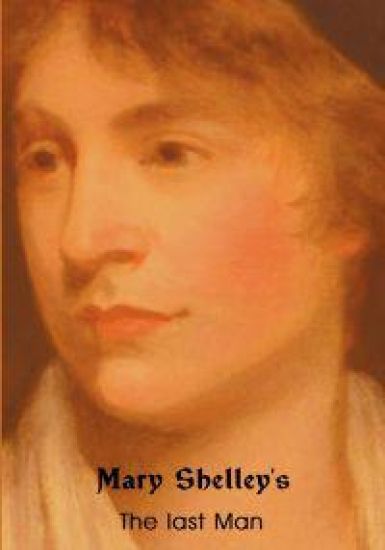
The Last Man is a post-apocalyptic science fiction novel by Mary Shelley, which was first published in 1826. The book tells of a future world that has been ravaged by a plague. The novel was harshly reviewed at the time, and was virtually unknown until a scholarly revival beginning in the 1960s. It is notable in part for its semi-biographical portraits of Romantic figures in Shelley's circle, particularly Shelley's late husband Percy Bysshe Shelley and Lord Byron. The Last Man is a post-apocalyptic science fiction novel by Mary Shelley, which was first published in 1826. The book tells of a future world that has been ravaged by a plague. The novel was harshly reviewed at the time, and was virtually unknown until a scholarly revival beginning in the 1960s. It is notable in part for its semi-biographical portraits of Romantic figures in Shelley's circle, particularly Shelley's late husband Percy Bysshe Shelley and Lord Byron.
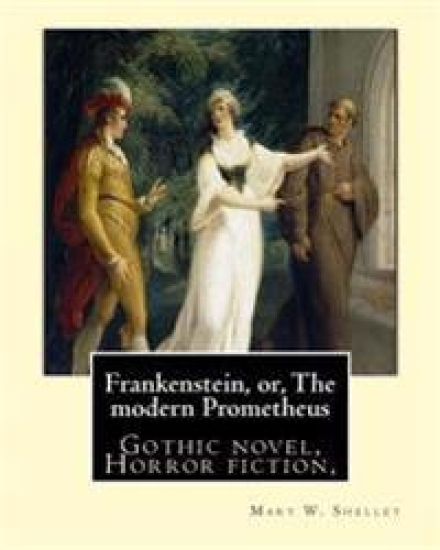
Frankenstein is a novel written in epistolary form, documenting a fictional correspondence between two characters. This novel tells the story of Victor Frankenstein, a young scientist who creates a grotesque but sapient creature in an unorthodox scientific experiment. Frankenstein is full of elements of the Gothic novel and the Romantic movement but, at same time, it is an early example of science fiction. A must read classic.
The Last Man Mary Shelley, most famous for "Frankenstein" also wrote several other novels and short stories. "The Last Man" was her second best-seller, written about ten years after the publication of "Frankenstein". The Last Man is an apocalyptic science fiction novel about tragic love and a future world that has been ravaged by a plague. It reflects Shelley's fears about civilization and the shortcomings of human behavior. Lionel Verney, the narrator and last survivor of a twenty-first century plague, recounts how he discovers a manuscript written in 2100. But aside from the novel being delightful and arguably obscure entertainment for the Romantic literature aficionado, it is the foundation of English Sci-Fi from H. G. Wells to Arthur C. Clarke, not to mention such works as "The Stand" by Stephen King and "I am Legend" by Richard Matheson.
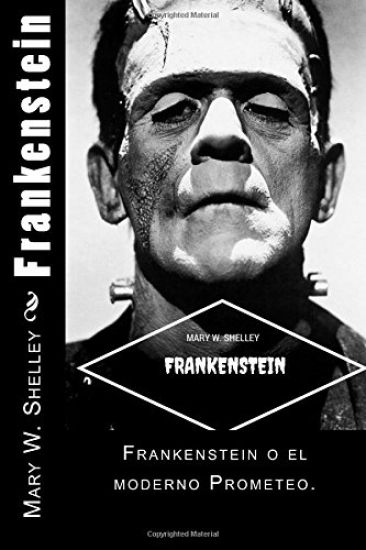
En el verano de 1816, el poeta Percy B. Shelley y su esposa Mary se reunieron con Lord Byron y su m dico Polidori en una villa a orillas del lago Leman. A instancias de Lord Byron y para animar una velada tormentosa, decidieron que cada uno inventar a una historia de fantasmas. La m s callada y reservada, Mary Shelley, dio vida as a quien ser a su personaje m s famoso: el doctor Frankenstein. Al cabo de un a o completar a la novela, hoy d a un cl sico imperecedero de la literatura g tica. La historia es de todos conocida: un cient fico decide crear una criatura con vida propia a la que luego rechaza. Met fora sobre la vida, la libertad y el amor, Frankenstein o el moderno Prometeo es una maravillosa f bula con todos los ingredientes de los grandes mitos, un gran cl sico que ahora recuperamos con una nueva traducci n y precedido de un espl ndido estudio de Alberto Manguel sobre la influencia del mito en el imaginario del cine
Frankenstein (t tulo completo: Frankenstein o el moderno Prometeo) es una obra literaria de la escritora inglesa Mary Shelley. Publicado en 1818 y enmarcado en la tradici n de la novela g tica, el texto explora temas tales como la moral cient fica, la creaci n y destrucci n de vida y la audacia de la humanidad en su relaci n con Dios. De ah , el subt tulo de la obra: el protagonista intenta rivalizar en poder con Dios, como una suerte de Prometeo moderno que arrebata el fuego sagrado de la vida a la divinidad. Es considerado como el primer texto del g nero Ciencia Ficci n.