Kirjojen hintavertailu – 12 859 818 kirjaa ja 27 kauppaa

Kirjailija

Mary Warnock

Kirjat ja teokset yhdessä paikassa: 15 kirjaa, julkaisuja vuosilta 1967–2021, suosituimpiin kuuluu Existentialism. Vertaile teosten hintoja ja tarkista saatavuus suomalaisista kirjakaupoista.

15 kirjaa

Kirjojen julkaisuvuodet: 1967–2021.

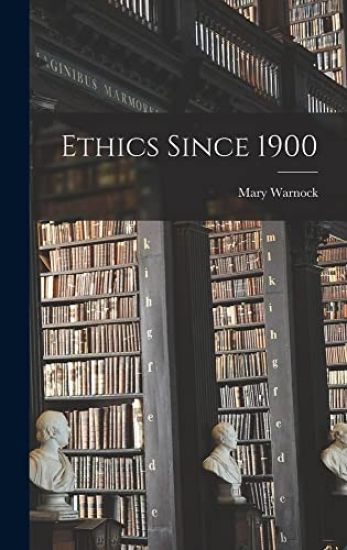
Ethics Since 1900

Ethics Since 1900

Mary Warnock

Hassell Street Press
2021
sidottu
This work has been selected by scholars as being culturally important and is part of the knowledge base of civilization as we know it. This work is in the public domain in the United States of America, and possibly other nations. Within the United States, you may freely copy and distribute this work, as no entity (individual or corporate) has a copyright on the body of the work. Scholars believe, and we concur, that this work is important enough to be preserved, reproduced, and made generally available to the public. To ensure a quality reading experience, this work has been proofread and republished using a format that seamlessly blends the original graphical elements with text in an easy-to-read typeface. We appreciate your support of the preservation process, and thank you for being an important part of keeping this knowledge alive and relevant.

The Philosophy of Sartre

The Philosophy of Sartre

Mary Warnock

Routledge
2020
nidottu
This book, first published in 1965, is a critical exposition of the philosophical doctrines of Jean-Paul Sartre. His contribution to ethical and political theory, and to metaphysics and ontology, is reviewed against the background of German idealism and phenomenology, and his arguments are presented clearly so that readers may assess their philosophical value in their own right.
The Philosophy of Sartre

The Philosophy of Sartre

Mary Warnock

Routledge
2019
sidottu
This book, first published in 1965, is a critical exposition of the philosophical doctrines of Jean-Paul Sartre. His contribution to ethical and political theory, and to metaphysics and ontology, is reviewed against the background of German idealism and phenomenology, and his arguments are presented clearly so that readers may assess their philosophical value in their own right.
Critical Reflections on Ownership

Critical Reflections on Ownership

Mary Warnock

Edward Elgar Publishing Ltd
2015
nidottu
In this thought-provoking work, Mary Warnock explores what it is to own things, and the differences in our attitude to what we own and what we do not. Starting from the philosophical standpoints of Locke and Hume, the ownership of gardens is presented as a prime example, exploring both private and common ownership, historically and autobiographically. The author concludes that, besides pleasure and pride, ownership brings a sense of responsibility for what is owned and a fundamental question is brought to light: can we feel the same responsibility for what we do not, and never can, own? Applying this question to the natural world and the planet as a whole, a realistic and gradualist perspective is offered on confronting global environmental degradation. Critical Reflections on Ownership examines the effect of the Romantic Movement on our attitudes to nature and is a salient commentary on the history of ideas. Providing an accessible entrance into moral philosophy and its practical applications, this book is an invaluable source for students in the fields of politics and philosophy. Academics interested in conceptions of ownership, and in the interface between philosophy, morality and politics, will find this deeply considered insight to be a stimulating read.
Critical Reflections on Ownership

Critical Reflections on Ownership

Mary Warnock

Edward Elgar Publishing Ltd
2015
sidottu
In this thought-provoking work, Mary Warnock explores what it is to own things, and the differences in our attitude to what we own and what we do not. Starting from the philosophical standpoints of Locke and Hume, the ownership of gardens is presented as a prime example, exploring both private and common ownership, historically and autobiographically. The author concludes that, besides pleasure and pride, ownership brings a sense of responsibility for what is owned and a fundamental question is brought to light: can we feel the same responsibility for what we do not, and never can, own? Applying this question to the natural world and the planet as a whole, a realistic and gradualist perspective is offered on confronting global environmental degradation. Critical Reflections on Ownership examines the effect of the Romantic Movement on our attitudes to nature and is a salient commentary on the history of ideas. Providing an accessible entrance into moral philosophy and its practical applications, this book is an invaluable source for students in the fields of politics and philosophy. Academics interested in conceptions of ownership, and in the interface between philosophy, morality and politics, will find this deeply considered insight to be a stimulating read.
Credo

Credo

Mary Warnock

Acumen Publishing Ltd
2012
nidottu
Much of Mary Warnock's published work had focused on particular ethical problems - from issues in medicine to the place of religion in politics - but here she writes for the first time about her own personal convictions. As an active, independently minded participant in British politics and as a philosopher at the centre of the subject for half a century, she has seen fashions come and go, and now in her eighties she is ready to articulate and defend what she believes of life and the religious. The human imagination, she argues, makes it possible for us to catch glimpses of things other than what is before our eyes. For some this is religion. For others, including herself, it is the symbolic or the aesthetic - music and art - that takes the imagination near to religious ideas. As a humanist who values religion for its unique contribution to human society, she offers a thought-provoking and deeply felt contribution to debates about personal well-being.
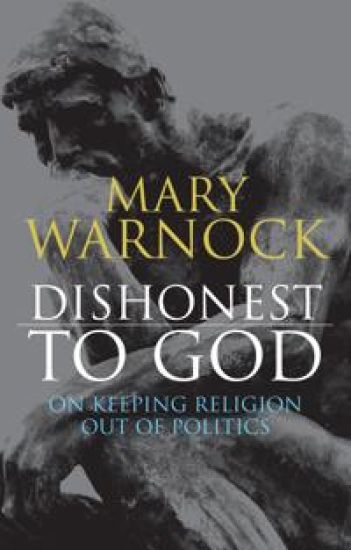
Dishonest to God

Dishonest to God

Mary Warnock

Continuum Publishing Corporation
2011
nidottu
This is a powerful argument that religious and theological issues should have no place in public morality issues such as euthanasia, assisted suicide, and abortion. Here is a pugnacious book by a philosopher who often hits the headlines. The book reflects on the nature of religion and how it relates or ought to relate to the rest of life. Many people today are totally indifferent to religion but religion is far from dead. Indeed religions are intensely defended and aggressively pursued. Religion is a cause for dissension and death. This is beyond dispute. Mary Warnock is concerned with Christianity. She argues that to value religion as the essential foundation of morality is a profound and probably dangerous mistake. Warnock's overriding purpose is to prise apart religion and morality. Judges for example are constantly being asked to pass judgement on moral issues in court. Because of The Human Rights Act, the law perforce is involved. Morality is therefore increasingly a public and not just a private matter. This book attempts to clarify the foundation of morality in a society largely indifferent to and ignorant of religion. Religion nevertheless emerges as a source of deep and unique imaginative experience.
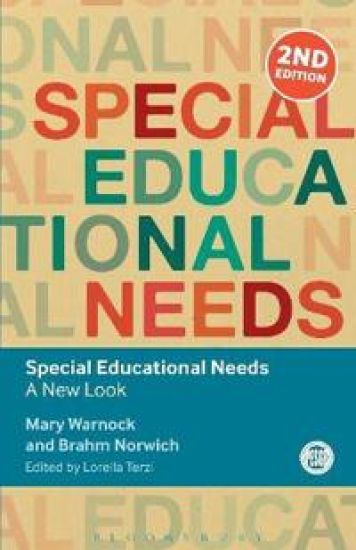
Special Educational Needs

Special Educational Needs

Mary Warnock; Brahm Norwich

Continuum Publishing Corporation
2010
nidottu
This title considers the philosophical debates surrounding special educational needs and inclusion. "Special Educational Needs: A New Look" by Mary Warnock was initially published by the Philosophy of Education Society of Great Britain in 2005. In this new edition, Warnock has updated her argument, Brahm Norwich has contributed a counter-argument and Lorella Terzi has provided a foreword and afterword, drawing the two debates together. The issues debated in this new edition of "Special Educational Needs: A New Look" include: The statement of special educational need - the concept of inclusion. "Special Educational Needs: A New Look" raises issues which will be of interest to all involved in special education and inclusion, including teachers, policy makers and educationalists. This innovative series is addressed to practitioners and policy-makers. It highlights the critical perspectives that philosophy can bring to bear on current education policy and provides a lively discussion of the issues. It aims to stimulate debate and to contribute to better informed educational initiatives.
Making Babies

Making Babies

Mary Warnock

Oxford University Press
2003
nidottu
Mary Warnock analyses what it means to claim something as a 'right', and goes on to discuss the cases of different groups of people. She examines the ethical problems faced by particular types of assisted reproduction, and argues that in the future human cloning may well be a viable and acceptable form of treatment for some types of infertility.
Making Babies

Making Babies

Mary Warnock

Oxford University Press
2002
sidottu
The development of new reproductive technologies has raised urgent questions and debates about how and by whom these treatments should be controlled. On the one hand individuals and groups have claimed access to assisted reproduction as a right, and some have also claimed that this access should be available free of charge. As well as clinically infertile heterosexual couples, this right has been claimed by single women, gay couples, post-menopausal women, and couples who wish to delay having children for various reasons. Others have argued that a desire to have children does not make it a human right, and, moreover, that there are some people who should not be assisted to become parents, on grounds of age, sexuality, or lifestyle. Mary Warnock steers a clear path through the web of complex issues underlying these views. She begins by analysing what it means to claim something as a 'right', and goes on to discuss the cases of different groups of people. She also examines the ethical problems faced by particular types of assisted reproduction, including artificial insemination, in-vitro fertilization, and surrogacy, and argues that in the future human cloning may well be a viable and acceptable form of treatment for some types of infertility.
Imagination and Time

Imagination and Time

Mary Warnock

Blackwell Publishers
1994
nidottu
All religion and much philosophy has been concerned with the contrast between the ephemeral and the eternal. Human beings have always sought ways to overcome time, and to prove that death is not the end. This book consists then in an exploration of certain closely related ideas: personal identity, time, history and our commitment to the future, and the role of imagination in life.
Imagination

Imagination

Mary Warnock

University of California Press
1978
pokkari
Imagination is an outstanding contribution to a notoriously elusive and confusing subject. It skillfully interrelates problems in philosophy, the history of ideas and literary theory and criticism, tracing the evolution of the concept of imagination from Hume and Kant in the eighteenth century to Ryle, Sartre and Wittgenstein in the twentieth. She strongly belies that the cultivation of imagination should be the chief aim of education and one of her objectives in writing the book has been to put forward reasons why this is so. Purely philosophical treatment of the concept is shown to be related to its use in the work of Coleridge and Wordsworth, who she considers to be the creators of a new kind of awareness with more than literary implications. The purpose of her historical account is to suggest that the role of imagination in our perception and thought is more pervasive than may at first sight appear, and that the thread she traces is an important link joining apparently different areas of our experience. She argues that imagination is an essential element in both our awareness of the world and our attaching of value to it.
Existentialism

Existentialism

Mary Warnock

Oxford University Press
1970
nidottu
Existentialism enjoyed great popularity in the 1940s and 1950s, and has probably had a greater impact upon literature than any other kind of philosophy. The common interest which unites Existentialist philosophers is their interest in human freedom. Readers of Existentialist philosophy are being asked, not merely to contemplate the nature of freedom, but to experience freedom, and to practise it. In this survey, Mary Warnock begins by considering the ethical origins of Existentialism, with particular reference to Kierkegaard and Nietzsche, and outlines the importance of a systematic account of man's connection with the world as expounded by Husserl. She discusses at length the common interests and ancestry of Existentialism in the works of Heidegger, Merleau-Ponty, and Sartre, and offers some conclusions about the current nature and future of this committed and practical philosophy. This revised edition includes a postscript reviewing the status of Existentialism in the 1990s, and has a thoroughly updated bibliography.