Kirjojen hintavertailu – 12 859 824 kirjaa ja 27 kauppaa
Kirjailija
Mary Wollstonecraft Shelley
Kirjat ja teokset yhdessä paikassa: 413 kirjaa, julkaisuja vuosilta 1818–2026, suosituimpiin kuuluu Maurice, or the Fisher's Cot. Vertaile teosten hintoja ja tarkista saatavuus suomalaisista kirjakaupoista.
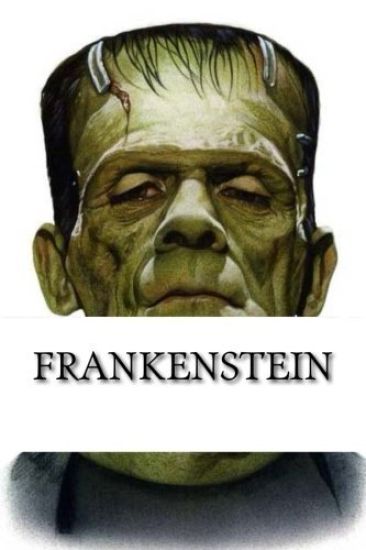
Frankenstein or The Modern Prometheus, was completed by Mary Shelley at the age of 19. She infused this original novel with Gothic and Romantic elements. Scientist Victor Frankenstein creates a large and powerful creature in the likeness of man, but is disgusted by his own creation and he abandons the being to fend for itself. Spawning generations of horror stories in the genre, Frankenstein is a gruesome warning against playing God and attempting the engineering of life.
By the dim and yellow light of the moon, as it forced its way through the window-shutters, I beheld the wretch-the miserable monster whom I had created. He held up the curtain of the bed; and his eyes, if eyes they may be called, were fixed on me. His jaws opened...' Frankenstein is the most celebrated horror story ever written. It tells the dreadful tale of Victor Frankenstein, a visionary young student of natural philosophy, who discovers the secret of life. In the grip of his obsession he constructs a being from dead body parts, and animates this creature. The results, for Victor and for his family, are catastrophic. Written when Mary Shelley was just eighteen, Frankenstein was inspired by the ghost stories and vogue for Gothic literature that fascinated the Romantic writers of her time. She transformed these supernatural elements an epic parable that warned against the threats to humanity posed by accelerating technological progress. Published for the 200th anniversary, this edition, based on the original 1818 text, explains in detail the turbulent intellectual context in which Shelley was writing, and also investigates how her novel has since become a byword for controversial practices in science and medicine, from manipulating ecosystems to vivisection and genetic modification. As an iconic study of power, creativity, and, ultimately, what it is to be human, Frankenstein continues to shape our thinking in profound ways to this day.
This is the story of a scientist, Victor Frankenstein who creates and gives life to a monster. The monster threatens to kill all of Victor's friends and loved ones unless Victor creates a female mate for him. victor complies for awhile. Then, fearing that it may lead to the reproduction and proliferation of a species that could threaten the survival of humanity as a whole, he backs out, destroying the partially finished female monster. In retaliation, the monster kills Victor's bride.
Mary Shelley's Frankenstein is the world's most famous Gothic novel and the first work of science fiction, with Frankenstein's monster being a symbol of science gone awry. Shelley's masterpiece has inspired numerous films, plays and other books. This, the 1818 edition, published anonymously, contains the author's original vision. Later revisions, though edited by Mary Shelley, were made more conservative and palatable to nineteenth century readers.
Mary Shelley's Frankenstein is the world's most famous Gothic novel and the first work of science fiction, with Frankenstein's monster being a symbol of science gone awry. Shelley's masterpiece has inspired numerous films, plays and other books. This, the 1818 edition, published anonymously, contains the author's original vision. Later revisions, though edited by Mary Shelley, were made more conservative and palatable to nineteenth century readers.
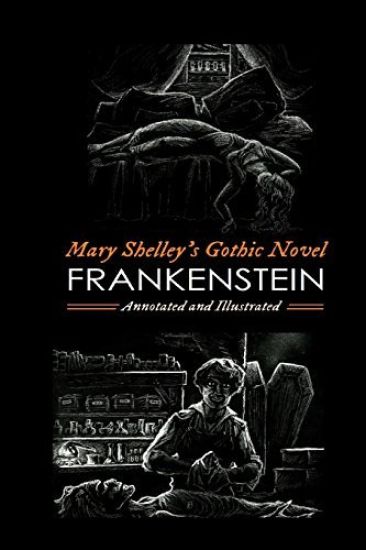
Completely annotated and provided with maps, essays, and chilling illustrations, this unique edition of Mary Shelley's "Frankenstein" answers some of readers' most lingering questions, clarifies historical references, and probes into the sensitive biographical nature of Mary Shelley's landmark novel. One of the most influential masterpieces of horror in the English language, "Frankenstein" straddles science fiction, horror, romance, the weird tale, and the literary allegory. Aside from the monomaniacal student of dark arts, the pensive bride throttled in her uncreased wedding bed, and the dramatic landscapes of Arctic ice fields and alpine vistas, Frankenstein is the story of poor stewardship, failed fatherhood, lost innocence, painful alienation, social rejection, the entangled relationship between adoring love and septic hatred, and the unfairness of a world which evicts a warm, gentle, curious, and eager spirit based on the casing of its skin. It raises relevant questions of technology, scientific responsibility, racism, sexism, community, environmentalism, progressivism, tolerance, diversity, love, and social responsibility, all wrapped in a psychologically complex, chilling narrative of grave robbing, playing god, murder, necrophilia, sublimated sexuality, and existential horror.
Narrating from her deathbed, Mathilda, a young woman barely in her twenties, writes her story as a way of explaining her actions to her friend, Woodville. Her narration follows her lonely upbringing and climaxes at a point when her unnamed father confesses his incestuous love for her. This is then followed by his suicide by drowning and her ultimate death; her relationship with the gifted young poet, Woodville, fails to reverse Matilda's emotional withdrawal or prevent her lonely death. The novella begins with readers becoming aware that this story is being narrated in the first person, by Mathilda, and that this narration is meant for a specific audience in answer to a question asked prior to the novella's beginning: "You have often asked me the cause of my solitary life; my tears; and above all of my impenetrable and unkind silence." Readers quickly learn that Mathilda is on her deathbed and this is the only reason she is exposing what seems to be a dark secret.
You will rejoice to hear that no disaster has accompanied the commencement of an enterprise which you have regarded with such evil forebodings. I arrived here yesterday, and my first task is to assure my dear sister of my welfare and increasing confidence in the success of my undertaking. I am already far north of London, and as I walk in the streets of Petersburgh, I feel a cold northern breeze play upon my cheeks, which braces my nerves and fills me with delight. Do you understand this feeling? This breeze, which has travelled from the regions towards which I am advancing, gives me a foretaste of those icy climes. Inspirited by this wind of promise, my daydreams become more fervent and vivid. I try in vain to be persuaded that the pole is the seat of frost and desolation; it ever presents itself to my imagination as the region of beauty and delight. There, Margaret, the sun is forever visible, its broad disk just skirting the horizon and diffusing a perpetual splendour. There-for with your leave, my sister, I will put some trust in preceding navigators-there snow and frost are banished; and, sailing over a calm sea, we may be wafted to a land surpassing in wonders and in beauty every region hitherto discovered on the habitable globe. Its productions and features may be without example, as the phenomena of the heavenly bodies undoubtedly are in those undiscovered solitudes. What may not be expected in a country of eternal light? I may there discover the wondrous power which attracts the needle and may regulate a thousand celestial observations that require only this voyage to render their seeming eccentricities consistent forever. I shall satiate my ardent curiosity with the sight of a part of the world never before visited, and may tread a land never before imprinted by the foot of man. These are my enticements, and they are sufficient to conquer all fear of danger or death and to induce me to commence this laborious voyage with the joy a child feels when he embarks in a little boat, with his holiday mates, on an expedition of discovery up his native river. But supposing all these conjectures to be false, you cannot contest the inestimable benefit which I shall confer on all mankind, to the last generation, by discovering a passage near the pole to those countries, to reach which at present so many months are requisite; or by ascertaining the secret of the magnet, which, if at all possible, can only be effected by an undertaking such as mine.
History of a Six Weeks' Tour through a part of France, Switzerland, Germany, and Holland; with Letters Descriptive of a Sail Round the Lake of Geneva and of the Glaciers of Chamouni is a travel narrative by the English Romantic authors Mary Shelley and Percy Bysshe Shelley. Published in 1817, it describes two trips taken by Mary, Percy, and Mary's stepsister, Claire Clairmont: one across Europe in 1814, and one to Lake Geneva in 1816. Divided into three sections, the text consists of a journal, four letters, and Percy Shelley's poem "Mont Blanc". Apart from the poem, the text was primarily written and organised by Mary Shelley. In 1840 she revised the journal and the letters, republishing them in a collection of Percy Shelley's writings. Part of the new genre of the Romantic travel narrative, History of a Six Weeks' Tour exudes spontaneity and enthusiasm; the authors demonstrate their desire to develop a sense of taste and distinguish themselves from those around them. The romantic elements of the work would have hinted at the text's radical politics to nineteenth-century readers. However, the text's frank discussion of politics, including positive references to the French Revolution and praise of Enlightenment philosopher Jean-Jacques Rousseau, was unusual for a travel narrative at the time, particularly one authored primarily by a woman. Although it sold poorly, History of a Six Weeks' Tour received favourable reviews. In proposing another travel narrative to her publisher in 1843, Mary Shelley claimed "my 6 weeks tour brought me many compliments".... Mary Wollstonecraft Shelley (n e Godwin; 30 August 1797 - 1 February 1851) was an English novelist, short story writer, dramatist, essayist, biographer, and travel writer, best known for her Gothic novel Frankenstein: or, The Modern Prometheus (1818). She also edited and promoted the works of her husband, the Romantic poet and philosopher Percy Bysshe Shelley. Her father was the political philosopher William Godwin, and her mother was the philosopher and feminist Mary Wollstonecraft. After Wollstonecraft's death less than a month after her daughter Mary was born, Mary was raised by Godwin, who was able to provide his daughter with a rich, if informal, education, encouraging her to adhere to his own liberal political theories. When Mary was four, her father married a neighbour, with whom, as her stepmother, Mary came to have a troubled relationship. In 1814, Mary began a romance with one of her father's political followers, Percy Bysshe Shelley, whom she eventually married. Together with Mary's stepsister Claire Clairmont, Mary and Shelley left for France and traveled through Europe. Upon their return to England, Mary was pregnant with Percy's child. Over the next two years, she and Percy faced ostracism, constant debt, and the death of their prematurely born daughter. They married in late 1816, after the suicide of Percy Shelley's first wife, Harriet. In 1816, the couple famously spent a summer with Lord Byron, John William Polidori, and Claire Clairmont near Geneva, Switzerland, where Mary conceived the idea for her novel Frankenstein. The Shelleys left Britain in 1818 for Italy, where their second and third children died before Mary Shelley gave birth to her last and only surviving child, Percy Florence Shelley. In 1822, her husband drowned when his sailing boat sank during a storm near Viareggio. A year later, Mary Shelley returned to England and from then on devoted herself to the upbringing of her son and a career as a professional author. The last decade of her life was dogged by illness, probably caused by the brain tumour that was to kill her at the age of 53. Until the 1970s, Mary Shelley was known mainly for her efforts to publish her husband's works and for her novel .... Percy Bysshe Shelley ( 4 August 1792 - 8 July 1822) was one of the major English Romantic poets, and is regarded by some as among the finest lyric, as well as epic, poets in the Englis