Kirjojen hintavertailu – 12 859 818 kirjaa ja 27 kauppaa

Kirjailija

Mary Zey

Kirjat ja teokset yhdessä paikassa: 5 kirjaa, julkaisuja vuosilta 1993–2017, suosituimpiin kuuluu Population Change in the United States. Vertaile teosten hintoja ja tarkista saatavuus suomalaisista kirjakaupoista.

5 kirjaa

Kirjojen julkaisuvuodet: 1993–2017.

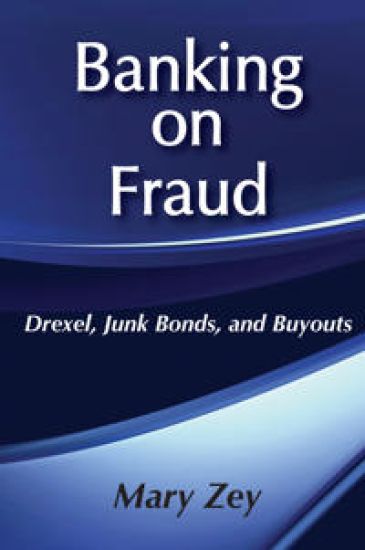
Banking on Fraud

Banking on Fraud

Mary Zey

Routledge
2017
sidottu
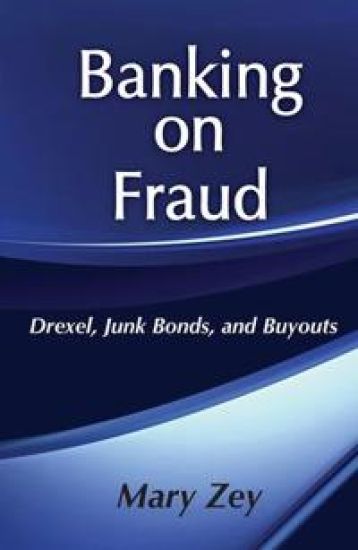
In analyzing the fraud-facilitated leveraged buyouts engineered by Michael Milken and the firm of Drexel Burnham Lambert, the author suggests that such buyouts have multiple and extensive consequences for the organization of business and the economy. Zey also demonstrates how ordinary bond trading networks were linked to the extraordinary networks of the Boesky Organizations and Employee Private Partnerships in order to defraud bond issuers and buyers. This book debunks the myth of rational economic organization in the 1980s and establishes broad implications for theories of organizational deviance.
Population Change in the United States

Population Change in the United States

Steve H. Murdock; Michael E. Cline; Mary Zey; Deborah Perez; P. Wilner Jeanty

Springer
2016
nidottu
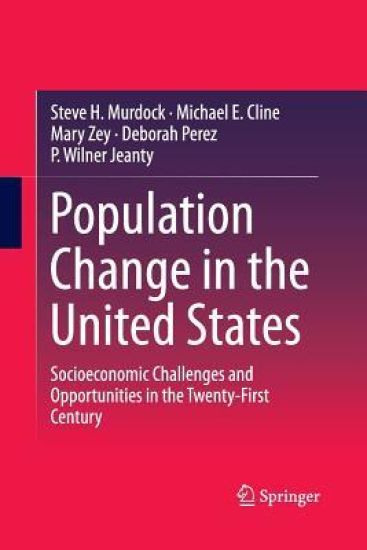
This new volume maps the complex interplay of demographic and socioeconomic changes in the United States, where rapid aging and ethnic diversification are merely the most salient of the many issues with major long-term implications. Drawing on The United States Census Bureau’s post-2010 detailed projections, as well as a wealth of data distilled from authoritative sources, the authors tackle many of the urgent policy questions raised by America’s changing population. The book explores the ways economic markets are adapting to an older and more diverse customer base, how the projected demographic change will impact public service demand, the growing economic disparities between asset-rich baby boomers and youth struggling for economic security, and how the projected demographic patterns will change the fiscal, economic, education, health, and housing sectors and alter the social structures and processes impacting American households and the diverse array of America’s future population. A thorough survey of major demographic patterns in the USA up to 2050 is followed by an assessment of how these will affect socioeconomic, public service, fiscal, economic, and social structures and mechanisms, down to the size and composition of households. The analysis then considers possible variations of outcome predicated on alternative dynamic patterns between demographics and socioeconomics. Cutting through the politics and communal anxieties with hard, cutting-edge data, this study will be a primary source for all those who must use its contents to guide their decisions.
Population Change in the United States

Population Change in the United States

Steve H. Murdock; Michael E. Cline; Mary Zey; Deborah Perez; P. Wilner Jeanty

Springer
2015
sidottu
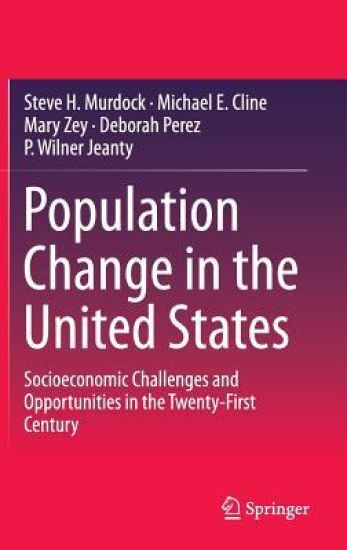
This new volume maps the complex interplay of demographic and socioeconomic changes in the United States, where rapid aging and ethnic diversification are merely the most salient of the many issues with major long-term implications. Drawing on The United States Census Bureau’s post-2010 detailed projections, as well as a wealth of data distilled from authoritative sources, the authors tackle many of the urgent policy questions raised by America’s changing population. The book explores the ways economic markets are adapting to an older and more diverse customer base, how the projected demographic change will impact public service demand, the growing economic disparities between asset-rich baby boomers and youth struggling for economic security, and how the projected demographic patterns will change the fiscal, economic, education, health, and housing sectors and alter the social structures and processes impacting American households and the diverse array of America’s future population. A thorough survey of major demographic patterns in the USA up to 2050 is followed by an assessment of how these will affect socioeconomic, public service, fiscal, economic, and social structures and mechanisms, down to the size and composition of households. The analysis then considers possible variations of outcome predicated on alternative dynamic patterns between demographics and socioeconomics. Cutting through the politics and communal anxieties with hard, cutting-edge data, this study will be a primary source for all those who must use its contents to guide their decisions.
Rational Choice Theory and Organizational Theory
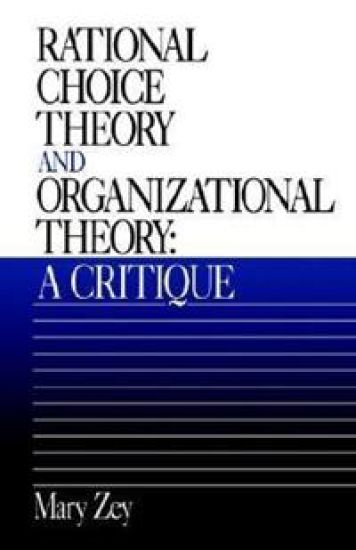
An ambitious new work by a well-respected economic sociologist, Rational Choice Theory and Organizational Theory: A Critique, offers a new perspective on the strategy and actions of organizations. In merging economic, psychological, and sociological literature as they focus on organizations, author Mary Zey contends that a historical political economy contingency theory provides the key to understanding how organizations function and the relationships between individuals and organizations in which they work. She brings to our attention that economic and other types of organizations differ in their behavior from rational individuals and rational markets. Zey integrates macro- and micro-levels of analysis while drawing together internal and external contingencies to explain how decisions are taken. Zey interprets, synthesizes, and critiques the important work of renowned scholars of rational choice, finance, and organizations including James March, Michael Jensen, and Oliver Williamson to analyze corporate decision making, differentiating it from individual decision making. The analysis is distinguished by inclusive thinking and new approaches to issues that have long confronted those who think about, theorize about, work with, and manage organizations. Mary ZeyÆs work expands the understanding of decision making by presenting evidence that points to the wide range and complexity of human decision making. The rational choice theorists, led most notably by Oliver Williamson and James Coleman, adhere to the tenets of transaction cost analysis and agency theory when looking at micro- and macro-level decisions made by people and organizations. Other models of decision making (habit, emotion, moral and ethical values, among others) have been labeled as deviations from formal rationality. Mary Zey calls these "deviations" alternative motives behind decision making, and her books are an attempt to present the leading work from this point of view. Rational Choice Theory and Organizational Theory: A Critique is the first single-authored volume to analyze and present an alternative model to decision making theory and serves as a companion to Decision Making (Sage, 1992). Rational Choice Theory and Organizational Theory will be useful to professors and students of decision making theory, organizational theory, sociology of organizations, and social theory.

Banking on Fraud

Banking on Fraud

Mary Zey

AldineTransaction
1993
nidottu
In analyzing the fraud-facilitated leveraged buyouts engineered by Michael Milken and the firm of Drexel Burnham Lambert, the author suggests that such buyouts have multiple and extensive consequences for the organization of business and the economy. Zey also demonstrates how ordinary bond trading networks were linked to the extraordinary networks of the Boesky Organizations and Employee Private Partnerships in order to defraud bond issuers and buyers. This book debunks the myth of rational economic organization in the 1980s and establishes broad implications for theories of organizational deviance.