Kirjailija
Massimiano Bucchi
Kirjat ja teokset yhdessä paikassa: 13 kirjaa, julkaisuja vuosilta 1998–2026, suosituimpiin kuuluu Geniuses, Heroes, and Saints. Vertaile teosten hintoja ja tarkista saatavuus suomalaisista kirjakaupoista.
13 kirjaa
Kirjojen julkaisuvuodet: 1998–2026.
The world around us is continually being shaped by science, and by society’s relationship to it. In recent years sociologists have been increasingly preoccupied with the latter, and now in this fascinating book, Massimiano Bucchi provides a brief introduction to this topical issue. Bucchi provides clear and unassuming summaries of all the major theoretical positions within the sociology of science, illustrated with many fascinating examples. Theories covered include Thomas Kuhn's theory of scientific change, the sociology of scientific knowledge, actor-network theory, and the social construction of technology. The second half of the book looks at recent public controversies over the role of science in the modern world including:* the Sokal affair, otherwise known as the science wars* debates over public understanding of science, such as global warming and genetically modified food* the implications of the human genome project. This much needed introduction to a rapidly growing area brings theory alive and will be essential reading for all students of the sociology of science.

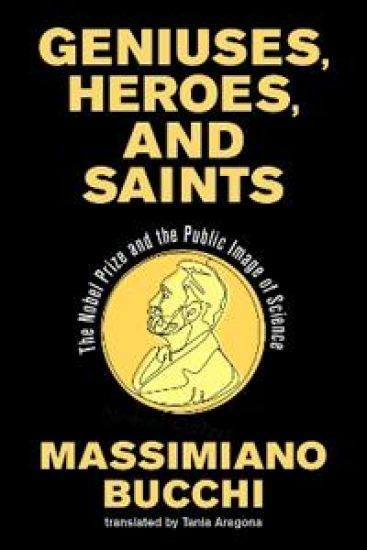
Geniuses, Heroes, and Saints
Massimiano Bucchi; Tania Aragona
MIT PRESS LTD
2025
nidottu
Halvin toimitettuna 30,90 €
A rich account of the world s leading science prize told through the lives it has changed, the controversies it has generated, and the impact it has made on the public. In a world where the work of science largely remains inscrutable to the general public, the Nobel Prize confers a degree of intelligibility like no other honor. Our best-known and most prestigious award for individual scientific achievement, the Nobel attaches a brilliant face to a story of profound discovery, making moving headlines. In Geniuses, Heroes, and Saints, Massimiano Bucchi tells an equally compelling story of the Nobel s transformation of science into an epic pursuit legible both to the field and to the public, bound up with the currents of historical change. Three main narratives characterize the Nobel. The scientist as genius, portrayed as a creative visionary, an exceptional intellect reflecting a solitary and romantic ideal of great communicative impact. The scientist as national hero acts as a surrogate of competition among nations in a peaceful, rational contest. The scientist as saint shines with moral exceptionality, a figure worthy of celebration and worship, known for virtues such as modesty, humility, and total dedication, body and soul, to the scientific enterprise. Whether the recipient was Albert Einstein or a countryside doctor toiling for years in obscurity, whether the prize was worthily given or awarded to work later disproved, or whether we even remember the honorees today, the Nobel defined the image of science in the twentieth century, Bucchi shows, an image that still lives in all sorts of fascinating ways today.
Science Communication: The Basics is an accessible yet critical introduction to science communication, which is viewed as the social conversation around science. It addresses why science communication matters, examines the evolution of theories and practices and explains concepts, myths, misunderstandings and challenges. Massimiano Bucchi and Brian Trench navigate the foundations and key themes of science communication through numerous vignettes, examples, cases and arguments. They provide annotated recommended reading and a Lexicon summarising the understandings and uses of key terms in the field. Revealing science communication as a collective process and part of daily life, topics covered include science communication as part of culture and our understanding of ourselves and the world; the history of science communication and the development of ‘modern science’; policy and theoretical approaches; the growth of professional practice, formal education and research in the field; evolving platforms for science communication; and quality, trust and ethical awareness in science communication. Science Communication: The Basics is designed to be a concise primer and essential reading for newcomers to the field, including staff in research and policy institutions, students of the natural, human and social sciences, and general readers curious about the ways science is presented and perceived in society. Science Communication: The Basics is the third in a triptych of works on science communication from the two authors. The other two works are the Routledge Handbook of Public Communication of Science and Technology, first published in 2008 and now in its third edition (2021), and a four-volume anthology of readings, The Public Communication of Science (2016), also published by Routledge.
Science Communication
Massimiano Bucchi; Brian Trench
TAYLOR FRANCIS LTD
2025
nidottu
Halvin toimitettuna 33,50 €
Science Communication: The Basics is an accessible yet critical introduction to science communication, which is viewed as the social conversation around science. It addresses why science communication matters, examines the evolution of theories and practices and explains concepts, myths, misunderstandings and challenges. Massimiano Bucchi and Brian Trench navigate the foundations and key themes of science communication through numerous vignettes, examples, cases and arguments. They provide annotated recommended reading and a Lexicon summarising the understandings and uses of key terms in the field. Revealing science communication as a collective process and part of daily life, topics covered include science communication as part of culture and our understanding of ourselves and the world; the history of science communication and the development of ‘modern science’; policy and theoretical approaches; the growth of professional practice, formal education and research in the field; evolving platforms for science communication; and quality, trust and ethical awareness in science communication. Science Communication: The Basics is designed to be a concise primer and essential reading for newcomers to the field, including staff in research and policy institutions, students of the natural, human and social sciences, and general readers curious about the ways science is presented and perceived in society. Science Communication: The Basics is the third in a triptych of works on science communication from the two authors. The other two works are the Routledge Handbook of Public Communication of Science and Technology, first published in 2008 and now in its third edition (2021), and a four-volume anthology of readings, The Public Communication of Science (2016), also published by Routledge.
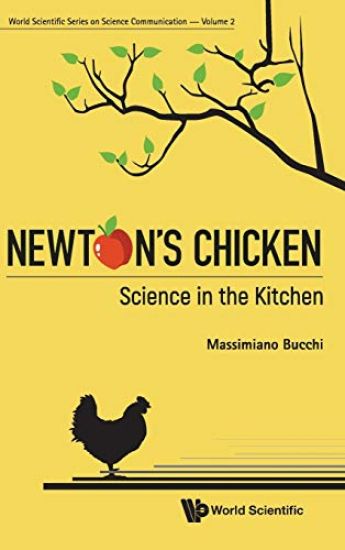
Newton's Chicken: Science In The Kitchen
Massimiano Bucchi
World Scientific Publishing Co Pte Ltd
2020
sidottu
A highly rigorous, yet original and entertaining book that explores the connection between food and science. Why has science forcefully entered the kitchen from a certain moment in history? Why do scientists often use images and metaphors drawn from gastronomy? What is the common thread that connects scientific experiments to mouth-watering recipes? What has futurist cooking got in common with molecular gastronomy? Experiments with coffee, controversies over beer and chocolate recipes guarded as if they were secret patents are the ingredients of this original, surprising account of the intersections between gastronomy and research, between laboratories and kitchens. Related Link(s)
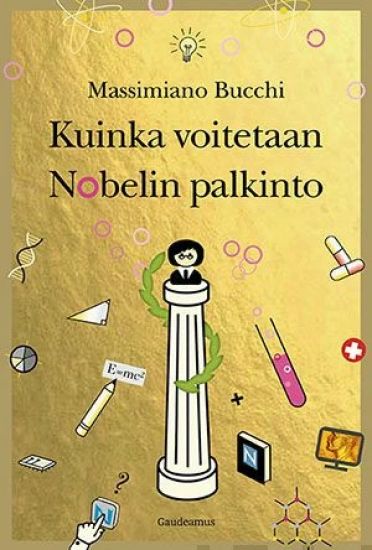
Kuinka voitetaan Nobelin palkinto
Massimiano Bucchi
Gaudeamus
2018
sidottu
Halvin toimitettuna 14,90 €
Vuonna 1901 Wilhelm Conrad Röntgen vastaanotti kaikkien aikojen ensimmäisen Nobelin fysiikanpalkinnon löydöstä, jota hän itse piti hyvin vaatimattomana. Maailman kuuluisin palkinto on siitä lähtien rakentanut kuvaa tieteestä ja sen tekijöistä, keksinnöistä ja kehityksestä. Nobelisteja on pidetty luovina neroina ja kansallissankareina, jotka ovat antaneet tieteelle kasvot. Kuinka voittaa Nobelin palkinto sukeltaa Nobelin tiedepalkintojen historiaan niiden voittajien matkassa. Albert Einsteinin, James Watsonin ja Marie Curien tarinoiden lisäksi tutustutaan kaikkien aikojen nuorimpaan ja vanhimpaan nobelistiin sekä moniin tyypillisiin ja epätyypillisiin voittajiin. Osansa saavat myös tuntemattomammiksi jääneet palkinnonsaajat. Voittajien ohella tarkastellaan itse palkintoa: sen historiaa ja myöntämisen käytänteitä. Kirja on varsinainen Nobel-trivian käsikirja kuvatessaan niin voittajien valintaprosessia kuin juhlallisuuksien kulkuakin. Teoksen näkökulma on vahvasti tieteessä, sen arvossa ja merkityksessä yhteiskunnalle.
In the days of global warming and BSE, science is increasingly a public issue. This book provides a theoretical framework which allows us to understand why and how scientists address the general public. The author develops the argument that turning to the public is not simply a response to inaccurate reporting by journalists or to public curiosity, nor a wish to gain recognition and additional funding. Rather, it is a tactic to which the scientific community are pushed by certain "internal" crisis situations. Bucchi examines three cases of scientists turning to the public: the cold fusion case, the COBE/Big Bang issue and Louis Pasteur's public demonstration of the anthrax vaccine, a historical case of "public science." Finally, Bucchi presents his unique model of communications between science and the public, carried out through the media. This is a thoughtful and wide-ranging treatment of complex contemporary issues, touching upon the history and sociology of science, communication and media studies. Bucchi's theories on scientific communication in the media are a valuable contribution to the current debate on this subject.
Nuclear energy, stem cell technology, GMOs: the more science advances, the more society seems to resist. But are we really watching a death struggle between opposing forces, as so many would have it? Can today’s complex technical policy decisions coincide with the needs of a participatory democracy? Are the two sides even equipped to talk to each other? Beyond Technocracy: Science, Politics and Citizens answers these questions with clarity and vision. Drawing upon a broad range of data and events from the United States and Europe, and noting the blurring of the expert/lay divide in the knowledge base, the book argues that these conflicts should not be dismissed as episodic, or the outbursts of irrationality and ignorance, but recognized as a critical opportunity to discuss the future in which we want to live. Massimiano Bucchi’s analysis covers the complex realities of post-academic science as he: Explores the widely debated theme of science and democracy across a broad range of technological controversies. Overviews issues raised by the current relationship among scientists, policymakers, business interests, and the public. Dispels stereotypes of the detached scientific community versus the uninformed general public. Examines the role of the media in framing scientific debate. Addresses the question of how to move beyond technocracy to a more fruitful collaboration between scientists and citizens. Offers a bold vision for a future in which the scientific and public spheres regard each other as partners working toward a shared purpose. Beyond Technocracy: Science, Politics and Citizens has great value as a postgraduate text for courses in technology and society, political science, and science policy. It will also find an interested audienceamong scientists, policymakers, managers in the technological sector, and concerned lay readers.
The world around us is continually being shaped by science, and by society’s relationship to it. In recent years sociologists have been increasingly preoccupied with the latter, and now in this fascinating book, Massimiano Bucchi provides a brief introduction to this topical issue. Bucchi provides clear and unassuming summaries of all the major theoretical positions within the sociology of science, illustrated with many fascinating examples. Theories covered include Thomas Kuhn's theory of scientific change, the sociology of scientific knowledge, actor-network theory, and the social construction of technology. The second half of the book looks at recent public controversies over the role of science in the modern world including:* the Sokal affair, otherwise known as the science wars* debates over public understanding of science, such as global warming and genetically modified food* the implications of the human genome project. This much needed introduction to a rapidly growing area brings theory alive and will be essential reading for all students of the sociology of science.
In the days of global warming and BSE, science is increasingly a public issue. This book provides a theoretical framework which allows us to understand why and how scientists address the general public. The author develops the argument that turning to the public is not simply a response to inaccurate reporting by journalists or to public curiosity, nor a wish to gain recognition and additional funding. Rather, it is a tactic to which the scientific community are pushed by certain "internal" crisis situations. Bucchi examines three cases of scientists turning to the public: the cold fusion case, the COBE/Big Bang issue and Louis Pasteur's public demonstration of the anthrax vaccine, a historical case of "public science." Finally, Bucchi presents his unique model of communications between science and the public, carried out through the media. This is a thoughtful and wide-ranging treatment of complex contemporary issues, touching upon the history and sociology of science, communication and media studies. Bucchi's theories on scientific communication in the media are a valuable contribution to the current debate on this subject.