Kirjojen hintavertailu – 12 903 725 kirjaa ja 27 kauppaa

Kirjailija

Massimo La Torre

Kirjat ja teokset yhdessä paikassa: 7 kirjaa, julkaisuja vuosilta 2007–2025, suosituimpiin kuuluu Contra la tradición. Perspectivas sobre la naturaleza del derecho. Vertaile teosten hintoja ja tarkista saatavuus suomalaisista kirjakaupoista.

7 kirjaa

Kirjojen julkaisuvuodet: 2007–2025.

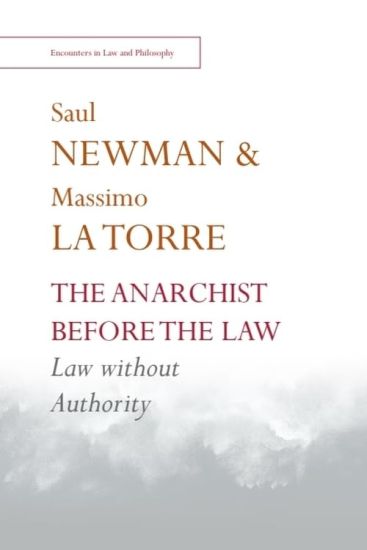
The Anarchist before the Law

The Anarchist before the Law

Saul Newman; Massimo La Torre

EDINBURGH UNIVERSITY PRESS
2025
nidottu
When might an anarchist need a good lawyer? Why do radical activists committed to revolutionary change often have to work within the limits of the law? Can a judge also be an anarchist? This book is an exploration of a paradoxical, yet necessary, encounter between anarchism and the law. Anarchism offers the most radical critique of the principle of legal authority and, as such, poses essential questions that legal philosophy must respond to regarding political obligation and the legitimacy of coercion. At a time when the law is in a state of crisis, it becomes crucial to interrogate its founding principles and ethical limits. Through an exploration of the anarchist tradition, and engaging with contemporary continental and analytical approaches to questions of jurisprudence, state sovereignty, violence, civil disobedience and human rights, this book develops an original anarchist theory of legal institutionalism and a concept of law without authority and coercion.
The Anarchist Before the Law

The Anarchist Before the Law

Saul Newman; Massimo La Torre

EDINBURGH UNIVERSITY PRESS
2024
sidottu
When might an anarchist need a good lawyer? Why do radical activists committed to revolutionary change often have to work within the limits of the law? Can a judge also be an anarchist? This book is an exploration of a paradoxical, yet necessary, encounter between anarchism and the law. Anarchism offers the most radical critique of the principle of legal authority and, as such, poses essential questions that legal philosophy must respond to regarding political obligation and the legitimacy of coercion. At a time when the law is in a state of crisis, it becomes crucial to interrogate its founding principles and ethical limits. Through an exploration of the anarchist tradition, and engaging with contemporary continental and analytical approaches to questions of jurisprudence, state sovereignty, violence, civil disobedience and human rights, this book develops an original anarchist theory of legal institutionalism and a concept of law without authority and coercion.

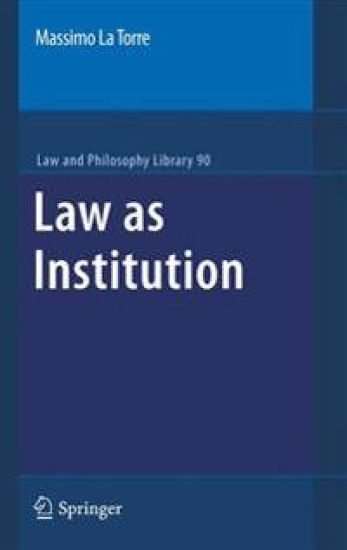
Law as Institution

Law as Institution

Massimo La Torre

Springer
2012
nidottu
This book – which is the result of several years of research, discussion, writing and re-writing – consists of three parts and eight chapters. The rst part is given by the two rst chapters introducing the issue of validity and facticity in law. The second part (Chapters 3, 4 and 5) is the core of this study and tries to present a theory based on a speci c view about language and social practice. The third part deal with the issue of value judgments and views about morality and consists of Chapters 6 and 7. Chapter 8 should nally serve as epilogue. In the rst chapter a discussion is started about the relationship between law and power, seen as a presupposition for an assessment of the nature of law. As a matter of fact, as has been remarked, “general theories of law struggle to do justice to the 1 multiple dualities of the law”. Indeed, law has a “dual nature”: it is a fact, but it also a norm, a sort of ideal entity. Law is sanction, but it is also discourse. It is effectivity, or facticity, but it is also a vehicle of principles among which the central one is justice. But this duality is not only a phenomenological, or a matter of justi cation and implementation as two separate moments.
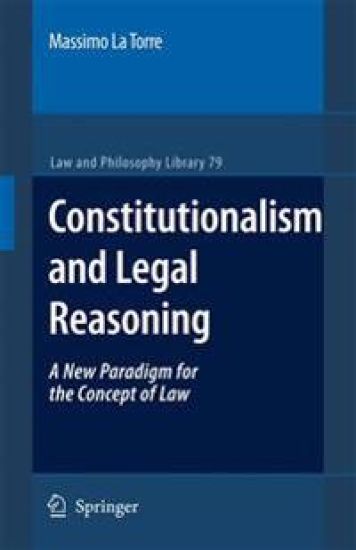
Constitutionalism and Legal Reasoning

Constitutionalism and Legal Reasoning

Massimo La Torre

Springer
2010
nidottu
This book, which consist of three chapters and two appendices, is intended to connect subjects that have usually been considered as detached or not strongly connected: constitutionalism, legal argumen- tion and legal ethics. Its main contention is that contemporary consti- tionalism pushes towards a new style of legal reasoning, which needs to take into account moral criteria and principles and that eventually the interpretative and moralist approach will lead to a somewhat unort- dox and less authoritarian concept of law. A constitution to be taken seriously and as a distinct and superior source of law, will end up referring to some sort of constitutional justice or judicial review. And constitutional reasoning and justice need to make recourse to principles but principles to be given an operative content should be elaborated through some form of moral reasoning. This r- soning however, if it does not want to betray the spirit of constitutional democracy and the very idea of a constitution as a special moment of self-determination, could not be just Platonism, a cognitivism without roots in the practice of public discourse and deliberation. So that cons- tutionalism will not really do without a public sphere and some activism of the latter. But if this is so, the traditional concept of law based on hi- archy, commands, prescription, sanction, and in the last instance violence, becomes obsolete. A law which is a command cannot be congruent with a practice ruled by discourse, that is, I argue, with constitution.
Law as Institution

Law as Institution

Massimo La Torre

Springer-Verlag New York Inc.
2010
sidottu
This book – which is the result of several years of research, discussion, writing and re-writing – consists of three parts and eight chapters. The rst part is given by the two rst chapters introducing the issue of validity and facticity in law. The second part (Chapters 3, 4 and 5) is the core of this study and tries to present a theory based on a speci c view about language and social practice. The third part deal with the issue of value judgments and views about morality and consists of Chapters 6 and 7. Chapter 8 should nally serve as epilogue. In the rst chapter a discussion is started about the relationship between law and power, seen as a presupposition for an assessment of the nature of law. As a matter of fact, as has been remarked, “general theories of law struggle to do justice to the 1 multiple dualities of the law”. Indeed, law has a “dual nature”: it is a fact, but it also a norm, a sort of ideal entity. Law is sanction, but it is also discourse. It is effectivity, or facticity, but it is also a vehicle of principles among which the central one is justice. But this duality is not only a phenomenological, or a matter of justi cation and implementation as two separate moments.
Constitutionalism and Legal Reasoning

Constitutionalism and Legal Reasoning

Massimo La Torre

Springer-Verlag New York Inc.
2007
sidottu
This book, which consist of three chapters and two appendices, is intended to connect subjects that have usually been considered as detached or not strongly connected: constitutionalism, legal argumen- tion and legal ethics. Its main contention is that contemporary consti- tionalism pushes towards a new style of legal reasoning, which needs to take into account moral criteria and principles and that eventually the interpretative and moralist approach will lead to a somewhat unort- dox and less authoritarian concept of law. A constitution to be taken seriously and as a distinct and superior source of law, will end up referring to some sort of constitutional justice or judicial review. And constitutional reasoning and justice need to make recourse to principles but principles to be given an operative content should be elaborated through some form of moral reasoning. This r- soning however, if it does not want to betray the spirit of constitutional democracy and the very idea of a constitution as a special moment of self-determination, could not be just Platonism, a cognitivism without roots in the practice of public discourse and deliberation. So that cons- tutionalism will not really do without a public sphere and some activism of the latter. But if this is so, the traditional concept of law based on hi- archy, commands, prescription, sanction, and in the last instance violence, becomes obsolete. A law which is a command cannot be congruent with a practice ruled by discourse, that is, I argue, with constitution.