
Kirjailija
Massimo Recalcati
Kirjat ja teokset yhdessä paikassa: 27 kirjaa, julkaisuja vuosilta 2015–2026, suosituimpiin kuuluu La Legge della parola. Radici bibliche della psicoanalisi. Vertaile teosten hintoja ja tarkista saatavuus suomalaisista kirjakaupoista.
27 kirjaa
Kirjojen julkaisuvuodet: 2015–2026.
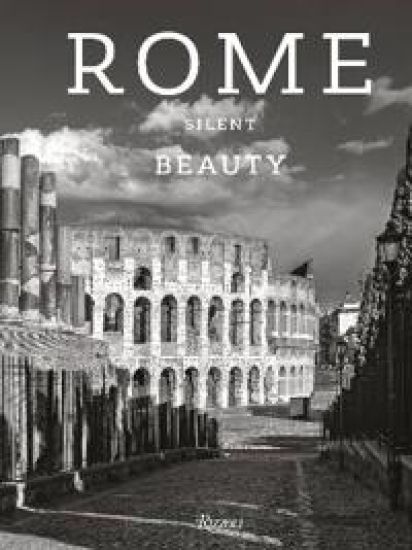
Like the rest of the world, Rome stopped during the pandemic triggered by Covid-19, remaining indefinitely in a state of suspended animation. The images taken in those days by the photographer Moreno Maggi capture this particular moment of a sleeping city and reveal a side of Rome that has never been seen before, in which the lines and geometries of the great works emerge more clearly than ever before, in all their beauty. Augmented reality makes the experience even more evocative, with visions of the deserted city created with a drone. Psychoanalyst Massimo Recalcati reminds us of what can always happen in dreams or nightmares: the familiar scene of the city emptied out. Art historian Claudio Strinati, an exceptional guide to this surreal city, describes monuments, historic buildings, and squares. Beauty envelops us and saves us in a version of Rome that becomes a symbol of eternal rebirth. This is a large volume that commemorates one of the most intense periods of the century.
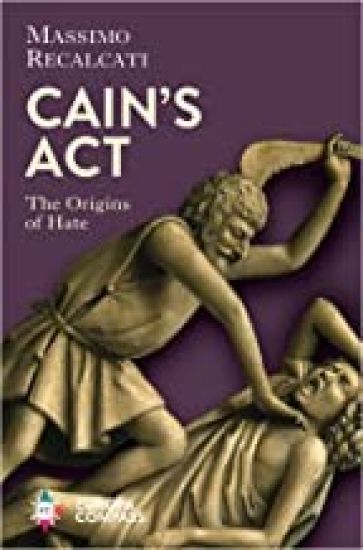
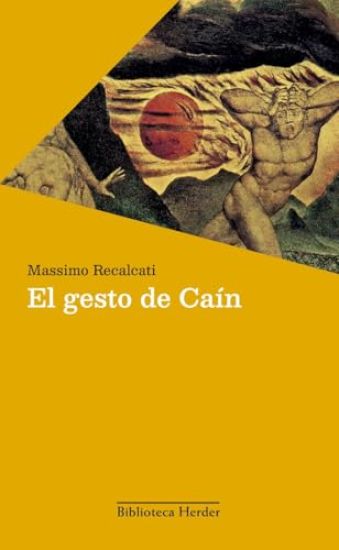
From one of Italy's most renowned philosophers and psychoanalysts, an urgent and stirring reflection on violence, morality, and our relationship with the OtherWhat lies at the foundation of human history and society? According to Massimo Recalcati, it is not love for one's neighbor, as preached by Jesus in the Gospels, but the brutality, jealousy, and violence depicted in the story of Cain and Abel. As timely as it is brilliant, this essay examines Cain's murderous act through the lens of psychoanalysis, showing how delusions of self-sufficiency and individual perfection lie at the deepest roots of fear and violence in our societies. True completeness can only be achieved through others--not despite them. This, argues Recalcati, is the lesson of Cain, one that resonates powerfully in our time." Recalcati explores the most fundamental of questions--for Cain, Abel, and every human being: can we believe in love?"--La Stampa
An urgent, stirring reflection on violence and morality. “Recalcati explores the most fundamental of questions—for Cain, Abel, and every human being: can we believe in love?”—La Stampa What lies at the foundation of human history and life in a society? According to Massimo Recalcati, it is not the sentiment of love for one’s neighbour preached by Jesus in the Gospels but the brutal hatred and violence depicted in the story of Cain and Abel. As timely as it is brilliant, this essay examines Cain’s murderous act through the lens of psychoanalysis, showing how delusions of self-sufficiency and individual perfection lie at the deepest roots of fear and violence in our societies. True completeness can only be achieved through others—not despite them. This, argues Recalcati, is the lesson of Cain, one that resonates powerfully in our time. Praise for Recalcati’s A Night in Gethsemane: “A book that reads in less than two hours but stays with you forever.”—Il Foglio “Lively and sharp . . . An invitation to look positively at the loneliness of human experience.”—Lettera

Modern social and political life is characterized not only by a passion for freedom and a desire for human contact, but also by the urge to shut down, to refuse freedom and the responsibility that goes with it, to barter it away in return for our security: this is the temptation of the wall, a temptation with which every modern society has to come to terms. Drawing on his experience as a psychoanalyst, Recalcati shows that the temptation of the wall is rooted in a deep psychological inclination: human beings have always drawn up borders and rejected the risks associated with being open to the outside world. But when these borders are turned into walls, they can only result in an impoverishment of the value of exchange and the loss of the dynamic plurality of a life shared with others.

Modern social and political life is characterized not only by a passion for freedom and a desire for human contact, but also by the urge to shut down, to refuse freedom and the responsibility that goes with it, to barter it away in return for our security: this is the temptation of the wall, a temptation with which every modern society has to come to terms. Drawing on his experience as a psychoanalyst, Recalcati shows that the temptation of the wall is rooted in a deep psychological inclination: human beings have always drawn up borders and rejected the risks associated with being open to the outside world. But when these borders are turned into walls, they can only result in an impoverishment of the value of exchange and the loss of the dynamic plurality of a life shared with others.
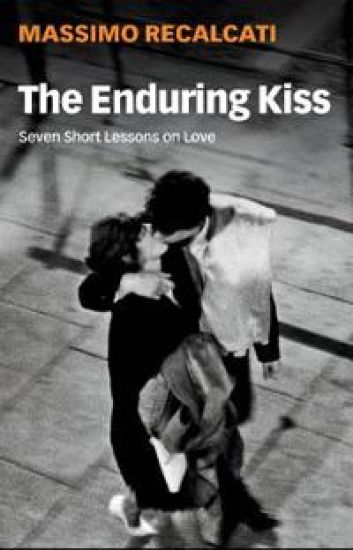
The kiss is the image that, perhaps more than any other, encompasses the beauty and poetry of love. Every love is required to maintain the kiss, to make it last. When they kiss, lovers carve out their hiding holes, finding their peace from war. When they kiss, the noise of the world is silenced, its laws broken, time is stolen from its normal continuity. They fall together in their distinct, embraced tongues. The kiss joins the tongue that declares love with the body of the lover. And the extinction of the kiss and, most importantly, of the desire to kiss one’s beloved announces the demise of love. In this short book, Massimo Recalcati – one of Italy’s leading intellectuals and bestselling authors – offers seven brief lessons on the mystery and miracle of love, from the serendipity of the first encounter to its end or its continuation over time, as mysterious and miraculous as the first encounter itself.
The kiss is the image that, perhaps more than any other, encompasses the beauty and poetry of love. Every love is required to maintain the kiss, to make it last. When they kiss, lovers carve out their hiding holes, finding their peace from war. When they kiss, the noise of the world is silenced, its laws broken, time is stolen from its normal continuity. They fall together in their distinct, embraced tongues. The kiss joins the tongue that declares love with the body of the lover. And the extinction of the kiss and, most importantly, of the desire to kiss one’s beloved announces the demise of love. In this short book, Massimo Recalcati – one of Italy’s leading intellectuals and bestselling authors – offers seven brief lessons on the mystery and miracle of love, from the serendipity of the first encounter to its end or its continuation over time, as mysterious and miraculous as the first encounter itself.
As the Gospels tell us, after the Last Supper Jesus retreats to a small field just outside the city of Jerusalem: Gethsemane, the olive grove. His prayers are interrupted when Judas arrives with a group of armed men, and kisses him. The kiss, given to point Jesus out to the guards, has become a powerful symbol of the wrenching experience of betrayal, and abandonment. Betrayed by his disciples, even by Peter, the most faithful of them all, Jesus is forsaken. His sin, to have drawn God closer to man. In The Night in Gethsemane, Massimo Recalcati, one of Italy’s highest regarded psychoanalysts, traces the relationship between biblical text and psychoanalytical theory, revealing human life in all its fragility and its agony.
The Night in Gethsemane: On Solitude and Betrayal
Massimo Recalcati
Europa Compass
2020
sidottu
Halvin toimitettuna 20,20 €
Highly regarded philosopher and psychoanalyst, Massimo Recalcati has penned a gripping, erudite meditation on suffering, doubt, betrayal, and the potential for renewal that dwells in our most painful moments. For Recalcati, Jesus's reckoning in the Garden of Gethsemane is at once an instance of human weakness and an encounter with the Divine. It is the story where the Divine and the Human meet most forcefully, first in company, then in solitude, and where agony and doubt mingle with potential rebirth and revitalization. As the Gospels recount, after the Last Supper, Jesus retreated to a small field just outside the city of Jerusalem: Gethsemane, the olive grove. His prayers are interrupted when Judas arrives with a group of armed men, and kisses him, betraying and abandoning him with a kiss. Jesus is forsaken by his friends and, it seems to him in this moment, by his father, his God. His sin, in Recalcati's view, is like Prometheus to have drawn Divine closer to man. The Night in Gethsemane is a revelatory, moving, and inspiring meditation by one of Italy's most important thinkers.
Relationships fall apart, marriages fail, couples break up – it happens to us all. Time corrodes passion and the routines of daily life kill the excitement that surrounds the emotion of the first encounter. The difficulty of uniting sexual pleasure with love, which Freud considered to be the most common neurosis in any love life, has become emblematic of a truth that seems undeniable: desire is destined to die if its object is not constantly renewed, if we do not change partner, if it is closed for too long in the restrictive chamber of the same bond. And yet what happens to these bonds when one of the two partners betrays the other, when the promise fails, when there is another emotional experience cloaked in secrecy and deceit? What happens if the traitor then begs forgiveness? Are they asking to be loved again and, having declared that it is not like it used to be, now want everything to go back to how it was? Should we make fun of lovers in their attempts to make love last? Or should we try to face up to the experience of betrayal, with the offence caused by the person we love most? Should we not perhaps attempt to praise forgiveness in love?
Relationships fall apart, marriages fail, couples break up – it happens to us all. Time corrodes passion and the routines of daily life kill the excitement that surrounds the emotion of the first encounter. The difficulty of uniting sexual pleasure with love, which Freud considered to be the most common neurosis in any love life, has become emblematic of a truth that seems undeniable: desire is destined to die if its object is not constantly renewed, if we do not change partner, if it is closed for too long in the restrictive chamber of the same bond. And yet what happens to these bonds when one of the two partners betrays the other, when the promise fails, when there is another emotional experience cloaked in secrecy and deceit? What happens if the traitor then begs forgiveness? Are they asking to be loved again and, having declared that it is not like it used to be, now want everything to go back to how it was? Should we make fun of lovers in their attempts to make love last? Or should we try to face up to the experience of betrayal, with the offence caused by the person we love most? Should we not perhaps attempt to praise forgiveness in love?
This new book by Massimo Recalcati focuses on the psycho-social life of the son. Comparing and contrasting the tragic story of Oedipus by Sophocles and the parable of the prodigal son, Recalcati argues that all common parenting strategies, whether authoritarian or democratic, are attempts at sealing the fate of sons – that is, they are designed to ensure that sons realize the dreams and fantasies of the parents. But all that sons want – and this is their secret because they generally do not want, or are unable, to confront their parents directly – is to be recognized as unique, as different, as independent, free-thinking individuals who are able to chart their own path in life, rather than extensions of their parents' fantasies. The parents' task is to acknowledge this, and to create the space for this desire to flourish. Continuing his remarkable reflections on parents, children and family life, this new book by one of Italy's leading and bestselling public intellectuals will be of interest to a wide general readership.