

Kirjailija
Mat Callahan
Kirjat ja teokset yhdessä paikassa: 6 kirjaa, julkaisuja vuosilta 2013–2023, suosituimpiin kuuluu The Explosion Of Deferred Dreams. Vertaile teosten hintoja ja tarkista saatavuus suomalaisista kirjakaupoista.
6 kirjaa
Kirjojen julkaisuvuodet: 2013–2023.
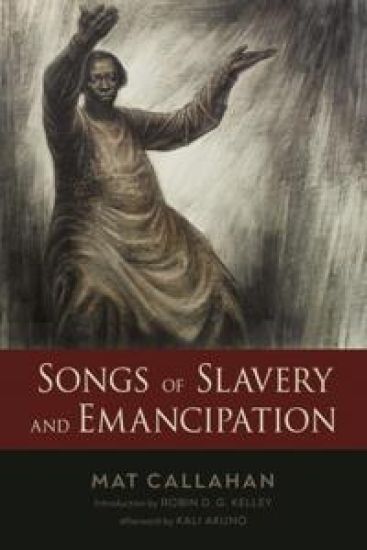
Songs of Slavery and Emancipation
Mat Callahan; Kali Akuno
UNIVERSITY PRESS OF MISSISSIPPI
2022
pokkari
Throughout the history of slavery, enslaved people organized resistance, escape, and rebellion. Sustaining them in this struggle was their music, some examples of which are sung to this day. While the existence of slave songs, especially spirituals, is well known, their character is often misunderstood. Slave songs were not only lamentations of suffering or distractions from a life of misery. Some songs openly called for liberty and revolution, celebrating such heroes as Gabriel Prosser and Nat Turner, and, especially, celebrating the Haitian Revolution. The fight for freedom also included fugitive slaves, free Black people, and their white allies who brought forth a set of songs that were once widely disseminated but are now largely forgotten, the songs of the abolitionists. Often composed by fugitive slaves and free Black people, and first appearing in the eighteenth century, these songs continued to be written and sung until the Civil War. As the movement expanded, abolitionists even published song books used at public meetings. Mat Callahan presents recently discovered songs composed by enslaved people explicitly calling for resistance to slavery, some originating as early as 1784 and others as late as the Civil War. He also presents long-lost songs of the abolitionist movement, some written by fugitive slaves and free Black people, challenging common misconceptions of abolitionism. Songs of Slavery and Emancipation features the lyrics of fifteen slave songs and fifteen abolitionist songs, placing them in proper historical context and making them available again to the general public. These songs not only express outrage at slavery but call for militant resistance and destruction of the slave system. There can be no doubt as to their purpose: the abolition of slavery, the emancipation of African American people, and a clear and undeniable demand for equality and justice for all humanity.
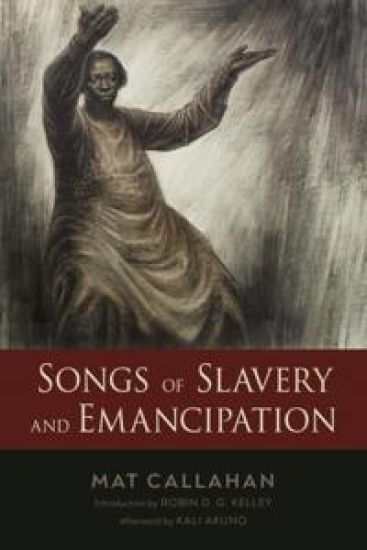
Songs of Slavery and Emancipation
Mat Callahan; Kali Akuno
UNIVERSITY PRESS OF MISSISSIPPI
2022
sidottu
Throughout the history of slavery, enslaved people organized resistance, escape, and rebellion. Sustaining them in this struggle was their music, some examples of which are sung to this day. While the existence of slave songs, especially spirituals, is well known, their character is often misunderstood. Slave songs were not only lamentations of suffering or distractions from a life of misery. Some songs openly called for liberty and revolution, celebrating such heroes as Gabriel Prosser and Nat Turner, and, especially, celebrating the Haitian Revolution. The fight for freedom also included fugitive slaves, free Black people, and their white allies who brought forth a set of songs that were once widely disseminated but are now largely forgotten, the songs of the abolitionists. Often composed by fugitive slaves and free Black people, and first appearing in the eighteenth century, these songs continued to be written and sung until the Civil War. As the movement expanded, abolitionists even published song books used at public meetings. Mat Callahan presents recently discovered songs composed by enslaved people explicitly calling for resistance to slavery, some originating as early as 1784 and others as late as the Civil War. He also presents long-lost songs of the abolitionist movement, some written by fugitive slaves and free Black people, challenging common misconceptions of abolitionism. Songs of Slavery and Emancipation features the lyrics of fifteen slave songs and fifteen abolitionist songs, placing them in proper historical context and making them available again to the general public. These songs not only express outrage at slavery but call for militant resistance and destruction of the slave system. There can be no doubt as to their purpose: the abolition of slavery, the emancipation of African American people, and a clear and undeniable demand for equality and justice for all humanity.
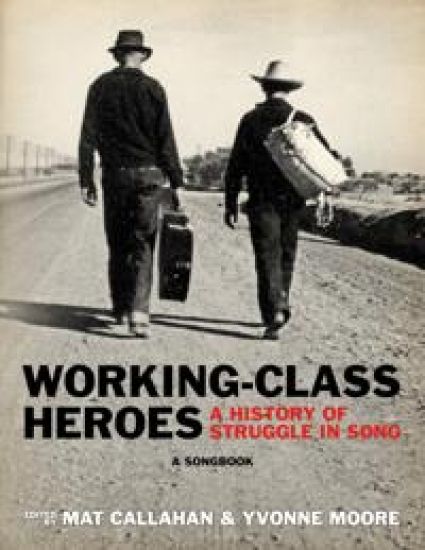
Working-Class Heroes is an organic melding of history, music, and politics that demonstrates with remarkably colorful evidence that workers everywhere will struggle to improve their conditions of life. And among them will be workers who share an insight: in order to better our lot, we must act collectively to change the world. Carefully curated by Mat Callahan and Yvonne Moore, this profusely illustrated treasury of song sheets, lyrics, photographs, histories, and biographical sketches explores the notion that our best hope lies in the capacity of ordinary working people to awaken to the need to emancipate ourselves and all of humanity. Featuring over a dozen songwriters, from Joe Hill to Aunt Molly Jackson, Working-Class Heroes delivers a lyrical deathblow to the myth that so-called political songs of the twentieth century were all being written by intellectuals and outside agitators in New York. Many, like Ella May Wiggins, were literally murdered by the bosses. Others, like Sarah Ogan Gunning, watched their children starve to death and their husbands die of black lung, only to rise up singing against the system that caused so much misery. Their heroism resulted not from their being different from their fellow workers but from being the same. Most of the songs collected here are from the early twentieth century, yet their striking relevance to current affairs invites us to explore the historical conditions that inspired their creation: deep, systemic crisis, advancing fascism, and the threat of world war. In the face of violent terror, these working-class songwriters bravely stood up to fight oppression. Such courage and heroism is immortal, such heroes should be celebrated and their songs can still lift our spirits, if we sing them today. Heroes featured in this twenty-song collection: Sarah Ogan Gunning, Ralph Chaplin, Woody Guthrie, Ella May Wiggins, Joe Hill, Paul Robeson, John Handcox, Aunt Molly Jackson, Jim Garland, Alfred Hayes, Joseph Brandon, and several more anonymous proletarian songwriters whose names have been long forgotten, though their words are immortal.
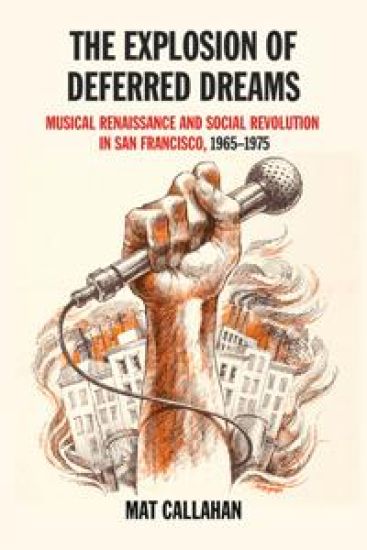
As the fiftieth anniversary of the Summer of Love floods the media with debates over morals, music, and political movements; celebrations of "flower power," "acid rock," and "hippies;" The Explosion of Deferred Dreams offers a critical re-examination of the interwoven political and musical happenings in San Francisco in the Sixties. Author, musician, and native San Franciscan Mat Callahan explores the dynamic links between the Black Panthers and Sly and the Family Stone, the United Farmworkers and Santana, the Indian Occupation of Alcatraz and the San Francisco Mime Troupe, and the New Left and the counterculture. Callahan's meticulous, impassioned arguments both expose and reframe the political and social context for the San Francisco Sound and the vibrant subcultural uprisings with which it is associated. Using dozens of original interviews, primary sources, and personal experiences, the author shows how the intense interplay of artistic and political movements put San Francisco, briefly, in the forefront of a worldwide revolutionary upsurge. A must-read for any musician, historian, or person who "was there" (or longed to have been), this book is substantive and provocative, inviting us to reinvigorate our historical sense-making of an era that assumes a mythic role in the contemporary American zeitgeist.
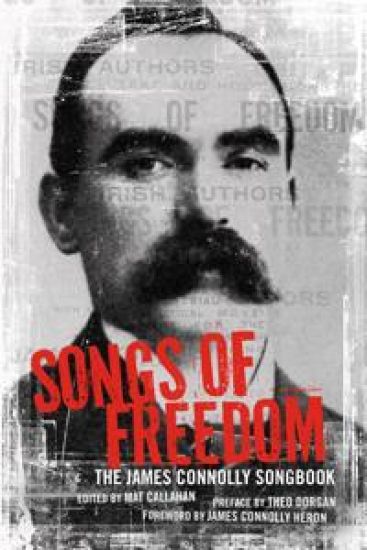
Songs of Freedom is the name of a songbook edited by James Connolly and published in 1907. Connolly's introduction is better known than the collection for which it was written, containing his oft quoted maxim: "Until the movement is marked by the joyous, defiant singing of revolutionary songs, it lacks one of the most distinctive marks of a popular revolutionary movement, it is the dogma of a few and not the faith of the multitude." Though most of the songs were of Irish derivation, the songbook itself was published in New York and directed to the American Working Class; explicitly internationalist in its aims. Songs of Freedom is a celebration of the life and work of James Connolly, the Irish revolutionary socialist martyred by the British government for his role in the Easter Rising of 1916. It is at once a collection of stirring revolutionary songs and a vital historical document. For the first time in a hundred years, readers will find the original Songs of Freedom as well as the 1919 Connolly Souvenir program published in Dublin for a concert commemorating Connolly's birth. Both are reproduced exactly as they originally appeared, providing a fascinating glimpse of the workers' struggle at the beginning of the last century. To complete the picture is included the James Connolly Songbook of 1972, which contains not only the most complete selection of Connolly's lyrics, but historical background essential to understanding the context in which the songs were written and performed.