
Kirjailija
Mat Irvine
Kirjat ja teokset yhdessä paikassa: 7 kirjaa, julkaisuja vuosilta 2007–2024, suosituimpiin kuuluu Return to the Moon. Vertaile teosten hintoja ja tarkista saatavuus suomalaisista kirjakaupoista.
7 kirjaa
Kirjojen julkaisuvuodet: 2007–2024.
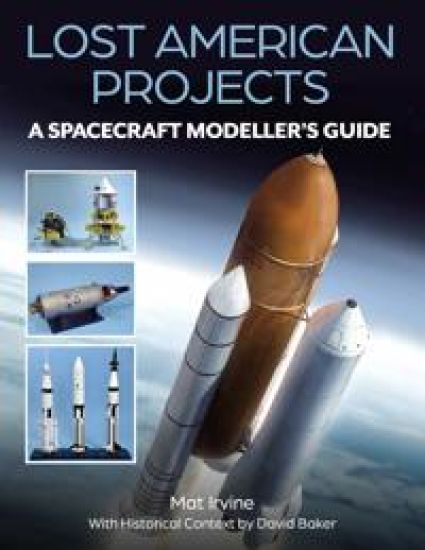
Lost American Projects: A Spacecraft Modellers Guide
Mat Irvine; David Baker
THE CROWOOD PRESS LTD
2024
nidottu
Bring to life America’s most amazing space projects that never were, using highly illustrated step-by-step guides. The major American space programmes that carried crews are well known. From Mercury, Gemini and Apollo in the 1960s and into the 1970s, through to the 1980s Space Shuttle, which made its final flight in 2011, they have all made their mark – even the North American X-15 rocket plane that earned many of its pilots their Astronaut Wings, owing to its high-altitude capability. All these involved a lot of new hardware, including the Saturn rockets, the Apollo craft and the Shuttle Orbiter with its solid-fuel rocket boosters and giant external tank. During this time of actual missions, space scientists and engineers were also looking at how all these new techniques and hardware could be put to even greater use. Many plans were devised, artwork drawn and technical models produced to illustrate the proposals. However, none were ever built and certainly none ever flew. This book looks at what could have been and how they can be built as models to display alongside those that did actually fly. Lost American Projects – A Spacecraft Modeller’s Guide is a follow-on to Mat Irvine’s earlier book, Scale Spacecraft Modelling.

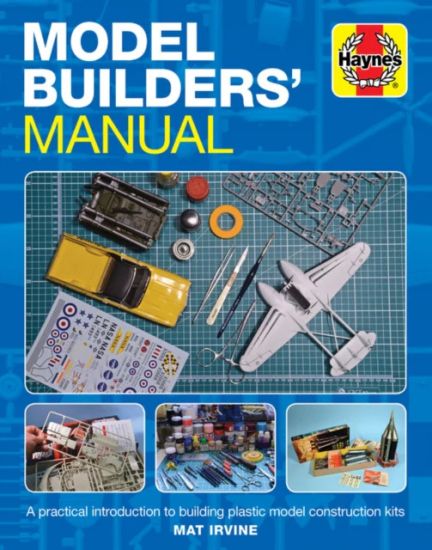
Model-making is centuries old, but the introduction of polystyrene – a stable plastic – in the mid-20th century, provided the opportunity to make the 'plastic construction kit' available to the amateur model-maker. Nearly 70 years later, despite suffering from ups-and-downs, the vibrant plastic model-making scene has grown tremendously and is now a world-wide hobby., This manual takes the reader through how modern model kits are designed and manufactured, how the scale is decided upon (most modern kits are made to established scales so that models and accessories are compatible with one another), as well as providing advice on model-building tools and techniques. The down-to-earth text, complemented by numerous photographs, provides details of the ideal 'workshop' set-up for building models; tools and adhesives required; paint types and application techniques – from brushing to using aerosol cans, airbrushing and paint booths; the wide variety of decals available, and how to make your own; basic building techniques, and how to construct dioramas to put models into an appropriate 'setting'., In recent years the growth of 'multi-material' kits has become far more common, and details are provided of 'non-plastic' materials, such as resins, white metal and photo-etch parts, all of which need to be dealt with slightly differently to polystyrene., A comprehensive introduction for those new to model-making, along with expert advice for those already experienced in making models who wish to hone their skills., • The world of model making History of model-making, kit manufacture, scales, model ranges., • Model building Places to work, tools, adhesives, paint, decals, basic building techniques, displays and dioramas, advanced techniques and alternative materials, collecting kits, clubs, competition, displays and photography., • Useful contacts Model companies and suppliers., Author: Mat Irvine has been involved with model making over most of his lifetime. He moved from 'amateur' to 'professional', when he joined the BBC Visual Effects Department. Here, the work covered all aspects of special effects, including model making, and he designed 'miniature' sequences for Doctor Who and Blake's 7, and science programmes including Tomorrow's World, Horizon and The Sky at Night., Mat regularly appeared in front of cameras for Saturday morning programmes such as Swap Shop and Saturday Superstore, demonstrating model-building techniques., Mat has acted as a consultant with many of the model-making companies around the world. He has written 15 books, a number on model building, and many hundreds of articles for model magazines.
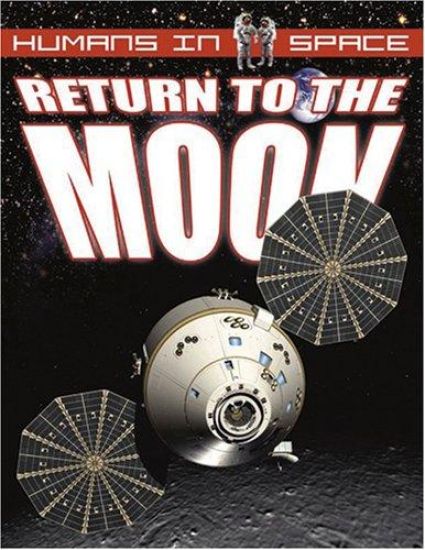
From 1969 to 1972, NASA's Apollo program focused on putting a man on the Moon. After that goal was reached, the space program switched gears and concentrated on other areas of exploration and research. What if we were to return to the Moon today? Would advances in technology make it possible for people to live on the Moon? Return to the Moon asks and answers many questions about future space travel to it and its possible colonization. Topics include - rockets to the Moon and commercial passenger transportation - the history of the Moon - overcoming obstacles such as zero gravity in order to build on the Moon - what technology would be required for people to live in zero gravity
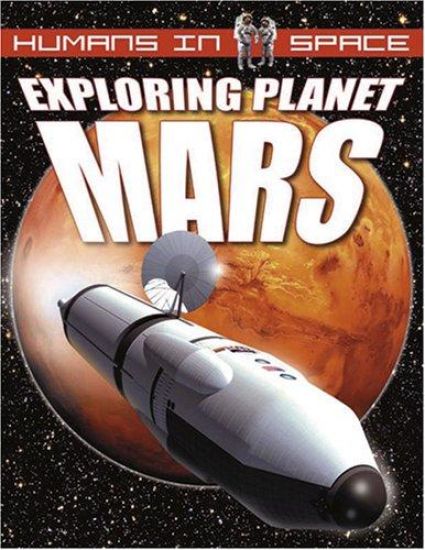
Space exploration has come a long way since the days when early astronomers thought they could see canals that had been built on Mars through their simple telescopes. Today's scientists have actually sent probes to the Red Planet that have sent back vital information about Mars which has debunked some myths but also created some new mysteries. Exploring Planet Mars looks at the scientific facts about Earth's nearest neighbor and delves into future exploration of the planet - possibly even colonization Topics include - the history of Earth's relationship to Mars - the various probes that have been sent to the planet - what scientists think Mars was like thousands of years ago and what it may be like thousands of years from now - signs of life on Mars?
Space exploration has come a long way since the days when early astronomers thought they could see canals that had been built on Mars through their simple telescopes. Today's scientists have actually sent probes to the Red Planet that have sent back vital information about Mars which has debunked some myths but also created some new mysteries. Exploring Planet Mars looks at the scientific facts about Earth's nearest neighbor and delves into future exploration of the planet - possibly even colonization Topics include - the history of Earth's relationship to Mars - the various probes that have been sent to the planet - what scientists think Mars was like thousands of years ago and what it may be like thousands of years from now - signs of life on Mars?