Kirjojen hintavertailu – 12 859 829 kirjaa ja 27 kauppaa

Kirjailija

Matt Tomlinson

Kirjat ja teokset yhdessä paikassa: 8 kirjaa, julkaisuja vuosilta 2014–2026, suosituimpiin kuuluu Let the Dead Speak. Vertaile teosten hintoja ja tarkista saatavuus suomalaisista kirjakaupoista.

8 kirjaa

Kirjojen julkaisuvuodet: 2014–2026.

Let the Dead Speak

Let the Dead Speak

Andrew Singleton; Matt Tomlinson

MANCHESTER UNIVERSITY PRESS
2026
nidottu
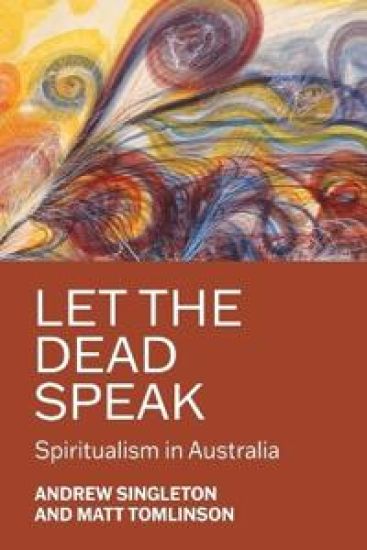
This book explores the historical and social dynamics of Spiritualism - a religious movement associated in the popular imagination with nineteenth-century parlour séances and ghost photography. It continues to be practised actively today in Australia, the UK, and USA. The authors draw on their deep fieldwork, interviews, and archival research to analyse Spiritualism’s resilience and the enduring popular appeal of mediumship. There are three key contributions of the book: the first is that the scholarly study of “belief” should be rehabilitated. The authors propose a model of belief as a dialogue between claims to truth and commitments to institutions supporting those claims. The second is women’s agency in Spiritualism. From the movement’s beginnings, strong female leaders have decisively shaped its religious and political profile. The third is the need to analyse Australian Spiritualism as a distinct variant of a transnational Anglophone family of ritual practice.
Making Places Sacred

Making Places Sacred

Matt Tomlinson; Yujie Zhu

Cambridge University Press
2025
sidottu
Although claims to sacredness are often linked to the power of a distant past, the work of making places sacred is creative, novel, renewable, and reversible. This Element highlights how sacred space is newly made. It is often associated with blood, death, and geographic anomalies, yet no single feature determines sacred associations. People make space sacred by connecting with 'extrahuman' figures – the ancestors, spirits, and gods that people attempt to interact with in every society. These connections can be concentrated in people's bodies, yet bodies are particularly vulnerable to loss. The Element also examines the multidimensional and multisensory dimensions of sacred space, which can be made almost anywhere, including online, but can also be unmade. Unmaking sacred space can entail new sacralization. New and minority religions in particular provide excellent sites for studying sacredness as a value, raising the reliably productive question: sacred for whom?
Making Places Sacred

Making Places Sacred

Matt Tomlinson; Yujie Zhu

Cambridge University Press
2025
pokkari
Although claims to sacredness are often linked to the power of a distant past, the work of making places sacred is creative, novel, renewable, and reversible. This Element highlights how sacred space is newly made. It is often associated with blood, death, and geographic anomalies, yet no single feature determines sacred associations. People make space sacred by connecting with 'extrahuman' figures – the ancestors, spirits, and gods that people attempt to interact with in every society. These connections can be concentrated in people's bodies, yet bodies are particularly vulnerable to loss. The Element also examines the multidimensional and multisensory dimensions of sacred space, which can be made almost anywhere, including online, but can also be unmade. Unmaking sacred space can entail new sacralization. New and minority religions in particular provide excellent sites for studying sacredness as a value, raising the reliably productive question: sacred for whom?
Let the Dead Speak

Let the Dead Speak

Andrew Singleton; Matt Tomlinson

MANCHESTER UNIVERSITY PRESS
2025
sidottu
This book explores the historical and social dynamics of Spiritualism - a religious movement associated in the popular imagination with nineteenth-century parlour séances and ghost photography. It continues to be practised actively today in Australia, the UK, and USA. The authors draw on their deep fieldwork, interviews, and archival research to analyse Spiritualism’s resilience and the enduring popular appeal of mediumship. There are three key contributions of the book: the first is that the scholarly study of “belief” should be rehabilitated. The authors propose a model of belief as a dialogue between claims to truth and commitments to institutions supporting those claims. The second is women’s agency in Spiritualism. From the movement’s beginnings, strong female leaders have decisively shaped its religious and political profile. The third is the need to analyse Australian Spiritualism as a distinct variant of a transnational Anglophone family of ritual practice.
God Is Samoan

God Is Samoan

Matt Tomlinson

University of Hawai'i Press
2020
nidottu
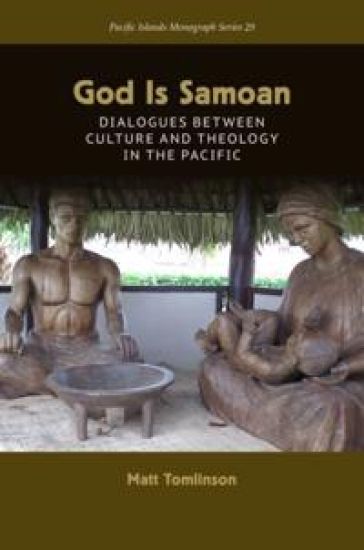
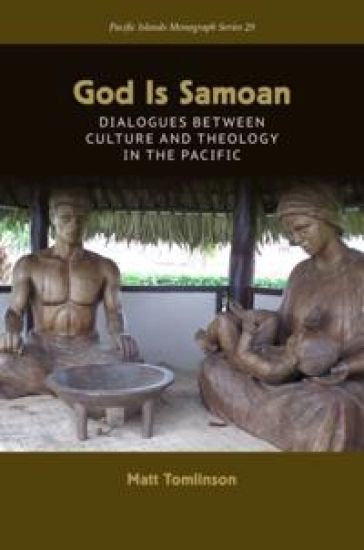
Christian theologians in the Pacific Islands see culture as the grounds on which one understands God. In this pathbreaking book, Matt Tomlinson engages in an anthropological conversation with the work of "contextual theologians", exploring how the combination of Pacific Islands culture and Christianity shapes theological dialogues. Employing both scholarly research and ethnographic fieldwork, the author addresses a range of topics: from radical criticisms of biblical stories as inappropriate for Pacific audiences to celebrations of traditional gods such as Tagaloa as inherently Christian figures. This book presents a symphony of voices-engaged, critical, prophetic-from the contemporary Pacific's leading religious thinkers and suggests how their work articulates with broad social transformations in the region. Each chapter in this book focuses on a distinct type of culturally driven theological dialogue. One type is between readers and texts, in which biblical scholars suggest new ways of reading, and even rewriting, the Bible so it becomes more meaningful in local terms. A second kind concerns the state of the church and society. For example, feminist theologians and those calling for "prophetic" action on social problems propose new conversations about how people in Oceania should navigate difficult times. A third kind of discussion revolves around identity, emphasizing what makes Oceania unique and culturally coherent. A fourth addresses the problems of climate change and environmental degradation to sacred lands by encouraging "eco-theological" awareness and interconnection. Finally, many contextual theologians engage with the work of other disciplines' prominently, anthropology-as they develop new discourse on God, people, and the future of Oceania. Contextual theology allows people in Oceania to speak with God and fellow humans through the idiom of culture in a distinctly Pacific way. Tomlinson concludes, however, that the most fruitful topic of dialogue might not be culture, but rather the nature of dialogue itself. Written in an accessible, engaging style and presenting innovative findings, this book will interest students and scholars of anthropology, world religion, theology, globalization, and Pacific studies.

God Is Samoan

God Is Samoan

Matt Tomlinson

University of Hawai'i Press
2020
sidottu
Christian theologians in the Pacific Islands see culture as the grounds on which one understands God. In this pathbreaking book, Matt Tomlinson engages in an anthropological conversation with the work of "contextual theologians," exploring how the combination of Pacific Islands' culture and Christianity shapes theological dialogues. Employing both scholarly research and ethnographic fieldwork, the author addresses a range of topics: from radical criticisms of biblical stories as inappropriate for Pacific audiences to celebrations of traditional gods such as Tagaloa as inherently Christian figures. This book presents a symphony of voices-engaged, critical, prophetic-from the contemporary Pacific's leading religious thinkers and suggests how their work articulates with broad social transformations in the region. Each chapter in this book focuses on a distinct type of culturally driven theological dialogue. One type is between readers and texts, in which biblical scholars suggest new ways of reading, and even rewriting, the Bible so it becomes more meaningful in local terms. A second kind concerns the state of the church and society. For example, feminist theologians and those calling for "prophetic" action on social problems propose new conversations about how people in Oceania should navigate difficult times. A third kind of discussion revolves around identity, emphasizing what makes Oceania unique and culturally coherent. A fourth addresses the problems of climate change and environmental degradation to sacred lands by encouraging "eco-theological" awareness and interconnection. Finally, many contextual theologians engage with the work of other disciplines- prominently, anthropology-as they develop new discourse on God, people, and the future of Oceania. Contextual theology allows people in Oceania to speak with God and fellow humans through the idiom of culture in a distinctly Pacific way. However, Tomlinson concludes, the most fruitful topic of dialogue might not be culture, but rather the nature of dialogue itself. Written in an accessible, engaging style and presenting innovative findings, this book will interest students and scholars of anthropology, world religion, theology, globalization, and Pacific studies.
Ritual Textuality

Ritual Textuality

Matt Tomlinson

Oxford University Press Inc
2014
sidottu
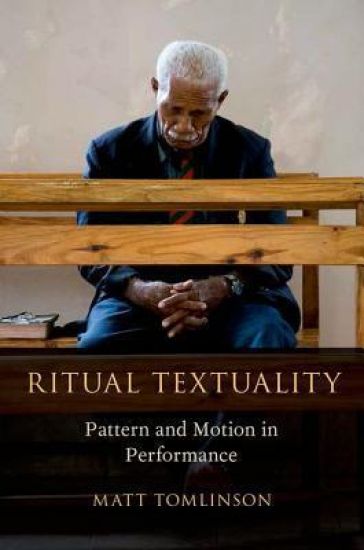
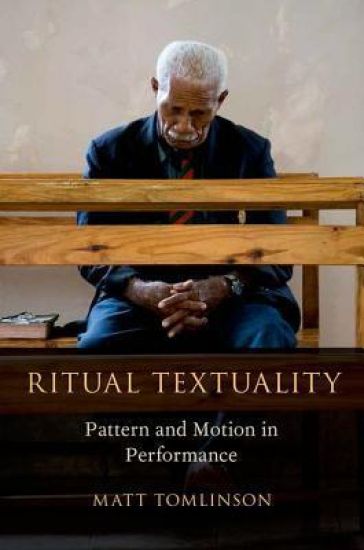
A classic question in studies of ritual is how ritual performances achieve-or fail to achieve-their effects. In this pathbreaking book, Matt Tomlinson argues that participants condition their own expectations of ritual success by interactively creating distinct textual patterns of sequence, conjunction, contrast, and substitution. Drawing on long-term research in Fiji, the book presents in-depth studies of each of these patterns, taken from a wide range of settings: a fiery, soul-saving Pentecostal crusade; relaxed gatherings at which people drink the narcotic beverage kava; deathbeds at which missionaries eagerly await the signs of good Christians' "happy deaths"; and the monologic pronouncements of a military-led government determined to make the nation speak in a single voice. In each of these cases, Tomlinson also examines the broad ideologies of motion which frame participants' ritual actions, such as Pentecostals' beliefs that effective worship requires ecstatic movement like jumping, dancing, and clapping, and nineteenth-century missionaries' insistence that the journeys of the soul in the afterlife should follow a new path. By approaching ritual as an act of "entextualization"-in which the flow of discourse is turned into object-like texts-while analyzing the ways people expect words, things, and selves to move in performance, this book presents a new and compelling way to understand the efficacy of ritual action.
Ritual Textuality

Ritual Textuality

Matt Tomlinson

Oxford University Press Inc
2014
nidottu
A classic question in studies of ritual is how ritual performances achieve-or fail to achieve-their effects. In this pathbreaking book, Matt Tomlinson argues that participants condition their own expectations of ritual success by interactively creating distinct textual patterns of sequence, conjunction, contrast, and substitution. Drawing on long-term research in Fiji, the book presents in-depth studies of each of these patterns, taken from a wide range of settings: a fiery, soul-saving Pentecostal crusade; relaxed gatherings at which people drink the narcotic beverage kava; deathbeds at which missionaries eagerly await the signs of good Christians' "happy deaths"; and the monologic pronouncements of a military-led government determined to make the nation speak in a single voice. In each of these cases, Tomlinson also examines the broad ideologies of motion which frame participants' ritual actions, such as Pentecostals' beliefs that effective worship requires ecstatic movement like jumping, dancing, and clapping, and nineteenth-century missionaries' insistence that the journeys of the soul in the afterlife should follow a new path. By approaching ritual as an act of "entextualization"-in which the flow of discourse is turned into object-like texts-while analyzing the ways people expect words, things, and selves to move in performance, this book presents a new and compelling way to understand the efficacy of ritual action.