Kirjojen hintavertailu – 12 859 818 kirjaa ja 27 kauppaa

Kirjailija

MATTHEW ARNOLD

Kirjat ja teokset yhdessä paikassa: 405 kirjaa, julkaisuja vuosilta 1869–2026, suosituimpiin kuuluu ST. PAUL AND PROTESTANTISM: WITH AN ESSA. Vertaile teosten hintoja ja tarkista saatavuus suomalaisista kirjakaupoista.

405 kirjaa

Kirjojen julkaisuvuodet: 1869–2026.

The Letters of Matthew Arnold v. 6; 1885-1888

The Letters of Matthew Arnold v. 6; 1885-1888

Matthew Arnold

University of Virginia Press
2002
sidottu
In this final volume of the Virginia edition of Arnold's letters, Arnold joins for the last time a Royal Commission on Education, travelling first to Germany, and then on to Switzerland and Paris. Following his wife and younger daughter, Arnold also makes his second American visit, this time to see ""the Midget"", his first grandchild. Both missions reveal his well-known and characteristic zest for people and places - new acquaintances, new scenery, the total experience of living - observing, absorbing, recording and moving on. Finally, with maximum nostalgia and minimum regret, he resigned the inspectorship of schools in which he had spent nearly all of his adult existence and settles down, in sweet, bucolic content, to the life of a country squire. Then, tragically, abruptly and predictably, it screeches to a halt. Manifestly, he had lived daily with intimations of mortality. The series-cumulative index included with this volume is a valuable resource for tracking Arnold's records of his active life.
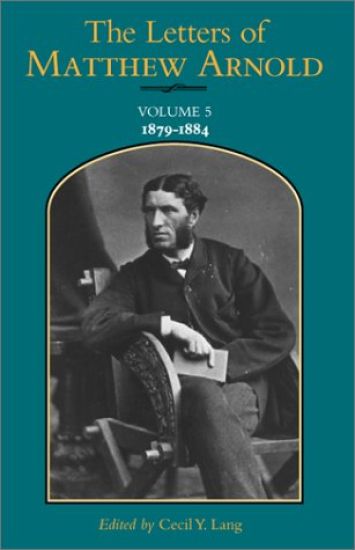
The Letters of Matthew Arnold v.5; 1879-1884

The Letters of Matthew Arnold v.5; 1879-1884

Matthew Arnold

University of Virginia Press
2001
sidottu
The emotional and moral centre of this collection is the series of letters written during Arnold's first American visit, during which he ranged from New York and New England to Madison, Chicago, Richmond, Washington, Toronto, Montreal and Quebec. Like most visiting British luminaries, he meets everyone, everywhere, including the president and former president, the Delanos, the Roosevelts, the Vanderbilts and especially Andrew Carnegie. But the visit - a lecture tour taken to pay off his sons debts - had other and far more significant repercussions, for Arnold was accompanied by his wife and by his elder daughter, who met the man she was to marry - the direct cause of a second American visit and, in due course, of a flourishing branch of Arnold descendants in the United States.
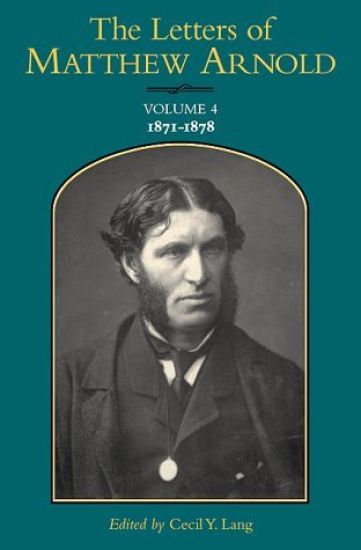
The Letters of Matthew Arnold v. 4; 1871-1878

The Letters of Matthew Arnold v. 4; 1871-1878

Matthew Arnold

University of Virginia Press
2000
sidottu
This is the fourth in a series of six volumes collecting together all the known letters of Matthew Arnold. In his writings, Arnold ranges from religion to literature; ""St Paul and Protestantism"" in 1870 is followed by ""Literature and Dogma, God and the Bible"", and ""Last Essays on Church and Religion"". These books have all more or less been forgotten, but in the 1870s they were an integral part of intellectual culture, as was ""Friendship's Garland"". Equally, the letters here contribute to chronicle Arnold's personal life in the characteristically intimate note of all his correspondence. Arnold loses a son, a brother and his mother (as well as his mother-in-law), and he moves seamlessly from the marvellous letters to his sister remaining at Fox How almost as of he had been writing all along not merely to an individual but also to a spiritual anchor, or even to his moral centre. Arnold travels to France, Switzerland and Italy, recording as always his incomparable impressions. He settles, finally, in Surrey, and poignantly says farewell to his youth in ""George Sand"".
Dover Beach and Other Poems

Dover Beach and Other Poems

Matthew Arnold

Dover Publications Inc.
2000
nidottu
A wonderful collection of intimate, personal, sentimental, and even nostalgic works by the greatly admired Victorian poet. Filled with lyric inspiration and lofty meditative characters, the selections include "The Scholar Gipsy," "Thyrsis," "The Forsaken Merman," "Memorial Verses," "Rugby Chapel," and the famous title poem.
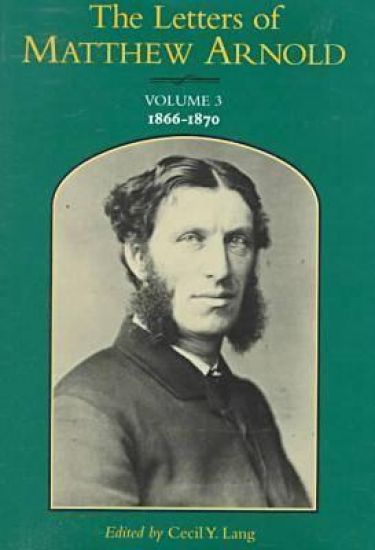
The Letters of Matthew Arnold v. 3; 1866-70

The Letters of Matthew Arnold v. 3; 1866-70

Matthew Arnold

University of Virginia Press
1998
sidottu
The letters in this volume show Arnold, now midway in his professional career, publishing his first volume of poems in a decade and emerging as a critic - simultaneously - of society, of education, of religion, and, as always, of politics. In 1867 he publishes ""New Poems"", containing several of his best-known and most beloved works, ""Dover Beach, ""Thyrsis"", ""Stanzas from the Grande Chartreuse"", and many others, including the first reprint since 1852 of ""Empedocles on Etna"", and in 1869 ""Culture and Anarchy"", of which the germ is visible in a remarkable letter to his mother in 1867, as well as the influential reports on continental schools, and the seminal ""St. Paul and Protestantism"". The letters to his mother and other family members continue unabated; two of his sons die, their deaths recorded in wrenching accents; his essays, possibly by design, draw flak from all directions, which Arnold evades (any poet to any critic) as adroitly or disarmingly as usual; for two years he takes into his home an Italian prince; and he is awarded an honourary Oxford degree. He remains in every way both Establishment and anti-Establishment, both courteous, as has been said, and something better than courteous: honest.
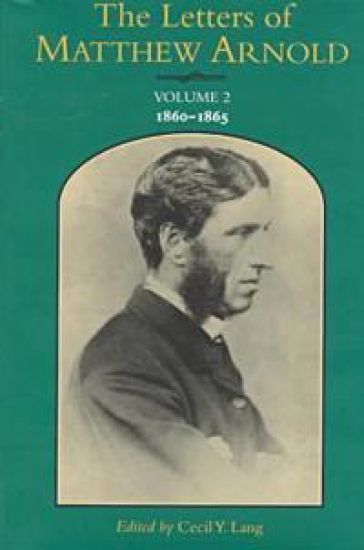
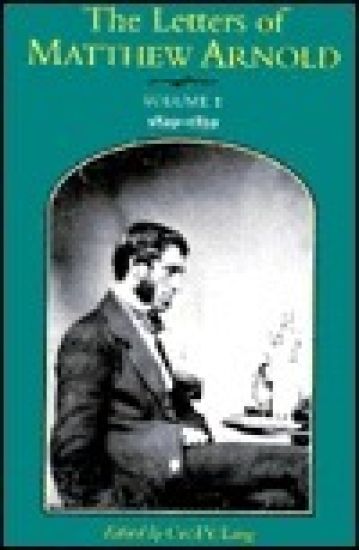
The Letters of Matthew Arnold v. 1; 1829-59

The Letters of Matthew Arnold v. 1; 1829-59

Matthew Arnold

University of Virginia Press
1996
sidottu
The publication of all the known letters of Matthew Arnold (1822-1888), when complete in seven volumes, will present close to 4000 letters, nearly five times the number in G. W. E. Russell's two-volume compilation of 1895, many of which appear in their entirety here for the first time. Renowned as a poet and critic, Arnold will be celebrated now as a letter writer. In his introduction, Cecil Y. Lang writes that the letters ""may well be the finest portrait of an age and of a person, representing the main movements of mind and of events of nearly half a century and at the same time revealing the intimate life of the participant-observer, in any collection of letters in the 19th century, possibly in existence"". Volume 1 begins in 1829 with an account of the Arnold children by their father, the notable headmaster of Rugby School, and closes in 1859, when already a poet and literary critic, Matthew Arnold returned to England after several months on a government educational commission in Europe to find himsef acquiring a European reputation. The letters show him as a child; a schoolboy at Winchester and Rugby; a foppish Oxonian; a worldly young main in a perfect, undemanding job; then as a new husband in an imperfect, too-demanding job; Professor of Poetry at Oxford; and finally as an emergent European critic. The letters, with a consecutiveness rare in such editions, contain a great deal of new information about Arnold and his family, both personal (somtimes intimate) and professional. Two new diaries are included, a long, boyish travelogue-letter and a mature essay-letter on architecture, never before recognized as Arnold's, as well as a handful of letters written to Arnold. Matthew Arnold wrote with wit, humour and warmth of his poetry, his work, his travels throughout Europe and America, and his large and loving family. But most of all, what comes across in these letters, writes Lang, is that ""Arnold loved to live - the world within and the world without chiming togther... And he learned to live with a boring, demanding, underpaid, unrewarding occupation largely because - questing intellectual, husband and father, school inspector, clubbable man-about-town and cosmopolite-about-Europe and America, fisherman, skater, voracious reader - he learned to live"".

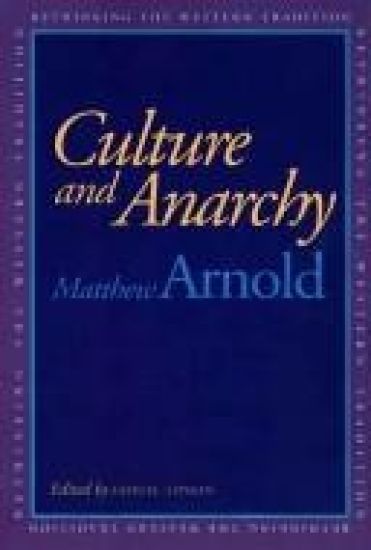
Culture and Anarchy

Culture and Anarchy

Matthew Arnold

Yale University Press
1994
pokkari
Culture and Anarchy is one of the central texts of the western intellectual tradition and has helped to shape thinking about the tasks and requirements of culture and civil society. The book is particularly relevant now, however, because it articulates many issues about culture and cultural politics that are being intensely debated today. In the past decade, Culture and Anarchy has been the subject of discussion by both the cultural right and the cultural left, beloved by the one because it asserts the primacy of reason over the anarchy of doing as one likes, and despised by the other because it champions what many liberals consider an elitist model of culture. This new edition of Culture and Anarchy addresses this debate by including specially commissioned essays by Maurice Cowling, Gerald Graff, Samuel Lipman, and Steven Marcus that analyze Arnold's ideas from divergent political and literary perspectives and link them to contemporary concerns over the health of western culture in an increasingly multicultural society. The edition reprints for the first time in unaltered form the original 1869 text of Culture and Anarchy, providing valuable insight into Arnold's authorial intent; it is supplemented by a useful glossary of names, terms, and events and an introduction by Lipman that places Arnold in his time and discusses his initial reception and continuing importance today.
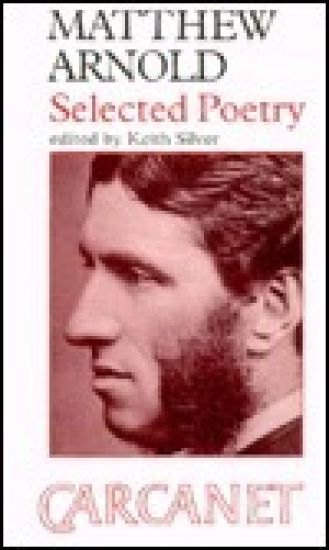
Selected Poems: Matthew Arnold

Selected Poems: Matthew Arnold

Matthew Arnold

Fyfield Books
1994
nidottu
This is a collection of the poetry by the Victorian poet-critic and Professor of Poetry at Oxford (1857-1867), Matthew Arnold (1822-1888). This book contains some of his most popular works, such as "Dover Beach", "The Scholar Gypsy" and "Thyrsis". Beside these widely anthologised poems, this book places a selection of other poems in many genres, revealing the scope of his work. Arnold's love for his particular Engand and for his friends, his longing for stability and his religious doubt, form the case note of much of his poetry. Son of Dr Arnold, headmaster of Rugby School, Matthew Arnold was himself deeply involved in education, becoming an Inspector of Schools. His impact as a poet, critic and scholar was considerable.
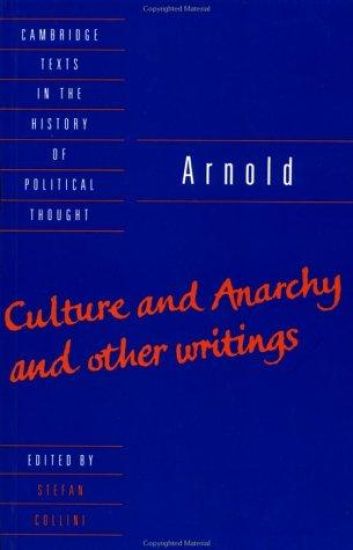
Arnold: 'Culture and Anarchy' and Other Writings

Arnold: 'Culture and Anarchy' and Other Writings

Matthew Arnold

Cambridge University Press
1993
pokkari
Matthew Arnold’s Culture and Anarchy (1869) is one of the most celebrated works of social criticism ever written. It has become an inescapable reference-point for all subsequent discussion of the relations between politics and culture, and it has exercised a profound influence both on conceptions of the distinctive nature of British society, and on ideas about education and the teaching of literature more generally. This edition establishes the authoritative text of this much-revised work, and places it alongside Arnold’s three most important essays on political subjects - Democracy, Equality, and The Function of Criticism at the Present Time. The editor’s substantial introduction situates these works in the context both of Arnold's life and other writings, and of nineteenth-century intellectual and political history. This edition also contains a chronology of Arnold’s life, a bibliographical guide and full notes on the names, books, and historical events mentioned in the texts.