Kirjojen hintavertailu – 12 859 818 kirjaa ja 27 kauppaa

Kirjailija

Matthew Biro

Kirjat ja teokset yhdessä paikassa: 6 kirjaa, julkaisuja vuosilta 2009–2025, suosituimpiin kuuluu Nykytaide katsoo taakseen. Vertaile teosten hintoja ja tarkista saatavuus suomalaisista kirjakaupoista.

6 kirjaa

Kirjojen julkaisuvuodet: 2009–2025.

Nykytaide katsoo taakseen

Nykytaide katsoo taakseen

Matthew Biro; Ville Hakanen; Hanna Johansson; Heta Kaisto; Pilvi Kalhama; Salla Myllylä; Sanna Ojanne; Oscar Ortiz-Nieminen; Leena-Maija Rossi; Inkeri Suutari; Laura Vainikka; Jenni Vauhkonen

Kustannusosakeyhtiö Parvs
2025
nidottu
"Nykytaide katsoo taakseen" luo silmäyksen ajankohtaiseen nykytaiteen tutkimukseen. Antologian artikkelit tarkastelevat eri näkökulmista sitä, miten moninaisin tavoin nykytaiteen tekijät ja teokset ovat kytköksissä historiaan. Myös nykytaide pohjaa pitkään taiteen traditioon, ja monet taiteilijat käsittelevät tuotannossaan historiaa niin laajoina kokonaisuuksina kuin yksittäisiin tapahtumiin fokusoiden. Teos on jatkoa Serlachiuksen seminaarijulkaisujen sarjalle, jonka ensimmäinen osa oli "Taidehistoria menee metsään!". Mäntässä järjestettävä Serlachius-seminaari tuo yhteen asiantuntijoita, toimii foorumina ajankohtaiselle taidehistorialliselle tutkimukselle ja edistää kotimaista taiteentutkimusta sekä tiedon saavutettavuutta myös yliopistokaupunkien ulkopuolella. Antologia on tehty yhteistyössä Taidehistorian seuran kanssa, ja se julkaistaan vertaisarvioidussa "Taidehistoriallisia tutkimuksia" -julkaisusarjassa.
Esther Shalev-Gerz

Esther Shalev-Gerz

Matthew Biro; Tuomas Seppä; Esther Shalev-Gerz; Jill Silverman van Coenegrachts; Pauli Sivonen

Kustannusosakeyhtiö Parvs
2017
nidottu
Esther Shalev-Gerz (s. 1948) on Vilnassa syntynyt ja Pariisissa asuva hienovireinen käsitetaiteilija, joka tarkastelee valokuva- ja videoteoksissaan kulttuuristen identiteettien rakentumista sekä perinteisten ammattien asemaa globaalissa ja nopeasti digitalisoituvassa maailmassa. Teos esittelee kuusi toisiinsa nivoutuvaa teoskokonaisuutta, jotka kaikki käsittelevät omalla tavallaan työtä, sen merkityksiä, siihen liittyviä muistoja ja kokemuksia sekä laajemmin postindustrialistista maailmaa, jossa työn ja tuotannon muodot ovat joutuneet murrokseen. Kirjan toimittaja on taidekriitikko ja kuraattori Timo Valjakka.
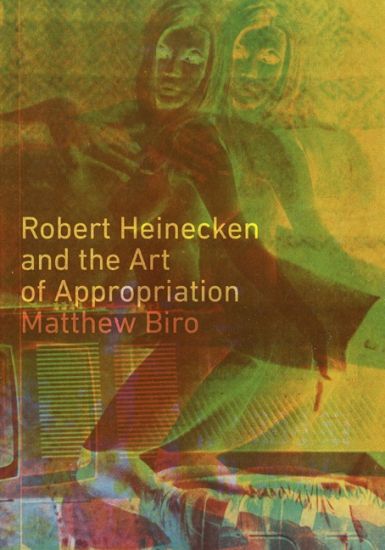
Robert Heinecken and the Art of Appropriation

Robert Heinecken and the Art of Appropriation

Matthew Biro

UNIVERSITY OF MINNESOTA PRESS
2022
nidottu
The first comprehensive study of the artist Robert Heinecken and his critical views on the culture of mass media This is the first book-length study dedicated to the artist Robert Heinecken, whose innovative photographic practices sought to interrogate how mass media imagery facilitated the construction of individual and collective identities. Appropriating, rephotographing, and layering pictures culled from newspapers, advertisements, pornography, and television, Heinecken recombined and transformed the ubiquitous images of mass culture to encourage viewers to critically reflect on their sense of self. From the 1960s through the late 1990s, Heinecken’s controversial art continually challenged inherited ideas around consumerism, the facticity of reportage, and visual culture’s relationship to gender and identity politics. Embodying the evolution of contemporary art toward increasingly hybrid and conceptual approaches, his oeuvre includes examples of painting, sculpture, photomontage, performance, installation, time-based media, and artist’s books, all of which collectively exploit photography’s reproducibility to subvert society’s dominant ideologies and stereotypical modes of representation. Author Matthew Biro presents an exhaustive look at Heinecken’s life and art, locating him within a lineage that encompasses the activities of the early twentieth-century avant-gardes and the postmodern strategies of the Pictures Generation artists. Assessing his career within the specific political and historical contexts from which he gleaned his material, and illustrated throughout with vibrant full-color reproductions of his art, this in-depth examination demonstrates Robert Heinecken’s significance as a key figure of twentieth-century art and an incisive commentator on modern life in America.
Robert Heinecken and the Art of Appropriation

Robert Heinecken and the Art of Appropriation

Matthew Biro

UNIVERSITY OF MINNESOTA PRESS
2022
sidottu
The first comprehensive study of the artist Robert Heinecken and his critical views on the culture of mass media This is the first book-length study dedicated to the artist Robert Heinecken, whose innovative photographic practices sought to interrogate how mass media imagery facilitated the construction of individual and collective identities. Appropriating, rephotographing, and layering pictures culled from newspapers, advertisements, pornography, and television, Heinecken recombined and transformed the ubiquitous images of mass culture to encourage viewers to critically reflect on their sense of self. From the 1960s through the late 1990s, Heinecken’s controversial art continually challenged inherited ideas around consumerism, the facticity of reportage, and visual culture’s relationship to gender and identity politics. Embodying the evolution of contemporary art toward increasingly hybrid and conceptual approaches, his oeuvre includes examples of painting, sculpture, photomontage, performance, installation, time-based media, and artist’s books, all of which collectively exploit photography’s reproducibility to subvert society’s dominant ideologies and stereotypical modes of representation. Author Matthew Biro presents an exhaustive look at Heinecken’s life and art, locating him within a lineage that encompasses the activities of the early twentieth-century avant-gardes and the postmodern strategies of the Pictures Generation artists. Assessing his career within the specific political and historical contexts from which he gleaned his material, and illustrated throughout with vibrant full-color reproductions of his art, this in-depth examination demonstrates Robert Heinecken’s significance as a key figure of twentieth-century art and an incisive commentator on modern life in America.
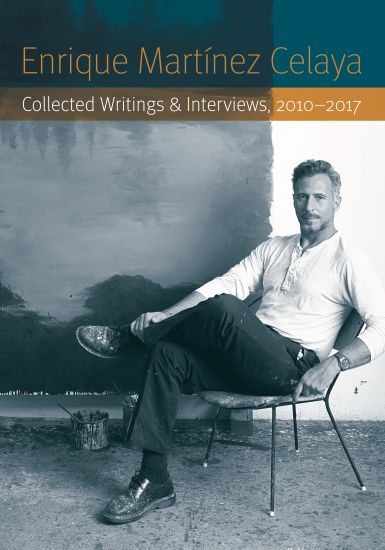
Enrique Martínez Celaya

Enrique Martínez Celaya

Enrique Martínez Celaya; Matthew Biro

University of Nebraska Press
2020
pokkari
This collection, spanning nearly a decade of artistic activity, features selections of writings that trace the intellectual influences and track the development of one of the more formidable and productive minds in the contemporary art world. The writings comprise Enrique Martínez Celaya’s public lectures; essays; interviews; correspondence with artists, critics, and scholars; artist statements; blog posts; and journal entries. These texts were written during Martínez Celaya’s appointment as Visiting Presidential Professor at the University of Nebraska; Roth Distinguished Visiting Scholar at Dartmouth College; and, most recently, as the first Provost Professor of Humanities and Arts at the University of Southern California. Marked by Martínez Celaya’s encyclopedic curiosity and considerable knowledge about the world, these writings and interviews explore the role of art in life, evaluate texts by other modern and contemporary artists and thinkers, and reveal the artist’s deep engagement with artistic, philosophical, and literary lines of inquiry.
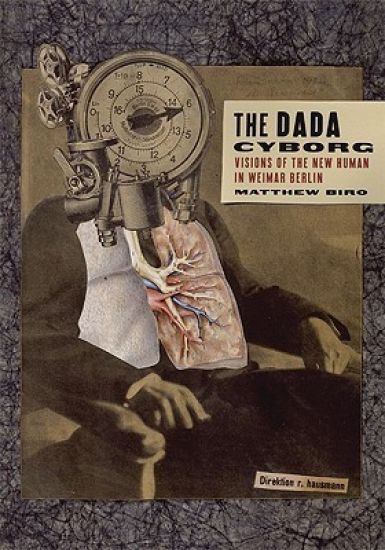
The Dada Cyborg

The Dada Cyborg

Matthew Biro

University of Minnesota Press
2009
nidottu
Finding the cyborg in early twentieth-century German artIn an era when technology, biology, and culture are becoming ever more closely connected, The Dada Cyborg explains how the cyborg as we know it today actually developed between 1918 and 1933 when German artists gave visual form to their utopian hopes and fantasies in a fearful response to World War I. In what could be termed a prehistory of the posthuman, Matthew Biro shows the ways in which new forms of human existence were imagined in Germany between the two world wars through depictions of cyborgs. Examining the work of Hannah Höch, Raoul Hausmann, George Grosz, John Heartfield, Otto Dix, and Rudolf Schlichter, he reveals an innovative interpretation of the cyborg as a representative of hybrid identity, as well as a locus of new modes of awareness created by the impact of technology on human perception. Tracing the prevalence of cyborgs in German avant-garde art, Biro demonstrates how vision, hearing, touch, and embodiment were beginning to be reconceived during the Weimar Republic. Biro’s unique and interdisciplinary analysis offers a substantially new account of the Berlin Dada movement, one that integrates the group’s poetic, theoretical, and performative practices with its famous visual strategies of photomontage, assemblage, and mixed-media painting to reveal radical images of a “new human.”