Kirjojen hintavertailu – 12 903 725 kirjaa ja 27 kauppaa

Kirjailija

Matthew Chrisman

Kirjat ja teokset yhdessä paikassa: 7 kirjaa, julkaisuja vuosilta 2015–2025, suosituimpiin kuuluu Belief, Agency, and Knowledge. Vertaile teosten hintoja ja tarkista saatavuus suomalaisista kirjakaupoista.

7 kirjaa

Kirjojen julkaisuvuodet: 2015–2025.

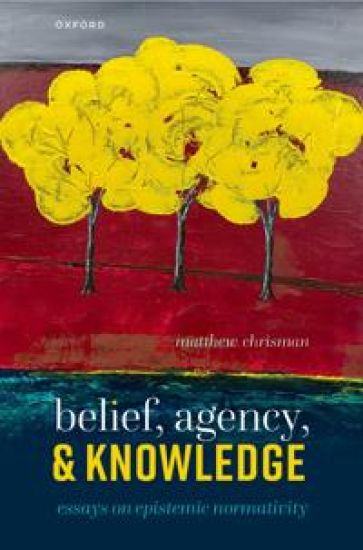
Belief, Agency, and Knowledge

Belief, Agency, and Knowledge

Matthew Chrisman

Oxford University Press
2025
nidottu
Epistemology is not just about the nature of knowledge or the analysis of concepts such as 'knows' and 'justified'. It is also about what we ought to believe and how we ought to investigate and reason about what is true. This book is a study of these normative aspects of epistemology. More specifically, it is concerned with the nature of epistemic norms and their relation both to the value of knowledge and to the structure of cognitive agency. The first part develops a theory of doxastic agency according to which believers exercise agency centrally in the ongoing activity of maintaining systems of belief. The second part defends an account of the grip epistemic norms have on us and the nature of our epistemic values. These are explained in terms of the way that a person's belief, can be subject to robust social norms and be valued for its stability not only individually, but, crucially, within epistemic communities. The third part proposes inferentialist foundations for a meta-epistemological theory of epistemic discourse that takes seriously the idea that knowledge attributions are partly normative, and hence should be partly classified on the 'ought' side of the division between claims about what reality is like, and claims about what people ought to do, think, and feel.
What is this thing called Metaethics?

What is this thing called Metaethics?

Matthew Chrisman

TAYLOR FRANCIS LTD
2023
sidottu
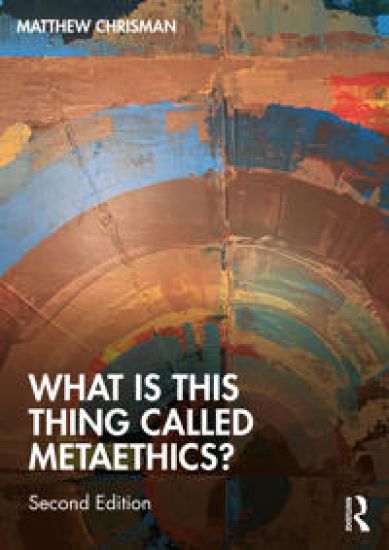
What makes something morally right? Where do our ethical standards come from? Are they relative to cultures or timeless and universal? Are there any objective moral facts? What is goodness? If there are moral facts, how do we learn about them? What do we mean when we say someone ought to do something? These are all questions in metaethics, the branch of ethics that investigates the status of morality, the nature of ethical value, the possibility of ethical knowledge, and the meaning of ethical statements. To the uninitiated it can appear abstract and far removed from its two more concrete cousins, ethical theory and applied ethics, yet it is one of the fastest-growing and most exciting areas of ethics. What is this thing called Metaethics? demystifies this important subject and is ideal for students coming to it for the first time. Beginning with a brief overview of metaethics and the development of a "conceptual toolkit," Matthew Chrisman introduces and assesses the following key topics:ethical reality: including questions about naturalism and non-naturalism, moral facts, and the distinction between realism and antirealismethical language: does language represent reality? What mental states are expressed by moral statements?moral psychology: the theory of motivation and the connection between moral judgement and motivationmoral knowledge: intuitionist and coherentist moral epistemologies, and theories of objectivity and relativism in metaethicsprominent metaethical theories: naturalism, nonnaturalism, error-theory, and expressivismnew directions in metaethics, including non-traditional theories, thick ethical concepts, and extensions to metaepistemology and metanormative theoryThe Second Edition has been completely revised and updated throughout. This includes a new thematic organization of the core chapters, many new examples, a newly written final chapter including discussion of thick ethical concepts and all-things-considered normativity, updated references to recent scholarly literature, improved learning resources, an expanded glossary of terms, and much more. Additional features such as chapter summaries, questions of understanding, and suggestions for further reading make What is this thing called Metaethics? an ideal introduction to metaethics.
What is this thing called Metaethics?

What is this thing called Metaethics?

Matthew Chrisman

TAYLOR FRANCIS LTD
2023
nidottu

Halvin toimitettuna 53,40 €

What makes something morally right? Where do our ethical standards come from? Are they relative to cultures or timeless and universal? Are there any objective moral facts? What is goodness? If there are moral facts, how do we learn about them? What do we mean when we say someone ought to do something? These are all questions in metaethics, the branch of ethics that investigates the status of morality, the nature of ethical value, the possibility of ethical knowledge, and the meaning of ethical statements. To the uninitiated it can appear abstract and far removed from its two more concrete cousins, ethical theory and applied ethics, yet it is one of the fastest-growing and most exciting areas of ethics. What is this thing called Metaethics? demystifies this important subject and is ideal for students coming to it for the first time. Beginning with a brief overview of metaethics and the development of a "conceptual toolkit," Matthew Chrisman introduces and assesses the following key topics:ethical reality: including questions about naturalism and non-naturalism, moral facts, and the distinction between realism and antirealismethical language: does language represent reality? What mental states are expressed by moral statements?moral psychology: the theory of motivation and the connection between moral judgement and motivationmoral knowledge: intuitionist and coherentist moral epistemologies, and theories of objectivity and relativism in metaethicsprominent metaethical theories: naturalism, nonnaturalism, error-theory, and expressivismnew directions in metaethics, including non-traditional theories, thick ethical concepts, and extensions to metaepistemology and metanormative theoryThe Second Edition has been completely revised and updated throughout. This includes a new thematic organization of the core chapters, many new examples, a newly written final chapter including discussion of thick ethical concepts and all-things-considered normativity, updated references to recent scholarly literature, improved learning resources, an expanded glossary of terms, and much more. Additional features such as chapter summaries, questions of understanding, and suggestions for further reading make What is this thing called Metaethics? an ideal introduction to metaethics.
Belief, Agency, and Knowledge

Belief, Agency, and Knowledge

Matthew Chrisman

Oxford University Press
2022
sidottu
Epistemology is not just about the nature of knowledge or the analysis of concepts such as 'knows' and 'justified'. It is also about what we ought to believe and how we ought to investigate and reason about what is the case. This is a study focused on these normative aspects of epistemology. More specifically, it is concerned with the nature of epistemic norms and their relation both to the value of knowledge and to the structure of cognitive agency. The first part develops a theory of doxastic agency according to which believers exercise agency in the ongoing activity of maintaining systems of belief. The second part defends an account of the grip epistemic norms have on us and the nature of our epistemic values. These are explained in terms of the way that a state, such as a person's belief, can be subject to robust social norms and be valued for its stability not only individually, but, crucially, within epistemic communities. The third part proposes some foundations for a meta-epistemological theory of epistemic discourse that takes seriously the idea that knowledge attributions are partly normative, and hence should be partly classified on the 'ought' side of the division between claims about what reality is like, and claims about what people ought to do, think, and feel.
Philosophy for Everyone

Philosophy for Everyone

Matthew Chrisman; Duncan Pritchard; Guy Fletcher; Elinor Mason; Jane Suilin Lavelle; Michela Massimi; Alasdair Richmond; Dave Ward

Routledge
2016
nidottu
Philosophy for Everyone begins by explaining what philosophy is before exploring the questions and issues at the foundation of this important subject. Key topics in this new edition and their areas of focus include:Moral philosophy – the nature of our moral judgments and reactions, whether they aim at some objective moral truth, or are mere personal or cultural preferences; and the possibility of moral responsibility given the sorts of things that cause behavior;Political philosophy – fundamental questions about the nature of states and their relationship to the citizens within those statesEpistemology – what our knowledge of the world and ourselves consists in, and how we come to have it; and whether we should form beliefs by trusting what other people tell us;Philosophy of mind – what it means for something to have a mind, and how minds should be understood and explained; Philosophy of science – foundational conceptual issues in scientific research and practice, such as whether scientific theories are true; andMetaphysics - fundamental questions about the nature of reality, such as whether we have free will, or whether time travel is possible. This book is designed to be used in conjunction with the free ‘Introduction to Philosophy’ MOOC (massive open online course) created by the University of Edinburgh’s Eidyn research centre, and hosted by the Coursera platform (www.coursera.org/course/introphil). This book is also highly recommended for anyone looking for a short overview of this fascinating discipline.
Philosophy for Everyone

Philosophy for Everyone

Matthew Chrisman; Duncan Pritchard; Guy Fletcher; Elinor Mason; Jane Suilin Lavelle; Michela Massimi; Alasdair Richmond; Dave Ward

Routledge
2016
sidottu
Philosophy for Everyone begins by explaining what philosophy is before exploring the questions and issues at the foundation of this important subject. Key topics in this new edition and their areas of focus include:Moral philosophy – the nature of our moral judgments and reactions, whether they aim at some objective moral truth, or are mere personal or cultural preferences; and the possibility of moral responsibility given the sorts of things that cause behavior;Political philosophy – fundamental questions about the nature of states and their relationship to the citizens within those statesEpistemology – what our knowledge of the world and ourselves consists in, and how we come to have it; and whether we should form beliefs by trusting what other people tell us;Philosophy of mind – what it means for something to have a mind, and how minds should be understood and explained; Philosophy of science – foundational conceptual issues in scientific research and practice, such as whether scientific theories are true; andMetaphysics - fundamental questions about the nature of reality, such as whether we have free will, or whether time travel is possible. This book is designed to be used in conjunction with the free ‘Introduction to Philosophy’ MOOC (massive open online course) created by the University of Edinburgh’s Eidyn research centre, and hosted by the Coursera platform (www.coursera.org/course/introphil). This book is also highly recommended for anyone looking for a short overview of this fascinating discipline.
The Meaning of 'Ought'

The Meaning of 'Ought'

Matthew Chrisman

Oxford University Press Inc
2015
sidottu
The word 'ought' is one of the core normative terms, but it is also a modal word. In this book Matthew Chrisman develops a careful account of the semantics of 'ought' as a modal operator, and uses this to motivate a novel inferentialist account of why ought-sentences have the meaning that they have. This is a metanormative account that agrees with traditional descriptivist theories in metaethics that specifying the truth-conditions of normative sentences is a central part of the explanation of their meaning. But Chrisman argues that this leaves important metasemantic questions about what it is in virtue of which ought-sentences have the meanings that they have unanswered. His appeal to inferentialism aims to provide a viable anti-descriptivist but also anti-expressivist answer to these questions.