Kirjojen hintavertailu – 12 859 827 kirjaa ja 27 kauppaa

Kirjailija

Matthew Clarke

Kirjat ja teokset yhdessä paikassa: 22 kirjaa, julkaisuja vuosilta 2006–2027, suosituimpiin kuuluu Towards a Weak Ontology of Education. Vertaile teosten hintoja ja tarkista saatavuus suomalaisista kirjakaupoista.

22 kirjaa

Kirjojen julkaisuvuodet: 2006–2027.

Towards a Weak Ontology of Education

Towards a Weak Ontology of Education

Ruth Unsworth; Gunnlaugur Magnússon; Dion Rüsselbæk Hansen; Matthew Clarke; Stephen Heimans; Anne M. Phelan

Bloomsbury Publishing PLC
2027
Sidottu
This book critiques the humanist legacy in education, arguing that it frames our thoughts, imaginations and conceptualisations of what education means and can be about. It offers an alternative perspective, unburdened by this legacy, and grounded in a ‘weak ontology’, as a means of opening up new possibilities for the educational imagination. The authors argue that by embracing humanism’s values of rectitude and redemption as foundational, education becomes nothing more than a means to “social hygiene and economic productivity” (Bojesen, 2020). The authors offer a repertoire of concepts that begin to affirm educational experience, each chapter exploring the potential and challenges of these concepts. Those concepts include subjectivity and inclination, conversation, natality and the event, finitude and death, and indeterminability. These are used to challenge the dominant educational drives for progress and economic growth and offers a bold and timely vision for education that truly matters in an age of relentless expansion and mounting global crises.
International Development

International Development

Damien Kingsbury; John McKay; Matthew Clarke; Kyoko Kusakabe

BLOOMSBURY PUBLISHING PLC
2026
nidottu
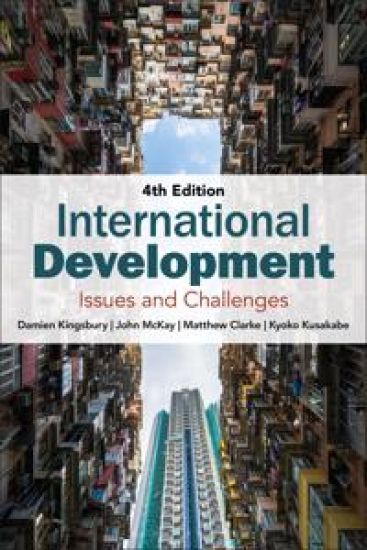
How can a country industrialise without causing environmental damage? How do development professionals ensure they act in the interests of recipients, rather than their own donor country? And how is the humanitarian project of development complicated by ideological objectives? The fourth edition of this renowned textbook covers the most urgent issues facing the field of development. With the return of Russia as a global actor, renewed conflict in the Middle East, and global inequality exacerbated by climate change and global health crises, the questions underpinning international development are increasingly fraught. For most of its history, international development was shaped by Cold War competition; at the turn of the twenty-first century, the paradigm shifted as China assumed a greater role, and post-9/11 US development initiatives were intended to reduce militancy in the Middle East. As these tensions return to the world stage, it is ever more important for students to ask what development is – or should be – and what it can achieve. With increased attention to gender and postcolonial perspectives and strong coverage of security, economics and global order, this book is essential reading for students of international development.
International Development

International Development

Damien Kingsbury; John McKay; Matthew Clarke; Kyoko Kusakabe

BLOOMSBURY PUBLISHING PLC
2026
sidottu
How can a country industrialise without causing environmental damage? How do development professionals ensure they act in the interests of recipients, rather than their own donor country? And how is the humanitarian project of development complicated by ideological objectives? The fourth edition of this renowned textbook covers the most urgent issues facing the field of development. With the return of Russia as a global actor, renewed conflict in the Middle East, and global inequality exacerbated by climate change and global health crises, the questions underpinning international development are increasingly fraught. For most of its history, international development was shaped by Cold War competition; at the turn of the twenty-first century, the paradigm shifted as China assumed a greater role, and post-9/11 US development initiatives were intended to reduce militancy in the Middle East. As these tensions return to the world stage, it is ever more important for students to ask what development is – or should be – and what it can achieve. With increased attention to gender and postcolonial perspectives and strong coverage of security, economics and global order, this book is essential reading for students of international development.
Education and the Fantasies of Neoliberalism

Education and the Fantasies of Neoliberalism

Matthew Clarke

TAYLOR FRANCIS LTD
2023
nidottu
Education and the Fantasies of Neoliberalism revitalizes conversations about the nature and purpose of education in a global context characterized by concerns about quality and equity in education, reflecting wider economic and political anxieties around declining productivity and social inclusion. The book illustrates how Lacanian psychoanalytic theory offers a conceptual vocabulary for exposing and critiquing the fantasmatic nature of policy and practice, while foregrounding the tensions and contradictions they seek to conceal. Specifically, the book draws on ideas of lack, fantasy and desire from Lacanian psychoanalytic theory to gain insights into the contentious but disavowed politics of reform in education. The book builds on cutting-edge work in political and psychoanalytic theory to offer unique insights that challenge and contest the simplistic and often trivializing readings of education in contemporary media and political debates. Offering a novel perspective on education policy reform, this book will be of great interest to academics, researchers and post-graduate students in the fields of philosophy of education and educational policy and politics.
Education and the Fantasies of Neoliberalism
Education and the Fantasies of Neoliberalism revitalizes conversations about the nature and purpose of education in a global context characterized by concerns about quality and equity in education, reflecting wider economic and political anxieties around declining productivity and social inclusion. The book illustrates how Lacanian psychoanalytic theory offers a conceptual vocabulary for exposing and critiquing the fantasmatic nature of policy and practice, while foregrounding the tensions and contradictions they seek to conceal. Specifically, the book draws on ideas of lack, fantasy and desire from Lacanian psychoanalytic theory to gain insights into the contentious but disavowed politics of reform in education. The book builds on cutting-edge work in political and psychoanalytic theory to offer unique insights that challenge and contest the simplistic and often trivializing readings of education in contemporary media and political debates. Offering a novel perspective on education policy reform, this book will be of great interest to academics, researchers and post-graduate students in the fields of philosophy of education and educational policy and politics.
Lacan and Education Policy

Lacan and Education Policy

Matthew Clarke

Bloomsbury Academic
2020
nidottu
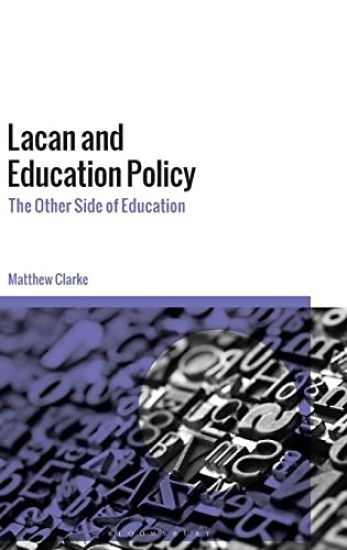
Lacan and Education Policy draws on the rich conceptual resources of Lacanian psychoanalysis. Using Lacan’s four discourses Matthew Clarke offers a sophisticated critique of recent education policy and the neoliberal model of political economy within which it sits, including the ways in which education has been diminished and trivialised through the economistic and depoliticising moves of policy. Clarke articulates possibilities for thinking differently about education and education policy beyond the reductive narratives of neoliberalism. He argues that psychoanalytic theory is valuable, not so much for allowing us to see what education ‘really is’, but for offering insights into what prevents education from ‘being’, enabling us to shift our focus instead into the possibilities education offers as a space of ‘becoming’. The book suggests possibilities for conceptualising and creating ‘the other side’ of education.
Lacan and Education Policy

Lacan and Education Policy

Matthew Clarke

Bloomsbury Academic
2019
sidottu
Lacan and Education Policy draws on the rich conceptual resources of Lacanian psychoanalysis. Using Lacan’s four discourses Matthew Clarke offers a sophisticated critique of recent education policy and the neoliberal model of political economy within which it sits, including the ways in which education has been diminished and trivialised through the economistic and depoliticising moves of policy. Clarke articulates possibilities for thinking differently about education and education policy beyond the reductive narratives of neoliberalism. He argues that psychoanalytic theory is valuable, not so much for allowing us to see what education ‘really is’, but for offering insights into what prevents education from ‘being’, enabling us to shift our focus instead into the possibilities education offers as a space of ‘becoming’. The book suggests possibilities for conceptualising and creating ‘the other side’ of education.
Religion and Development in the Asia-Pacific

Religion and Development in the Asia-Pacific

Matthew Clarke; Anna Halafoff

Routledge
2019
nidottu
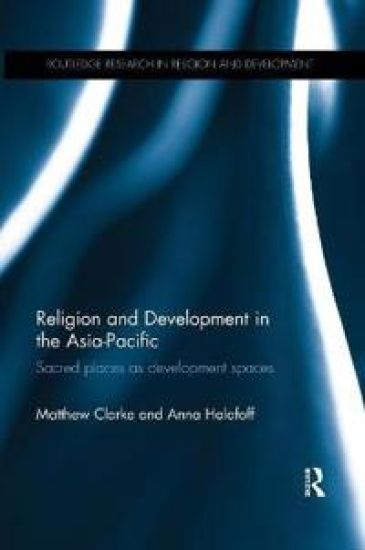
Community development is most effective and efficient when it is situated and led at the local level and considers the social behaviours, needs and worldviews of local communities. With more than eight out of ten people globally self-reporting religious belief, Religion and Development in the Asia-Pacific: Sacred places as development spaces argues that the role and impact of religions on community development needs to be better understood. It also calls for greater attention to be given to the role of sacred places as sites for development activities, and for a deeper appreciation of the way in which sacred stories and teachings inspire people to work for the benefit of others in particular locations. The book considers theories of ‘place’ as a component of successful development interventions and expands this analysis to consider the specific role that sacred places – buildings and social networks – have in planning, implementing and promoting sustainable development. A series of case studies examine various sacred places as sites for development activities. These case studies include Christian churches and disaster relief in Vanuatu; Muslim shrines and welfare provision in Pakistan; a women’s Buddhist monastery in Thailand advancing gender equity; a Jewish aid organisation providing language training to Muslim Women in Australia; and Hawaiian sacred sites located within a holistic retreat centre committed to ecological sustainability. Religion and Development in the Asia-Pacific demonstrates the important role that sacred spaces can play in development interventions, covering diverse major world religions, interfaith and spiritual contexts, and as such will be of considerable interest for postgraduate students and researchers in development studies, religious studies, sociology of religion and geography.
Sermons Upon Several Occasions; by the Reverend Mr. Matthew Clarke
The 18th century was a wealth of knowledge, exploration and rapidly growing technology and expanding record-keeping made possible by advances in the printing press. In its determination to preserve the century of revolution, Gale initiated a revolution of its own: digitization of epic proportions to preserve these invaluable works in the largest archive of its kind. Now for the first time these high-quality digital copies of original 18th century manuscripts are available in print, making them highly accessible to libraries, undergraduate students, and independent scholars. The Age of Enlightenment profoundly enriched religious and philosophical understanding and continues to influence present-day thinking. Works collected here include masterpieces by David Hume, Immanuel Kant, and Jean-Jacques Rousseau, as well as religious sermons and moral debates on the issues of the day, such as the slave trade. The Age of Reason saw conflict between Protestantism and Catholicism transformed into one between faith and logic -- a debate that continues in the twenty-first century.++++The below data was compiled from various identification fields in the bibliographic record of this title. This data is provided as an additional tool in helping to insure edition identification: ++++British LibraryT084850London: printed for Theodore Sanders, and sold by Richard Ford, and John Chandler, 1727. xlviii,412p.; 8
Quitting Weed: The Complete Guide

Quitting Weed: The Complete Guide

Matthew Clarke

Independently Published
2018
nidottu
Just as there are responsible drinkers and alcoholics, there are those who can moderate their cannabis use and those who cannot. If you are struggling to quit and you want to learn how to quit successfully, this book is for you - you'll never look at cannabis the same way again. Learn about the science and psychology of cannabis addiction - understand what drives your addictionUnderstand cannabis withdrawal symptoms and how to best treat themKnow what to expect during the quitting process - relapses, self-doubt, emotional ups and downsUnderstand how to overcome the obstacles to sobriety - mental gymnastics, social pressure, boredom, nostalgiaEmbrace the Quitting Mindset - discover the knowledge and approaches necessary for maintaining long-term sobrietyLife is too short to be a slave to a plant. Begin your recovery journey today. Quitting Weed: The Complete Guide is the definitive book on overcoming cannabis addiction. A former addict himself, Matthew Clarke provides an easy-to-follow, comprehensive guide for understanding how cannabis addiction works, and most importantly, detailed advice on how to conquer addiction - permanently.
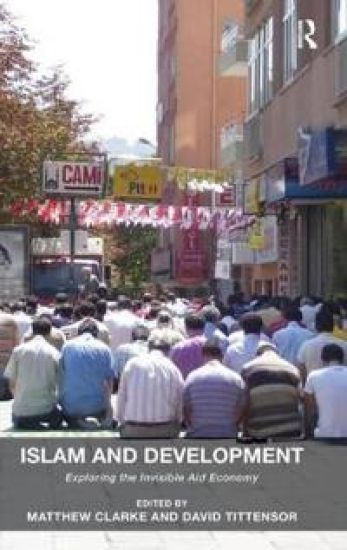
Islam and Development

Islam and Development

Matthew Clarke; David Tittensor

Routledge
2018
nidottu
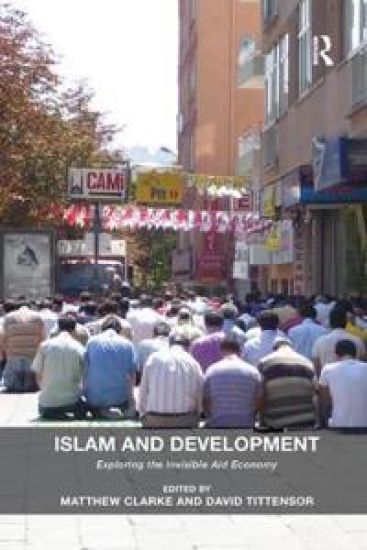
The study of Islam since the advent of 9/11 has made a significant resurgence. However, much of the work produced since then has tended to focus on the movements that not only provide aid to their fellow Muslims, but also have political and at times violent agendas. This tendency has led to a dearth of research on the wider Muslim aid and development scene. Focusing on the role and impact of Islam and Islamic Faith Based Organisations (FBOs), an arena that has come to be regarded by some as the 'invisible aid economy', Islam and Development considers Islamic theology and its application to development and how Islamic teaching is actualized in case studies of Muslim FBOs. It brings together contributions from the disciplines of theology, sociology, politics and economics, aiming both to raise awareness and to function as a corrective step within the development studies literature.
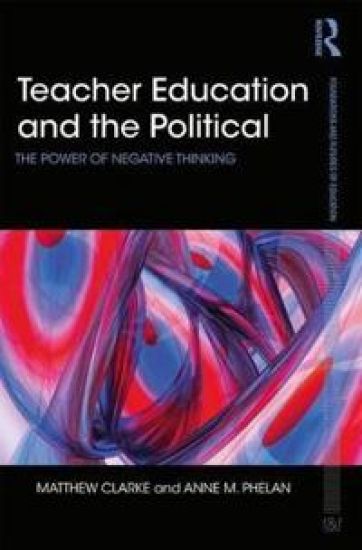
Teacher Education and the Political

Teacher Education and the Political

Matthew Clarke; Anne Phelan

Routledge
2017
nidottu
Teacher Education and the Political is a striking book which addresses the nature and purpose of teacher education in a global context characterised by economic and political anxieties around declining productivity and social inclusion. These anxieties are manifested in recent policy developments such as the promotion of professional standards, the deregulation and marketisation of teacher education and the imposition of performance-related regimes that tie teachers’ pay to outcomes in high-stakes testing. The book assesses the implications of such policies for the work of teachers as well as for teacher educators and those undertaking initial teacher training. It is argued that these policy moves can be read as a depoliticising and de-intellectualising of teacher education. In this context, they illustrate how contemporary theory can provide a language for critiquing recent developments and imagining new trajectories for policy and practice in teacher education. Drawing on the work of theorists from Derrida and Mouffe to Agamben and Lacan, this book argues for the need to maintain a space for intellectual autonomy as a critical dimension of the ethico-political work of teachers. Together these ideas and analyses provide examples of the power of negative thinking, illustrating its capacity to unsettle comfortable truths and foreground the political nature of teacher education. Current teachers, teacher educators and school leaders will be particularly interested readers, alongside those concerned with policy in the wider educational landscape.
Teacher Education and the Political

Teacher Education and the Political

Matthew Clarke; Anne Phelan

Routledge
2017
sidottu
Teacher Education and the Political is a striking book which addresses the nature and purpose of teacher education in a global context characterised by economic and political anxieties around declining productivity and social inclusion. These anxieties are manifested in recent policy developments such as the promotion of professional standards, the deregulation and marketisation of teacher education and the imposition of performance-related regimes that tie teachers’ pay to outcomes in high-stakes testing. The book assesses the implications of such policies for the work of teachers as well as for teacher educators and those undertaking initial teacher training. It is argued that these policy moves can be read as a depoliticising and de-intellectualising of teacher education. In this context, they illustrate how contemporary theory can provide a language for critiquing recent developments and imagining new trajectories for policy and practice in teacher education. Drawing on the work of theorists from Derrida and Mouffe to Agamben and Lacan, this book argues for the need to maintain a space for intellectual autonomy as a critical dimension of the ethico-political work of teachers. Together these ideas and analyses provide examples of the power of negative thinking, illustrating its capacity to unsettle comfortable truths and foreground the political nature of teacher education. Current teachers, teacher educators and school leaders will be particularly interested readers, alongside those concerned with policy in the wider educational landscape.
Religion and Development in the Asia-Pacific

Religion and Development in the Asia-Pacific

Matthew Clarke; Anna Halafoff

Routledge
2016
sidottu
Community development is most effective and efficient when it is situated and led at the local level and considers the social behaviours, needs and worldviews of local communities. With more than eight out of ten people globally self-reporting religious belief, Religion and Development in the Asia-Pacific: Sacred places as development spaces argues that the role and impact of religions on community development needs to be better understood. It also calls for greater attention to be given to the role of sacred places as sites for development activities, and for a deeper appreciation of the way in which sacred stories and teachings inspire people to work for the benefit of others in particular locations. The book considers theories of ‘place’ as a component of successful development interventions and expands this analysis to consider the specific role that sacred places – buildings and social networks – have in planning, implementing and promoting sustainable development. A series of case studies examine various sacred places as sites for development activities. These case studies include Christian churches and disaster relief in Vanuatu; Muslim shrines and welfare provision in Pakistan; a women’s Buddhist monastery in Thailand advancing gender equity; a Jewish aid organisation providing language training to Muslim Women in Australia; and Hawaiian sacred sites located within a holistic retreat centre committed to ecological sustainability. Religion and Development in the Asia-Pacific demonstrates the important role that sacred spaces can play in development interventions, covering diverse major world religions, interfaith and spiritual contexts, and as such will be of considerable interest for postgraduate students and researchers in development studies, religious studies, sociology of religion and geography.
Islam and Development

Islam and Development

Matthew Clarke; David Tittensor

Ashgate Publishing Limited
2014
sidottu
The study of Islam since the advent of 9/11 has made a significant resurgence. However, much of the work produced since then has tended to focus on the movements that not only provide aid to their fellow Muslims, but also have political and at times violent agendas. This tendency has led to a dearth of research on the wider Muslim aid and development scene. Focusing on the role and impact of Islam and Islamic Faith Based Organisations (FBOs), an arena that has come to be regarded by some as the 'invisible aid economy', Islam and Development considers Islamic theology and its application to development and how Islamic teaching is actualized in case studies of Muslim FBOs. It brings together contributions from the disciplines of theology, sociology, politics and economics, aiming both to raise awareness and to function as a corrective step within the development studies literature.
Attitudes to National Identity in Melanesia and Timor-Leste

Attitudes to National Identity in Melanesia and Timor-Leste

Heather Wallace; Matthew Clarke; Simon Feeny

Peter Lang AG, Internationaler Verlag der Wissenschaften
2013
nidottu
This book examines the attitudes of tertiary students in Melanesia and Timor-Leste to national identity and key issues of nation-building. Their views are pivotal to understanding the challenges of building a more cohesive sense of national identity and political community in these states. Melanesian countries show a relatively high degree of similarity in their responses to the surveys on national identity carried out by the authors, but with key differences attributable to particular historical, regional or linguistic legacies of colonial rule. The ongoing importance of traditional authority and kastom/adat in conceptions of political community and identity is evident in all four case study sites, and in each case matches indicators of respect for modern state authority. Although different for each site, the authors’ findings also illustrate the importance of students’ geographical region of origin, language orientation and gender in explaining key differences in attitudes towards national identity. The book demonstrates that strong levels of national identification and pride persist among the future leaders of the countries surveyed, even in the face of ongoing regional and linguistic divisions and weak state capacity, suggesting a strong potential basis for nation-building agendas if wider challenges of democratic performance, service provision and regional development can be addressed over time.
Development and Religion

Development and Religion

Matthew Clarke

Edward Elgar Publishing Ltd
2011
sidottu
Development and Religion explores how the world's five major religions - Hinduism, Buddhism, Judaism, Christianity and Islam - understand and practice 'development' through an examination of their sacred texts, social teaching and basic beliefs. Religious belief is a common human characteristic with eighty percent of the world's population professing religious faith. Observable in all societies, religious belief is pervasive, profound, persuasive and persistent. The premise of this book is that despite this, religion has long been ignored within mainstream development paradigms and by development practitioners (both locally and at the international level) resulting in sub-optimal development outcomes. Matthew Clarke argues that each religion offers useful insights into various issues concerning development that should be considered by donors, NGOs, and others seeking to improve the lives of the poor. Undergraduates and postgraduate students of development studies, religious studies and theology will gratefully welcome this highly regarded book. Contents: Foreword by Katherine Marshall; Preface; 1. The Religion - Development Nexus; 2. Hinduism - Dharma and Active Citizenship; 3. Buddhism - A Middle Way for Development; 4. Judaism - A Cry for Justice; 5. Christianity - Development as an Option for the Poor; 6. Islam: Equality and Action; 7. Conclusion; References; Index
The Millennium Development Goals and Beyond

The Millennium Development Goals and Beyond

Simon Feeny; Matthew Clarke

Palgrave Macmillan
2009
sidottu
This book examines how international aid donors and Non-Governmental Organisations (NGOs) can assist countries in the Asia-Pacific region achieve the Millennium Development Goals. The book examines the progress countries have made towards the MDGs and highlights the need to tailor the goals to individual country circumstances.
Post-Kyoto

Post-Kyoto

Matthew Clarke

Nova Science Publishers Inc
2008
sidottu
Those who are wealthy have some degree of control over their climate. When it is hot, they can cool themselves down with air conditioners. Likewise, when it is cold, they can warm themselves with heaters. The wealthier the person, the more sophisticated the heating or cooling employed. A poor person has little such climate control. When it is hot, they are hot. When it is cold, they are cold. Without accessing any other information or asking any questions, the ability someone has to control their own personal environment is a ready and reasonable way of assessing their level of economic development. It is ironic then that as all nations become increasingly wealthy that the ability to control climate is quickly disappearing. Climate change is occurring and the affects are already evident. Weather patterns are changing, animal migration is occurring at different times, polar ice caps are shrinking and access to secure water supplies for some is diminishing. Global wealth is no longer sufficient for being assured of climate control. In a sense, therefore, all nations and all individuals are becoming more poor-like. Further, this lack of climate control will be exacerbated if we continue to develop as we have in the past. The global community must now act in unity to address climate change. The Kyoto Protocol was the first significant international instrument that addressed climate change. However, this protocol ceases to exist in 2012 and negotiations have already begun to design the next international climate change protocol. This new book sets out what this new protocol might be. The purpose of the book is therefore to contribute to the current negotiations and offer an alternative to the consensus that appears to be emerging: a consensus that will see very little departure from the principles that underpinned the Kyoto Protocol - limited targets for a limited number of nations. The reactive approach - see what happens, limit damages, and learn from experience - is unworkable. Rather we must take a proactive approach. This thought-provoking book proposes a proactive approach to the design of the next international climate change protocol.