Kirjojen hintavertailu – 12 875 974 kirjaa ja 26 kauppaa

Kirjailija

MATTHEW COBB

Kirjat ja teokset yhdessä paikassa: 14 kirjaa, julkaisuja vuosilta 2010–2025, suosituimpiin kuuluu RESISTANCE PA. Vertaile teosten hintoja ja tarkista saatavuus suomalaisista kirjakaupoista.

14 kirjaa

Kirjojen julkaisuvuodet: 2010–2025.

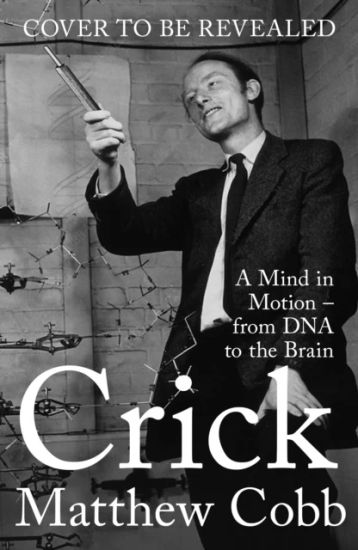
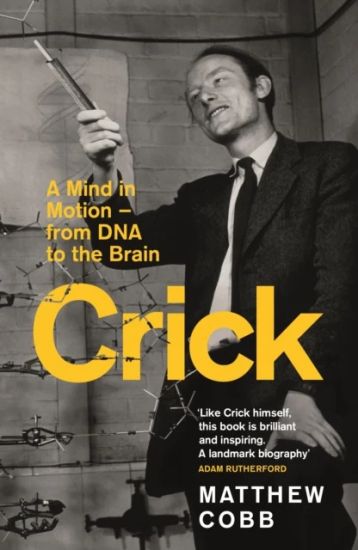
Crick: A Mind in Motion

Crick: A Mind in Motion

Matthew Cobb

BASIC BOOKS
2025
sidottu

Halvin toimitettuna 32,70 €

A major new biography of Francis Crick, codiscoverer of the structure of DNA, pioneering neuroscientist, and twentieth-century genius What are the moments that make a life? In Francis Crick's, the decisive moment came in 1951, when he first met James Watson. Their ensuing discovery of the structure of DNA made Crick world-famous. But neither that chance meeting nor that discovery made Crick who he was. As Matthew Cobb shows in Crick, it is another chance encounter, with a line from the writing of Beat poet Michael McClure, that reveals Crick's character: "THIS IS THE POWERFUL KNOWLEDGE," it shouted. Crick, having read it, would keep it with him for the rest of his life, a token of his desire to solve the riddles of existence. John Keats once accused scientists of merely wanting to "unweave a rainbow," but it was an irrepressible, Romantic urge to wonder that defined Crick, as much as a desire to find the basis of life in DNA and the workings of our minds. For the first time ever, Cobb presents the full portrait of Crick, a scientist and a man: his triumphs and failings, insights and oversights. Crick set out to find the powerful knowledge. Almost miraculously, he did.
As Gods: A Moral History of the Genetic Age
The thrilling and terrifying history of genetic engineering In 2018, scientists manipulated the DNA of human babies for the first time. As biologist and historian Matthew Cobb shows in As Gods, this achievement was one many scientists have feared from the start of the genetic age. Four times in the last fifty years, geneticists, frightened by their own technology, have called a temporary halt to their experiments. They ought to be frightened: Now we have powers that can target the extinction of pests, change our own genes, or create dangerous new versions of diseases in an attempt to prevent future pandemics. Both awe-inspiring and chilling, As Gods traces the history of genetic engineering, showing that this revolutionary technology is far too important to be left to the scientists. They have the power to change life itself, but should we trust them to keep their ingenuity from producing a hellish reality?
The Logic of Life

The Logic of Life

François Jacob; Matthew Cobb

PRINCETON UNIVERSITY PRESS
2022
pokkari
“The most remarkable history of biology that has ever been written.”—Michel FoucaultNobel Prize–winning scientist François Jacob’s The Logic of Life is a landmark book in the history of biology and science. Focusing on heredity, which Jacob considers the fundamental feature of living things, he shows how, since the sixteenth century, the scientific understanding of inherited traits has moved not in a linear, progressive way, from error to truth, but instead through a series of frameworks. He reveals how these successive interpretive approaches—focusing on visible structures, internal structures (especially cells), evolution, genes, and DNA and other molecules—each have their own power but also limitations. Fundamentally challenging how the history of biology is told, much as Thomas Kuhn’s Structure of Scientific Revolutions did for the history of science as a whole, The Logic of Life has greatly influenced the way scientists and historians view the past, present, and future of biology.
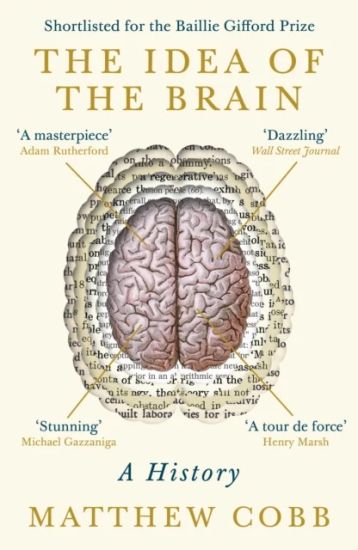
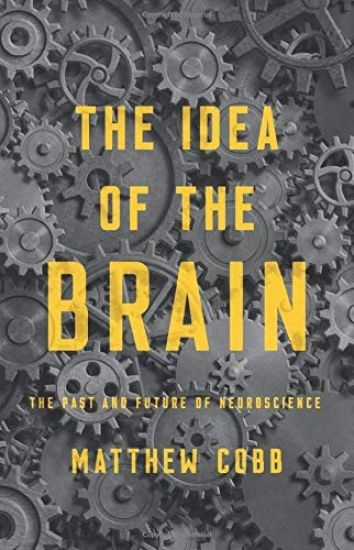
The Idea of the Brain

The Idea of the Brain

Matthew Cobb

Profile Books Ltd
2021
pokkari

Halvin toimitettuna 19,40 €

Shortlisted for the 2020 Baillie Gifford Prize A New Statesman Book of the Year This is the story of our quest to understand the most mysterious object in the universe: the human brain. Today we tend to picture it as a computer. Earlier scientists thought about it in their own technological terms: as a telephone switchboard, or a clock, or all manner of fantastic mechanical or hydraulic devices. Could the right metaphor unlock the its deepest secrets once and for all? Galloping through centuries of wild speculation and ingenious, sometimes macabre anatomical investigations, scientist and historian Matthew Cobb reveals how we came to our present state of knowledge. Our latest theories allow us to create artificial memories in the brain of a mouse, and to build AI programmes capable of extraordinary cognitive feats. A complete understanding seems within our grasp. But to make that final breakthrough, we may need a radical new approach. At every step of our quest, Cobb shows that it was new ideas that brought illumination. Where, he asks, might the next one come from? What will it be?
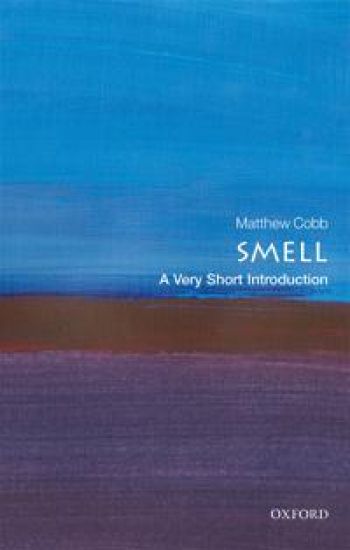
Smell

Smell

Matthew Cobb

Oxford University Press
2020
nidottu
Our sense of smell - or olfaction as it is technically known - is our most enigmatic sense. It can conjure up memories, taking us back to very specific places and emotions, whilst powerful smells can induce strong feelings of hunger or nausea. In the animal kingdom smell can be used to find food, a mate, or a home; to sense danger; and to send and receive complex messages with other members of a species. Yet despite its fundamental importance in our mental life and in the existence of all animals, our scientific understanding of how smell works is limited. In this Very Short Introduction, Matthew Cobb describes the latest scientific research on smell in humans and other mammals, in insects, and even in fish. He looks at how smell evolved, how animals use it to navigate and communicate, and disorders of smell in humans. Understanding smell, especially its neurobiology, has proved a big challenge, but olfactory science has revealed genetic factors that determine what we can and cannot smell, and why some people like a given smell while others find it unbearable. He ends by considering future treatments for smell disorders, and speculating on the role of smell in a world of robots. ABOUT THE SERIES: The Very Short Introductions series from Oxford University Press contains hundreds of titles in almost every subject area. These pocket-sized books are the perfect way to get ahead in a new subject quickly. Our expert authors combine facts, analysis, perspective, new ideas, and enthusiasm to make interesting and challenging topics highly readable.
The Idea of the Brain: The Past and Future of Neuroscience
An "elegant", "engrossing" (Carol Tavris, Wall Street Journal) examination of what we think we know about the brain and why -- despite technological advances -- the workings of our most essential organ remain a mystery. "I cannot recommend this book strongly enough."--Henry Marsh, author of Do No Harm Shortlisted for the 2020 Baillie-Gifford Prize For thousands of years, thinkers and scientists have tried to understand what the brain does. Yet, despite the astonishing discoveries of science, we still have only the vaguest idea of how the brain works. In The Idea of the Brain, scientist and historian Matthew Cobb traces how our conception of the brain has evolved over the centuries. Although it might seem to be a story of ever-increasing knowledge of biology, Cobb shows how our ideas about the brain have been shaped by each era's most significant technologies. Today we might think the brain is like a supercomputer. In the past, it has been compared to a telegraph, a telephone exchange, or some kind of hydraulic system. What will we think the brain is like tomorrow, when new technology arises? The result is an essential read for anyone interested in the complex processes that drive science and the forces that have shaped our marvelous brains.
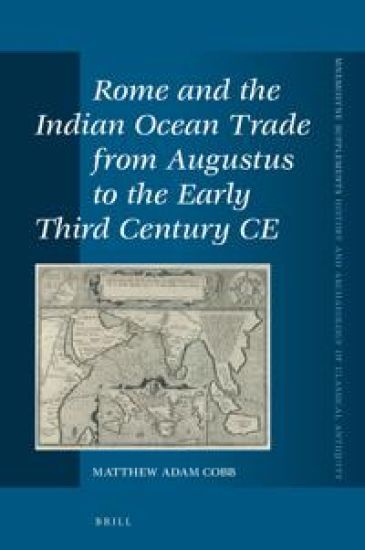
Rome and the Indian Ocean Trade from Augustus to the Early Third Century CE
In Rome and the Indian Ocean Trade from Augustus to the Early Third Century CE Matthew Adam Cobb examines the development of commercial exchange between the Mediterranean and the Indian Ocean worlds from the Roman annexation of Egypt (30 BCE) up to the early third century CE. Among the issues considered are the identities of those involved, how they organised and financed themselves, the challenges they faced (scheduling, logistics, security, sailing conditions), and the types of goods they traded. Drawing upon an expanding corpus of new evidence, Cobb aims to reassess a number of long-standing scholarly assumptions about the nature of Roman participation in this trade. These range from its chronological development to its economic and social impact.
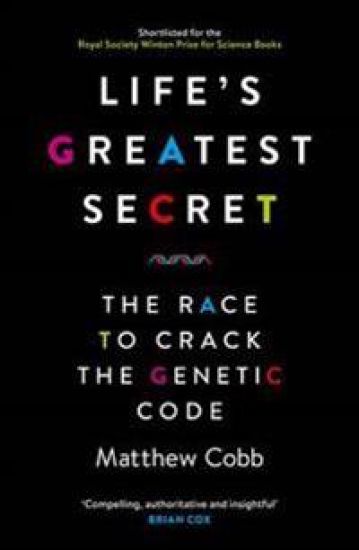
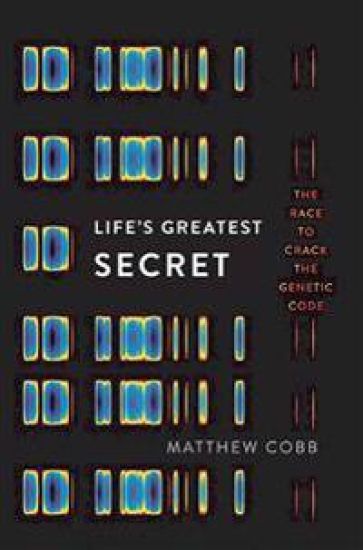
Life's Greatest Secret

Life's Greatest Secret

Matthew Cobb

Profile Books Ltd
2016
pokkari
Life's Greatest Secret is the story of the discovery and cracking of the genetic code. This great scientific breakthrough has had far-reaching consequences for how we understand ourselves and our place in the natural world. The code forms the most striking proof of Darwin's hypothesis that all organisms are related, holds tremendous promise for improving human well-being, and has transformed the way we think about life. Matthew Cobb interweaves science, biography and anecdote in a book that mixes remarkable insights, theoretical dead-ends and ingenious experiments with the pace of a thriller. He describes cooperation and competition among some of the twentieth century's most outstanding and eccentric minds, moves between biology, physics and chemistry, and shows the part played by computing and cybernetics. The story spans the globe, from Cambridge MA to Cambridge UK, New York to Paris, London to Moscow. It is both thrilling science and a fascinating story about how science is done.
Life's Greatest Secret: The Race to Crack the Genetic Code
Everyone has heard of the story of DNA as the story of Watson and Crick and Rosalind Franklin, but knowing the structure of DNA was only a part of a greater struggle to understand life's secrets. Life's Greatest Secret is the story of the discovery and cracking of the genetic code, the thing that ultimately enables a spiraling molecule to give rise to the life that exists all around us. This great scientific breakthrough has had farreaching consequences for how we understand ourselves and our place in the natural world, and for how we might take control of our (and life's) future. Life's Greatest Secret mixes remarkable insights, theoretical dead-ends, and ingenious experiments with the swift pace of a thriller. From New York to Paris, Cambridge, Massachusetts, to Cambridge, England, and London to Moscow, the greatest discovery of twentieth-century biology was truly a global feat. Biologist and historian of science Matthew Cobb gives the full and rich account of the cooperation and competition between the eccentric characters -- mathematicians, physicists, information theorists, and biologists -- who contributed to this revolutionary new science. And, while every new discovery was a leap forward for science, Cobb shows how every new answer inevitably led to new questions that were at least as difficult to answer: just ask anyone who had hoped that the successful completion of the Human Genome Project was going to truly yield the book of life, or that a better understanding of epigenetics or "junk DNA" was going to be the final piece of the puzzle. But the setbacks and unexpected discoveries are what make the science exciting, and it is Matthew Cobb's telling that makes them worth reading. This is a riveting story of humans exploring what it is that makes us human and how the world works, and it is essential reading for anyone who'd like to explore those questions for themselves.