
Kirjojen hintavertailu – 12 903 725 kirjaa ja 27 kauppaa

Kirjailija

Matthew Donald

Kirjat ja teokset yhdessä paikassa: 2 kirjaa, julkaisuja vuosilta 2012–2014, suosituimpiin kuuluu The Semantic Representation of Natural Language. Vertaile teosten hintoja ja tarkista saatavuus suomalaisista kirjakaupoista.

2 kirjaa

Kirjojen julkaisuvuodet: 2012–2014.

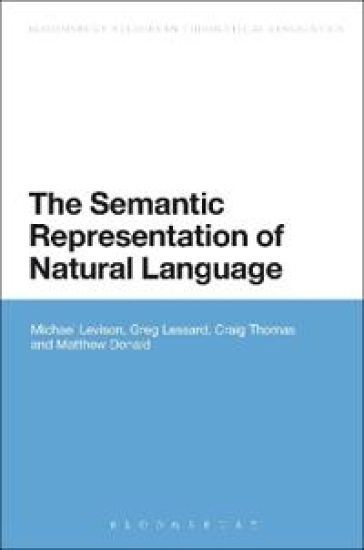
The Semantic Representation of Natural Language

The Semantic Representation of Natural Language

Michael Levison; Greg Lessard; Craig Thomas; Matthew Donald

Bloomsbury Academic
2014
nidottu
This volume contains a detailed, precise and clear semantic formalism designed to allow non-programmers such as linguists and literary specialists to represent elements of meaning which they must deal with in their research and teaching. At the same time, by its basis in a functional programming paradigm, it retains sufficient formal precision to support computational implementation. The formalism is designed to represent meaning as found at a variety of levels, including basic semantic units and relations, word meaning, sentence-level phenomena, and text-level meaning. By drawing on fundamental principles of program design, the proposed formalism is both easy to read and modify yet sufficiently powerful to allow for the representation of complex semantic phenomena. In this monograph, the authors introduce the formalism and show its basic structure, apply it to the analysis of the semantics of a variety of linguistic phenomena in both English and French, and use it to represent the semantics of a variety of texts ranging from single sentences, to textual excepts, to a full story.
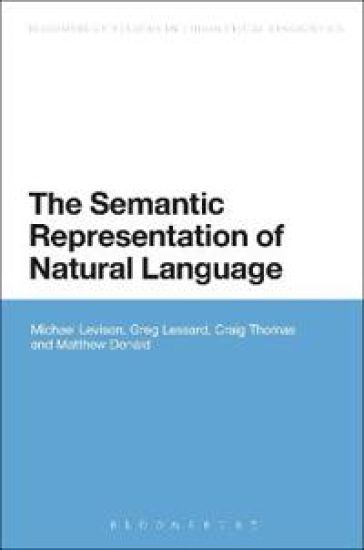
The Semantic Representation of Natural Language

The Semantic Representation of Natural Language

Michael Levison; Greg Lessard; Craig Thomas; Matthew Donald

Bloomsbury Academic USA
2012
sidottu
This volume contains a detailed, precise and clear semantic formalism designed to allow non-programmers such as linguists and literary specialists to represent elements of meaning which they must deal with in their research and teaching. At the same time, by its basis in a functional programming paradigm, it retains sufficient formal precision to support computational implementation. The formalism is designed to represent meaning as found at a variety of levels, including basic semantic units and relations, word meaning, sentence-level phenomena, and text-level meaning. By drawing on fundamental principles of program design, the proposed formalism is both easy to read and modify yet sufficiently powerful to allow for the representation of complex semantic phenomena. In this monograph, the authors introduce the formalism and show its basic structure, apply it to the analysis of the semantics of a variety of linguistic phenomena in both English and French, and use it to represent the semantics of a variety of texts ranging from single sentences, to textual excepts, to a full story.