Kirjojen hintavertailu – 12 873 107 kirjaa ja 26 kauppaa

Kirjailija

Matthew Hindman

Kirjat ja teokset yhdessä paikassa: 4 kirjaa, julkaisuja vuosilta 2008–2020, suosituimpiin kuuluu The Internet Trap. Vertaile teosten hintoja ja tarkista saatavuus suomalaisista kirjakaupoista.

4 kirjaa

Kirjojen julkaisuvuodet: 2008–2020.

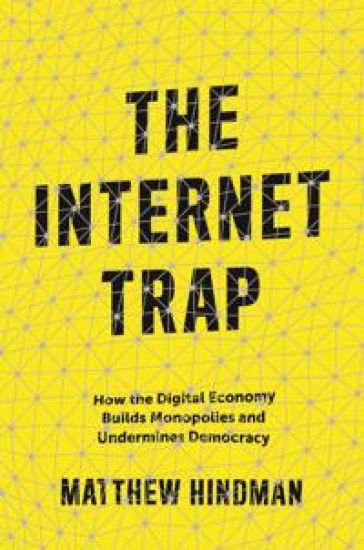
The Internet Trap

The Internet Trap

Matthew Hindman

Princeton University Press
2020
pokkari
Why there is no such thing as a free audience in today's attention economyThe internet was supposed to fragment audiences and make media monopolies impossible. Instead, behemoths like Google and Facebook now dominate the time we spend online—and grab all the profits. This provocative and timely book sheds light on the stunning rise of the digital giants and the online struggles of nearly everyone else, and reveals what small players can do to survive in a game that is rigged against them. Challenging some of the most enduring myths of digital life, Matthew Hindman explains why net neutrality alone is no guarantee of an open internet, and demonstrates what it really takes to grow a digital audience in today's competitive online economy.
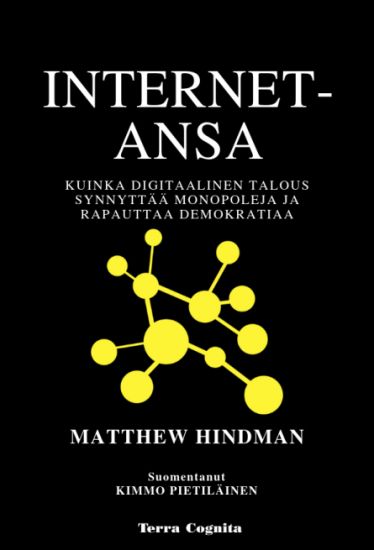
Internet-ansa

Internet-ansa

Matthew Hindman

Terra Cognita
2019
nidottu

Halvin toimitettuna 37,50 €

Internetin uskottiin pirstaloivan yleisöt ja lopettavan mediamonopolit, mutta nyt Googlen ja Facebooksin kaltaiset jätit hallitsevat verkossa käyttämäämme aikaa ja keräävät koko huomiotalouden voiton. Internet-ansa selittää, miten nämä jätit syntyivät ja miten ne ovat pakottaneet muut verkossa toimijat taistelemaan elämästään. Pienet alun edut ovat kasautuneet muutamille voittajille ja rajoittaneet koko internetin edut niille. Hindman selittää, miksi Internet ei ole jälkiteollinen teknologia, jollaisena sitä kaupitellaan, miksi autotallissa uutta suunittelevien on mahdotonta voittaa se ja miksi verkon neutraalius ei sellaisenaan takaa avointa internetiä. Ennen kaikkea Hindman selittää, miksi ajatusten moniulotteisuus katoaa, miksi paikalliset digitaaliset uutislähteet ja muut pienet pelurit eivät voi nousta edes omalla alueellaan suuriksi, ja osoittaa, mitä digtaalisen yleisön luominen ja elossa säilyminen verkossa todiela edellyttää. Matthew Hindman on mediatutkimuksen apulaisprofessori George Washington Universityssa.
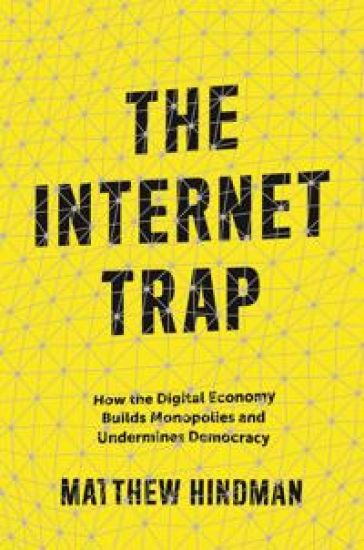
The Internet Trap

The Internet Trap

Matthew Hindman

Princeton University Press
2018
sidottu
A book that challenges everything you thought you knew about the online economyThe internet was supposed to fragment audiences and make media monopolies impossible. Instead, behemoths like Google and Facebook now dominate the time we spend online—and grab all the profits from the attention economy. The Internet Trap explains how this happened. This provocative and timely book sheds light on the stunning rise of the digital giants and the online struggles of nearly everyone else—and reveals what small players can do to survive in a game that is rigged against them. Matthew Hindman shows how seemingly tiny advantages in attracting users can snowball over time. The internet has not reduced the cost of reaching audiences—it has merely shifted who pays and how. Challenging some of the most enduring myths of digital life, Hindman explains why the internet is not the postindustrial technology that has been sold to the public, how it has become mathematically impossible for grad students in a garage to beat Google, and why net neutrality alone is no guarantee of an open internet. He also explains why the challenges for local digital news outlets and other small players are worse than they appear and demonstrates what it really takes to grow a digital audience and stay alive in today’s online economy. The Internet Trap shows why, even on the internet, there is still no such thing as a free audience.
The Myth of Digital Democracy

The Myth of Digital Democracy

Matthew Hindman

Princeton University Press
2008
pokkari
Is the Internet democratizing American politics? Do political Web sites and blogs mobilize inactive citizens and make the public sphere more inclusive? The Myth of Digital Democracy reveals that, contrary to popular belief, the Internet has done little to broaden political discourse but in fact empowers a small set of elites--some new, but most familiar. Matthew Hindman argues that, though hundreds of thousands of Americans blog about politics, blogs receive only a miniscule portion of Web traffic, and most blog readership goes to a handful of mainstream, highly educated professionals. He shows how, despite the wealth of independent Web sites, online news audiences are concentrated on the top twenty outlets, and online organizing and fund-raising are dominated by a few powerful interest groups. Hindman tracks nearly three million Web pages, analyzing how their links are structured, how citizens search for political content, and how leading search engines like Google and Yahoo! funnel traffic to popular outlets. He finds that while the Internet has increased some forms of political participation and transformed the way interest groups and candidates organize, mobilize, and raise funds, elites still strongly shape how political material on the Web is presented and accessed. The Myth of Digital Democracy. debunks popular notions about political discourse in the digital age, revealing how the Internet has neither diminished the audience share of corporate media nor given greater voice to ordinary citizens.