

Kirjojen hintavertailu – 12 903 724 kirjaa ja 27 kauppaa

Kirjailija

Matthew Hu

Kirjat ja teokset yhdessä paikassa: 2 kirjaa, julkaisuja vuosilta 2025–2026, suosituimpiin kuuluu Design For Six Sigma For Engineers. Vertaile teosten hintoja ja tarkista saatavuus suomalaisista kirjakaupoista.

2 kirjaa

Kirjojen julkaisuvuodet: 2025–2026.

Design For Six Sigma For Engineers

Design For Six Sigma For Engineers

Matthew Hu; Kai Yang; Michael Sheh

World Scientific Publishing Co Pte Ltd
2025
sidottu
Design for Six Sigma (DFSS) is a systematic approach for manufacturing companies to address product and process issues at the early development stage. Through inventive thought processes, early error elimination, and robust design, DFSS has dramatically impacted product quality and performance and increased profit. In this comprehensive volume, the four-phase IDOV — Identify-Design-Optimize-Verify — DFSS methodology is discussed in detail. The various practices from inventive design methodologies, deterministic and stochastic numerical methods, and the use of CAE simulation techniques, are mapped to the DFSS procedure. Many case studies are used to illustrate how tools are used in DFSS processes. Written by DFSS practitioners and technologists, this book is intended for any engineer to use as a reference in executing DFSS projects.
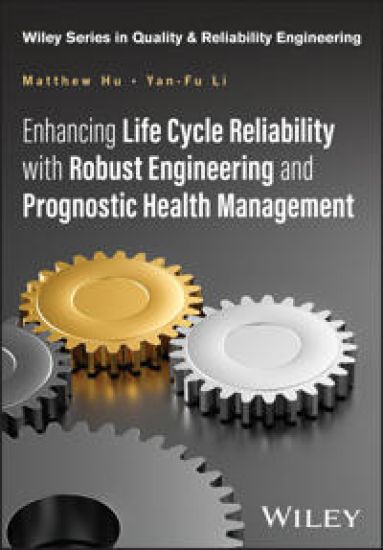
Enhancing Life Cycle Reliability with Robust Engineering and Prognostic Health Management
Complete process for ensuring product performance through robust concept design, robust optimization, selection, and verification in an uncontrollable user environment Life Cycle Reliability through Robustness Development, and Prognostic and Health Management enables readers to build a robustness-thinking-based approach for robust design for reliability and prognostic health management (PHM), explaining best practices from early product design through the entire product lifecycle, leading to lower costs and shorter development cycles. The text integrates key tools and emerging reliability management systems into a comprehensive program for developing more robust and reliable technology-based products. The text provides value-added strategies for robustness development in new products and health management with three main types of robustness development and reliability growth case studies: intrinsic, instrumental, and collective. Readers can harness multiple forms of engineering knowledge to inform decision-making within reliability contexts. To ensure customer satisfaction, the text helps readers consciously consider noise factors (environmental variation during the product's usage, manufacturing variation, and component deterioration) and cost of failure in the field for the Robust Design method. Written by two highly qualified authors, Life Cycle Reliability through Robustness Development, and Prognostic and Health Management includes information on: Effective reliability efforts in an integrated product development environment, failure mode avoidance, and reliability analysis using the physics-of-failure process Essential of robustness and robust design in reliability improvement, covering design-in reliability up front, eliminating failures prior to testing, and increasing fielded reliability Rapid, cost-effective deployment of health and usage monitoring systems and improving diagnostic and prognostic techniques and processes ROI analyses for PHM, selecting and deploying sensors, setting up data transmission channels, and developing data collection and data pre-processing functions Comprehensive in scope, Life Cycle Reliability through Robustness Development, and Prognostic and Health Management is an essential resource on the subject for all individuals responsible for product development and design, increasing life-cycle product reliability, process quality, or reducing costs in a design, development, manufacturing, and maintenance.