Kirjojen hintavertailu – 12 859 827 kirjaa ja 27 kauppaa
Kirjailija
Matthew Jennings
Kirjat ja teokset yhdessä paikassa: 6 kirjaa, julkaisuja vuosilta 2011–2019, suosituimpiin kuuluu Ocmulgee National Monument. Vertaile teosten hintoja ja tarkista saatavuus suomalaisista kirjakaupoista.
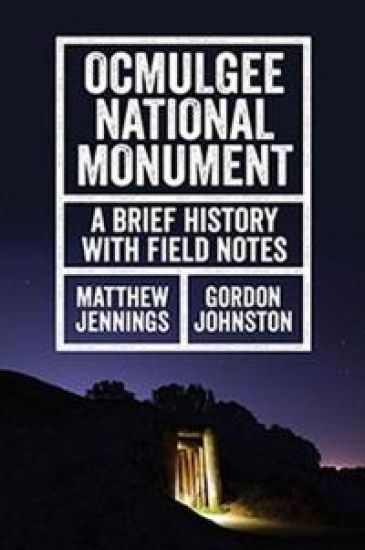
In this brief illustrated guide to the national monument located in Macon, Georgia, that conserves ancient Mississippian mounds and 12,000 years of human presence along the Ocmulgee River, Matthew Jennings and Gordon Johnston, like G. D. Pope and Lonnie Davis in earlier guides, introduce readers to the park's history, archaeology, Native cultures, and landscape. Jennings both updates the history and adds an account of the intercultural exchange that the park has brought about between the post-removal Muscogee Creek people native to the area and Georgians of the last several generations. This new guide braids into Jennings's concise historical overview Gordon Johnston's field notes and poems, written while Johnston was writer-in-residence at Ocmulgee National Monument, about the park's woods, streams, artifacts, and wildlife. The book includes transcriptions of oral stories by William Harjo (Muscogee) and an array of photographs and images, many of them new, that span the park's history, including Ocmulgee, an installation by artist Hock E Aye Vi Edgar Heap of Birds (Cheyenne/Arapaho) in Atlanta in 2005.
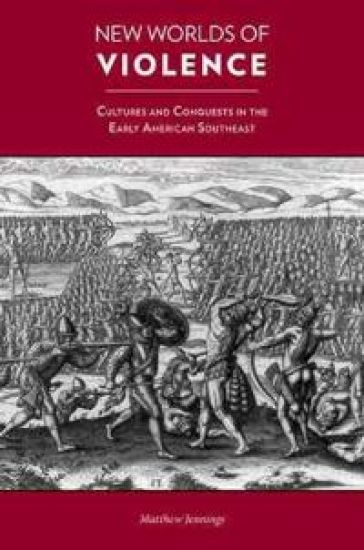
From the early 1500s to the mid-1700s, the American Southeast was the scene of continuous tumult as European powers vied for dominance in the region while waging war on Native American communities. Yet even before Hernando de Soto landed his expeditionary force on the Gulf shores of Florida, Native Americans had created their own “cultures of violence”: sets of ideas about when it was appropriate to use violence and what sorts of violence were appropriate to a given situation. In New Worlds of Violence, Matthew Jennings offers a persuasive new framework for understanding the European–Native American contact period and the conflicts among indigenous peoples that preceded it. This pioneering approach posits that every group present in the Southeast had its own ideas about the use of violence and that these ideas changed over time as they collided with one another. The book starts with the Mississippian era and continues through the successive Spanish and English invasions of the Native South. Jennings argues that the English conquered the Southeast because they were able to force everyone else to adapt to their culture of violence, which, of course, changed over time as well. By 1740, a peculiarly Anglo-American culture of violence was in place that would profoundly influence the expansion of England’s colonies and the eventual southern United States. While Native and African violence were present in this world, they moved in circles defined by the English. New Worlds of Violence concludes by pointing out that long-lasting violence bears long-lasting consequences. An important contribution to the growing body of work on the early Southeast, this book will significantly broaden readers’ understanding of America’s violent past. Matthew Jennings is an assistant professor of history at Macon State College in Macon, Georgia. He is the author of “Violence in a Shattered World” in Mapping the Shatter Zone: The European Invasion and the Transformation of the Mississippian World, edited by Robbie Ethridge and Sheri Shuck-Hall. His work has also appeared in The Uniting States, The South Carolina Encyclopedia, A Multicultural History of the United States, and The Encyclopedia of Native American History.