Kirjojen hintavertailu – 12 859 818 kirjaa ja 27 kauppaa

Kirjailija

Matthew Jones

Kirjat ja teokset yhdessä paikassa: 56 kirjaa, julkaisuja vuosilta 2001–2026, suosituimpiin kuuluu My Weather Book Tornado Safety. Vertaile teosten hintoja ja tarkista saatavuus suomalaisista kirjakaupoista.

56 kirjaa

Kirjojen julkaisuvuodet: 2001–2026.

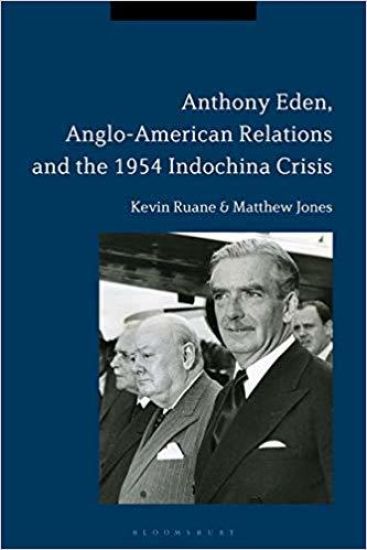
Anthony Eden, Anglo-American Relations and the 1954 Indochina Crisis

Anthony Eden, Anglo-American Relations and the 1954 Indochina Crisis

Kevin Ruane; Matthew Jones

Bloomsbury Academic
2021
nidottu
In the spring of 1954 the war in Vietnam between the French and the communist-led Vietminh came to a head. With French forces reeling, the United States prepared to intervene militarily to prevent the further spread of communism. Turning to its allies, first and foremost Britain, to join in what the Secretary of State John Foster Dulles called a ‘united action’ coalition. Far from agreeing to participate in a coalition, the British government set out to frustrate US military plans and to work instead for a peaceful negotiated resolution. Ultimately fearing eruption of a Third World War from US intervention, the British envoy led by Foreign Secretary Anthony Eden managed to broker a peaceful outcome. Professors Kevin Ruane and Matthew Jones chart the history of this last occasion when British diplomacy played a key if not decisive role in resolving a fundamental issue of war and peace. Eden’s diplomatic victory over the Americans in 1954 is nearly always overshadowed by the catastrophic political outcome for Britain and Eden in the Suez Crisis two year later. This book, however, seeks to counter some of the retrospective blight that Suez has cast over his pre-1956 career and realign Eden's reputation with a more balanced perspective, taking a larger view of his influence on peace in Southeast Asia.

Transforming Towns

Transforming Towns

Matthew Jones

RIBA Publishing
2020
nidottu
Towns have undergone dramatic and rapid change over the last century. Declining historic cores are surrounded by sprawling low-density housing, industrial and retail estates. The character and sense of place at the heart of rural towns and villages is under threat. By drawing people away from town centres, these developments erode the sense of community and public life. This book demonstrates how contemporary architecture, community engagement and thoughtful urban design can contribute to the creation of thriving small communities. It addresses a lack of inspiration and ideas for architects and designers working in small communities and promotes a character-based approach to designing and planning 21st century towns.
Anthony Eden, Anglo-American Relations and the 1954 Indochina Crisis

Anthony Eden, Anglo-American Relations and the 1954 Indochina Crisis

Kevin Ruane; Matthew Jones

Bloomsbury Academic
2019
sidottu
In the spring of 1954, after eight years of bitter fighting, the war in Vietnam between the French and the communist-led Vietminh came to a head. With French forces reeling, the United States planned to intervene militarily to shore-up the anti-communist position. Turning to its allies for support, first and foremost Great Britain, the US administration of Dwight D. Eisenhower sought to create what Secretary of State John Foster Dulles called a “united action” coalition. In the event, Winston Churchill’s Conservative government refused to back the plan. Fearing that US-led intervention could trigger a wider war in which the United Kingdom would be the first target for Soviet nuclear attack, the British Foreign Secretary, Anthony Eden, was determined to act as Indochina peacemaker – even at the cost of damage to the Anglo-American “special relationship”. In this important study, Kevin Ruane and Matthew Jones revisit a Cold War episode in which British diplomacy played a vital role in settling a crucial question of international war and peace. Eden’s diplomatic triumph at the 1954 Geneva Conference on Indochina is often overshadowed by the 1956 Suez Crisis which led to his political downfall. This book, however, recalls an earlier Eden: a skilled and experienced international diplomatist at the height of his powers who may well have prevented a localised Cold War crisis escalating into a general Third World War.
Science Fiction Cinema and 1950s Britain

Science Fiction Cinema and 1950s Britain

Matthew Jones

Bloomsbury Academic USA
2019
nidottu
This book is open access and available on www.bloomsburycollections.com. It is funded by Knowledge Unlatched. For the last sixty years discussion of 1950s science fiction cinema has been dominated by claims that the genre reflected US paranoia about Soviet brainwashing and the nuclear bomb. However, classic films, such as Invasion of the Body Snatchers (1956) and It Came from Outer Space (1953), and less familiar productions, such as It! The Terror from Beyond Space (1958), were regularly exported to countries across the world. The histories of their encounters with foreign audiences have not yet been told. Science Fiction Cinema and 1950s Britain begins this task by recounting the story of 1950s British cinema-goers and the aliens and monsters they watched on the silver screen. Drawing on extensive archival research, Matthew Jones makes an exciting and important intervention by locating American science fiction films alongside their domestic counterparts in their British contexts of release and reception. He offers a radical reassessment of the genre, demonstrating for the first time that in Britain, which was a significant market for and producer of science fiction, these films gave voice to different fears than they did in America. While Americans experienced an economic boom, low immigration and the conferring of statehood on Alaska and Hawaii, Britons worried about economic uncertainty, mass immigration and the dissolution of the Empire. Science Fiction Cinema and 1950s Britain uses these and other differences between the British and American experiences of the 1950s to tell a new history of the decade’s science fiction cinema, exploring for the first time the ways in which the genre came to mean something unique to Britons.
Void Beast Vol.1

Void Beast Vol.1

Stephanie Kuklish; Matthew Jones

Independently Published
2019
nidottu
The World sits ravaged, an apocalypse created by man's anger and greed wiped the land of civilizations that had stood strong for hundreds of years. The new world sits disheveled, humans and zombies fighting for food and hiding in the shadows. A plague of Z-Virus spread like wildfire over the remaining survivors of the war. Those not infected did what they could to survive. With destroyed cities and no sense of government or protection they are forced to walk alone in the dark cold streets. In the large mansion on the hill, one of the last remaining Werewolf Shifters paces the grounds on a constant rotation. By day he studies with his father, looking for the evil scientist waging war against his own kind. At night he hunts him down. Unfortunately for Takeo Johnson, and his father, sticking their snouts into the work of Doctor Gutierrez is a good way to get yourself killed. In a string of both horrid and sometimes fortuitous events, Takeo, or TJ, finds out what it really means to be a Void Beast and what it means to run the pack, magic powers and all.
Denise Chapter 1

Denise Chapter 1

Stephanie Kuklish; Matthew Jones

Independently Published
2019
nidottu
Denise started out in a world where the newspapers were underground, families bolted metal doors shut at night to keep the zombies out, and eating out of a tin can to candle light was considered a good hearty meal. It was all she ever knew, but it didn't stop her curiosity, and she was constantly getting in trouble for sneaking out into the city alone to spend hours sitting in the old boarded up city library looking at pictures of Hollywood movie stars and of a world she didn't recognize. Now imagine not being able to die while also having the ability to control the very monsters you once ran from. Crazy right? Well welcome to Denise's world.
The Official History of the UK Strategic Nuclear Deterrent
Volume I of The Official History of the UK Strategic Nuclear Deterrent provides an authoritative and in-depth examination of the British government’s strategic nuclear policy from 1945 to 1964. Written with full access to the UK documentary record, this volume examines how British governments after 1945 tried to build and then maintain an independent, nationally controlled strategic nuclear capability, and the debates this provoked in official circles. Against a background of evolving British ideas about deterrence during the Cold War, it focuses on the strategic, political and diplomatic considerations that compelled governments, in the face of ever-increasing pressures on the defence budget, to persist in their efforts to develop nuclear weapons and to deploy a credible nuclear force, as the age of the manned bomber gave way to the ballistic missile. Particular attention is given to controversies over the portion of the defence budget devoted to the deterrent programme, the effects of the restoration of Anglo-American nuclear collaboration after 1958, increasing reliance on the United States for nuclear delivery systems, the negotiations that led to the Nassau Agreement of 1962 and the supply of Polaris, and discussions within the Western Alliance over the control of nuclear forces. By the time of the October 1964 election, when this volume concludes, previous dismissal of the prospects for successful ballistic missile defence were giving way to growing doubts over the long-term effectiveness of the Polaris system in its role as an independent deterrent, several years before it was due to enter service with the Royal Navy. This book will be of much interest to students of British politics, Cold War history, nuclear proliferation and international relations.
The Official History of the UK Strategic Nuclear Deterrent
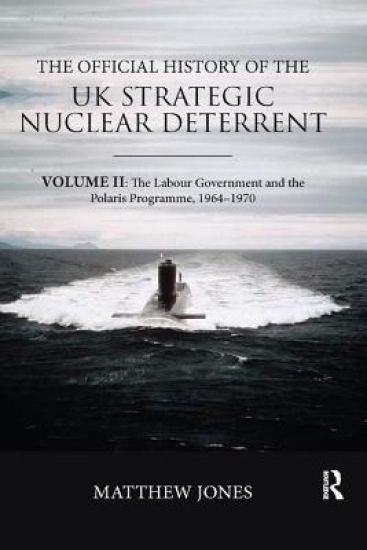
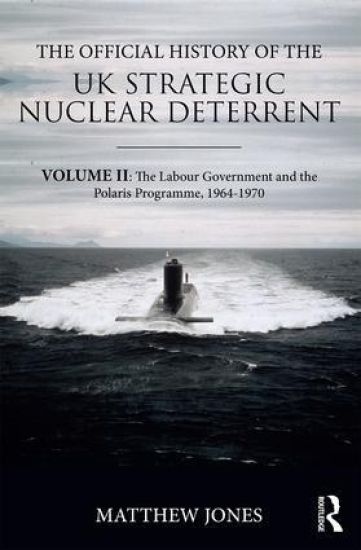
Volume II of The Official History of the UK Strategic Nuclear Deterrent provides an authoritative and in-depth examination of the British government’s strategic nuclear policy from 1964 to 1970. Written with full access to the UK documentary record, Volume II examines the controversies that developed over nuclear policy following the arrival in office of a Labour government led by Harold Wilson in October 1964 that openly questioned the independence of the deterrent. Having decided to preserve the Polaris programme, Labour ministers were nevertheless committed not to develop another generation of nuclear weapons beyond those in the pipeline, placing major doubts over the long-term future of the nuclear programme and collaboration with the United States. Defence planners also became increasingly concerned that the deployment of Soviet anti-ballistic missile (ABM) defences around Moscow threatened to undermine the ability of Polaris to fulfil its role as a national strategic nuclear deterrent. During 1967, under heavy pressures to control defence spending, a protracted debate was conducted within Whitehall over the future of Polaris and how to respond to the evolving ABM challenge. The volume concludes with Labour’s defeat at the general election of June 1970, by which time the Royal Navy had assumed the nuclear deterrent role from the RAF, and plans had already been formulated for a UK project to improve Polaris which could both ensure its continuing credibility and rejuvenate the Anglo-American nuclear relationship. This book will be of much interest to students of British politics, Cold War history, nuclear proliferation and international relations.
Science Fiction Cinema and 1950s Britain

Science Fiction Cinema and 1950s Britain

Matthew Jones

Bloomsbury Academic USA
2017
sidottu
This book is open access and available on www.bloomsburycollections.com. It is funded by Knowledge Unlatched. For the last sixty years discussion of 1950s science fiction cinema has been dominated by claims that the genre reflected US paranoia about Soviet brainwashing and the nuclear bomb. However, classic films, such as Invasion of the Body Snatchers (1956) and It Came from Outer Space (1953), and less familiar productions, such as It! The Terror from Beyond Space (1958), were regularly exported to countries across the world. The histories of their encounters with foreign audiences have not yet been told. Science Fiction Cinema and 1950s Britain begins this task by recounting the story of 1950s British cinema-goers and the aliens and monsters they watched on the silver screen. Drawing on extensive archival research, Matthew Jones makes an exciting and important intervention by locating American science fiction films alongside their domestic counterparts in their British contexts of release and reception. He offers a radical reassessment of the genre, demonstrating for the first time that in Britain, which was a significant market for and producer of science fiction, these films gave voice to different fears than they did in America. While Americans experienced an economic boom, low immigration and the conferring of statehood on Alaska and Hawaii, Britons worried about economic uncertainty, mass immigration and the dissolution of the Empire. Science Fiction Cinema and 1950s Britain uses these and other differences between the British and American experiences of the 1950s to tell a new history of the decade’s science fiction cinema, exploring for the first time the ways in which the genre came to mean something unique to Britons.
Baking School

Baking School

Justin Gellatly; Louise Gellatly; Matthew Jones

Fig Tree
2017
sidottu

Halvin toimitettuna 30,60 €

The perfect gift for the baker in your life! From sourdough bread and pizza recipes to croissants and doughnuts, 'tis the season for baking. Best known for Justin's world-famous doughnuts, the Bread Ahead Bakery in Borough Market is also home to their Bakery School, where thousands have learned to make sourdough, croissants, Swedish ryebread, pizza and much more. Now, using this book, you can too, from the comfort of your own home. Divided by country, including English, French, Italian and Nordic, there are chapters on sourdough, gluten-free baking, flatbreads and - of course - doughnuts. Learn everything you need to know to make Justin's famed 'pillows of joy', from the classic vanilla custard to salted honeycomb. Fun, practical and designed to take you from beginner to artisan, Baking School will fill your heart and home with the glorious smell of homemade bread.____________________________PRAISE FOR BREAD, CAKE, DOUGHNUT, PUDDING:'When you need a wise, witty presence when your loaf has gone over to the Dark Side, Gellatly is your Yoda' Guardian'This book is as good for slavering over as it is to cook from' Nigella Lawson'Best of the batch . . . Gellatly's sourdough is without peer in London' Independent
Natural Catastrophe Risk Management and Modelling

Natural Catastrophe Risk Management and Modelling

Kirsten Mitchell-Wallace; Matthew Jones; John Hillier; Matthew Foote

John Wiley Sons Inc
2017
sidottu
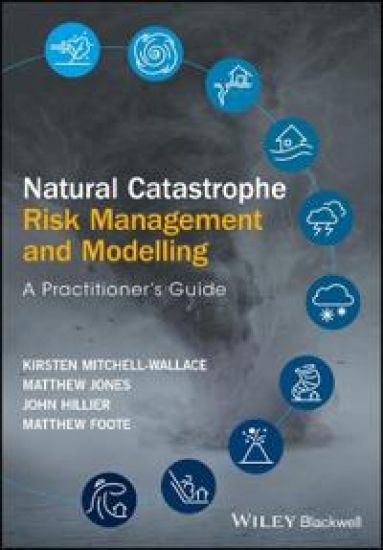
This book covers both the practical and theoretical aspects of catastrophe modelling for insurance industry practitioners and public policymakers. Written by authors with both academic and industry experience it also functions as an excellent graduate-level text and overview of the field. Ours is a time of unprecedented levels of risk from both natural and anthropogenic sources. Fortunately, it is also an era of relatively inexpensive technologies for use in assessing those risks. The demand from both commercial and public interests—including (re)insurers, NGOs, global disaster management agencies, and local authorities—for sophisticated catastrophe risk assessment tools has never been greater, and contemporary catastrophe modelling satisfies that demand. Combining the latest research with detailed coverage of state-of-the-art catastrophe modelling techniques and technologies, this book delivers the knowledge needed to use, interpret, and build catastrophe models, and provides greater insight into catastrophe modelling’s enormous potential and possible limitations. The first book containing the detailed, practical knowledge needed to support practitioners as effective catastrophe risk modellers and managersIncludes hazard, vulnerability and financial material to provide the only independent, comprehensive overview of the subject, accessible to students and practitioners alikeDemonstrates the relevance of catastrophe models within a practical, decision-making framework and illustrates their many applicationsIncludes contributions from many of the top names in the field, globally, from industry, academia, and government Natural Catastrophe Risk Management and Modelling: A Practitioner’s Guide is an important working resource for catastrophe modelling analysts and developers, actuaries, underwriters, and those working in compliance or regulatory functions related to catastrophe risk. It is also valuable for scientists and engineers seeking to gain greater insight into catastrophe risk management and its applications.
The Official History of the UK Strategic Nuclear Deterrent
Volume II of The Official History of the UK Strategic Nuclear Deterrent provides an authoritative and in-depth examination of the British government’s strategic nuclear policy from 1964 to 1970. Written with full access to the UK documentary record, Volume II examines the controversies that developed over nuclear policy following the arrival in office of a Labour government led by Harold Wilson in October 1964 that openly questioned the independence of the deterrent. Having decided to preserve the Polaris programme, Labour ministers were nevertheless committed not to develop another generation of nuclear weapons beyond those in the pipeline, placing major doubts over the long-term future of the nuclear programme and collaboration with the United States. Defence planners also became increasingly concerned that the deployment of Soviet anti-ballistic missile (ABM) defences around Moscow threatened to undermine the ability of Polaris to fulfil its role as a national strategic nuclear deterrent. During 1967, under heavy pressures to control defence spending, a protracted debate was conducted within Whitehall over the future of Polaris and how to respond to the evolving ABM challenge. The volume concludes with Labour’s defeat at the general election of June 1970, by which time the Royal Navy had assumed the nuclear deterrent role from the RAF, and plans had already been formulated for a UK project to improve Polaris which could both ensure its continuing credibility and rejuvenate the Anglo-American nuclear relationship. This book will be of much interest to students of British politics, Cold War history, nuclear proliferation and international relations.
The Official History of the UK Strategic Nuclear Deterrent
Volume I of The Official History of the UK Strategic Nuclear Deterrent provides an authoritative and in-depth examination of the British government’s strategic nuclear policy from 1945 to 1964. Written with full access to the UK documentary record, this volume examines how British governments after 1945 tried to build and then maintain an independent, nationally controlled strategic nuclear capability, and the debates this provoked in official circles. Against a background of evolving British ideas about deterrence during the Cold War, it focuses on the strategic, political and diplomatic considerations that compelled governments, in the face of ever-increasing pressures on the defence budget, to persist in their efforts to develop nuclear weapons and to deploy a credible nuclear force, as the age of the manned bomber gave way to the ballistic missile. Particular attention is given to controversies over the portion of the defence budget devoted to the deterrent programme, the effects of the restoration of Anglo-American nuclear collaboration after 1958, increasing reliance on the United States for nuclear delivery systems, the negotiations that led to the Nassau Agreement of 1962 and the supply of Polaris, and discussions within the Western Alliance over the control of nuclear forces. By the time of the October 1964 election, when this volume concludes, previous dismissal of the prospects for successful ballistic missile defence were giving way to growing doubts over the long-term effectiveness of the Polaris system in its role as an independent deterrent, several years before it was due to enter service with the Royal Navy. This book will be of much interest to students of British politics, Cold War history, nuclear proliferation and international relations.