Kirjojen hintavertailu – 12 859 818 kirjaa ja 27 kauppaa

Kirjailija

Matthew Kerbel

Kirjat ja teokset yhdessä paikassa: 5 kirjaa, julkaisuja vuosilta 2001–2017, suosituimpiin kuuluu Next Generation Netroots. Vertaile teosten hintoja ja tarkista saatavuus suomalaisista kirjakaupoista.

5 kirjaa

Kirjojen julkaisuvuodet: 2001–2017.

Party On!

Party On!

John White; Matthew Kerbel

Routledge
2017
sidottu
Alexander Hamilton and Thomas Jefferson laid the foundations for today's political debates between Democrats and Republicans. Hamilton believed that freedom must be married with a strong central government and especially an energetic president, while Jefferson believed freedom derived from local civic virtues. Throughout history, Democrats and Republicans have chosen sides in this eternal debate—and sometimes even changed sides. Today, those debates have become sharper and more polarized, as the two parties square off on major issues such as healthcare, taxes, regulation, the role of the federal government, and what discretion should be given to local authorities. The debate can be loud and shrill, even as the public yearns for some accommodation between these two schools of thought. People may generally desire an active government to deal with acute problems, but localism still has widespread appeal, and political dysfunction often results when these outcomes are presented as polar opposites and elections are reduced to zero sum contests. Social media adds to the polarization, as Americans gravitate to websites that often ratify their preexisting points of view. The parties struggle to function in this environment as they try to adapt to the political realities of the social media age and the Trump era.

Party On!

Party On!

John White; Matthew Kerbel

Routledge
2017
nidottu
Alexander Hamilton and Thomas Jefferson laid the foundations for today's political debates between Democrats and Republicans. Hamilton believed that freedom must be married with a strong central government and especially an energetic president, while Jefferson believed freedom derived from local civic virtues. Throughout history, Democrats and Republicans have chosen sides in this eternal debate—and sometimes even changed sides. Today, those debates have become sharper and more polarized, as the two parties square off on major issues such as healthcare, taxes, regulation, the role of the federal government, and what discretion should be given to local authorities. The debate can be loud and shrill, even as the public yearns for some accommodation between these two schools of thought. People may generally desire an active government to deal with acute problems, but localism still has widespread appeal, and political dysfunction often results when these outcomes are presented as polar opposites and elections are reduced to zero sum contests. Social media adds to the polarization, as Americans gravitate to websites that often ratify their preexisting points of view. The parties struggle to function in this environment as they try to adapt to the political realities of the social media age and the Trump era.
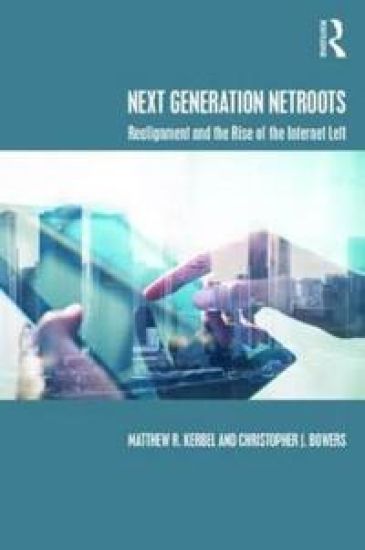
Next Generation Netroots

Next Generation Netroots

Matthew Kerbel; Christopher J. Bowers

Routledge
2016
sidottu
From the early demise of Trent Lott at the hands of bloggers to the agonized scream of Howard Dean; from Daily Kos and the blogosphere to the rise of Twitter and Facebook, politics and new media have co-existed and evolved in rapid succession. Here, an academic and practitioner team up to consider how new and old media technologies mix with combustible politics to determine, in real time, the shape of the emerging political order. Our political moment shares with other realigning periods the sense that political parties are failing to address the public interest. In an era defined by the collapse of the political center, extreme income inequality, rapidly changing demography, and new methods of communicating and organizing, a second-generation online progressive movement fueled by email and social media is coming into its own. In this highly readable text, the authors – one a scholar of Internet politics, the other a leading voice of the first generation netroots – draw on unique data and on-the-ground experience to answer key questions at the core of our tumultuous politics: How has Internet activism changed in form and function? How have the left and right changed with it? How does this affect American political power?
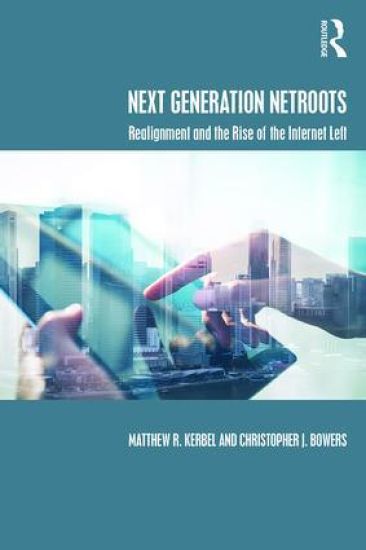
Next Generation Netroots

Next Generation Netroots

Matthew Kerbel; Christopher J. Bowers

Routledge
2016
nidottu
From the early demise of Trent Lott at the hands of bloggers to the agonized scream of Howard Dean; from Daily Kos and the blogosphere to the rise of Twitter and Facebook, politics and new media have co-existed and evolved in rapid succession. Here, an academic and practitioner team up to consider how new and old media technologies mix with combustible politics to determine, in real time, the shape of the emerging political order. Our political moment shares with other realigning periods the sense that political parties are failing to address the public interest. In an era defined by the collapse of the political center, extreme income inequality, rapidly changing demography, and new methods of communicating and organizing, a second-generation online progressive movement fueled by email and social media is coming into its own. In this highly readable text, the authors – one a scholar of Internet politics, the other a leading voice of the first generation netroots – draw on unique data and on-the-ground experience to answer key questions at the core of our tumultuous politics: How has Internet activism changed in form and function? How have the left and right changed with it? How does this affect American political power?
If It Bleeds, It Leads

If It Bleeds, It Leads

Matthew Kerbel

Westview Press Inc
2001
pokkari
You've been watching television news forever. You're intimately familiar with the friendly faces and soothing voices that nightly tell you what's wrong with the world. You think you know everything there is to know about them. You're wrong. If It Bleeds, It Leads takes us minute-by-minute through two-and-one-half real hours of syndicated, local, and network information programming to uncover the truth behind what passes as news. Why is the only real difference between Jerry Springer and Dan Rather that Dan's guests usually don't need medical attention? How did a load of baking powder spark two minutes of high-strung local news coverage? It's all here: the personal revelations of talk show guests the dangers lurking in your neighbourhood sports sex celebrity power and weather updates every ten minutes- all real material taken from real broadcasts designed to keep viewers glued to the screen.