Kirjojen hintavertailu – 12 903 735 kirjaa ja 27 kauppaa

Kirjailija

Matthew Lynch

Kirjat ja teokset yhdessä paikassa: 9 kirjaa, julkaisuja vuosilta 2011–2022, suosituimpiin kuuluu It's Time for a Change. Vertaile teosten hintoja ja tarkista saatavuus suomalaisista kirjakaupoista.

9 kirjaa

Kirjojen julkaisuvuodet: 2011–2022.

The Discipleship Course

The Discipleship Course

Lucy Peppiatt; Matthew Lynch

Westminster Theological Centre (parent co.)
2022
pokkari
The Discipleship Course booklet is designed for those who have made a commitment to Jesus Christ and are now Christians. It is an introduction to the Christian faith, and was written to give new Christians an understanding of their new identity, their history, their scriptures, and their future.
Shooting

Shooting

Matthew Lynch

Independently Published
2018
pokkari
Anyone can shoot, few can shoot well, and fewer still can shoot well while wearing a derby, a monocle, and a huge mustache. This little work was aimed at the popularization of shooting as a sport in France at the turn of the century, as the various authors were concerned that French troops lacked the time and ammunition to become expert marksmen through army training alone. There are interesting sections concerning the shady art of 'firing on command' with a particular kind of muzzle-loading percussion pistol that likely followed a slap across the face with a glove, and here the author gives you the lowdown on how to avoid pulling an Alexander Hamilton when faced with an Aaron Burr. There is also a good deal regarding the ins and outs of shooting clay pigeons, a high-tech pastime in 1905.
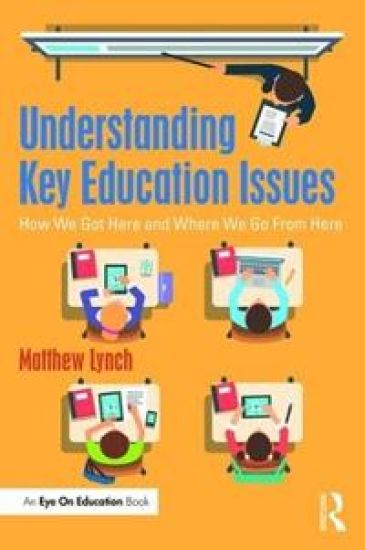
Understanding Key Education Issues

Understanding Key Education Issues

Matthew Lynch

Routledge
2017
nidottu
In this age of education innovation and reform, schools must evolve and react to current policy trends. This accessible book offers research-based insights into six key educational trends and issues that are impacting K–12 learning today: year-round schooling, assessments, educating minorities, anti-intellectualism, issues of social promotion and retention, and school design. Each chapter unpacks research and policy issues relating to these topics and provides administrators with practical advice on how they should approach these issues to improve learning in their schools. The ideas and strategies in Understanding Key Education Issues will help educators across the country achieve greater efficiency, better results, and a higher purpose.
Understanding Key Education Issues

Understanding Key Education Issues

Matthew Lynch

Routledge
2017
sidottu
In this age of education innovation and reform, schools must evolve and react to current policy trends. This accessible book offers research-based insights into six key educational trends and issues that are impacting K–12 learning today: year-round schooling, assessments, educating minorities, anti-intellectualism, issues of social promotion and retention, and school design. Each chapter unpacks research and policy issues relating to these topics and provides administrators with practical advice on how they should approach these issues to improve learning in their schools. The ideas and strategies in Understanding Key Education Issues will help educators across the country achieve greater efficiency, better results, and a higher purpose.
Monotheism and Institutions in the Book of Chronicles
Matthew Lynch examines ways that the one God became known and experienced through institutions according to the book of Chronicles. Chronicles recasts Israel's earlier histories from the vantage point of vigorous commitments to the temple and its supporting institutions (the priesthood and royal house), and draws out the numerous ways that those institutions mediate divine power and inspire national unity. By understanding and participating in the reestablishment of these institutions, Chronicles suggests that post-exilic Judeans could reconnect to the powerful God of the past despite the appallingly impoverished state of post-exilic life. However, Chronicles contends that God was not beholden by those participating in the temple system. As such, it constitutes a via media between two regnant perspectives on the relationship between biblical monotheism and particularism, one which sees in monotheism an inherent move beyond particularism, and another which sees a problematic appeal to monotheism to legitimate powerful institutions. While Chronicles gives expression to the profound resonances between institutional and divine greatness, it is also careful to resist linking divine power and institutional power in absolute terms.
A Guide to Effective School Leadership Theories
Educational administrators know that leadership requires hundreds of judgments each day that require a sensitivity and understanding of various leadership strategies. Bridging the gap between the academic and practical world, A Guide to Effective School Leadership Theories provides an exploration of ten dominant leadership strategies to give school leaders a solid basis in theory and practical application. Demonstrating the advantages and drawbacks of each theory, readers are encouraged to discover the most appropriate strategy, or combination of strategies, that will best enable their school to achieve positive results. Each Chapter Includes:Introductory vignettes grounding the leadership theory in practice Discussion of the history, development, and utility of the strategy Research findings for further exploration of the theory End-of-chapter questions and activities designed to connect theory to practiceThis book is essential reading for aspiring and practicing school leaders who wish to have a better understanding of their leadership role. Providing a focused, up-to-date introduction to the current themes and dimensions of educational leadership, A Guide to Effective School Leadership Theories presents all the tools necessary to analyze and implement effective leadership in readers’ own settings.
A Guide to Effective School Leadership Theories
Educational administrators know that leadership requires hundreds of judgments each day that require a sensitivity and understanding of various leadership strategies. Bridging the gap between the academic and practical world, A Guide to Effective School Leadership Theories provides an exploration of ten dominant leadership strategies to give school leaders a solid basis in theory and practical application. Demonstrating the advantages and drawbacks of each theory, readers are encouraged to discover the most appropriate strategy, or combination of strategies, that will best enable their school to achieve positive results. Each Chapter Includes: Introductory vignettes grounding the leadership theory in practice Discussion of the history, development, and utility of the strategy Research findings for further exploration of the theory End-of-chapter questions and activities designed to connect theory to practice This book is essential reading for aspiring and practicing school leaders who wish to have a better understanding of their leadership role. Providing a focused, up-to-date introduction to the current themes and dimensions of educational leadership, A Guide to Effective School Leadership Theories presents all the tools necessary to analyze and implement effective leadership in readers' own settings.
It's Time for a Change

It's Time for a Change

Matthew Lynch

Rowman Littlefield Education
2011
nidottu
The United States entered the 21st century as the world’s sole superpower. Our diplomatic strength, military might, financial resources, and technological innovation were, and continue to be, the envy of the world. However, in the crucial area of education, the U. S. lags behind many other developed countries. Though the U. S. spends more per student than almost any other country, international exams have demonstrated that we consistently perform well behind countries such as South Korea, China, Japan, and Finland in the areas of reading and math. There are even more worrying elements at play, however. Paramount among these is the fact that the U. S. educational system is becoming ever more stratified. Despite efforts such as the George W. Bush administration’s No Child Left Behind Act (NCLB), the disparity in academic achievement between students from high and low socioeconomic classes continues to grow. The ramifications of this trend are vast. China, Japan, and South Korea understand that well-educated workers are crucial for survival in the competitive global economy. Thus, they are placing enormous emphasis on education, ensuring that their students receive instruction not only foundational reading and math, but are also taught to think creatively and solve problems. Their youth are poised to take on and conquer the world. The U. S., on the other hand, is losing the battle. School systems are using more money but have less to show for it. Test results, especially among the lower socioeconomic classes, are dismal. America has extraordinary natural resources, a solid, functioning democracy, and excellent infrastructure, but unless we can reform our educational system to produce students who are able to take advantage of new technologies and compete in the global economy, we will cede our position as world leader. Its Time for Change: School Reform provides a no nonsense blueprint for reforming The U. S. educational system in a manner that will ensure that it secures its position as the preeminent word leader.

It's Time for a Change

It's Time for a Change

Matthew Lynch

Rowman Littlefield Education
2011
sidottu
The United States entered the 21st century as the world’s sole superpower. Our diplomatic strength, military might, financial resources, and technological innovation were, and continue to be, the envy of the world. However, in the crucial area of education, the U. S. lags behind many other developed countries. Though the U. S. spends more per student than almost any other country, international exams have demonstrated that we consistently perform well behind countries such as South Korea, China, Japan, and Finland in the areas of reading and math. There are even more worrying elements at play, however. Paramount among these is the fact that the U. S. educational system is becoming ever more stratified. Despite efforts such as the George W. Bush administration’s No Child Left Behind Act (NCLB), the disparity in academic achievement between students from high and low socioeconomic classes continues to grow. The ramifications of this trend are vast. China, Japan, and South Korea understand that well-educated workers are crucial for survival in the competitive global economy. Thus, they are placing enormous emphasis on education, ensuring that their students receive instruction not only foundational reading and math, but are also taught to think creatively and solve problems. Their youth are poised to take on and conquer the world. The U. S., on the other hand, is losing the battle. School systems are using more money but have less to show for it. Test results, especially among the lower socioeconomic classes, are dismal. America has extraordinary natural resources, a solid, functioning democracy, and excellent infrastructure, but unless we can reform our educational system to produce students who are able to take advantage of new technologies and compete in the global economy, we will cede our position as world leader. Its Time for Change: School Reform provides a no nonsense blueprint for reforming The U. S. educational system in a manner that will ensure that it secures its position as the preeminent word leader.