Kirjojen hintavertailu – 12 903 724 kirjaa ja 27 kauppaa

Kirjailija

Matthew Rubery

Kirjat ja teokset yhdessä paikassa: 5 kirjaa, julkaisuja vuosilta 2009–2025, suosituimpiin kuuluu The Novelty of Newspapers. Vertaile teosten hintoja ja tarkista saatavuus suomalaisista kirjakaupoista.

5 kirjaa

Kirjojen julkaisuvuodet: 2009–2025.

Undercover

Undercover

Stephen Donovan; Matthew Rubery

Cambridge University Press
2025
sidottu

Halvin toimitettuna 113,50 €

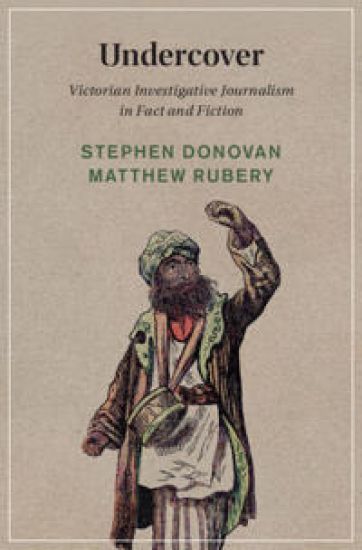
The scandalous 1866 publication of 'A Night in a Workhouse' altered the course of press history. Victorian journalist James Greenwood's disconcerting exposé of spending a night in a casual ward while disguised as a vagrant launched an enormously popular genre of newspaper writing that would come to be known as undercover reporting. Inspired by the exploits of the 'Amateur Casual', imitators infiltrated restricted areas by adopting disguises of their own as beggars, migrants, homeless people, mental patients, street performers, and single mothers. Undercover traces the seismic consequences that the radical innovation of 'going undercover' had for Victorian media, literature, and culture. This revisionist history of a distinctly British tradition of investigative journalism reconstitutes the pioneering investigations that shaped the global development of undercover reporting, analyses the format's vicarious appeal to audiences anxious about their own precarity, and traces the impact that incognito investigations had on the Victorian era's leading novelists.
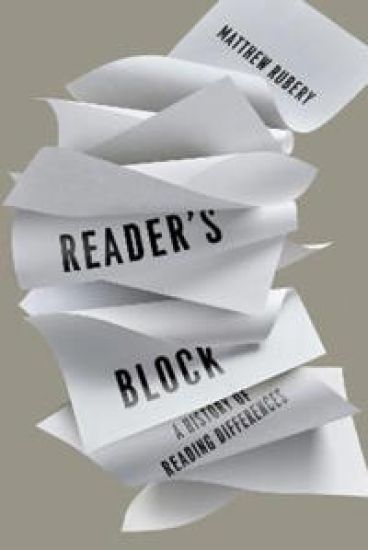
Reader's Block

Reader's Block

Matthew Rubery

STANFORD UNIVERSITY PRESS
2022
sidottu
What does the term "reading" mean? Matthew Rubery's exploration of the influence neurodivergence has on the ways individuals read asks us to consider that there may be no one definition. This alternative history of reading tells the stories of "atypical" readers and the impact had on their lives by neurological conditions affecting their ability to make sense of the printed word: from dyslexia, hyperlexia, and alexia to synesthesia, hallucinations, and dementia. Rubery's focus on neurodiversity aims to transform our understanding of the very concept of reading. Drawing on personal testimonies gathered from literature, film, life writing, social media, medical case studies, and other sources to express how cognitive differences have shaped people's experiences both on and off the page, Rubery contends that there is no single activity known as reading. Instead, there are multiple ways of reading (and, for that matter, not reading) despite the ease with which we use the term. Pushing us to rethink what it means to read, Reader's Block moves toward an understanding of reading as a spectrum that is capacious enough to accommodate the full range of activities documented in this fascinating and highly original book. Read it from cover to cover, out of sequence, or piecemeal. Read it upside down, sideways, or in a mirror. For just as there is no right way to read, there is no right way to read this book. What matters is that you are doing something with it—something that Rubery proposes should be called "reading."
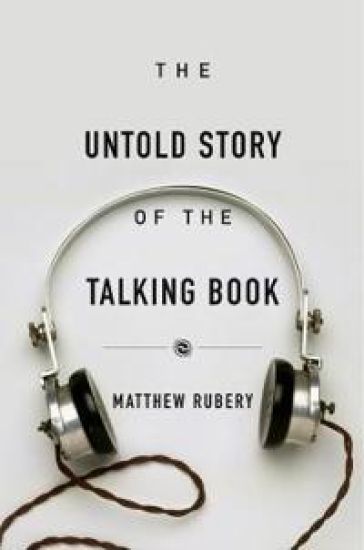
The Untold Story of the Talking Book

The Untold Story of the Talking Book

Matthew Rubery

Harvard University Press
2016
sidottu

Halvin toimitettuna 45,90 €

Histories of the book often move straight from the codex to the digital screen. Left out of that familiar account are nearly 150 years of audio recordings. Recounting the fascinating history of audio-recorded literature, Matthew Rubery traces the path of innovation from Edison’s recitation of “Mary Had a Little Lamb” for his tinfoil phonograph in 1877, to the first novel-length talking books made for blinded World War I veterans, to today’s billion-dollar audiobook industry. The Untold Story of the Talking Book focuses on the social impact of audiobooks, not just the technological history, in telling a story of surprising and impassioned conflicts: from controversies over which books the Library of Congress selected to become talking books—yes to Kipling, no to Flaubert—to debates about what defines a reader. Delving into the vexed relationship between spoken and printed texts, Rubery argues that storytelling can be just as engaging with the ears as with the eyes, and that audiobooks deserve to be taken seriously. They are not mere derivatives of printed books but their own form of entertainment. We have come a long way from the era of sound recorded on wax cylinders, when people imagined one day hearing entire novels on mini-phonographs tucked inside their hats. Rubery tells the untold story of this incredible evolution and, in doing so, breaks from convention by treating audiobooks as a distinctively modern art form that has profoundly influenced the way we read.
The Novelty of Newspapers

The Novelty of Newspapers

Matthew Rubery

Oxford University Press Inc
2014
nidottu
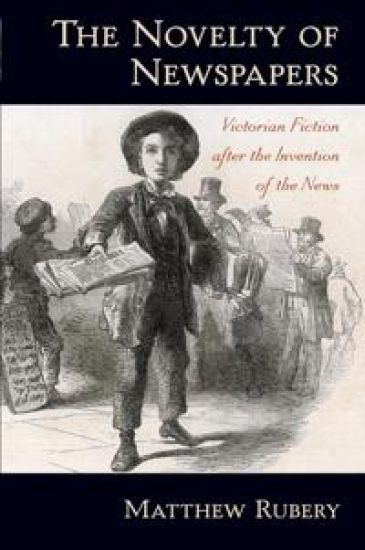
Arising in the 1800s and soon drawing a million readers a day, the commercial press profoundly influenced the work of Brontë, Braddon, Dickens, Conrad, James, Trollope, and others who mined print journalism for fictional techniques. Five of the most important of these narrative conventions-the shipping intelligence, personal advertisement, leading article, interview, and foreign correspondence-show how the Victorian novel is best understood alongside the simultaneous development of newspapers. In highly original analyses of Victorian fiction, this study also captures the surprising ways in which public media enabled the expression of private feeling among ordinary readers: from the trauma caused by a lover's reported suicide to the vicarious gratification felt during a celebrity interview; from the distress at finding one's behavior the subject of unflattering editorial commentary to the apprehension of distant cultures through the foreign correspondence. Combining a wealth of historical research with a series of astute close readings, The Novelty of Newspapers breaks down the assumed divide between the epoch's literature and journalism and demonstrates that newsprint was integral to the development of the novel.
The Novelty of Newspapers

The Novelty of Newspapers

Matthew Rubery

Oxford University Press Inc
2009
sidottu
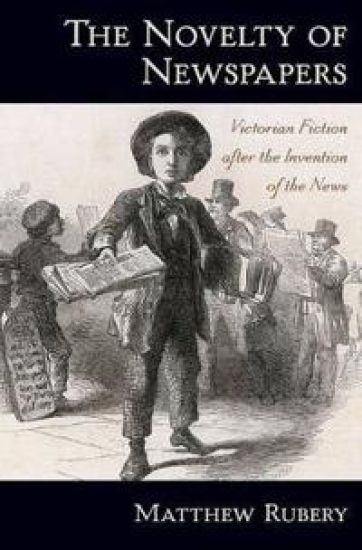
The Novelty of Newspapers explains why the Victorian novel is best understood alongside the simultaneous development of the news as a commercial commodity read by up to a million readers per day. This study focuses on five of the most important of these narrative conventions-the shipping intelligence, personal advertisement, leading article, interview, and foreign correspondence-in order to show how concretely journalism influenced the novel at this time. Drawing on examples of periodicals from the period, Matthew Rubery reveals how the commercial press arising in nineteenth-century Britain profoundly influenced Mary Braddon, Charlotte Brontë, Wilkie Collins, Charles Dickens, Joseph Conrad, Henry James, Anthony Trollope, and many other novelists who all used narrative conventions derived from the press in their fiction.