Kirjojen hintavertailu – 12 903 725 kirjaa ja 27 kauppaa

Kirjailija

Matthias Felleisen

Kirjat ja teokset yhdessä paikassa: 6 kirjaa, julkaisuja vuosilta 1995–2018, suosituimpiin kuuluu The Seasoned Schemer. Vertaile teosten hintoja ja tarkista saatavuus suomalaisista kirjakaupoista.

6 kirjaa

Kirjojen julkaisuvuodet: 1995–2018.

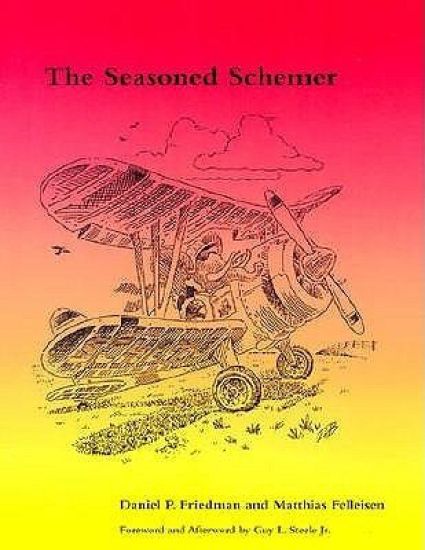
The Seasoned Schemer

The Seasoned Schemer

Daniel P. Friedman; Matthias Felleisen; Guy Lewis Steele Jr.

MIT Press
1995
pokkari
The notion that "thinking about computing is one of the most exciting things the human mind can do" sets both The Little Schemer (formerly known as The Little LISPer) and its new companion volume, The Seasoned Schemer, apart from other books on LISP. The authors' enthusiasm for their subject is compelling as they present abstract concepts in a humorous and easy-to-grasp fashion. Together, these books will open new doors of thought to anyone who wants to find out what computing is really about. The Little Schemer introduces computing as an extension of arithmetic and algebra; things that everyone studies in grade school and high school. It introduces programs as recursive functions and briefly discusses the limits of what computers can do. The authors use the programming language Scheme, and interesting foods to illustrate these abstract ideas. The Seasoned Schemer informs the reader about additional dimensions of computing: functions as values, change of state, and exceptional cases. The Little LISPer has been a popular introduction to LISP for many years. It had appeared in French and Japanese. The Little Schemer and The Seasoned Schemer are worthy successors and will prove equally popular as textbooks for Scheme courses as well as companion texts for any complete introductory course in Computer Science.
How to Design Programs

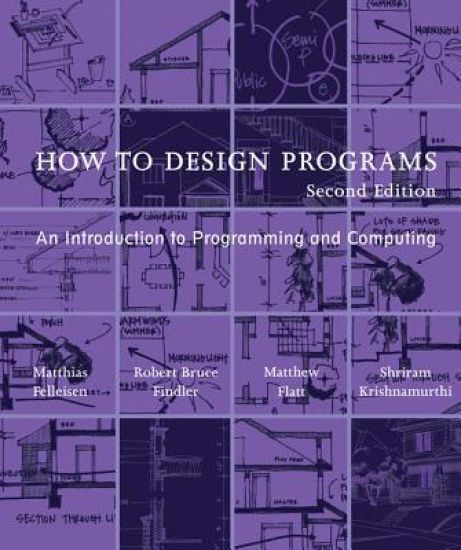
How to Design Programs

Matthias Felleisen; Robert Bruce Findler; Matthew Flatt; Shriram Krishnamurthi

MIT Press
2018
pokkari
A completely revised edition, offering new design recipes for interactive programs and support for images as plain values, testing, event-driven programming, and even distributed programming. This introduction to programming places computer science at the core of a liberal arts education. Unlike other introductory books, it focuses on the program design process, presenting program design guidelines that show the reader how to analyze a problem statement, how to formulate concise goals, how to make up examples, how to develop an outline of the solution, how to finish the program, and how to test it. Because learning to design programs is about the study of principles and the acquisition of transferable skills, the text does not use an off-the-shelf industrial language but presents a tailor-made teaching language. For the same reason, it offers DrRacket, a programming environment for novices that supports playful, feedback-oriented learning. The environment grows with readers as they master the material in the book until it supports a full-fledged language for the whole spectrum of programming tasks. This second edition has been completely revised. While the book continues to teach a systematic approach to program design, the second edition introduces different design recipes for interactive programs with graphical interfaces and batch programs. It also enriches its design recipes for functions with numerous new hints. Finally, the teaching languages and their IDE now come with support for images as plain values, testing, event-driven programming, and even distributed programming.
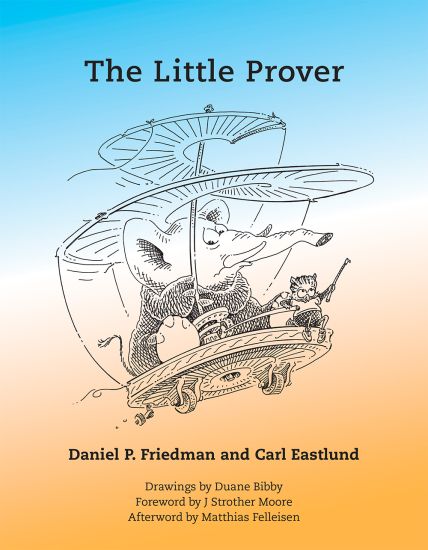
The Little Prover

The Little Prover

Daniel P. Friedman; Carl Eastlund; J Strother Moore; Matthias Felleisen

MIT Press
2015
pokkari
An introduction to writing proofs about computer programs, written in an accessible question-and-answer style, complete with step-by-step examples and a simple proof assistant. The Little Prover introduces inductive proofs as a way to determine facts about computer programs. It is written in an approachable, engaging style of question-and-answer, with the characteristic humor of The Little Schemer (fourth edition, MIT Press). Sometimes the best way to learn something is to sit down and do it; the book takes readers through step-by-step examples showing how to write inductive proofs. The Little Prover assumes only knowledge of recursive programs and lists (as presented in the first three chapters of The Little Schemer) and uses only a few terms beyond what novice programmers already know. The book comes with a simple proof assistant to help readers work through the book and complete solutions to every example.
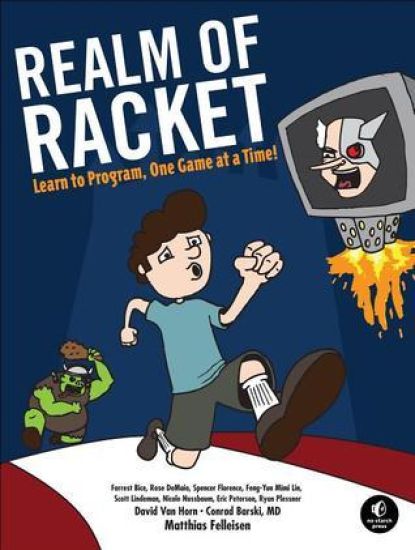
Realm Of Racket

Realm Of Racket

Matthias Felleisen

No Starch Press,US
2013
nidottu
Racket is a descendant of Lisp, a programming language renowned for its elegance, power, and challenging learning curve. But while Racket retains the functional goodness of Lisp, it was designed with beginning programmers in mind. Realm of Racket is your introduction to the Racket language. In Realm of Racket, you'll learn to program by creating increasingly complex games. Your journey begins with the Guess My Number game and coverage of some basic Racket etiquette. Next you'll dig into syntax and semantics, lists, structures, and conditionals, and learn to work with recursion and the GUI as you build the Robot Snake game. After that it's on to lambda and mutant structs (and an Orc Battle), and fancy loops and the Dice of Doom. Finally, you'll explore laziness, AI, distributed games, and the Hungry Henry game. As you progress through the games, chapter checkpoints and challenges help reinforce what you've learned. Offbeat comics keep things fun along the way. As you travel through the Racket realm, you'll: * Master the quirks of Racket's syntax and semantics * Learn to write concise and elegant functional programs * Create a graphical user interface using the 2htdp/image library * Create a server to handle true multiplayer games Realm of Racket is a lighthearted guide to some serious programming. Read it to see why Racketeers have so much fun!
Semantics Engineering with PLT Redex

Semantics Engineering with PLT Redex

Matthias Felleisen; Robert Bruce Findler; Matthew Flatt

MIT Press
2009
sidottu
The first comprehensive presentation of reduction semantics in one volume, and the first tool set for such forms of semantics. This text is the first comprehensive presentation of reduction semantics in one volume; it also introduces the first reliable and easy-to-use tool set for such forms of semantics. Software engineers have long known that automatic tool support is critical for rapid prototyping and modeling, and this book is addressed to the working semantics engineer (graduate student or professional language designer). The book comes with a prototyping tool suite to develop, explore, test, debug, and publish semantic models of programming languages. With PLT Redex, semanticists can formulate models as grammars and reduction models on their computers with the ease of paper and pencil. The text first presents a framework for the formulation of language models, focusing on equational calculi and abstract machines, then introduces PLT Redex, a suite of software tools for expressing these models as PLT Redex models. Finally, experts describe a range of models formulated in Redex. PLT Redex comes with the PLT Scheme implementation, available free at http://www.plt-scheme.org/. Readers can download the software and experiment with Redex as they work their way through the book.
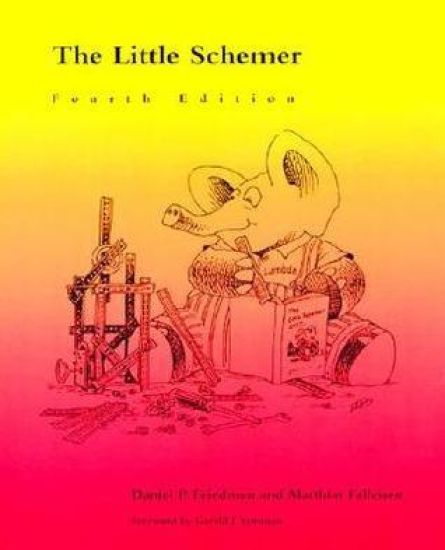
The Little Schemer

The Little Schemer

Daniel P. Friedman; Matthias Felleisen

MIT Press
1995
pokkari

Halvin toimitettuna 45,60 €

The notion that "thinking about computing is one of the most exciting things the human mind can do" sets both The Little Schemer (formerly known as The Little LISPer) and its new companion volume, The Seasoned Schemer, apart from other books on LISP. The authors' enthusiasm for their subject is compelling as they present abstract concepts in a humorous and easy-to-grasp fashion. Together, these books will open new doors of thought to anyone who wants to find out what computing is really about. The Little Schemer introduces computing as an extension of arithmetic and algebra; things that everyone studies in grade school and high school. It introduces programs as recursive functions and briefly discusses the limits of what computers can do. The authors use the programming language Scheme, and interesting foods to illustrate these abstract ideas. The Seasoned Schemer informs the reader about additional dimensions of computing: functions as values, change of state, and exceptional cases. The Little LISPer has been a popular introduction to LISP for many years. It had appeared in French and Japanese. The Little Schemer and The Seasoned Schemer are worthy successors and will prove equally popular as textbooks for Scheme courses as well as companion texts for any complete introductory course in Computer Science.