Kirjojen hintavertailu – 12 903 735 kirjaa ja 27 kauppaa
Kirjailija
Matti Leppäranta
Kirjat ja teokset yhdessä paikassa: 11 kirjaa, julkaisuja vuosilta 2009–2026, suosituimpiin kuuluu Vesi vanhin voitehista. Vertaile teosten hintoja ja tarkista saatavuus suomalaisista kirjakaupoista.
Suomi on tuhansien järvien maa ja vesistöt ovat osa suomalaista sielunmaisemaa. Vesiin liittyvä perimätieto, sukupolvelta toiselle siirtyneet laulut, tarinat, uskomukset ja sanonnat ovat keskeinen osa Suomen kansallista kulttuuriperintöä. Kansanomaiset käsitykset luonnosta pohjautuvat osin käytännön kokemukseen. Sananparret ovat usein satoja vuosia vanhoja ja kulkeneet perimätietona sukupolvelta toiselle. Sananparsien selittäminen, ymmärtäminen ja uusi tulkitseminen tuovat perimätietoa eläväksi osaksi arkea ja lähentävät kansalaisia Suomen vesistöjen kulttuuriperinnön, luonnontieteiden ja vesiensuojelun maailmaan. Luonto ja sen alati vaihtuvat olosuhteet ja ilmiöt ovat aina kiinnostaneet ihmisiä. Vuosikierrolla ja siihen kuuluvilla sään ja ilmaston ilmiöillä on ollut suuri merkitys ihmisten elämään erityisesti aikana, jolloin ihmiset saivat elantonsa suoraan luonnosta tai maanviljelystä. Vuodenaika, ilmasto ja sää määrittelivät toukotöiden, sadonkorjuun, metsästyksen, kalastuksen sekä vesillä tai jäällä liikkumisen oikeat ajankohdat. Vuodenajat ja niihin laaditut ohjeet, askareet ja ennusteet ovat vahvasti esillä kansanperinteessä. Kirjan tekstit ja sananparret seuraavat vuodenaikojen vaihteluja ja veden yhteyttä niihin. Vesi vanhin voitehista liittyy ajankohtaiseen keskusteluun luontokadosta ja ilmastonmuutoksesta, jotka vaikuttavat Suomen vesien ja vesiluonnon tilaan jo nyt. Taiteella ja musiikilla on kautta aikojen ollut tärkeä merkitys ihmisen luontosuhteen herättäjinä. Kirja auttaa lukijaa kiinnittymään historian jatkumoon sekä herättelee pohtimaan omaa yhteyttään sekä suhdettaan vesiin, ympäristöön ja siihen, minkälaisen maailman haluaa jättää tuleville sukupolville. Vesi vanhin voitehista -kirja on syntynyt Suomen vesistösäätiön koordinoiman ja Koneen säätiön rahoittaman Vesi vanhin voitehista - mitä ihmettä? -hankkeen tuloksena. Teos yhdistää vesiin liittyvää kansanperinnettä, luonnontieteitä ja perimätiedon inspiroimaa uutta sanoitusta ja kuvitusta. Luonnontieteiden emeritusprofessorit Timo Huttula, Lauri Arvola ja Matti Leppäranta ovat koonneet vesien perimätietoa kulttuurintutkija, dosentti Tiina Sepän avustuksella. Hankkeen kuvataiteilija Sebastian Lindberg ja artistit Yeboyah, Hassan Maikal ja Yrjänä ovat hankkeessa tutustuneet vesiin, vesiensuojeluun ja vesien perimätietoon ja ammentaneet niistä inspiraatiota teoksiinsa. Suomen vesistösäätiön ja kirjan kustantaneen John Nurmisen Säätiön yhteinen päämäärä on suojella ja parantaa Suomen vesiluonnon, sisävesien ja Itämeren tilaa, ja turvata rikkaan vesiluonnon säilyminen myös tulevaisuudessa.
Suomen järvet ja virtavedet ovat aina olleet osa elämäämme - joskus selviytymisen edellytys, nykyisin usein virkistäytymisen ja harrastusten lähde. Tämä teos tarkastelee vesistöjä tutkijoiden näkökulmista ja kertoo lyhyiden, helposti lähestyttävien tarinoiden avulla veden kiehtovista ilmiöistä ja poikkeuksellisista tapahtumista. Kirja perustuu tekijöidensä pitkään tutkimus- ja kenttäkokemukseen sekä Suomessa että ympäri maailmaa - Etelämannerta, Afrikkaa ja Aasiaa myöten. Se jatkaa vuonna 2021 ilmestyneen Suomalaisen järvikirjan perintöä tarjoten uutta tietoa ja näkökulmia vesistöihin. Teoksen kirjoittajat ovat kolme kokenutta vesistötutkijaa: - Lauri Arvola, professori emeritus, akvaattinen ekologia (Helsingin yliopisto) - Timo Huttula, professori emeritus, hydrologia (Suomen ympäristökeskus) - Matti Leppäranta, professori emeritus, geofysiikka (Helsingin yliopisto) Teos sopii kaikille, jotka ovat kiinnostuneita luonnosta, vesien suojelusta ja siitä, miten vesi kytkeytyy kulttuuriimme, elinkeinoihimme ja hyvinvointiimme. Samalla se toimii muistutuksena siitä, että puhdas vesi on yhä elinehto - ja sen säilyttäminen tuleville sukupolville meidän yhteinen tehtävämme.
The Baltic Sea oceanographic research community is wide and the research history is over 100 years old. Nevertheless, there is still no single, coherent book on the physical oceanography of the Baltic Sea as a whole. There is a strong need for such a book, coming from working oceanographers as well as the university teaching programmes in advanced undergraduate to graduate levels. In the regional conference series in physical oceanography (Baltic Sea Science Conference, Baltic Sea Oceanographers' conference, Baltex-conferences) about 500 scientists take part regularly. Even more scientists work in the fields of marine biology, chemistry and the environment, and they need information on the physics of the Baltic Sea as well. There are nine countries bordering on the Baltic Sea and five more in the runoff area. The Baltic Sea as a source of fish, means of transportation and leisure activities is highly important to the regional society. In the runoff area there are a total of 85 million people. Research and protection strategies need to be developed, as the Baltic Sea is probably the most polluted sea in the world. Since the Baltic Sea has become an inner sea of the EU (apart from small shore parts of Russia in Petersburg and Kaliningrad), it is anticipated that the importance of the region will consequently rise. The book will arouse interest among students, scientists and decision makers involved with the Baltic problems. It will also give important background information for those working with biogeochemical processes in the Baltic Sea, because the physical forcing for those processes is of vital importance.
This textbook offers a comprehensive introduction to the geophysics of the cryosphere—Earth’s sphere of snow and ice—intended for advanced undergraduate students in geophysics, geography, geology, and environmental sciences. Unlike broader climate-focused or geographically descriptive volumes, this book provides a structured, physical understanding of snow and ice processes in high-latitude and high-altitude environments. Chapters cover the physical properties of snow and ice, the evolution of seasonal snow cover, the flow and mass balance of glaciers and ice sheets, and the behavior of floating ice on lakes, rivers, and seas. The book also explores the cryosphere’s role in climate systems and its future under changing conditions. Developed from long-standing courses at the University of Helsinki and international winter schools, this book includes end-of-chapter study problems and a compact annex of key constants and formulas. It is equally useful as a coursebook or reference for researchers in Earth system sciences working with cryospheric elements.
The lake ice response to eventual climate warming would appear as a shortening of the ice season due to the increasing air temperature and also as changing of the quality of the ice seasons via changes in ice thickness and structure. The book gives the whole story of lake ice into a single volume.
This book updates the first edition for the status of knowledge in the physics of lake ice and the interactions between the ice cover and the liquid water underneath. Since the first edition was written in 2013, there has been a lot of progress in the field, in particular concerning environmental questions and the impact of climate change. Life conditions in ice-covered lakes and practical matters are now brought more into the picture so that the revision also properly serves as a handbook for applications. The author has worked widely with boreal lakes, polar lakes and Central Asian lakes that provides a wide geographical spectrum. Chapter 1 gives a brief overview and presents the research fields. The second chapter contains the classification of ice-covered lakes and observation techniques, especially remote sensing. In Chapter 3, the structure and properties of lake ice are presented including optics and geochemistry. Ice growth and melting are treated in Chapter 4, while the following chapter focuses on ice mechanics with applications to traffic on ice and ice loads. Chapter 6 goes into the exotic environment of pro-glacial lakes. Chapter 7 contains the stratification and circulation of the water body beneath lake ice, Chapter 8 presents the winter ecology of freezing lakes and discusses the lake ice interface toward the society, and Chapter 9 summarizes the climate change impact on lake ice seasons. The book ends into a brief closing chapter and list of references. Research problems for student learning are listed throughout the book. Annexes are included to provide numerical data of constants and standard formulae to help practical calculations and student tasks. Lake ice closely interacts with human living conditions, but people have learnt to live with that and to utilize the ice. In the present time this is true for on-ice traffic and recreation activities. Ice fishing has become a widely enjoyed hobby, and winter sports such as skiing, skating,and ice sailing are popular activities on frozen lakes. The lake ice response to eventual climate warming would appear as a shortening of the ice season due to the increasing air temperature and also as changing of the quality of the ice seasons via changes in ice thickness and structure. The book gives the whole story of lake ice into a single volume. The second, revised edition updates the content based on recent progress in winter limnology and ice physics research and applications. The author has contributed to lake ice research since the 1980s. In particular, his topics have been lake ice structure and thermodynamics, light transfer in ice and snow, ice mechanics in large lakes, and lake ice climatology. Mathematical modeling of ice growth, drift, and decay are covered in this research.
Suomalaiset ovat sopeutuneet elämään lumen ja jään kanssa, mistä kertovat ikivanha talvisanasto ja teknologia suksista, reestä ja tuurasta alkaen. Suomi on harvoja maita, jotka joka talvi kauttaaltaan peittyvät lumeen ja jäähän. Kokemusperäistä tietoa on kertynyt laajasti, ja arkielämä sekä teknologia ovat sopeutuneet lumiseen ja jäiseen talveen. Kaupungistuminen ja moderni teknologia ovat tuoneet etäisyyttä talveen, ja perinteiset talvitaidot ovat rapautuneet. "Lumen ja jään maa" kertoo lumesta ja jäästä pintaa syvemmältä. Se tarkastelee, mitä talvinen luonto on, miten se toimii ja miksi, esimerkiksi miten lumi suojaa luontoa, miten järvien jää kestää kulkijaa ja mitä on merellinen ajojää. Lunta ja jäätä käsitellään eri muodoissaan: lumipeite, routa, jäätiköt, sisävesien jääpeite sekä Itämeren jää. Teos tarkastelee myös talven ekologiaa sekä lumen ja jään merkitystä ympäristön- ja ilmaston muutoksissa." Lumen ja jään maa" kertoo lumesta ja jäästä luonnossa ja ihmiselon vuosikierrossa Suomessa. Samalla se esittelee lumen ja jään osana suomalaista arkielämää, kulttuuria ja identiteettiä.
A large number of boreal lakes are ice-covered in winter. However, research and literature of these lakes concerns by far only the open water season. In particular, no textbook on physics of ice-covered lakes exists, and now it would be a proper time to prepare such. Winter limnology has become an increasing active field of research recently. A series of winter limnology symposia was started in 2008 in Finland with nearly 100 participants. The second symposium was held in Berlin in 2010 and the third one is coming in 2012 in Norway. Winter limnologists need strongly a textbook on lake ice physics since the ice acts as their boundary condition.
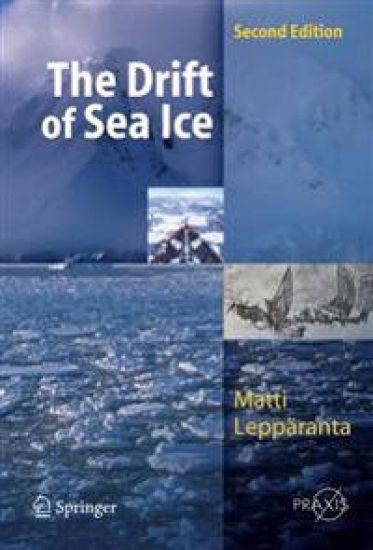
The Second Edition of The Drift of Sea Ice presents the fundamental laws of sea ice drift which come from the material properties of sea ice and the basic laws of mechanics. The resulting system of equations is analysed for the general properties of sea ice drift, the free drift model and analytical models for ice drift in the presence of internal friction, and the construction of numerical ice drift models is detailed. This second edition of a much lauded work, unique on this topic in the English language, has been revised, updated and expanded with much new information and outlines recent results, in particular in relation to the climate problem, mathematical modelling and ice engineering applications. The current book presents the theory, observations, mathematical modelling techniques, and applications of sea ice drift science. The theory is presented from the beginning on a graduate student level, so that students and researchers coming from other fields such as physical oceanography, meteorology, physics, engineering, environmental sciences or geography can use the book as a source book or self-study material. First the drift ice material is presented ending with the concept of ‘ice state’ – the relevant properties in sea ice dynamics. Ice kinematics observations are widely presented with the mathematical analysis methods, and thereafter come drift ice rheology – to close the triangle material – kinematics – stress. The momentum equation of sea ice is derived in detail and its general properties are carefully analysed. Then follow two chapters on analytical models: free drift and drift in the presence of internal friction: These are very important tools in understanding the dynamical behaviour of sea ice. The last topical chapter is numerical models, which are the modern tool to solve ice dynamics problem in short term and long term problems. The closing chapter summarises sea ice dynamics applications and the need of sea ice dynamicknowledge and gives some final remarks on the future of this branch of science.