Kirjojen hintavertailu – 12 903 725 kirjaa ja 27 kauppaa
Kirjailija
Maureen Daly Goggin
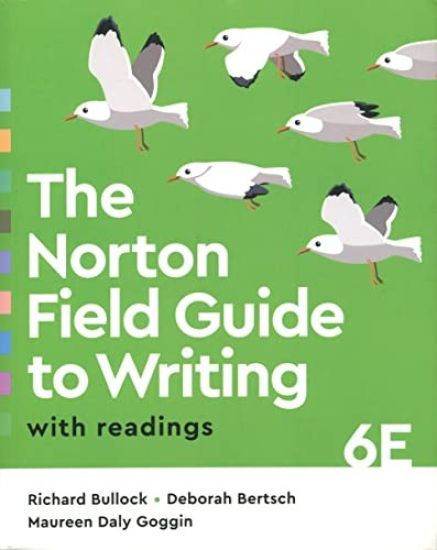
Kirjat ja teokset yhdessä paikassa: 5 kirjaa, julkaisuja vuosilta 2000–2022, suosituimpiin kuuluu The Norton Field Guide to Writing With Readings. Vertaile teosten hintoja ja tarkista saatavuus suomalaisista kirjakaupoista.
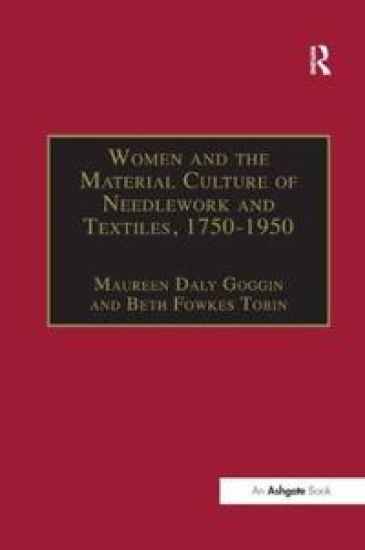
Rejecting traditional notions of what constitutes art, this book brings together essays on a variety of fiber arts to recoup women's artistic practices by redefining what counts as art. Although scholars over the last twenty years have turned their attention to fiber arts, redefining the conditions, practices, and products as art, there is still much work to be done to deconstruct the stubborn patriarchal art/craft binary. With essays on a range of fiber art practices, including embroidery, knitting, crocheting, machine stitching, rug making, weaving, and quilting, this collection contributes to the ongoing scholarly redefinition of women's relationship to creative activity. Focusing on women as producers of cultural products and creators of social value, the contributors treat women as active subjects and problematize their material practices and artifacts in the complex world of textiles. Each essay also examines the ways in which needlework both performs gender and, in turn, constructs gender. Moreover, in concentrating on and theorizing material practices of textiles, these essays reorient the study of fiber arts towards a focus on process”the making of the object, including the conditions under which it was made, by whom, and for what purpose”as a way to rethink the fiber arts as social praxis.
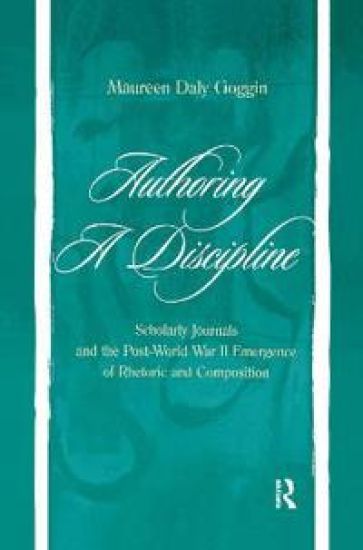
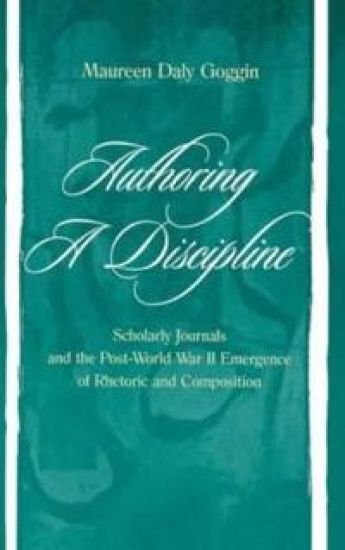
Authoring a Discipline traces the post-World War II emergence of rhetoric and composition as a discipline within departments of English in institutions of higher education in the United States. Goggin brings to light both the evolution of this discipline and many of the key individuals involved in its development. Drawing on archival and oral evidence, this history offers a comprehensive and systematic investigation of scholarly journals, the editors who directed them, and the authors who contributed to them, demonstrating the influence that publications and participants have had in the emergence of rhetoric and composition as an independent field of study. Goggin considers the complex struggles in which scholars and teachers engaged to stake ground and to construct a professional and disciplinary identity. She identifies major debates and controversies that ignited as the discipline emerged and analyzes how the editors and contributors to the major scholarly journals helped to shape, and in turn were shaped by, the field of rhetoric and composition. She also coins a new term--discipliniographer--to describe those who write the field through authoring and authorizing work, thus creating the social and political contexts in which the discipline emerged. The research presented here demonstrates clearly how disciplines are social products, born of political struggles for both intellectual and material spaces.
Rejecting traditional notions of what constitutes art, this book brings together essays on a variety of fiber arts to recoup women's artistic practices by redefining what counts as art. Although scholars over the last twenty years have turned their attention to fiber arts, redefining the conditions, practices, and products as art, there is still much work to be done to deconstruct the stubborn patriarchal art/craft binary. With essays on a range of fiber art practices, including embroidery, knitting, crocheting, machine stitching, rug making, weaving, and quilting, this collection contributes to the ongoing scholarly redefinition of women's relationship to creative activity. Focusing on women as producers of cultural products and creators of social value, the contributors treat women as active subjects and problematize their material practices and artifacts in the complex world of textiles. Each essay also examines the ways in which needlework both performs gender and, in turn, constructs gender. Moreover, in concentrating on and theorizing material practices of textiles, these essays reorient the study of fiber arts towards a focus on process”the making of the object, including the conditions under which it was made, by whom, and for what purpose”as a way to rethink the fiber arts as social praxis.
Authoring a Discipline traces the post-World War II emergence of rhetoric and composition as a discipline within departments of English in institutions of higher education in the United States. Goggin brings to light both the evolution of this discipline and many of the key individuals involved in its development. Drawing on archival and oral evidence, this history offers a comprehensive and systematic investigation of scholarly journals, the editors who directed them, and the authors who contributed to them, demonstrating the influence that publications and participants have had in the emergence of rhetoric and composition as an independent field of study. Goggin considers the complex struggles in which scholars and teachers engaged to stake ground and to construct a professional and disciplinary identity. She identifies major debates and controversies that ignited as the discipline emerged and analyzes how the editors and contributors to the major scholarly journals helped to shape, and in turn were shaped by, the field of rhetoric and composition. She also coins a new term--discipliniographer--to describe those who write the field through authoring and authorizing work, thus creating the social and political contexts in which the discipline emerged. The research presented here demonstrates clearly how disciplines are social products, born of political struggles for both intellectual and material spaces.