Kirjojen hintavertailu – 12 859 819 kirjaa ja 27 kauppaa

Kirjailija

Maurice Galton

Kirjat ja teokset yhdessä paikassa: 18 kirjaa, julkaisuja vuosilta 1992–2024, suosituimpiin kuuluu Reforming or Re-inventing Schools?. Vertaile teosten hintoja ja tarkista saatavuus suomalaisista kirjakaupoista.

18 kirjaa

Kirjojen julkaisuvuodet: 1992–2024.

Crisis in the Primary Classroom

Crisis in the Primary Classroom

Maurice Galton

TAYLOR FRANCIS LTD
2024
nidottu
First published in 1995, Crisis in the Primary Classroom redefines the crisis plaguing primary classrooms by challenging many of the educational and political orthodoxies of the nineties. The book is set during a particular period in the nineties when primary education was under attack from the Government and sections of the media, with accusations that reading standards had fallen, the National Curriculum was not being taught well and training colleges had failed to produce sufficient teachers of quality. In response to these concerns, the Government commissioned a report, which presented a series of solutions. Maurice Galton argues that the report failed to identify the root causes of the problems facing primary schools. He examines critically whether the National Curriculum was necessary, and whether teaching methods and classroom organization really needed to be changed radically. He also addresses the issue of quality among teachers, suggesting ways in which this might be developed. Crisis in the Primary Classroom deserves to be read by all concerned with the planning, administration and practice of primary education. Teachers will be encouraged by the message that methods found to be successful in the past must be accommodated in new patterns of organization and classroom practice.
Crisis in the Primary Classroom

Crisis in the Primary Classroom

Maurice Galton

TAYLOR FRANCIS LTD
2021
sidottu
First published in 1995, Crisis in the Primary Classroom redefines the crisis plaguing primary classrooms by challenging many of the educational and political orthodoxies of the nineties. The book is set during a particular period in the nineties when primary education was under attack from the Government and sections of the media, with accusations that reading standards had fallen, the National Curriculum was not being taught well and training colleges had failed to produce sufficient teachers of quality. In response to these concerns, the Government commissioned a report, which presented a series of solutions. Maurice Galton argues that the report failed to identify the root causes of the problems facing primary schools. He examines critically whether the National Curriculum was necessary, and whether teaching methods and classroom organization really needed to be changed radically. He also addresses the issue of quality among teachers, suggesting ways in which this might be developed. Crisis in the Primary Classroom deserves to be read by all concerned with the planning, administration and practice of primary education. Teachers will be encouraged by the message that methods found to be successful in the past must be accommodated in new patterns of organization and classroom practice.
Reforming or Re-inventing Schools?

Reforming or Re-inventing Schools?

John MacBeath; Maurice Galton; John Bangs

Routledge
2019
nidottu
What has changed and what will change in the next decade? Reforming or Re-inventing Schools? revisits some of the key issues in school and system reform, with a reflection on developments in the English education system and internationally. It offers an insightful review and critique of education principles and their relationship to school practice, exploring some of the myths as well as examining the potential value of comparative data. Drawing on new evidence and interviews with a group of policy makers and academics on the British and international stages, this book asks: What do parents, children and ‘society’ want from a system of education? What motivates teachers to join the profession and why do such large numbers leave so soon? What are the roots of misunderstanding and mismanagement in provision, support and accountability? How do teachers communicate, support and exchange ideas with each other? How do we measure positive change? Examining the roots and conditions for growth, and comparing and contrasting the situation in the United Kingdom with innovative development taking place elsewhere in the rest of the world, Reforming or Re-inventing Schools? is an essential read for anyone interested in school and country performance at a national and international level.
Reforming or Re-inventing Schools?

Reforming or Re-inventing Schools?

John MacBeath; Maurice Galton; John Bangs

Routledge
2019
sidottu
What has changed and what will change in the next decade? Reforming or Re-inventing Schools? revisits some of the key issues in school and system reform, with a reflection on developments in the English education system and internationally. It offers an insightful review and critique of education principles and their relationship to school practice, exploring some of the myths as well as examining the potential value of comparative data. Drawing on new evidence and interviews with a group of policy makers and academics on the British and international stages, this book asks: What do parents, children and ‘society’ want from a system of education? What motivates teachers to join the profession and why do such large numbers leave so soon? What are the roots of misunderstanding and mismanagement in provision, support and accountability? How do teachers communicate, support and exchange ideas with each other? How do we measure positive change? Examining the roots and conditions for growth, and comparing and contrasting the situation in the United Kingdom with innovative development taking place elsewhere in the rest of the world, Reforming or Re-inventing Schools? is an essential read for anyone interested in school and country performance at a national and international level.
Teaching in the Primary School (1989)
Originally published in 1989, this book reviews teaching methods and curriculum practice against the reality of classroom practice and educational objective and policies. In some ways a re-appraisal of progressive individual and group teaching and learning methods, together with practical guidelines for teachers.
Group Work in the Primary Classroom

Group Work in the Primary Classroom

Maurice Galton; John Williamson

Routledge
2016
sidottu
Drawing on the work of Vygotsky, the authors look at the social and emotional advantages children can gain from working together. They use case studies derived from the ORACLE II group work project at Leicester, and also take into account the advances made in collaborative group work in other countries. The result is a set of guidelines from which teachers can plan policies suitable for their own schools.
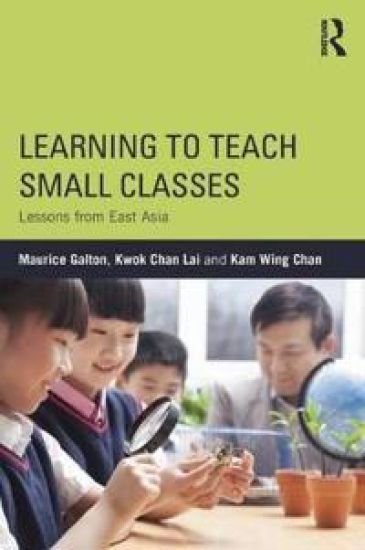
Learning to Teach Small Classes

Learning to Teach Small Classes

Maurice Galton; Kwok Chan Lai; Kam Wing Chan

Routledge
2014
sidottu
The justification for smaller classes has traditionally been that students can receive more individual attention and be provided with a curriculum that promotes student centred learning. However, in Asia where student engagement is generally over 90% in primary school classrooms, the focus of smaller classes is for teachers to increase the quality of their teaching, building on the already impressive levels of student engagement. Learning to Teach Small Classes comprehensively instructs teachers on ways they can utilise the advantage of a smaller class to its fullest potential. It works through different case studies and gives examples of successful classroom practice in each of the core subject areas (Chinese, English and Mathematics). Chapters include: Setting Objectives, Asking and Answering Questions Sustaining Successful Group and Pair Work The Use of Feedback and Assessment for Developing Independence in Learning Bringing it all together and Sustaining Effective Practice With questions for discussion and further suggested reading, this book is an invaluable resource for anyone involved in small class teaching, and East Asian teaching and education policy.
Learning to Teach Small Classes

Learning to Teach Small Classes

Maurice Galton; Kwok Chan Lai; Kam Wing Chan

Routledge
2014
nidottu
The justification for smaller classes has traditionally been that students can receive more individual attention and be provided with a curriculum that promotes student centred learning. However, in Asia where student engagement is generally over 90% in primary school classrooms, the focus of smaller classes is for teachers to increase the quality of their teaching, building on the already impressive levels of student engagement. Learning to Teach Small Classes comprehensively instructs teachers on ways they can utilise the advantage of a smaller class to its fullest potential. It works through different case studies and gives examples of successful classroom practice in each of the core subject areas (Chinese, English and Mathematics). Chapters include: Setting Objectives, Asking and Answering Questions Sustaining Successful Group and Pair Work The Use of Feedback and Assessment for Developing Independence in Learning Bringing it all together and Sustaining Effective Practice With questions for discussion and further suggested reading, this book is an invaluable resource for anyone involved in small class teaching, and East Asian teaching and education policy.
Inside the Secondary Classroom (RLE Edu O)

Inside the Secondary Classroom (RLE Edu O)

Sara Delamont; Maurice Galton

Routledge
2014
nidottu
Focusing on pupils moving from primary to middle or secondary school, it describes and evaluates the schools’ programmes to ease transfer, and includes material provided by the pupils themselves. The main body of the book is a rich and detailed account of the first months of life in new secondary schools, where the pleasures and perils of new friends, new teachers and new subjects, and a new approach to teaching are encountered. The book conveys vividly how pupils experience a new environment, and meet its dangers, rules and regulations, timetable, complex groupings and ideology. Inside the Secondary Classroom was the first comparative ethnography of school life in Britain, carried out in six schools. It reveals surprising similarities and differences between them. The cases studied range from highly successful pupils with nine ‘O’ levels to others with severe social and personal problems.
Inside the Secondary Classroom (RLE Edu O)

Inside the Secondary Classroom (RLE Edu O)

Sara Delamont; Maurice Galton

Routledge
2011
sidottu
Focusing on pupils moving from primary to middle or secondary school, it describes and evaluates the schools’ programmes to ease transfer, and includes material provided by the pupils themselves. The main body of the book is a rich and detailed account of the first months of life in new secondary schools, where the pleasures and perils of new friends, new teachers and new subjects, and a new approach to teaching are encountered. The book conveys vividly how pupils experience a new environment, and meet its dangers, rules and regulations, timetable, complex groupings and ideology. Inside the Secondary Classroom was the first comparative ethnography of school life in Britain, carried out in six schools. It reveals surprising similarities and differences between them. The cases studied range from highly successful pupils with nine ‘O’ levels to others with severe social and personal problems.
Reinventing Schools, Reforming Teaching

Reinventing Schools, Reforming Teaching

John Bangs; John Macbeath; Maurice Galton

Routledge
2010
sidottu
What lessons can we learn from the relationship between policy-makers and schools over the life of the ‘New’ Labour and its predecessor Conservative government? What happened to ‘Education, Education, Education’ as it travelled from political vision to classroom practice? What are the lasting legacies of 13 years of a reforming Labour government? And what are the key messages for a coalition government? These are the questions addressed to the architects of educational reform, their critics and the prophets of better things to come. The 37 interviewees include ministers past and present, journalists, union officials, members of lobby groups and think tanks. Reinventing Schools, Reforming Teaching considers the impact of educational policies on those who have to translate political priorities into the day to day work of schools and classrooms. The authors argue that an evidence-informed view of policy-making has yet to be realised, graphically illustrating how many recent political decisions in education can be explained by the personal experiences, predilections and short-term needs of key decision-makers. The interviews, which explore the dynamics behind the creation of education policies, cover a wide range of themes and issues, including: policy-makers' attitudes to schools, the staff who work in them and the communities they serve the drivers of politicians' reform agendas and the constraints on radical reform the shaping and reshaping of curriculum and assessment the search for a more effective marriage between inspection and school self evaluation the relationship of academic research to policy making how a vision for teaching and teachers might be constructed for the 21st centuryContributions from leading figures including; David Puttnam, Kenneth Baker, Estelle Morris, Gillian Shepherd, Jim Knight, Pauline Perry, Michael Barber, Peter Mortimore, Judy Sebba, Paul Black, Mary James, Kevan Collins, David Hargreaves, Mike Tomlinson, David Berliner, Andreas Schleicher, Tim Brighouse, Conor Ryan, Keith Bartley, Michael Gove and Philippa Cordingley are woven in with the insights of teachers and headteachers such as Alasdair MacDonald and William Atkinson. The book's findings and proposals will be of interest not only to professional educators and those with an interest in the current and future state of education but to those interested in the process of policy-making itself.
Reinventing Schools, Reforming Teaching

Reinventing Schools, Reforming Teaching

John Bangs; John Macbeath; Maurice Galton

Routledge
2010
nidottu
What lessons can we learn from the relationship between policy-makers and schools over the life of the ‘New’ Labour and its predecessor Conservative government? What happened to ‘Education, Education, Education’ as it travelled from political vision to classroom practice? What are the lasting legacies of 13 years of a reforming Labour government? And what are the key messages for a coalition government? These are the questions addressed to the architects of educational reform, their critics and the prophets of better things to come. The 37 interviewees include ministers past and present, journalists, union officials, members of lobby groups and think tanks. Reinventing Schools, Reforming Teaching considers the impact of educational policies on those who have to translate political priorities into the day to day work of schools and classrooms. The authors argue that an evidence-informed view of policy-making has yet to be realised, graphically illustrating how many recent political decisions in education can be explained by the personal experiences, predilections and short-term needs of key decision-makers. The interviews, which explore the dynamics behind the creation of education policies, cover a wide range of themes and issues, including: policy-makers' attitudes to schools, the staff who work in them and the communities they serve the drivers of politicians' reform agendas and the constraints on radical reform the shaping and reshaping of curriculum and assessment the search for a more effective marriage between inspection and school self evaluation the relationship of academic research to policy making how a vision for teaching and teachers might be constructed for the 21st centuryContributions from leading figures including; David Puttnam, Kenneth Baker, Estelle Morris, Gillian Shepherd, Jim Knight, Pauline Perry, Michael Barber, Peter Mortimore, Judy Sebba, Paul Black, Mary James, Kevan Collins, David Hargreaves, Mike Tomlinson, David Berliner, Andreas Schleicher, Tim Brighouse, Conor Ryan, Keith Bartley, Michael Gove and Philippa Cordingley are woven in with the insights of teachers and headteachers such as Alasdair MacDonald and William Atkinson. The book's findings and proposals will be of interest not only to professional educators and those with an interest in the current and future state of education but to those interested in the process of policy-making itself.
Transfer from the Primary Classroom

Transfer from the Primary Classroom

Maurice Galton; Linda Hargreaves

Routledge
2001
nidottu
The ORACLE (Observation and Classroom Learning and Evaluation) and its follow-up study address the following questions: Has teaching in the primary school changed over the past twenty years? Has pupil performance improved or declined? Are the links between certain teacher approaches and pupil achievement still the same? Has the National Curriculum had any important consequences for the way in which transfer is conducted? One of the main claims of the National Curriculum is that it has provided greater continuity through the various stages and this should be reflected in smoother transition from one school to the next. This book focuses on the issue of transfer from the primary to the secondary school, using data from the ORACLE project. This study which took place from 1975 to 1980, followed by 'Son of ORACLE', the study of group-work in the primary classroom 1980 to 1983, has had an enormous influence on the debate on primary education. The studies described in detail what took place in primary classrooms, the teaching styles used by teachers and the responses made by pupils. It linked these processes to pupil performance. Finally, it followed the pupils as they transferred out of the primary school into the secondary phase of education. At present a new research project is being carried out in Leicester. It involves studying primary schools for one year and then following the children as they transfer to the secondary phase or to a middle school. The project involves two thirds of the schools used in the original ORACLE research. In addition, the same observation instruments and the same tests, modified for cultural differences, are being used.
Transfer from the Primary Classroom

Transfer from the Primary Classroom

Maurice Galton; Linda Hargreaves

Routledge
2001
sidottu
The ORACLE (Observation and Classroom Learning and Evaluation) and its follow-up study address the following questions: Has teaching in the primary school changed over the past twenty years? Has pupil performance improved or declined? Are the links between certain teacher approaches and pupil achievement still the same? Has the National Curriculum had any important consequences for the way in which transfer is conducted? One of the main claims of the National Curriculum is that it has provided greater continuity through the various stages and this should be reflected in smoother transition from one school to the next. This book focuses on the issue of transfer from the primary to the secondary school, using data from the ORACLE project. This study which took place from 1975 to 1980, followed by 'Son of ORACLE', the study of group-work in the primary classroom 1980 to 1983, has had an enormous influence on the debate on primary education. The studies described in detail what took place in primary classrooms, the teaching styles used by teachers and the responses made by pupils. It linked these processes to pupil performance. Finally, it followed the pupils as they transferred out of the primary school into the secondary phase of education. At present a new research project is being carried out in Leicester. It involves studying primary schools for one year and then following the children as they transfer to the secondary phase or to a middle school. The project involves two thirds of the schools used in the original ORACLE research. In addition, the same observation instruments and the same tests, modified for cultural differences, are being used.
Inside the Primary Classroom: 20 Years On

Inside the Primary Classroom: 20 Years On

Chris Comber; Maurice Galton; Linda Hargreaves; Debbie Wall

Routledge
1999
nidottu
In recent years primary education has been the subject of continuing debate with questions of standards and their apparent decline being raised with alarming regularity. Central in informing these debates has been the ORACLE study of groupwork in primary classrooms. Published during the 1980s, the study described in detail the daily life of the primary classroom, the teaching styles used by teachers and the responses of pupils. That research has now been replicated - with over two thirds of the schools originally studied being revisited, using the same tests and observation instruments. This book presents the findings of this second round of research, and is therefore unique in being able authoritatively to document the changes - or lack of them - in primary education and teaching practice over the last twenty years.
Inside the Primary Classroom: 20 Years On

Inside the Primary Classroom: 20 Years On

Chris Comber; Maurice Galton; Linda Hargreaves; Debbie Wall

Routledge
1999
sidottu
In recent years primary education has been the subject of continuing debate with questions of standards and their apparent decline being raised with alarming regularity. Central in informing these debates has been the ORACLE study of groupwork in primary classrooms. Published during the 1980s, the study described in detail the daily life of the primary classroom, the teaching styles used by teachers and the responses of pupils. That research has now been replicated - with over two thirds of the schools originally studied being revisited, using the same tests and observation instruments. This book presents the findings of this second round of research, and is therefore unique in being able authoritatively to document the changes - or lack of them - in primary education and teaching practice over the last twenty years.
Group Work in the Primary Classroom

Group Work in the Primary Classroom

Maurice Galton; John Williamson

Routledge
1992
nidottu
Drawing on the work of Vygotsky, the authors look at the social and emotional advantages children can gain from working together. They use case studies derived from the ORACLE II group work project at Leicester, and also take into account the advances made in collaborative group work in other countries. The result is a set of guidelines from which teachers can plan policies suitable for their own schools.